
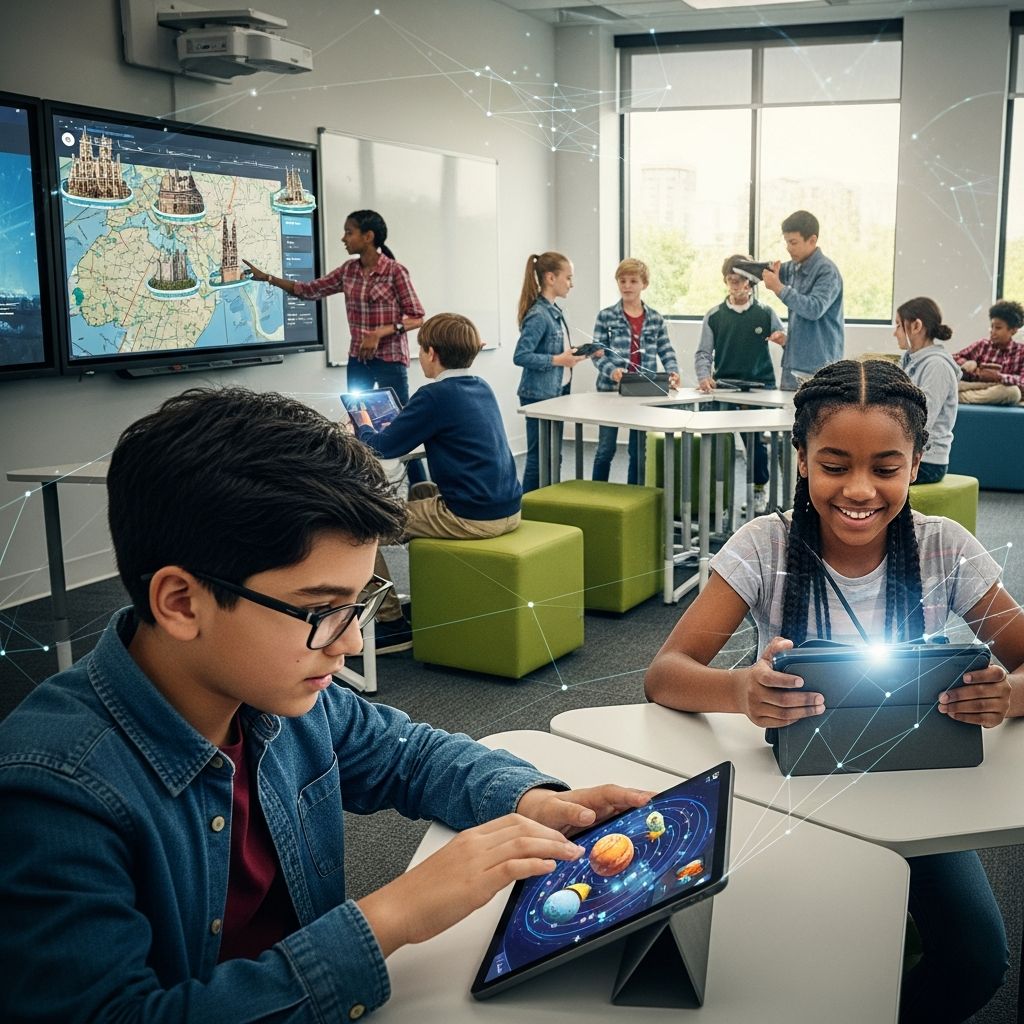
Reimagining Educational Exploration in the Digital Age
The landscape of educational experiences has undergone a dramatic transformation in recent years, driven by technological advancements that place extraordinary learning opportunities directly into the hands of educators and students. One of the most impactful innovations reshaping classroom instruction is the integration of immersive digital experiences that allow learners to explore destinations, concepts, and environments that would otherwise remain beyond their reach. These interactive learning tools break down traditional barriers related to cost, logistics, and accessibility, enabling educators to deliver richer, more engaging instruction while simultaneously reducing the administrative burden that has historically accompanied experiential learning.
The shift toward digital exploration represents more than a mere technological upgrade—it reflects a fundamental reconceptualization of what constitutes meaningful educational engagement. Students no longer must limit their learning to textbook illustrations or classroom demonstrations. Instead, they can navigate through ancient civilizations, observe scientific phenomena in controlled environments, and interact with global resources in ways that foster deeper comprehension and lasting retention.
Expanding Access Beyond Traditional Constraints
Perhaps the most significant advantage of digital exploration tools lies in their ability to democratize access to extraordinary learning resources. Traditional experiential learning has historically been constrained by geographical location, institutional budgets, and logistical complexity. Schools in remote areas, under-resourced districts, and communities with limited transportation infrastructure faced substantial obstacles in providing students with hands-on, real-world learning experiences.
Digital exploration platforms eliminate these structural inequities by making it possible for any classroom—regardless of location or financial status—to provide students with access to world-renowned institutions, natural wonders, and specialized environments. A student in a rural community can explore the Louvre’s art collections, tour NASA’s facilities, investigate the Smithsonian’s exhibits, and examine the Pyramids of Giza without leaving the classroom. This unprecedented democratization of access ensures that all learners, regardless of their socioeconomic circumstances, can benefit from enriched educational experiences.
The accessibility advantage extends beyond geographic considerations. Students with mobility challenges, chronic health conditions, or anxiety disorders that make large-scale field trips impractical now have meaningful pathways to engage with educational content in supportive environments. This inclusive approach recognizes that learning styles and accessibility needs vary widely among student populations, and digital tools can be adapted to accommodate diverse requirements.
Enhanced Cognitive Processing and Knowledge Retention
Research demonstrates that immersive learning environments produce measurable improvements in student comprehension, information retention, and skill development. When students engage with educational content through multisensory, interactive platforms, their brains process and encode information differently than when learning through traditional instructional methods. The embodied nature of these experiences—where learners physically interact with their environment through navigation, manipulation, and exploration—activates neural pathways associated with both cognitive and emotional processing.
Studies examining the effectiveness of immersive digital learning have revealed substantial effect sizes when comparing outcomes against conventional instruction. Students consistently demonstrate stronger information recall, improved conceptual understanding, and superior performance on assessments measuring both knowledge acquisition and practical skill development. This cognitive advantage appears particularly pronounced when students engage with abstract or complex concepts that benefit from concrete, visualizable representations.
The effectiveness of immersive environments extends to students with special needs and learning differences. Research from educational institutions has documented that students with various learning disabilities, attention challenges, and developmental differences show significant improvement in learning outcomes when working within well-designed immersive environments. The structured yet flexible nature of these platforms allows students to control their learning pace, revisit concepts, and engage with material in ways that align with their neurological processing styles.
Generating Authentic Student Engagement and Motivation
Engagement represents one of education’s most persistent challenges, particularly when students encounter abstract concepts or content that feels disconnected from their lived experiences. Traditional lecture-based instruction and textbook learning often fail to capture sustained attention, especially among students who are more kinesthetically or visually oriented in their learning preferences.
Interactive digital exploration fundamentally transforms the engagement equation by placing students in active, decision-making roles within learning environments. Rather than passively receiving information, learners navigate spaces, make choices about what to explore, and discover connections through personal investigation. This participatory approach generates what researchers term “intrinsic motivation”—the internal drive to learn that stems from genuine curiosity and interest rather than external rewards or grades.
The combination of visual immersion, interactive elements, and agency in the learning process produces measurable increases in student enjoyment, self-perceived learning effectiveness, and sustained attention. When students can actually observe demonstrations of complex concepts, manipulate digital objects, and explore environments through first-person perspective, they develop stronger emotional connections to the material and demonstrate greater persistence in problem-solving activities.
Streamlining Logistical Complexity and Administrative Burden
Traditional field trips, while valuable, impose substantial logistical demands on educational institutions. Coordinating transportation, managing permission slips, securing liability insurance, deploying adequate supervision, scheduling around multiple class calendars, and navigating budget constraints creates significant friction in the planning process. Many educators acknowledge that the administrative overhead associated with experiential learning has historically deterred them from incorporating these activities as regularly as pedagogically desirable.
Digital exploration platforms fundamentally simplify this equation by eliminating transportation requirements, reducing supervision demands, removing permission slip complexity, and enabling flexible scheduling that accommodates diverse classroom calendars. Teachers can access pre-designed experiences that align with curriculum standards, or they can customize materials to reflect specific learning objectives. The reduction in administrative burden allows educators to invest their time and energy in instructional design and student engagement rather than logistical coordination.
Furthermore, digital resources can be reused indefinitely across multiple years and classroom sections, providing exceptional value relative to investment. Unlike single-use field trips that serve one cohort of students at one point in time, digital experiences create permanent resources that benefit successive generations of learners.
Fostering Cross-Classroom Collaboration and Connection
Educational research increasingly emphasizes the importance of collaborative learning and social connection in developing both academic competencies and interpersonal skills. Digital exploration platforms enable unprecedented opportunities for students across different classrooms, schools, and geographic regions to share learning experiences, interact with peers, and develop collaborative problem-solving skills.
When multiple classrooms engage with the same digital environment simultaneously, students can communicate through avatars, share observations, and work together to accomplish learning objectives. This connected experience creates a sense of participation in a larger educational community while simultaneously exposing students to diverse perspectives and problem-solving approaches. Students in urban centers can collaborate with peers in rural communities, international students can exchange viewpoints with domestic learners, and students from varied socioeconomic backgrounds can interact as equal participants in shared learning spaces.
Teachers similarly benefit from opportunities to share resources, adapt experiences developed by colleagues, and build professional learning networks around innovative instructional practices. This collaborative dimension transforms digital exploration from an isolated classroom tool into a mechanism for building educational community and distributing pedagogical expertise across institutional boundaries.
Supporting Development of Executive Function and Cognitive Flexibility
Educational psychology emphasizes the importance of developing executive function skills—including working memory, cognitive flexibility, planning, and perspective-taking—as foundations for academic success and life-long learning. Digital exploration environments provide structured opportunities for students to practice and strengthen these cognitive competencies.
By engaging with multiple environments, cultural contexts, and problem scenarios in relatively short timeframes, students develop the cognitive flexibility necessary to adapt their thinking when encountering novel situations. The ability to navigate unfamiliar virtual spaces, make autonomous decisions about exploration pathways, and synthesize information from diverse sources builds decision-making capacities and strengthens metacognitive awareness. Students learn to approach complex problems systematically, consider multiple solutions, and evaluate outcomes reflexively.
The self-paced nature of many digital experiences allows students to control their cognitive load, determining when to move forward, when to revisit concepts, and when to explore supplementary materials. This autonomy develops metacognitive awareness and helps students understand their own learning processes more deeply.
Personalizing Learning Pathways and Differentiation Strategies
Differentiation—tailoring instruction to accommodate diverse learning needs, abilities, and preferences—represents a central principle in contemporary educational practice. Traditional field trips inherently limit differentiation possibilities, as large groups typically follow standardized pathways through environments, with minimal opportunity for individualized adaptation.
Digital exploration platforms enable unprecedented levels of personalization. Students can control their pacing, choosing to spend extended time exploring particular aspects while moving more quickly through other content. They can select pathways through learning environments based on personal interests, deciding which destinations to visit first or which phenomena to investigate in depth. Accessibility features can be customized to accommodate individual needs—text-to-speech functionality, adjustable text sizes, modified visual presentations, and customizable navigation interfaces ensure that diverse learners can access content effectively.
Teachers can pre-design structured experiences that guide particular student populations toward specific learning objectives, while simultaneously offering flexibility for student-directed exploration. This combination of structure and autonomy respects individual learning differences while ensuring alignment with instructional goals.
Preparing Students for Active Participation in a Connected World
As educational technology becomes increasingly integrated into professional environments, student competencies with digital tools and virtual collaboration become essential preparation for contemporary work. Engaging with immersive digital environments during their educational years helps students develop comfort and proficiency with technologies they will encounter throughout their careers.
Beyond technical skills, virtual collaboration develops communication competencies necessary in increasingly distributed work environments. Students learn to express ideas in digital spaces, collaborate with peers they cannot physically see, negotiate technical challenges, and accomplish shared objectives in virtual contexts. These competencies transfer directly to workplace readiness, preparing students for employment in organizations where remote collaboration constitutes the norm rather than the exception.
Integrating Pre-Visit Preparation and Post-Experience Reflection
Educational research indicates that field trip effectiveness increases substantially when educators implement pre-visit preparation activities and post-visit reflection and extension exercises. Digital exploration tools facilitate this comprehensive approach by serving as preparation mechanisms before in-person visits or as independent learning experiences in their own right.
Teachers can utilize digital platforms to introduce concepts, establish context, and generate curiosity before students experience in-person visits to physical locations. This preparation enhances students’ ability to make meaningful observations during actual visits and helps them connect abstract concepts to concrete experiences. Conversely, digital experiences can serve as post-visit extensions, allowing students to revisit and extend their learning after in-person experiences conclude.
Implementing Best Practices for Maximum Impact
Maximizing the educational effectiveness of digital exploration requires attention to several implementation considerations:
- Alignment with Curriculum: Ensure digital experiences directly support learning standards and instructional objectives rather than functioning as supplementary entertainment.
- Active Engagement Design: Select or create experiences that require authentic interaction and decision-making rather than passive observation.
- Intentional Scaffolding: Provide appropriate support structures that guide learning while preserving opportunities for student autonomy and discovery.
- Reflection Opportunities: Build in structured time for students to reflect on discoveries, make connections to prior learning, and synthesize new understanding.
- Accessibility Verification: Confirm that platforms and experiences accommodate diverse learner needs and that accessibility features are functioning appropriately.
- Collaborative Planning: Coordinate digital experiences across grade levels and subject areas to create coherent learning progressions and maximize resource utilization.
Frequently Asked Questions
Q: Can digital exploration experiences fully replace traditional field trips?
A: No, research indicates that hybrid approaches combining digital experiences with in-person visits produce optimal learning outcomes. Digital experiences excel at providing preparation, extension, and access to resources that physical visits cannot accommodate, while in-person experiences offer irreplaceable sensory and social dimensions.
Q: What technology infrastructure is required to implement virtual field trips?
A: Requirements vary depending on the specific platform and whether immersive headsets are utilized. Many effective virtual experiences function on standard computer lab equipment or classroom projections, while immersive experiences benefit from VR headsets. Schools should assess their existing technology infrastructure and select platforms accordingly.
Q: How do virtual field trips accommodate students with motion sickness or sensory sensitivities?
A: Quality platforms offer accessibility options including motion sickness reduction settings, adjustable movement speeds, and non-immersive viewing modes. Teachers should communicate accessibility needs to platform providers and provide alternative participation formats when necessary.
Q: Can teachers create customized virtual experiences aligned with their specific curriculum?
A: Many platforms enable teacher customization and content creation, though the technical requirements vary. Teachers can often select from pre-designed experiences, adapt existing content, or access resources for creating custom experiences.
Q: How do schools handle the cost of virtual field trip platforms and technology?
A: Many museums, cultural institutions, and educational organizations offer free or low-cost virtual experiences. Grant funding, professional development budgets, and technology allocations can support implementation. The cost per student often proves substantially lower than traditional field trip expenses.
References
- Educational, Engaging, Accessible: The Benefits of Virtual Field Trips — Kai XR. 2024. https://www.kaixr.com/post/benefits-of-virtual-field-trips
- The Benefits of Virtual Field Trips for K–12 Educators — ClickView Education. 2025. https://www.clickvieweducation.com/blog/teaching-strategies/virtual-field-trips-classroom-benefits
- Leverage Virtual Field Trips to Engage Students in Authentic Learning Experiences — AVID Open Access. 2024. https://avidopenaccess.org/resource/leverage-virtual-field-trips-to-engage-students-in-authentic-learning-experiences/
- Virtual Field Trips vs Traditional: Which is Better? — Professional Learning Board. 2024. https://professionallearningboard.com/virtual-field-trips/
- Why Teachers Want Virtual Field Trips to Stay — American Alliance of Museums. 2021. https://www.aam-us.org/2021/08/18/why-teachers-want-virtual-field-trips-to-stay/

Medha Deb is an editor with a master's degree in Applied Linguistics from the University of Hyderabad. She believes that her qualification has helped her develop a deep understanding of language and its application in various contexts. Medha specializes in the areas of beauty, health, sports, and wellness and is committed to ensuring that the content on the website is…