
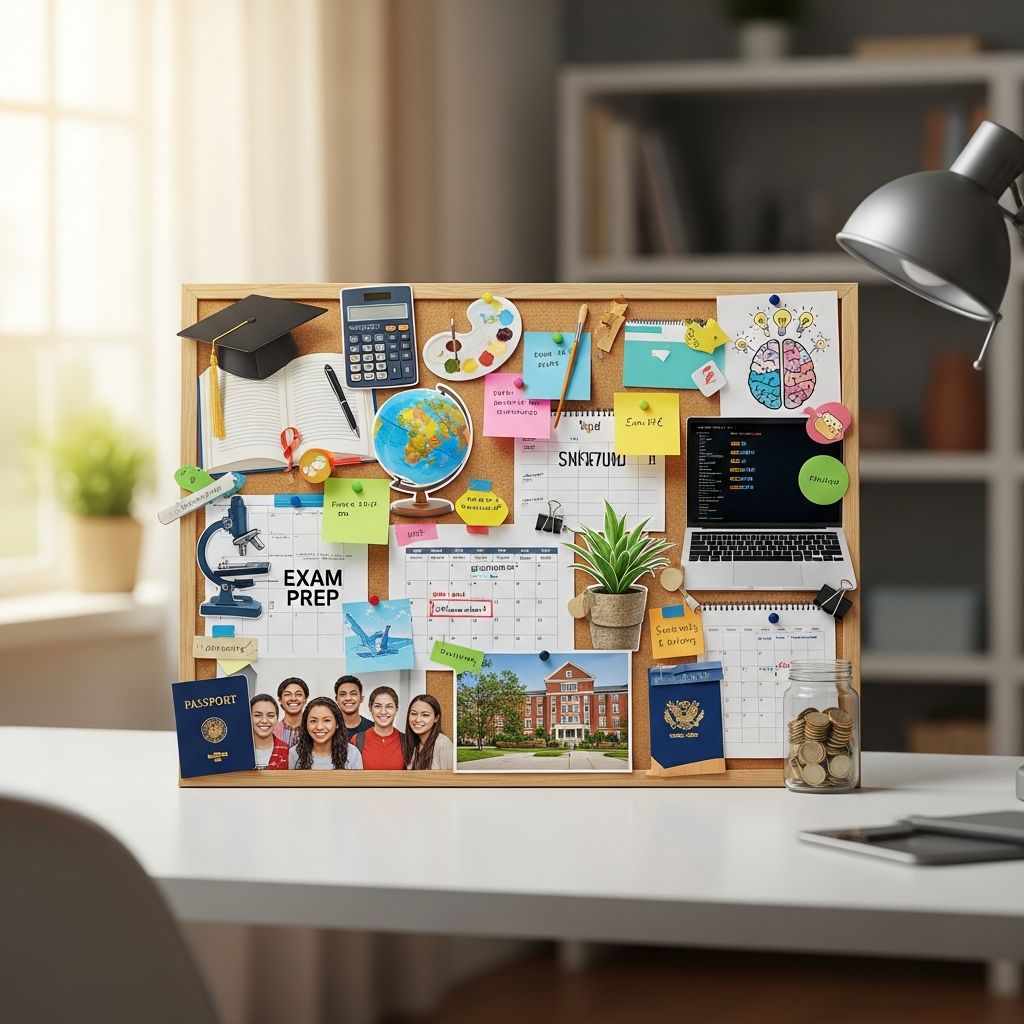
Vision boards serve as dynamic tools that help students transform abstract aspirations into vivid, actionable plans. These collages of images, quotes, and symbols not only clarify ambitions but also sustain motivation throughout challenging academic journeys.
Understanding the Essence of Vision Boards in Student Life
A vision board acts as a personal canvas where students depict their future achievements, from earning top grades to pursuing dream careers. Rooted in creative visualization principles, this method makes intangible goals feel immediate and achievable, fostering deeper emotional investment.
Unlike simple lists, vision boards engage multiple senses, reinforcing commitment through daily visual exposure. Students who maintain these displays report heightened persistence, as the board constantly reminds them of their ‘why’ behind daily efforts.
Key Advantages of Adopting Vision Boards for Learning
Implementing vision boards yields measurable gains in student performance and mindset. Here’s a breakdown of primary benefits:
- Motivation Surge: Visible goals act as daily prompts, countering procrastination and reigniting drive during low points.
- Growth Mindset Cultivation: By picturing success, students embrace challenges as growth opportunities rather than threats.
- Structured Goal Framework: Boards promote SMART criteria—Specific, Measurable, Achievable, Relevant, Time-bound—turning vague wishes into concrete milestones.
- Creative Outlet: The assembly process sparks innovation, allowing unique self-expression that enhances enjoyment in planning.
- Focus and Responsibility: Regular reviews sharpen priorities and build self-accountability, essential for long-term habits.
For students facing learning disabilities, these boards break overwhelming objectives into visual chunks, reducing anxiety and boosting confidence through progress tracking.
Step-by-Step Guide to Crafting an Effective Student Vision Board
Creating a vision board is accessible, requiring minimal supplies like poster board, magazines, scissors, glue, and markers—or digital apps for modern twists. Follow these phases:
- Reflect Deeply: Journal about core desires in academics, hobbies, health, and relationships. Ask: What excites me? What skills do I need?
- Gather Visuals: Collect photos, drawings, or printouts symbolizing targets—e.g., a graduation cap for college dreams or a globe for travel goals.
- Organize Thematically: Divide the board into zones like ‘Education,’ ‘Career,’ ‘Wellness’ for clarity.
- Add Inspirational Text: Include affirmations such as ‘I am capable’ or quotes from role models to amplify emotional impact.
- Display Prominently: Place in a bedroom or study area for frequent viewing, updating quarterly to reflect progress.
Digital versions using tools like Canva or collaborative platforms enable easy edits and sharing, ideal for remote learning.
Popular Themes to Personalize Your Vision Board
Tailor boards to individual passions for maximum resonance. Common categories include:
| Theme | Example Elements | Potential Goals |
|---|---|---|
| Academic Excellence | Books, diplomas, study icons | Achieve A average, master algebra, join debate club |
| Career Aspirations | Job logos, tools, uniforms | Secure internship, learn coding, become engineer |
| Personal Wellness | Fitness gear, healthy foods, journals | Run 5K, meditate daily, sleep 8 hours |
| Extracurriculars | Sports gear, instruments, travel maps | Make varsity team, play guitar, visit Europe |
| Skill Building | Language apps, books, certificates | Learn Spanish, read 12 books yearly, lead project |
These themes ensure comprehensive coverage, balancing immediate school needs with lifelong ambitions.
Integrating Vision Boards into Classroom and Home Routines
Educators can embed vision boards in curricula for collective impact. Start the school year with a workshop, linking boards to subjects—like art classes for design or history for timeline visuals.
Pair students for peer accountability, where they share updates and celebrate wins, reducing isolation. Track efficacy via journals or goal checklists, adjusting for diverse learners.
Parents foster home use by supplying materials and reviewing boards weekly, modeling goal pursuit. In homeschooling, boards align daily tasks with big-picture visions.
Overcoming Common Hurdles in Vision Board Creation
Challenges like creative blocks or fading interest arise, but solutions exist:
- Lack of Ideas: Brainstorm with prompts or online image banks.
- Time Constraints: Dedicate 1-2 hours initially, then 15-minute monthly refreshes.
- Digital Access Issues: Offer low-tech options with recycled materials.
- Motivation Dip: Revisit board with a buddy or teacher for reinforcement.
Adapt for inclusivity, using voice-to-text for motor challenges or simplified visuals for cognitive needs.
Real-World Examples of Student Vision Board Triumphs
Consider a middle schooler who visualized straight A’s and piano mastery; within a year, improved grades and recital performance followed consistent board checks. High schoolers targeting college often include acceptance letters, correlating with higher application rates.
For special needs students, boards with milestone stickers tracked reading progress, enhancing self-esteem and skill acquisition. These stories underscore visualization’s role in bridging intention and reality.
Advanced Strategies for Sustained Vision Board Power
Elevate boards by incorporating habit trackers or QR codes linking to progress videos. Quarterly audits ensure alignment with evolving goals.
Combine with journaling for reflection: ‘What steps did I take this week?’ This meta-cognition amplifies growth. Group projects in schools build community, as shared visions inspire collective effort.
Frequently Asked Questions (FAQs)
What materials do I need for a basic vision board?
Corkboard or paper, magazines, glue, markers. Digital: apps like Pinterest or PicMonkey.
How often should I update my vision board?
Every 3-6 months or after major achievements to keep it relevant.
Can vision boards help with ADHD or learning challenges?
Yes, by providing visual structure and breaking tasks into visuals, aiding focus and retention.
Are digital vision boards as effective as physical ones?
Equally powerful if viewed daily; digital offers easy sharing and edits.
How do teachers measure vision board success?
Through student self-reports, goal attainment logs, and performance improvements.
Vision boards evolve from crafts to catalysts, empowering students to author their futures with clarity and enthusiasm.
References
- Vision Board for Students: A Visual Path to Achieving Educational Goals — Creately. 2023. https://creately.com/guides/student-vision-board/
- Lack of Motivation? Exploring Vision Boards in Inspiring Education — Greenhouse Learning. 2023. https://greenhouselearning.co.uk/lack-of-motivation-exploring-vision-boards-in-inspiring-education/
- The Power of Vision Boards for Kids — Learning Disabilities Association of Wisconsin. 2023. https://ldaofwisconsin.org/the-power-of-vision-boards-for-kids/
- Inspire Student Goals with Vision Boards — Connections Academy. 2023. https://www.connectionsacademy.com/support/resources/article/vision-boards-for-students/
- 5 Benefits to Creating a Vision Board for Kids — Special Ed Resource. 2023. https://specialedresource.com/benefits-to-creating-a-vision-board-for-kids

- Integrated M.A. in Applied Linguistics, University of Hyderabad
- 5+ years in editorial, instructional, SEO, and research-based writing
Sneha is a relationships and lifestyle writer with a strong foundation in applied linguistics and certified training in relationship coaching. She brings over five years of writing experience to theskillvault, crafting thoughtful, research-driven content that empowers readers to build healthier relationships, boost emotional well-being, and embrace holistic living. Her writing and insights reflect the belief that beauty, happiness, and wellness…