
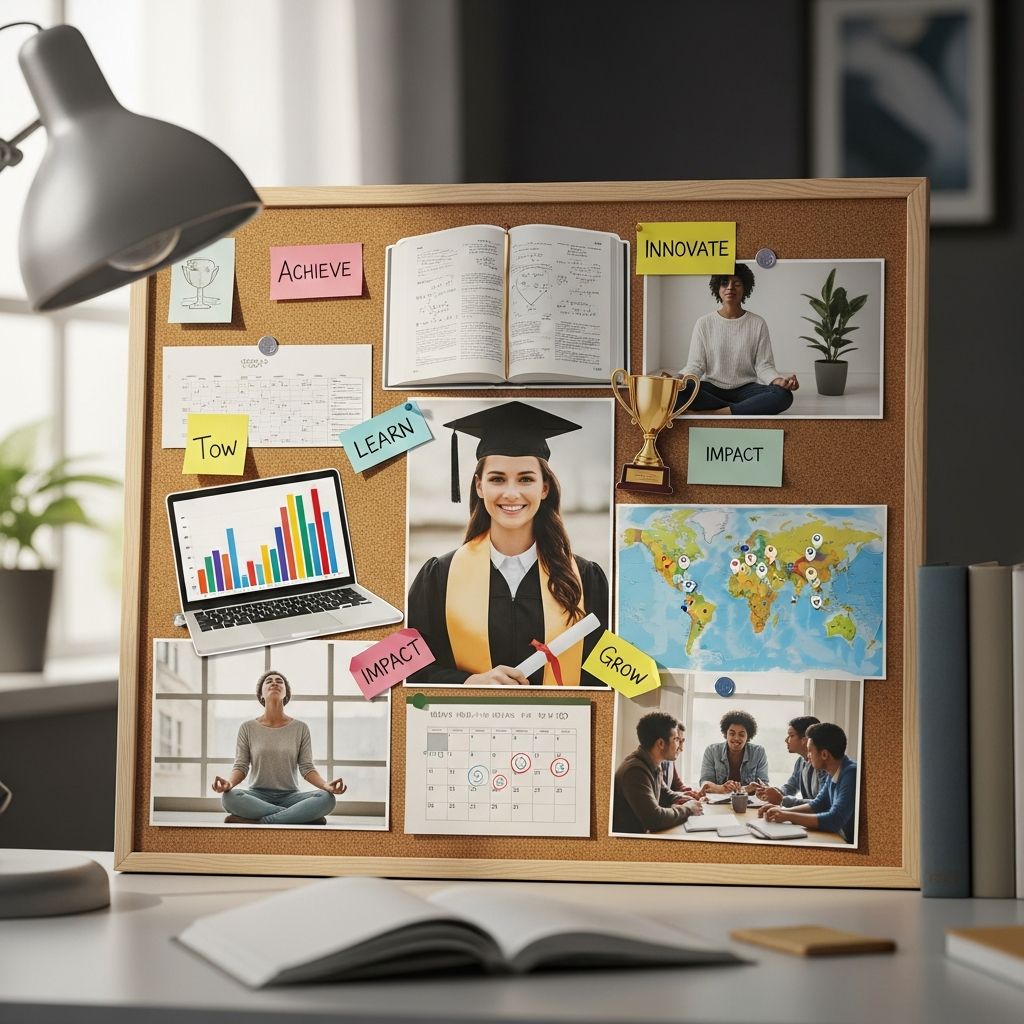
Visual tools like vision boards transform abstract aspirations into tangible motivators, helping students clarify ambitions and pursue them with focus. These collages of images, quotes, and symbols serve as daily reminders of potential achievements, fostering resilience and drive in educational settings.
Understanding the Power of Visual Goal Setting
Goal setting often feels distant for young learners, but vision boards bridge that gap by making dreams visible. Research on visualization shows it enhances motivation and performance, as the brain responds to mental imagery similarly to real experiences. For students, this means turning vague wishes into concrete plans, whether aiming for better grades or personal milestones.
Educators note that traditional methods fail to engage because they lack personalization. Vision boards address this by allowing creativity, where students select elements resonating with their unique paths. This process builds self-awareness and commitment, key to long-term success.
Key Benefits for Learners of All Ages
Vision boards offer multifaceted advantages, supported by educational practices that emphasize visual aids for retention and inspiration.
- Clarifies Objectives: Students articulate dreams through curated visuals, creating purpose-driven intentions.
- Increases Motivation: Daily exposure reignites drive during challenges, reminding them of the ‘big picture’.
- Builds Confidence: Visual representations reinforce self-belief, essential for overcoming setbacks.
- Sharpens Focus: Prioritizes actions aligning with goals, reducing distractions.
- Encourages Responsibility: Breaking goals into steps teaches habit formation and accountability.
These benefits extend beyond academics, nurturing holistic development like creativity and perseverance.
Practical Steps to Create Effective Vision Boards
Building a vision board is accessible, requiring minimal supplies: poster board, magazines, scissors, glue, markers, or digital tools like Canva. Follow these steps for maximum impact.
- Reflect Deeply: Prompt students to journal about desired outcomes in academics, hobbies, health, or relationships. Ask: ‘What excites you? What challenges do you want to conquer?’
- Gather Inspirations: Collect images, quotes, and symbols from magazines, online searches, or personal drawings representing goals.
- Design Thoughtfully: Arrange elements on the board, ensuring balance and centrality for key aspirations. Add personal touches like doodles.
- Add Action Plans: Include SMART goals (Specific, Measurable, Achievable, Relevant, Time-bound) beneath images, e.g., ‘Read 2 books monthly’.
- Review and Refine: Step back to ensure it inspires; adjust as needed.
For digital versions, use apps with templates, ideal for remote learning environments.
Age-Appropriate Goal Ideas and Examples
Tailor vision boards to developmental stages for relevance. Younger students focus on fun skills, while older ones target careers.
| Age Group | Sample Goals | Visual Elements |
|---|---|---|
| Elementary (5-10) | Learn to swim, read 1 book/month, join soccer | Pool images, book covers, soccer balls |
| Middle School (11-14) | Get B+ in math, save $20/month, learn guitar song weekly | Grade reports, piggy banks, music notes |
| High School (15+) | College acceptance, marathon completion, travel abroad | Campus photos, running shoes, maps |
These examples draw from real student aspirations, promoting balanced growth.
Strategic Display and Maintenance Strategies
Visibility is crucial; hidden boards lose power. Optimal spots include:
- Bedroom wall or desk for daily views.
- Classroom locker or binder cover.
- Digital wallpaper or phone lock screen.
- Shared family space for parental reinforcement.
Schedule monthly reviews: Discuss progress, celebrate wins, adjust goals. This turns the board into a living tool, integrating with planners or apps for tracking.
Overcoming Common Challenges in Implementation
Some students hesitate due to perfectionism or overwhelm. Counter this by emphasizing ‘no wrong way’—focus on inspiration over aesthetics. For tech-shy creators, start with physical materials. Teachers can model vulnerability by sharing their boards, normalizing the process.
Lack of follow-through? Pair with accountability buddies or teacher check-ins. Evidence shows consistent exposure sustains motivation.
Integrating Vision Boards into Classroom Routines
Incorporate as semester starters or post-break refreshers. Dedicate a class period, then tie to reflections in journals or portfolios. For group dynamics, create class vision boards for shared objectives like community service.
Remote settings benefit from shared digital platforms, fostering virtual showcases.
Real-World Impact: Student Success Stories
Anecdotes highlight transformations: One middle schooler visualized straight A’s, implemented study habits, and exceeded goals. High schoolers targeting careers reported heightened focus amid college apps. These align with visualization studies boosting confidence and ability.
Frequently Asked Questions (FAQs)
What supplies do I need for a physical vision board?
Poster board, magazines, scissors, glue, markers—recycle old calendars for images.
Can vision boards be digital?
Yes, tools like Pinterest, Canva, or PowerPoint work well, especially for sharing online.
How often should students update their boards?
Quarterly or after major milestones to reflect evolving goals.
Are vision boards suitable for all learning styles?
Primarily visual, but add audio quotes or tactile elements for variety.
What if a student struggles to think of goals?
Brainstorm via prompts: future self in 5 years, dream day, admired role models.
Vision boards evolve with users, adapting to new ambitions while anchoring core values.
References
- Using Vision Boards to Empower Students to Set and Achieve Goals — Edvative. 2023. https://www.edvative.com/blog/o59ee4ecjyid7ktwcm83sr6rh33cvz
- Lack Of Motivation? Exploring Vision Boards In Inspiring Education — Greenhouse Learning. 2023. https://greenhouselearning.co.uk/lack-of-motivation-exploring-vision-boards-in-inspiring-education/
- Inspire Student Goals with Vision Boards — Connections Academy. 2024-02-06. https://www.connectionsacademy.com/support/resources/article/vision-boards-for-students/
- 5 Benefits to Creating a Vision Board for Kids — Special Ed Resource. 2023. https://specialedresource.com/benefits-to-creating-a-vision-board-for-kids
- Vision Boards: Start the Year with a Visual Goal Setting Exercise — Catlin Tucker. 2021-08. https://catlintucker.com/2021/08/vision-boards/
- Your Complete Guide to Building a Student Vision Board for 2025 Success — California OPS. 2024. https://californiaops.org/your-complete-guide-to-building-a-student-vision-board-for-2025-success/

Medha Deb is an editor with a master's degree in Applied Linguistics from the University of Hyderabad. She believes that her qualification has helped her develop a deep understanding of language and its application in various contexts. Medha specializes in the areas of beauty, health, sports, and wellness and is committed to ensuring that the content on the website is…