
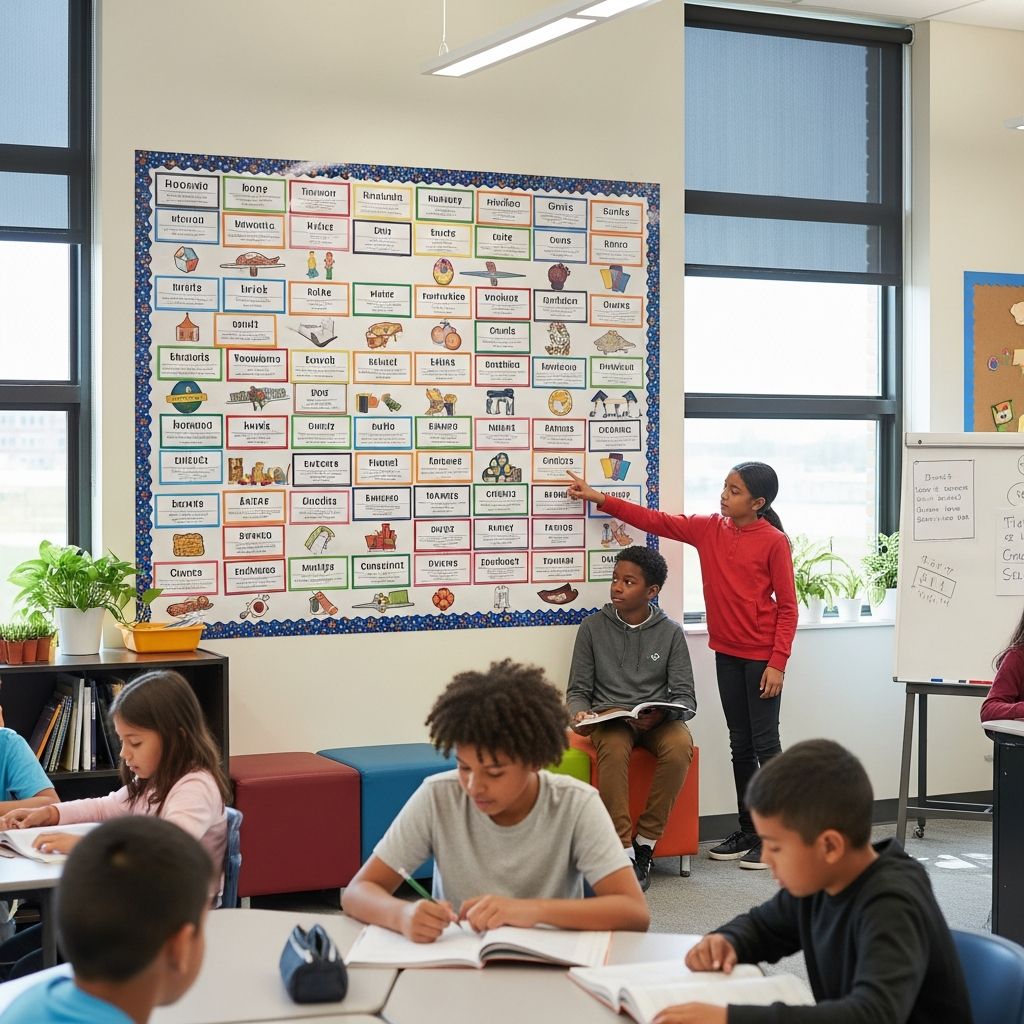
Understanding the Role of Vocabulary Displays in Student Learning
Modern educational research consistently demonstrates that students who learn in classrooms featuring well-designed vocabulary displays develop stronger literacy skills and increased confidence in both reading and writing activities. These visual resources serve as permanent references that students can access independently throughout their daily learning experiences. Unlike traditional posters that remain static and decorative, effective vocabulary displays function as interactive learning tools where students regularly engage with content, making meaningful connections between words and their applications.
The fundamental purpose of a classroom vocabulary display extends beyond simple decoration. These installations provide scaffolding for emergent readers and writers, offer spelling references during independent work sessions, and create opportunities for targeted vocabulary instruction across content areas. When designed thoughtfully, they become essential classroom infrastructure that supports differentiated instruction and accommodates diverse learning styles.
Essential Design Principles for Effective Vocabulary Displays
Creating a vocabulary display that serves genuine pedagogical purposes requires careful consideration of several design elements. The most successful installations prioritize accessibility and functionality over aesthetic appeal alone, though these elements need not be mutually exclusive.
Organization and Accessibility
The arrangement of vocabulary items dramatically impacts student utilization rates. Organizing words alphabetically creates a logical system that helps students locate specific terms quickly without requiring teacher assistance. This organizational structure particularly benefits independent learners and builds student confidence in self-directed learning. Alternative organizational systems might group words by thematic units, content topics, or grammatical categories depending on instructional objectives and grade level.
Placement within the classroom matters significantly. Position vocabulary displays at eye level for your students, ensuring they can easily view and reference words during lessons and independent activities. Proximity to writing stations, reading areas, and content-specific learning centers maximizes the likelihood that students will actually use these resources during authentic learning tasks.
Interactive Elements and Hands-On Components
Moving vocabulary displays from passive to active learning tools requires incorporating interactive features. Consider using velcro attachments that allow students to physically remove word cards, manipulate them during word work activities, and reorganize them for different learning purposes. Tactile elements such as raised lettering or textured backgrounds engage kinesthetic learners and create multisensory vocabulary experiences that enhance retention and recall.
Storing word cards on rings, in pocket charts, or within accessible containers transforms your display into a resource that students can bring to their work areas. This flexibility supports small-group instruction, literacy centers, and collaborative learning experiences where students need direct access to vocabulary items.
Display Format Options for Different Classroom Contexts
Traditional Wall-Based Displays
Standard classroom walls remain the most common location for vocabulary displays, and they offer distinct advantages in terms of visibility and constant student access. Wall-based installations work particularly well for sight words, high-frequency vocabulary, and content-specific terminology that students encounter regularly throughout their day. Using decorative borders, color coding by category, and themed backgrounds can enhance the visual appeal while maintaining functionality.
Portable and Flexible Display Systems
Not all classrooms offer abundant wall space, particularly in shared instructional environments or facilities designed for flexible learning configurations. Portable display solutions using bulletin board stands, PVC pipe frames, or easels provide effective alternatives that can be repositioned as classroom needs change. These systems work exceptionally well for featuring rotating vocabulary sets, allowing you to highlight current focus words while maintaining storage for previously studied vocabulary.
Picture frames from various retailers offer elegant display options that complement diverse classroom aesthetics. By rotating the vocabulary sets displayed within these frames throughout the year, you maintain visual interest while systematically reviewing previously introduced vocabulary.
Digital and Virtual Display Alternatives
Contemporary classrooms increasingly incorporate digital vocabulary displays that extend learning beyond physical classroom walls. Virtual word walls created through collaborative platforms or learning management systems provide consistent, easily accessible vocabulary references for both in-person and remote learners. These digital spaces enable teachers to include hyperlinked definitions, embedded images, pronunciation guides, and related example sentences that enrich the vocabulary experience beyond what traditional displays can offer.
Digital displays particularly benefit classrooms supporting hybrid or fully remote learning models, creating equitable access to vocabulary resources regardless of physical classroom attendance. Additionally, virtual platforms enable easy modification and updating of vocabulary lists without the time investment required for recreating physical displays.
Vocabulary Display Categories and Content Organization
Phonetic and Spelling Pattern Walls
Organizing vocabulary displays around phonetic patterns and spelling structures directly supports literacy instruction focused on decoding and encoding skills. Rather than displaying random word collections, group words sharing common phonetic elements, letter patterns, or phonogram families. This organizational approach transforms the display into an active learning tool for phonics instruction, allowing students to identify patterns and apply decoding strategies to unfamiliar words they encounter during reading.
Rotating these pattern-based displays weekly or biweekly keeps the content current with your phonics instruction sequence while allowing systematic vocabulary review and expansion. Students develop stronger pattern recognition skills and transfer these abilities to spelling unknown words independently.
Thematic and Content-Specific Vocabulary Displays
Unit-based vocabulary displays organize terminology around thematic topics or content area instruction. These installations support comprehension by frontloading key vocabulary before students encounter new concepts during reading or direct instruction. Organizing vocabulary by unit also helps students make meaningful connections between related terms and understand how vocabulary builds conceptual understanding within specific subjects or themes.
Thematic displays work particularly effectively in integrated curriculum models where vocabulary instruction connects directly to science, social studies, or interdisciplinary unit topics. This organizational approach demonstrates to students how vocabulary functions as a tool for understanding content rather than as an isolated skill.
High-Frequency and Sight Word Walls
While many classrooms feature comprehensive vocabulary displays, dedicated spaces for high-frequency words and sight words deserve special attention. These words form the foundation of fluent reading and require extensive exposure and practice for automaticity. Organizing sight words logically—whether alphabetically, by pattern, or by frequency level—helps students develop rapid recognition without conscious decoding effort.
Implementation Strategies for Maximum Student Engagement
Interactive Learning Activities Using Vocabulary Displays
Simply displaying vocabulary accomplishes little without intentional engagement strategies that encourage regular student interaction. Incorporate games, puzzles, and collaborative activities that require students to use the displayed vocabulary in meaningful contexts. Pictionary-style games where students illustrate vocabulary terms for peers to identify combine visual thinking with vocabulary review. Word play activities using anagrams, word searches, or rhyming challenges make vocabulary practice engaging rather than monotonous.
LINGO-style games adapted for classroom use provide another engaging format for vocabulary practice. Students receive grids where they write vocabulary words in positions of their choice, then mark off items as they are called out. This activity builds anticipation and friendly competition while reinforcing spelling patterns and vocabulary recognition.
Differentiation Through Vocabulary Displays
Well-designed vocabulary displays support differentiated instruction by offering entry points for students at various proficiency levels. Create layered vocabulary collections that include foundational words alongside more sophisticated synonyms or complex terminology. Organize vocabulary by difficulty levels, allowing teachers to direct different students toward appropriately challenging vocabulary sets.
Students working below grade level can focus on core sight words and essential vocabulary, while advanced learners explore synonym relationships, word origins, and domain-specific terminology. This approach maintains a unified classroom display while ensuring each student engages with appropriately challenging content.
Creating Dynamic and Evolving Vocabulary Systems
Continuous Growth and Updating
The most effective vocabulary displays function as works-in-progress rather than static installations completed at the beginning of the school year. Systematically add vocabulary throughout the year as students encounter new words in reading, learning events, and academic discussions. Involve students in decisions about which words merit permanent display, developing their metacognitive awareness of vocabulary acquisition and word selection.
Plan regular review cycles where you revisit previously displayed vocabulary, reinforcing retention while creating space for new vocabulary. Seasonal updates and thematic changes maintain visual interest and signal to students that the display remains relevant and responsive to current learning.
Student Contribution and Ownership
Transforming vocabulary displays from teacher-created resources into collaborative classroom projects increases student investment and engagement. Invite students to nominate challenging words they encounter during independent reading, contribute illustrated definitions, or create example sentences demonstrating vocabulary application. This participatory approach develops student agency while enriching the display with diverse perspectives and student-generated content.
Addressing Space and Practical Constraints
Not all classrooms feature abundant wall space, particularly in shared facilities, specialized instructional environments, or classrooms serving multiple programs. Alternative display solutions ensure that space limitations need not prevent teachers from implementing vocabulary displays. Vertical storage systems, rotating bulletin boards, window displays, and mobile carts provide creative solutions for classrooms facing spatial constraints.
Consider using document cameras or projectors to display vocabulary items on available wall or screen space, creating dynamic digital displays that easily change without requiring physical reconstruction. Tiered shelving units displaying vocabulary cards in organized containers provide both accessibility and efficient space utilization.
Integration with Writing Instruction
Strategically positioning vocabulary displays near writing stations creates natural connections between vocabulary learning and writing application. When students have immediate access to displayed vocabulary while composing, they develop stronger writing habits that incorporate more sophisticated word choices. The proximity of word references reduces barriers to vocabulary use, encouraging students to experiment with new and interesting words rather than defaulting to familiar vocabulary.
Combine vocabulary displays with word work centers where students engage in hands-on activities with displayed vocabulary. Sorting activities, word pattern investigations, and written application tasks deepen vocabulary understanding while providing multiple practice opportunities across different modalities.
Assessment and Monitoring Student Progress
Vocabulary displays serve assessment functions beyond their instructional roles. Observe which vocabulary items students reference during independent work, noting whether they select appropriate words for their contexts. Monitor spelling application to determine whether students transfer displayed vocabulary patterns to new words. These informal observations provide valuable data about which vocabulary has achieved automaticity and which items require additional review and practice.
Use vocabulary displays as springboards for more formal assessment activities. Request students to sort displayed vocabulary into categories, create synonym clusters, or use vocabulary words in original sentences. These activities reveal depth of vocabulary understanding beyond simple recognition.
Frequently Asked Questions
Q: How often should I update or rotate vocabulary displays?
A: Rotating or adding to vocabulary displays weekly or biweekly maintains fresh content aligned with current instruction. However, maintain a core collection of high-frequency words and essential vocabulary throughout longer instructional periods to allow repeated exposure necessary for automaticity.
Q: Can vocabulary displays work in upper elementary or secondary classrooms?
A: Absolutely. While vocabulary displays are particularly common in primary grades, adapting the format and content for older students remains highly effective. Upper grades benefit from displays organized by academic vocabulary, content-specific terminology, and sophisticated synonyms supporting writing instruction.
Q: What’s the ideal number of words to display at one time?
A: Rather than a specific number, consider displaying enough vocabulary to support current instruction without overwhelming students. A manageable collection allows students to navigate and locate words independently. Layering vocabulary gradually throughout the year proves more effective than overwhelming displays containing hundreds of items.
Q: How do I maintain vocabulary displays in shared classroom spaces?
A: Portable, modular display systems work best in shared spaces. Use containers or file organizers that you can easily transport and set up. Laminated, reusable materials save resources and allow flexibility across multiple classes or instructional periods.
Q: Should vocabulary displays include images or only text?
A: Including visual representations significantly enhances vocabulary displays by supporting visual learners and providing meaning cues alongside text. Illustrations, photographs, or icons help students who struggle with text-only references and make connections between words and concepts more concrete.
References
- 27 Practical Word Wall Ideas for the Classroom — Teach Starter. 2024. https://www.teachstarter.com/au/blog/27-practical-word-wall-ideas-classroom/
- Word Wall Ideas – Ready for an Interactive Classroom Word Wall Makeover — Learning Focused. 2024. https://learningfocused.com/blogs/lesson-planning/word-wall-ideas-interactive-classroom-word-wall-makeover
- Word Walls: Creative Ways to Display — Mrs. Jones Creation Station. 2024. https://mrsjonescreationstation.com/word-walls-creative-ways-to-display/
- The Best Word Walls For Every Classroom — Mrs. Beattie’s Classroom. 2024. https://mrsbeattiesclassroom.com/the-best-word-walls-for-every-classroom/
- ELA Word Wall Ideas and Activities — Mrs. Beers. 2024. https://mrsbeers.com/word-wall-ideas-and-activities/

- Integrated M.A. in Applied Linguistics, University of Hyderabad
- 5+ years in editorial, instructional, SEO, and research-based writing
Sneha is a relationships and lifestyle writer with a strong foundation in applied linguistics and certified training in relationship coaching. She brings over five years of writing experience to theskillvault, crafting thoughtful, research-driven content that empowers readers to build healthier relationships, boost emotional well-being, and embrace holistic living. Her writing and insights reflect the belief that beauty, happiness, and wellness…