
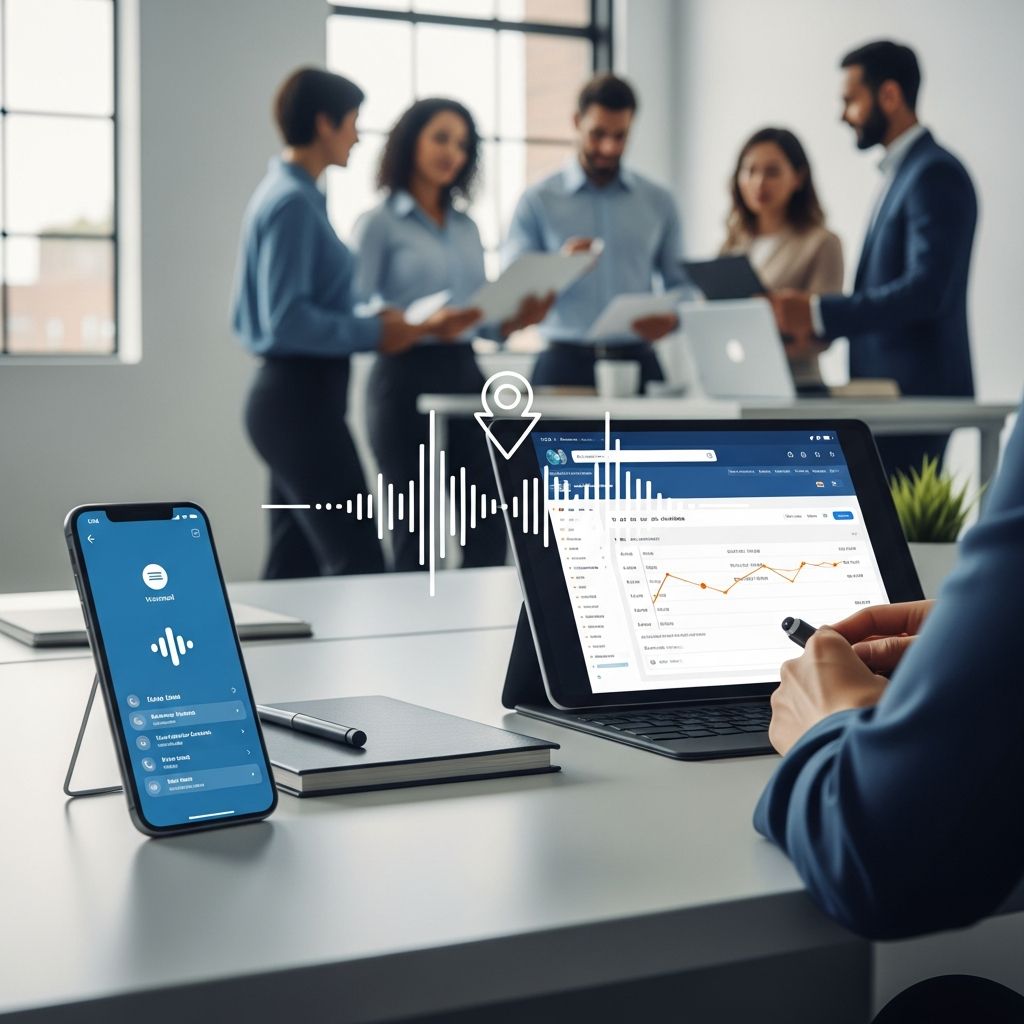
Voicemail drop has become a powerful way for sales and customer success teams to reach more people in less time, without sacrificing message quality. Used correctly, it can boost reply rates, reduce rep burnout, and create a more consistent experience for prospects.
This guide explains what voicemail drop is, how it works, when to use it, how to script effective messages, and how to stay compliant and ethical while you scale your outreach.
What Is Voicemail Drop?
Voicemail drop is a technology that lets you send a pre-recorded voicemail message directly to a contact’s voicemail inbox, typically with one click from your dialer or sales engagement platform. Instead of manually recording a message every time a call goes unanswered, the system inserts your prepared audio file into the mailbox.
Most business tools support two related approaches:
- Traditional voicemail drop – your rep dials the prospect, the dialer detects that the call has gone to voicemail, and the pre-recorded message is dropped into the mailbox while the rep immediately moves on to the next call.
- Ringless voicemail – specialized systems connect directly to the carrier’s voicemail server and place the message in the mailbox without the phone ever ringing.
In both cases, the contact later sees a voicemail notification and can listen when it is convenient.
How Voicemail Drop Works Behind the Scenes
Although the exact architecture varies by provider, most voicemail drop workflows follow a similar pattern.
Core steps in a typical voicemail drop
- Record or upload messages – reps or managers create short, polished voicemail scripts for common scenarios (cold outreach, follow-up, event reminders, renewal nudges) and record them as audio files.
- Launch a calling session – the rep uses a power dialer or parallel dialer to call through a list of prospects.
- Detect voicemail – when the dialer hits an answering machine, it recognizes the absence of a live voice and flags the call as voicemail.
- Drop the message – with a single click, the rep triggers the voicemail drop; the dialer inserts the pre-recorded message into the mailbox and the rep is instantly moved to the next call.
- Track outcomes – your CRM or engagement platform logs that a voicemail was dropped and can associate future replies with that activity.
How ringless voicemail differs technically
Ringless voicemail uses a different delivery path. Instead of placing a standard call:
- The provider sends a request to the recipient’s voicemail server over an IP-based connection.
- If accepted, the audio file is stored directly in the voicemail box without ringing the device.
- The recipient then sees a new voicemail notification but no missed call record.
This server-to-server approach is why ringless voicemail is often perceived as less disruptive, but it also raises specific legal and regulatory questions addressed later in this guide.
Key Benefits of Using Voicemail Drop
When implemented thoughtfully, voicemail drop provides several advantages for sales and customer-facing teams.
| Benefit | How It Helps Your Team |
|---|---|
| Higher productivity | Reps avoid repeating the same 20–30 second voicemail dozens of times a day and can move to the next call immediately. |
| More consistent messaging | Every prospect hears a clear, professionally scripted message instead of a rushed or inconsistent one. |
| Non-intrusive outreach | Prospects listen on their own schedule, which can feel less interruptive than a live call. |
| Improved campaign coverage | Teams reach more contacts in the same time window, creating more opportunities for callbacks and follow-up conversations. |
| Better rep experience | Less repetition and fewer manual tasks reduce fatigue and make calling blocks more sustainable. |
Where Voicemail Drop Fits in the Sales Process
Voicemail drop is not a replacement for live conversations or email; it complements them. The most effective teams use it at specific touchpoints within multi-channel sequences.
Common use cases
- Cold outbound – leave a brief, value-focused message on the first or second touch to warm up the prospect and reference in later emails.
- Follow-up after interest – when a prospect downloads content, replies to an email, or attends an event, a voicemail drop can reinforce your next step or confirmation.
- Meeting reminders – use voicemail drop to remind contacts of demos or consultations a day before the call, especially for high-value meetings.
- Renewal and expansion – for existing customers, voicemail drops can prompt them to review proposals, explore additional features, or schedule check-ins.
- Re-engagement – if a previously active prospect goes quiet, a friendly voicemail can put a human voice back into the relationship.
When not to use voicemail drop
- Highly sensitive conversations – topics involving pricing disputes, legal issues, or sensitive personal data should be handled live or in writing.
- Opted-out contacts – if someone has requested no calls or messages, voicemail drop should be disabled for that contact to remain compliant.
- Very small, strategic accounts – for a handful of tier-one accounts, bespoke, manually recorded voicemails may be more appropriate.
Crafting High-Converting Voicemail Drop Scripts
The effectiveness of voicemail drop depends heavily on the quality of your script. A polished recording cannot fix a weak message. Use these best practices to design scripts that encourage callbacks and replies.
Core elements of an effective voicemail
- Clear identification – state your name, company, and relevance quickly so the listener knows why you are calling.
- Specific value hook – mention one concrete outcome, problem, or metric that matters to the recipient’s role or industry.
- Simple next step – ask for a straightforward action: return the call, reply to an email, or book time via a link you will send.
- Concise length – keep most drops in the 20–35 second range; longer messages are more likely to be skipped midway.
- Natural tone – speak as you would on a live call: conversational, calm, and respectful, not robotic or overly scripted.
Tips for recording professional audio
- Use a decent external microphone or a quiet office headset to avoid background noise.
- Record several takes and choose the one that sounds most natural, not necessarily the most polished.
- Smile slightly while speaking; this often makes your tone warmer and more approachable.
- Check volume levels so the message is easily audible without forcing the listener to adjust their phone.
Personalization at Scale
One risk of voicemail drop is sounding generic. To avoid that, combine reusable core messages with light personalization where it matters most.
Segment first, then personalize
- Segment by role – create separate voicemail drops for executives, managers, and individual contributors; each cares about different outcomes.
- Segment by industry – reference common challenges or regulations in healthcare, finance, SaaS, or manufacturing.
- Segment by stage – use different scripts for net-new cold outreach, active opportunities, and existing customers.
Within each segment, you can still personalize via:
- A short custom intro recorded live before triggering the drop.
- Email follow-ups that mention details specific to the prospect’s company.
- Differentiated cadences for strategic accounts versus broad outbound lists.
Compliance, Consent, and Ethical Use
Any outbound technology must be used within legal and ethical boundaries. Laws differ across jurisdictions and can change over time, so always consult legal counsel for your specific situation. This section highlights general considerations to help you ask the right questions.
Regulatory landscape (high level)
- United States – ringless voicemail has been the subject of public debate regarding whether it counts as a “call” under the Telephone Consumer Protection Act (TCPA). The Federal Communications Commission (FCC) has treated certain forms of ringless voicemail as subject to robocall rules, which means businesses must pay close attention to consent requirements.
- European Union – under the ePrivacy Directive and the General Data Protection Regulation (GDPR), electronic communications used for direct marketing typically require prior consent or a clearly defined legitimate interest, plus an easy opt-out for recipients.
- Other regions – many countries have their own telemarketing, consumer protection, and privacy laws. Check local regulations before scaling voicemail campaigns.
Ethical best practices
- Respect opt-outs – promptly honor any request to stop calls or messages and ensure it is reflected in your CRM and dialer settings.
- Be transparent – clearly identify yourself and your company; avoid misleading or deceptive language.
- Limit frequency – do not bombard the same contact with multiple voicemail drops in a short timeframe; align frequency with your email and calling strategy.
- Provide clear avenues to respond – leave a callback number and, where appropriate, mention that you will follow up by email so they can choose their preferred channel.
Measuring Performance and Optimizing
To get the most from voicemail drop, treat it like any other channel: define metrics, run experiments, and iterate based on data.
Key metrics to track
- Contact coverage – proportion of your target list that actually receives a voicemail within a campaign.
- Callback rate – percentage of dropped voicemails that result in a call back within a defined time window.
- Multi-channel response rate – combined callbacks, email replies, and meeting bookings after sequences that include voicemail drops.
- Down-funnel impact – meetings set, opportunities created, and revenue influenced when voicemail is part of the touch pattern.
Experiment ideas
- Test different value hooks (time savings, revenue impact, risk reduction) across similar segments.
- Compare timing – voicemail on first touch vs. second or third touch in the sequence.
- Experiment with length – short (15–20 seconds) versus standard (25–35 seconds).
- Alternate between traditional voicemail drops during live calling blocks and ringless campaigns where legally permitted.
Operational Checklist for Rolling Out Voicemail Drop
Use this checklist to implement voicemail drop in a controlled, structured way.
- Confirm legal and compliance requirements for your target regions.
- Select a dialer or platform that supports voicemail drop and integrates with your CRM.
- Define key segments (industry, role, lifecycle stage) and map voicemail goals to each.
- Write short scripts and record multiple versions for testing.
- Train reps on when to use voicemail drop and when to leave manual messages.
- Set clear limits on touch frequency across all channels.
- Monitor metrics weekly and adjust scripts and sequences based on results.
Frequently Asked Questions (FAQs)
Q: Is voicemail drop the same as ringless voicemail?
A: No. Voicemail drop usually happens after a normal call goes to voicemail, and the rep triggers a pre-recorded message. Ringless voicemail connects directly to the voicemail server and places the message without the phone ringing at all.
Q: Does voicemail drop work on landlines?
A: Voicemail drop can work on landlines if the number has a voicemail or answering machine service enabled by the provider. If no mailbox exists, the system cannot deliver a message.
Q: How long should a sales voicemail drop be?
A: Most teams see better engagement with concise messages around 20–35 seconds. Longer voicemails are more likely to be skipped before the call-to-action is heard.
Q: Will voicemail drop annoy prospects?
A: It can, if overused or poorly targeted. When you respect opt-outs, limit frequency, speak directly to relevant problems, and blend voicemail with email and live calls, most prospects experience voicemail drops as less intrusive than repeated call attempts.
Q: What should I say in a first-touch voicemail?
A: Introduce yourself and your company, reference one specific outcome you help similar customers achieve, and suggest a simple next step, such as replying to your email or returning the call. Avoid full product pitches; your goal is interest, not a detailed demo.
References
- What is Voicemail Drop & How to Leverage it — Voicespin. 2023-09-15. https://www.voicespin.com/blog/voicemail-drop-in-calling-campaigns/
- Ringless Voicemail Explained: How It Works — VoiceDrop. 2023-07-10. https://www.voicedrop.ai/how-do-ringless-voicemails-work/
- What is Voicemail Drop? A Comprehensive Guide — Klenty. 2023-11-02. https://www.klenty.com/blog/what-is-voicemail-drop/
- Ringless Voicemail Drops: How They Work and Are They Legal? — PhoneBurner. 2022-08-18. https://www.phoneburner.com/blog/what-are-ringless-voicemail-drops
- Electronic Communications and Privacy Rules for Direct Marketing — European Commission. 2021-09-22. https://commission.europa.eu/law/law-topic/data-protection/eu-data-protection-rules/eprivacy-directive_en
- Ringless Voicemail Technology and TCPA Compliance — Federal Communications Commission (FCC). 2022-05-27. https://www.fcc.gov/general/telemarketing-and-robocalls

- Integrated M.A. in Applied Linguistics, University of Hyderabad
- 5+ years in editorial, instructional, SEO, and research-based writing
Sneha is a relationships and lifestyle writer with a strong foundation in applied linguistics and certified training in relationship coaching. She brings over five years of writing experience to theskillvault, crafting thoughtful, research-driven content that empowers readers to build healthier relationships, boost emotional well-being, and embrace holistic living. Her writing and insights reflect the belief that beauty, happiness, and wellness…