
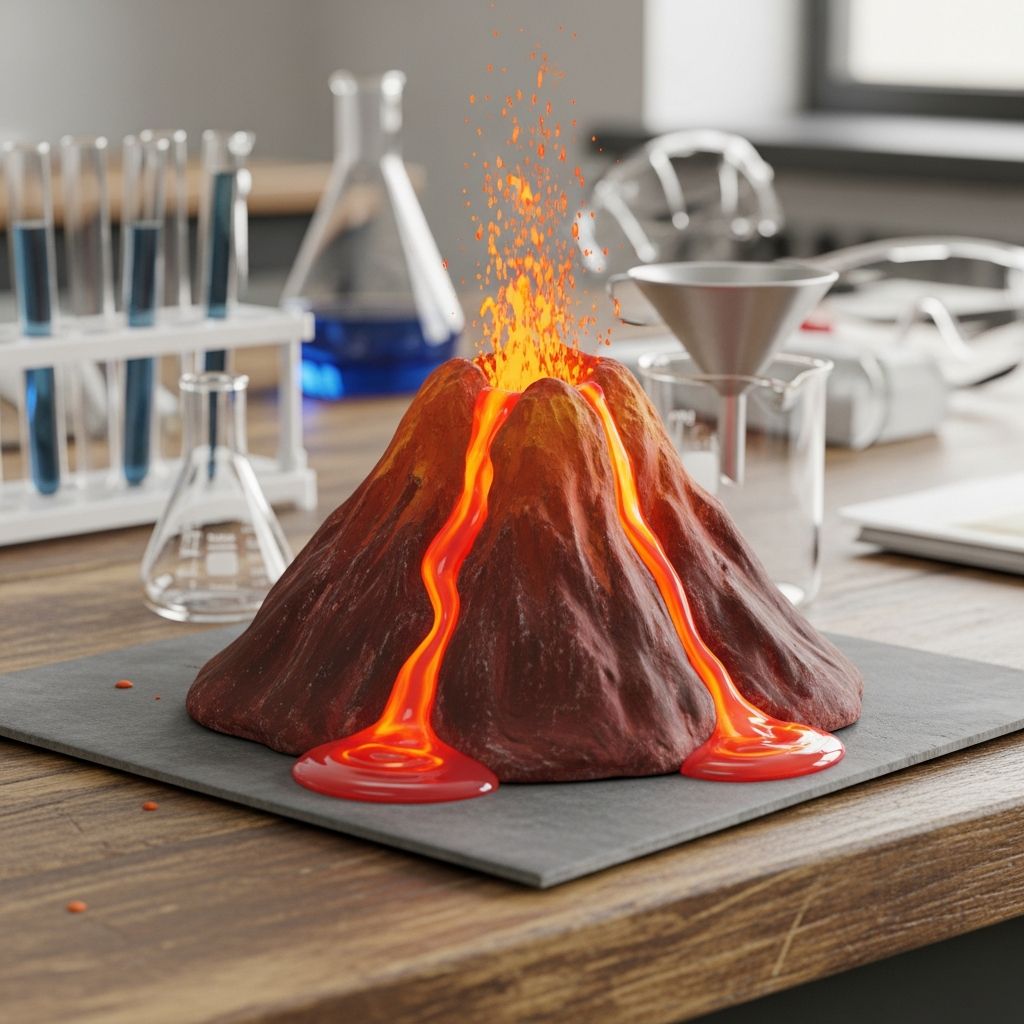
Understanding Volcanic Eruptions Through Experimental Chemistry
Volcanic eruptions have captivated human imagination for centuries, representing one of nature’s most powerful and dramatic phenomena. While actual volcanoes operate through complex geological processes involving magma, pressure, and earth’s internal dynamics, educators have developed accessible demonstrations that illuminate the fundamental scientific principles underlying these natural events. These experiments transform abstract chemistry concepts into tangible, visual experiences that engage learners of all ages.
The volcanic eruption experiment has become a cornerstone of science education because it successfully bridges the gap between theoretical knowledge and practical understanding. By combining readily available household materials with fundamental chemistry principles, students can observe the direct relationship between chemical reactions, gas production, and pressure buildup—core concepts that explain how real volcanoes function.
The Chemistry Foundation: Acid-Base Reactions Explained
At the heart of every successful volcanic eruption demonstration lies an elegant acid-base chemical reaction. The most common formulation pairs baking soda, a mild base scientifically known as sodium bicarbonate, with vinegar, a weak acid containing acetic acid. When these two substances combine, they initiate an immediate chemical transformation that produces three distinct products: water, sodium acetate salt, and crucially, carbon dioxide gas.
The carbon dioxide gas generation represents the key mechanism driving the eruption. As the reaction progresses, gas bubbles form rapidly within the liquid medium, creating pressure that forces the mixture upward and outward from the container. This mimics the essential process occurring within actual volcanic systems, where superheated magma generates gases that accumulate and eventually overcome the overlying rock and debris, resulting in a volcanic eruption.
Enhancing the Eruption Effect
While the basic acid-base reaction produces a respectable eruption, educators and experimenters have discovered that adding dish soap to the mixture dramatically amplifies the visual spectacle. The soap functions as a surfactant, stabilizing the carbon dioxide bubbles and transforming the eruption from a simple fizzy overflow into a voluminous column of colorful foam. This enhancement doesn’t alter the fundamental chemistry but rather makes the gas production more visually apparent and impressive to observers.
Building Your Volcano: Structural Approaches
Successful volcano experiments require more than just chemical reactions; they demand thoughtful construction of the volcano structure itself. Several effective approaches have proven popular among educators and families.
The Container Foundation Method
One straightforward approach involves positioning a small cup or bottle at the center of a structural base. A solo cup or paper cup serves as the chemical reaction chamber, while aluminum foil, plastic wrap, or craft materials form the volcano’s exterior shape around this central container. Positioning the cup on a paper plate or cookie sheet provides stability and contains the eruption overflow.
The Layered Earth Science Approach
More advanced demonstrations incorporate educational elements by building the volcano structure with multiple colored layers of clay or play dough. This construction method serves a dual purpose: it creates an authentic volcanic structure while simultaneously teaching about volcanic geology and stratigraphy—the study of rock layers. Students can observe how different layers represent different eruption events, building their understanding of volcanic history embedded within geological formations.
The Portable Paper Volcano Design
For classroom settings, some educators construct volcanoes using paper cups, cardboard bases, and traced outlines. This design allows for careful tracking of eruption patterns by marking compass directions (north, east, south, and west) on the base and noting precisely where lava flows travel. This methodical approach transforms the experiment from simple entertainment into rigorous scientific observation.
Beyond the Classic Formula: Creative Variations
While the baking soda and vinegar combination represents the standard approach, creative educators have developed intriguing variations that maintain the scientific principles while offering fresh perspectives and seasonal tie-ins.
Lemon Juice Rainbow Eruptions
Substituting lemon juice for vinegar creates an equally vigorous acid-base reaction while introducing a distinctive citrus aroma to the experiment. The acidity of lemon juice performs identically to vinegar in breaking down sodium bicarbonate and releasing carbon dioxide gas, yet provides a pleasant sensory dimension absent from traditional versions. When combined with multiple food coloring options and arranged in clear containers in circular formations, this variation creates mesmerizing rainbow effects as different colored solutions mix during the eruption sequence.
Seasonal and Alternative Eruptions
Creative educators have expanded volcano experiments to incorporate seasonal materials and natural objects. Apple volcanoes involve carefully coring an apple partway through its diameter, filling the cavity with baking soda and food coloring, then pouring vinegar into the resulting “crater” to trigger an eruption from the apple’s opening. Snow volcanoes work similarly, burying a small container of baking soda within a snow mound during winter months, with vinegar creating a colorful eruption through the white landscape. These variations maintain complete chemical consistency while introducing novelty and contextual learning opportunities.
The Scientific Learning Objectives Behind the Experiment
Beyond the entertaining visual display, volcano experiments effectively teach multiple interconnected scientific concepts that form the foundation of earth science and chemistry education.
Chemical Reactions and Molecular Transformation
Students directly observe how two separate substances combine to create entirely new materials with different properties. This tangible demonstration of chemical change helps learners grasp the distinction between physical and chemical transformations, a crucial concept in chemistry.
Gas Production and Pressure Dynamics
The experiment clearly demonstrates how gases occupy space and create pressure when confined. Students can observe carbon dioxide accumulation producing enough force to overcome liquid resistance and propel material outward, directly connecting to volcanic mechanisms where trapped gases eventually overcome the weight of overlying material.
Connecting Laboratory Demonstrations to Earth Processes
The experiment provides a tangible reference point for understanding authentic volcanic eruptions. While vastly simplified compared to actual volcanic events, the demonstration illuminates the fundamental principles: pressure buildup, gas release, and explosive overflow—processes operating identically in both the experiment and genuine geological systems.
Conducting Core Sample Analysis: Advanced Investigation
For educators seeking to deepen the educational impact, volcano experiments can incorporate core sampling—a technique used by real geologists to investigate subsurface structures. After constructing a multi-layered volcano and conducting eruptions that flow across the colored play dough layers, students use plastic straws to extract core samples by pushing them vertically through the accumulated layers and twisting to remove cross-sections.
This advanced component transforms the experiment into genuine geological investigation. By collecting multiple core samples from strategically selected locations across the volcano’s surface, students can reconstruct the internal layer structure and predict where different colored strata exist beneath the visible surface. This mirrors authentic geological practice where scientists use drilling data to map underground structures without excavating entire regions. Students record their findings on graph paper, using their core sample evidence to draw predicted layer boundaries and depths.
Variables to Explore and Investigate
Volcano experiments offer excellent opportunities for scientific investigation by manipulating specific variables and observing their effects on eruption characteristics.
- Vinegar quantity variations: Testing whether increasing or decreasing vinegar volume alters eruption intensity, duration, or foam height
- Baking soda concentration: Investigating how different amounts of baking soda affect the vigor and speed of gas production
- Water volume adjustments: Exploring whether diluting the reaction medium with additional water modifies eruption patterns
- Temperature effects: Comparing eruptions with warm versus room-temperature vinegar to determine if thermal energy influences reaction rates
- Dish soap proportions: Testing varying amounts of soap to optimize foam production without inhibiting gas generation
- Food coloring concentration: Examining whether dye density affects foam visibility or eruption behavior
Safety Considerations and Practical Guidance
While volcano experiments are fundamentally safe activities suitable for diverse age groups, several precautions ensure positive outcomes and prevent minor mishaps. Working in well-ventilated areas prevents carbon dioxide accumulation, though the small quantities produced in typical demonstrations pose minimal concern. Participants should stand back during eruptions to avoid splashing vinegar solutions into eyes or mucous membranes. Positioning the volcano on wipe-clean surfaces or over appropriate catch containers greatly simplifies cleanup afterward. Supervising adults should verify that all materials are non-toxic and age-appropriate for participating children.
Materials and Preparation Summary
| Component | Purpose | Typical Quantity |
|---|---|---|
| Baking Soda | Base reactant for acid-base reaction | 2-4 tablespoons |
| Vinegar (or Lemon Juice) | Acid reactant producing CO₂ gas | 200-400 ml |
| Dish Soap | Surfactant creating foam | 1-2 tablespoons |
| Food Coloring | Visual enhancement of eruption | Several drops |
| Water | Reaction medium and dilution | 100 ml |
| Container (Cup/Bottle) | Reaction chamber | 1 (2-liter bottle or cup) |
| Structural Material | Volcano exterior (clay, foil, paper) | As needed for design |
Frequently Asked Questions About Volcano Experiments
Q: Why is carbon dioxide produced when baking soda and vinegar mix?
A: The acetic acid in vinegar chemically breaks down the sodium bicarbonate in baking soda, producing water, sodium acetate salt, and carbon dioxide gas as byproducts. The rapid gas production creates the bubbling eruption effect.
Q: Can this experiment be conducted indoors safely?
A: Yes, the experiment is safe indoors when conducted on appropriate surfaces with supervision. Position the volcano on a wipe-clean area and stand back during eruption. The small amounts of carbon dioxide produced pose no hazard.
Q: How does this experiment relate to real volcanic eruptions?
A: Both involve pressure buildup and gas release driving material outward, though real volcanoes involve molten rock and operate on vastly larger scales. The fundamental principle—trapped gas creating eruption force—applies to both.
Q: What age groups can participate in volcano experiments?
A: Volcano experiments are suitable for preschoolers through high school students with appropriate supervision. Younger children benefit from the sensory experience and visual observation, while older students can explore variables and conduct investigations.
Q: Can substitute materials replace baking soda and vinegar?
A: Yes, any base-acid combination works, including lemon juice (acid) with baking soda, or hydrogen peroxide with yeast. However, baking soda and vinegar remains the safest and most accessible option for educational settings.
Q: How can I make the eruption more impressive?
A: Adding dish soap amplifies foam production significantly. Using warm vinegar accelerates the reaction rate, and adding more baking soda or vinegar increases eruption volume. Combining these strategies produces dramatic results while maintaining safety.
Q: What educational standards does this experiment address?
A: Volcano experiments teach chemical reactions, gas production, pressure dynamics, and earth science principles. They support hands-on STEM learning objectives across multiple grade levels and align with science standards emphasizing observable phenomena and investigative practices.
References
- Make a Volcano – Science Project — NASA Jet Propulsion Laboratory Education. 2024. https://www.jpl.nasa.gov/edu/resources/project/make-a-volcano/
- How to make a volcano — Natural History Museum London. 2024. https://www.nhm.ac.uk/discover/how-to-make-a-volcano.html
- The Ultimate Guide to Volcano Experiments for Kids — ATSCLUB. 2026. https://www.atsclub.org/blog/volcano-experiment
- Rainbow Volcano Science Experiment — Beyond the Playroom. 2024. https://beyondtheplayroom.com/erupting-rainbow-volcano/
- Volcano Science Experiment — Crafty Morning. 2024. https://www.craftymorning.com/volcano-science-experiment/
- How to make a Volcano — Science Fun. 2024. https://www.sciencefun.org/kidszone/experiments/how-to-make-a-volcano/
- How to Make a Volcano DIY Science Experiment — Mayta the Brown Bear (YouTube). 2024. https://www.youtube.com/watch?v=WzSZ857Arl0

- Integrated M.A. in Applied Linguistics, University of Hyderabad
- 5+ years in editorial, instructional, SEO, and research-based writing
Sneha is a relationships and lifestyle writer with a strong foundation in applied linguistics and certified training in relationship coaching. She brings over five years of writing experience to theskillvault, crafting thoughtful, research-driven content that empowers readers to build healthier relationships, boost emotional well-being, and embrace holistic living. Her writing and insights reflect the belief that beauty, happiness, and wellness…