
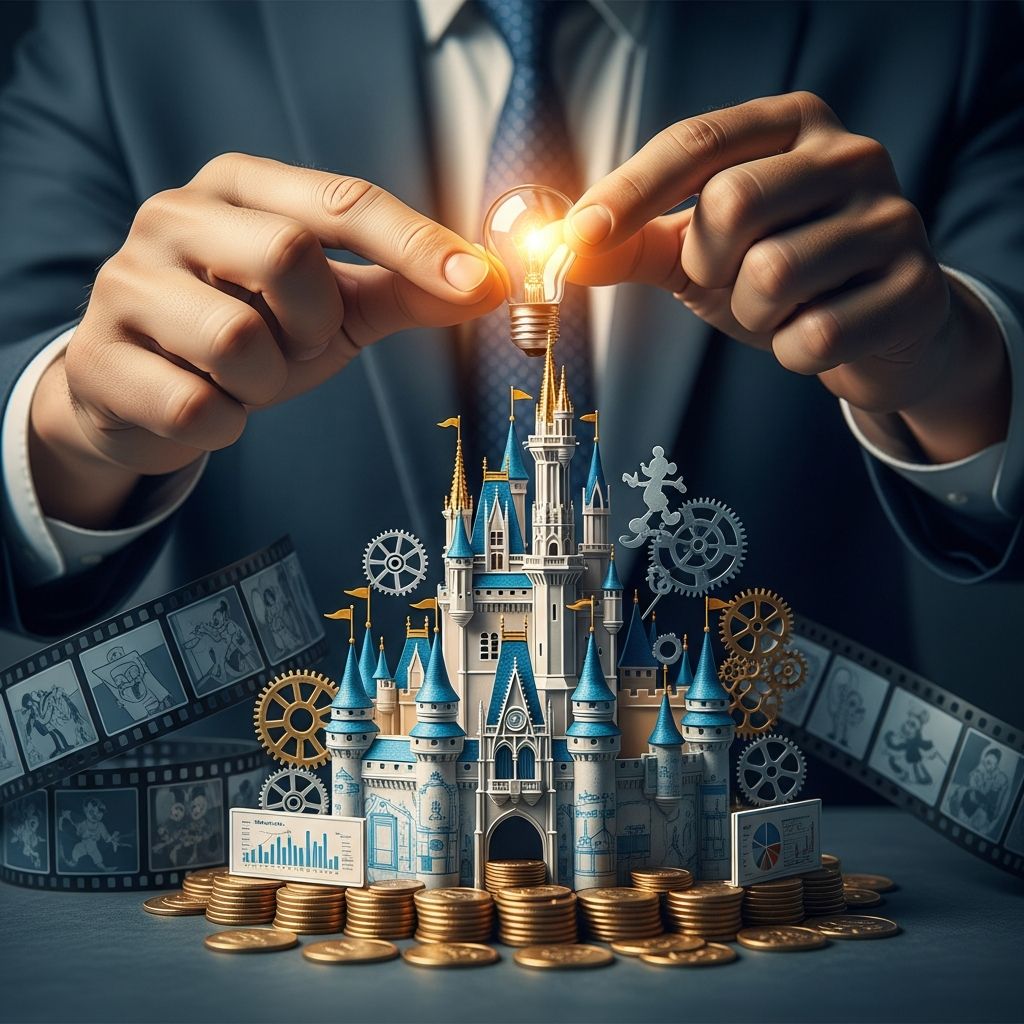
The journey from financial ruin to creating a global entertainment powerhouse offers invaluable lessons for modern entrepreneurs. Walt Disney’s career demonstrates that success is not predetermined by early circumstances but rather shaped by strategic thinking, unwavering determination, and the ability to learn from setbacks. His transformation from a struggling artist to the founder of one of the world’s most influential entertainment companies reveals fundamental principles that extend far beyond the entertainment industry.
Understanding the Foundation: Where Success Begins
Every entrepreneur faces a critical juncture between accepting limitations and transcending them. Disney’s early life was marked by financial instability and a controlling father who discouraged creative pursuits. Rather than allowing these circumstances to define his future, Disney transformed adversity into motivation. This foundational mindset—the refusal to accept predetermined outcomes—became the cornerstone of his entrepreneurial philosophy.
The lesson here extends beyond mere positive thinking. Disney recognized that circumstances are malleable when approached with strategic vision. He started multiple ventures that failed spectacularly, including his first animation studio, Laugh ‘O Gram Studio, which went bankrupt when he was just 23 years old. Instead of retreating or accepting defeat as permanent, he mobilized his resources and relocated to California with minimal capital. This decision to act decisively despite failure became a defining characteristic of his entrepreneurial approach.
Pivoting Through Crisis: Transforming Setbacks into Opportunities
The most instructive moment in Disney’s early career came when he lost his first successful character, Oswald the Lucky Rabbit, to a distribution deal with Universal. This represented not merely a business loss but a complete erasure of his creative work and accumulated success. At this point, many entrepreneurs would have questioned their viability.
Instead, Disney’s response exemplified strategic resilience. Rather than attempting to recreate Oswald or compete directly with his former partner, he innovated entirely. He developed Mickey Mouse, which became exponentially more successful and culturally significant than his predecessor. This transition demonstrates a crucial entrepreneurial principle: when circumstances force change, adaptation must be coupled with creative reinvention.
The mechanics of this turnaround reveal deeper entrepreneurial wisdom. Disney didn’t simply change characters; he changed the entire medium by incorporating synchronized sound into animation, creating “Steamboat Willie,” the first sound cartoon. By combining technological innovation with character creation, he elevated the entire medium and established an insurmountable competitive advantage.
Building Through Integrated Systems: The Multimedia Advantage
One of Disney’s most revolutionary contributions to business strategy was recognizing the power of integrated entertainment systems. Rather than viewing animation, live-action films, television, merchandise, and theme parks as separate businesses, he conceived them as interconnected components of a unified ecosystem.
This integrated approach served multiple strategic functions:
- Characters developed in animation could be commercialized through merchandise, generating revenue streams independent of film performance
- Theme parks provided immersive brand experiences that reinforced emotional connections to characters and stories
- Television programming extended reach to audiences who might not visit theaters, multiplying content value
- Merchandise and music created touchpoints for consumer engagement beyond entertainment consumption
The financial implications were substantial. Disney partnered with Herman Kamen to develop a quality-controlled merchandising operation that eventually generated millions in revenue, fundamentally transforming entertainment from a single-transaction industry into a multi-channel revenue ecosystem.
Innovation as Continuous Practice: Never Settling for Established Success
A critical distinction separates entrepreneurs who build successful companies from those who build lasting enterprises. Disney embodied the latter approach through relentless innovation at every stage of his career. His famous principle—”You can’t top pigs with pigs”—captured his refusal to replicate past successes.
After achieving extraordinary success with animated films, Disney expanded into live-action movies, nature documentaries, television programming, and eventually theme parks. Each expansion represented not merely business diversification but genuine creative innovation in entirely new domains.
The most audacious example was Disneyland itself. Born from Disney’s dissatisfaction with existing amusement parks during a visit with his daughter, he envisioned a fundamentally different experience. Rather than accepting industry standards for cleanliness, safety, or customer service, he established new benchmarks. This approach—identifying gaps between current conditions and imagined possibilities—became a systematic practice rather than an occasional inspiration.
Vision Communication: Inspiring Teams Toward Ambitious Goals
Technical innovation alone cannot sustain organizational growth. Disney understood that ambitious visions require passionate execution from talented teams. He possessed an extraordinary ability to articulate aspirational goals in ways that motivated others to extraordinary effort.
When constructing Disneyland, Disney communicated standards with remarkable specificity. His insistence that leather straps on a stagecoach meet exacting standards wasn’t perfectionism for its own sake; it reflected his understanding that guest experiences accumulate through countless small details. When designer John Hench suggested that guests wouldn’t notice or care about minor imperfections, Disney responded with a fundamental insight: “You are underestimating people. They will notice and they will care.”
This approach demanded more from team members than typical corporate hierarchies. Rather than following specifications, employees understood they were contributing to a comprehensive vision of excellence. This distinction transforms work from task completion into purposeful creation.
Strategic Risk-Taking: Calculated Bets on Transformative Visions
Entrepreneurial success requires distinguishing between reckless gambling and strategic risk. Disney’s financial decisions reveal a pattern of calculated risks aligned with comprehensive visions rather than desperate gambles.
The creation of “Snow White and the Seven Dwarfs” exemplified this approach. Industry experts dismissed feature-length animation as commercially unviable. The project consumed resources far exceeding budgetary projections, forcing Disney to mortgage his home, his studio, and even the rights to his beloved characters to complete it. This represented genuine financial jeopardy, not merely notional risk.
However, the decision wasn’t impulsive. Disney possessed deep confidence in his artistic vision and market understanding. He had tested character appeal through shorts, studied audience psychology, and refined storytelling techniques. The financial risk was substantial, but strategic groundwork had minimized the probability of catastrophic failure.
Similarly, Disneyland required Disney to mortgage his house and borrow against his life insurance policy during a period when theme parks remained largely unsuccessful ventures. Again, the risk was genuine and personal, but grounded in comprehensive planning and market understanding rather than speculation.
Organizational Structure for Innovation: Building Teams That Extend Vision
Disney candidly acknowledged that he was not the most skilled animator or artist. Rather than viewing this as limitation, he recognized it as opportunity to hire the world’s finest talent. This practice of surrounding himself with exceptional people who exceeded his own capabilities in specific domains became a defining organizational practice.
He established the WED company as a separate creative entity designed to recapture the collaborative energy of his early days. Working in a small bungalow with a close-knit team, he found that intimacy fostered the best creative thinking. This demonstrated understanding that different organizational structures serve different creative purposes. Efficient large-scale production requires different structures than innovative ideation.
This flexibility in organizational design—adapting structure to function rather than forcing function into predetermined structure—represents sophisticated entrepreneurial thinking often overlooked in standard business education.
Unwavering Self-Belief: Maintaining Vision Against External Skepticism
Extraordinary achievements invariably face market skepticism and expert dismissal. Disney’s career demonstrates that maintaining conviction despite external doubt constitutes a crucial entrepreneurial capacity.
When pursuing feature-length animation, feature-length animated television broadcasts in color, and theme parks that defied industry conventions, Disney faced consistent expert opposition. Rather than allowing external doubt to erode confidence, he used skepticism as evidence that he was pursuing genuinely innovative territory.
This wasn’t irrational optimism but rather grounded belief in specific capabilities. Disney invested heavily in understanding his market, testing concepts through pilots, and refining approaches based on feedback. His confidence rested on foundation of evidence rather than blind faith.
Continuous Learning and Adaptation: The Evolution of Entrepreneurial Thinking
Even at the peak of his career, Disney maintained openness to new approaches and emerging technologies. His investments in color television technology, space exploration partnerships, and experimental community design demonstrated that entrepreneurial learning never concludes.
The night before his death, Disney was still sketching plans for EPCOT (Experimental Prototype Community of Tomorrow) on hospital ceiling tiles, demonstrating that the impulse toward innovation remained central to his thinking regardless of circumstances.
Comparative Entrepreneurial Approaches
| Entrepreneurial Element | Disney’s Approach | Application for Modern Entrepreneurs |
|---|---|---|
| Handling Failure | Treat bankruptcy as learning opportunity, not terminal condition | Analyze failures for strategic insights rather than emotional processing |
| Market Positioning | Establish category dominance through innovation, not competition | Create new markets rather than fighting in existing categories |
| Resource Constraints | Use limitations as forcing function for creative solutions | View constraints as innovation catalysts rather than obstacles |
| Team Building | Hire people who exceed personal capabilities in specific areas | Build complementary teams rather than homogeneous organizations |
| Growth Strategy | Integrate complementary business activities into unified ecosystem | Develop interconnected revenue streams rather than isolated ventures |
Frequently Asked Questions
Q: How did Disney recover from his first bankruptcy?
A: After Laugh ‘O Gram Studio failed, Disney relocated to California with minimal resources and developed new characters, eventually creating Mickey Mouse. He combined innovation in animation technique (synchronized sound) with character creation to establish competitive differentiation. This recovery demonstrates that bankruptcy represents a setback, not a permanent condition, when accompanied by strategic reinvention.
Q: What was Disney’s most significant entrepreneurial risk?
A: Creating “Snow White and the Seven Dwarfs” represented Disney’s most consequential risk. He mortgaged his home, studio, and character rights when the entire industry dismissed feature-length animation as commercially unviable. This calculated risk, based on artistic confidence and market understanding, transformed entertainment possibilities and validated his vision.
Q: How did Disney build his entertainment empire so rapidly?
A: Disney recognized that separate entertainment activities—animation, television, merchandise, and theme parks—could function as integrated systems reinforcing each other. Characters created in animation became merchandise bestsellers, television extended reach, and theme parks provided brand experiences. This ecosystem approach multiplied revenue generation compared to single-channel entertainment companies.
Q: What organizational practices did Disney employ to maintain innovation?
A: Disney created separate companies and organizational structures adapted to different creative purposes. WED, his design company, operated in small-team settings to preserve collaborative energy. He also hired exceptional talent in specific areas where he lacked expertise, building complementary teams rather than attempting personal mastery of all functions.
Q: How did Disney maintain focus on long-term vision despite immediate challenges?
A: Disney communicated comprehensive visions with sufficient clarity and inspiration that team members remained committed despite resource constraints and apparent impossibility. His leadership communicated that they were building something genuinely transformative rather than simply completing assigned tasks.
References
- 25 Lessons from Walt Disney’s Billion Dollar Business Playbook — Addicted2Success. 2024. https://addicted2success.com/success-advice/25-lessons-from-walt-disneys-billion-dollar-business-playbook/
- 4 Top Business Lessons You Can Learn From Walt Disney’s Career — Melo. 2024. https://melo.co.uk/4-top-business-lessons-you-can-learn-from-walt-disneys-career/
- 7 Leadership Lessons From the Life of Walt Disney Workshop — Jeff Barnes, The Wisdom of Walt. 2024. https://thewisdomofwalt.com/disney-leadership-lessons/
- Leadership Lessons from Walt Disney: Communicating a Vision — Disney Institute. 2024. https://www.disneyinstitute.com/blog/leadership-lessons-from-walt-disney-communicating-a-vision/

Medha Deb is an editor with a master's degree in Applied Linguistics from the University of Hyderabad. She believes that her qualification has helped her develop a deep understanding of language and its application in various contexts. Medha specializes in the areas of beauty, health, sports, and wellness and is committed to ensuring that the content on the website is…