
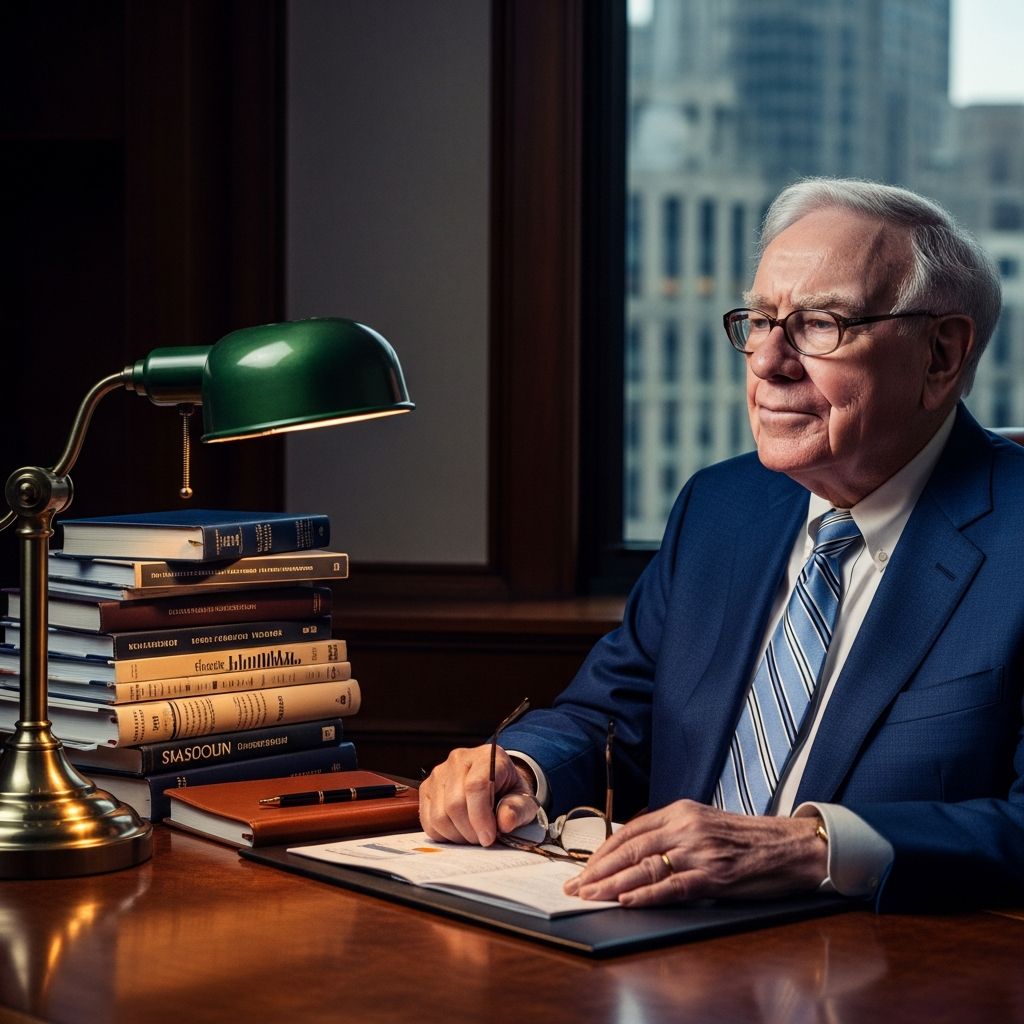
Warren Buffett, the legendary investor and chairman of Berkshire Hathaway, has long been admired not just for his financial acumen but for his profound approach to leading people and organizations. His methods emphasize simplicity, trust, and a focus on sustainable growth, offering valuable guidance for leaders in any field. This article delves into the core elements of Buffett’s philosophy, drawing from his decades of experience to provide actionable insights.
Building Trust Through Unwavering Integrity
At the heart of Buffett’s leadership is an absolute commitment to integrity. He views ethical behavior as non-negotiable, famously noting that a reputation takes years to build but moments to destroy. This principle guides every decision at Berkshire Hathaway, ensuring that trust forms the foundation of all relationships with employees, investors, and partners.
Buffett prioritizes hiring individuals with strong moral character above all else. He believes that intelligence and energy without integrity can be destructive. By fostering a culture where honesty is paramount, he creates an environment where teams feel secure to innovate and take calculated risks. Leaders emulating this approach report higher employee retention and stronger stakeholder loyalty.
- Screen candidates rigorously for ethical alignment during hiring.
- Model transparency by openly discussing challenges and successes.
- Hold everyone, including yourself, accountable to the same standards.
Mastering the Art of Strategic Patience
Buffett’s success stems from his exceptional patience and long-term orientation. Unlike short-term traders chasing quick gains, he invests in businesses with lasting competitive advantages, often holding them indefinitely. This ‘buy and hold’ mindset extends to leadership, where he avoids reactive decisions in favor of deliberate, forward-thinking strategies.
In practice, this means resisting market hype and focusing on fundamentals. Buffett advises evaluating performance over multi-year periods rather than quarterly fluctuations. For leaders, this translates to nurturing talent and projects that may take years to mature, building resilience against economic volatility.
| Short-Term Thinking | Buffett’s Long-Term Approach |
|---|---|
| Quarterly targets drive impulsive actions | Multi-year vision promotes sustainable growth |
| Chasing trends leads to instability | Investing in moats ensures enduring value |
| Fear of missing out prompts overreactions | Patience yields compounded returns |
Empowering Teams with True Delegation
One of Buffett’s most distinctive traits is his belief in decentralized authority. His mantra, ‘hire well, manage little,’ reflects a hands-off style that empowers managers to run their operations autonomously. This laissez-faire approach, inspired by mentors like Thomas Murphy, trusts experts to make decisions in their domains.
By delegating effectively, Buffett scales his influence across Berkshire’s vast portfolio without micromanaging. He selects capable leaders, provides resources, and steps back, fostering ownership and innovation. This method not only boosts productivity but also attracts top talent who thrive in autonomous environments.
Leaders can adopt this by:
- Investing time in thorough hiring to find self-starters.
- Setting clear goals while granting decision-making freedom.
- Offering support without interfering in daily operations.
Cultivating Continuous Learning and Mentorship
Buffett is a voracious reader and lifelong learner, crediting books like Benjamin Graham’s The Intelligent Investor for shaping his worldview. He avoids businesses he doesn’t understand and mentors others to do the same, emphasizing informed decision-making.
As a mentor, Buffett shares wisdom through annual letters and personal guidance, humanizing leadership by admitting errors. This openness demystifies success, showing that even icons face setbacks. He encourages teams to focus on fundamentals, analyze thoroughly, and avoid speculation.
Embracing Humility and Accountability
Humility defines Buffett’s style; he acknowledges limitations and owns mistakes publicly in shareholder reports. Phrases like shifting from a ‘leaking boat’ rather than patching it highlight his pragmatic accountability.
This vulnerability builds relatability and trust. Leaders who admit faults encourage a culture of learning from failures, accelerating improvement. Buffett’s blend of servant and transformational leadership prioritizes others’ growth, serving investors as stewards of their capital.
Fostering Ethical and Sustainable Growth
Berkshire’s model rejects dependency on superstar managers, seeking businesses that thrive on strong systems. Buffett and Charlie Munger prioritize enduring competitive edges over fleeting leadership charisma.
His Giving Pledge exemplifies servant leadership, committing vast wealth to philanthropy while advising ethical living below one’s means. This holistic view integrates business success with societal good.
Succession Planning for Enduring Legacy
Buffett’s foresight in grooming successors ensures Berkshire’s continuity. He selects leaders embodying his principles, focusing on sustainable prosperity beyond his tenure.
This underscores that great leadership builds institutions greater than individuals, with thoughtful planning safeguarding long-term vision.
Applying Buffett’s Principles in Modern Leadership
Today’s volatile markets amplify Buffett’s wisdom. Leaders facing disruption can apply his patience to navigate uncertainty, delegation to scale operations, and integrity to maintain trust amid scandals.
Case studies from Berkshire’s acquisitions show how these principles drive value: patient integration, empowered teams, and ethical oversight yield superior outcomes.
Incorporating these habits—daily reading for insight, reflective annual reviews, and trust-based teams—transforms ordinary managers into exceptional leaders.
Frequently Asked Questions (FAQs)
What is Warren Buffett’s key hiring criterion?
Integrity tops Buffett’s list; he seeks intelligence and energy only in those with strong ethics, as lacking it can destroy a business.
How does Buffett handle delegation?
He hires experts, trusts them with autonomy, and avoids micromanagement, encapsulated in ‘hire well, manage little.’
Why emphasize long-term thinking?
Buffett focuses on forever holdings and multi-year averages to achieve compounded growth over short-term noise.
Does Buffett admit mistakes?
Yes, he openly discusses errors in annual reports to foster learning and humanize leadership.
What role does learning play in his style?
Lifelong reading and mentorship from figures like Graham inform his decisions and guidance to others.
References
- Leadership Lessons from Berkshire Hathaway’s Warren Buffett — Picture Perfect Portfolios. 2023-05-15. https://pictureperfectportfolios.com/leadership-lessons-from-berkshire-hathaways-warren-buffett/
- Leadership Lessons from Warren Buffett — Leadership Ministries. 2022-08-10. https://leadmin.org/articlesarchive/leadership-lessons-from-warren-buffett
- Warren Buffett’s principles guide Berkshire as a new era of leadership begins — Fortune. 2025-11-24. https://fortune.com/2025/11/24/warren-buffett-principles-guide-berkshire-new-era-leadership-begins/
- Servant Leadership and Warren Buffett’s Giving Pledge — Harvard Program on Negotiation. 2023-02-28. https://www.pon.harvard.edu/daily/leadership-skills-daily/servant-leadership-and-warren-buffetts-giving-pledge/

Medha Deb is an editor with a master's degree in Applied Linguistics from the University of Hyderabad. She believes that her qualification has helped her develop a deep understanding of language and its application in various contexts. Medha specializes in the areas of beauty, health, sports, and wellness and is committed to ensuring that the content on the website is…