
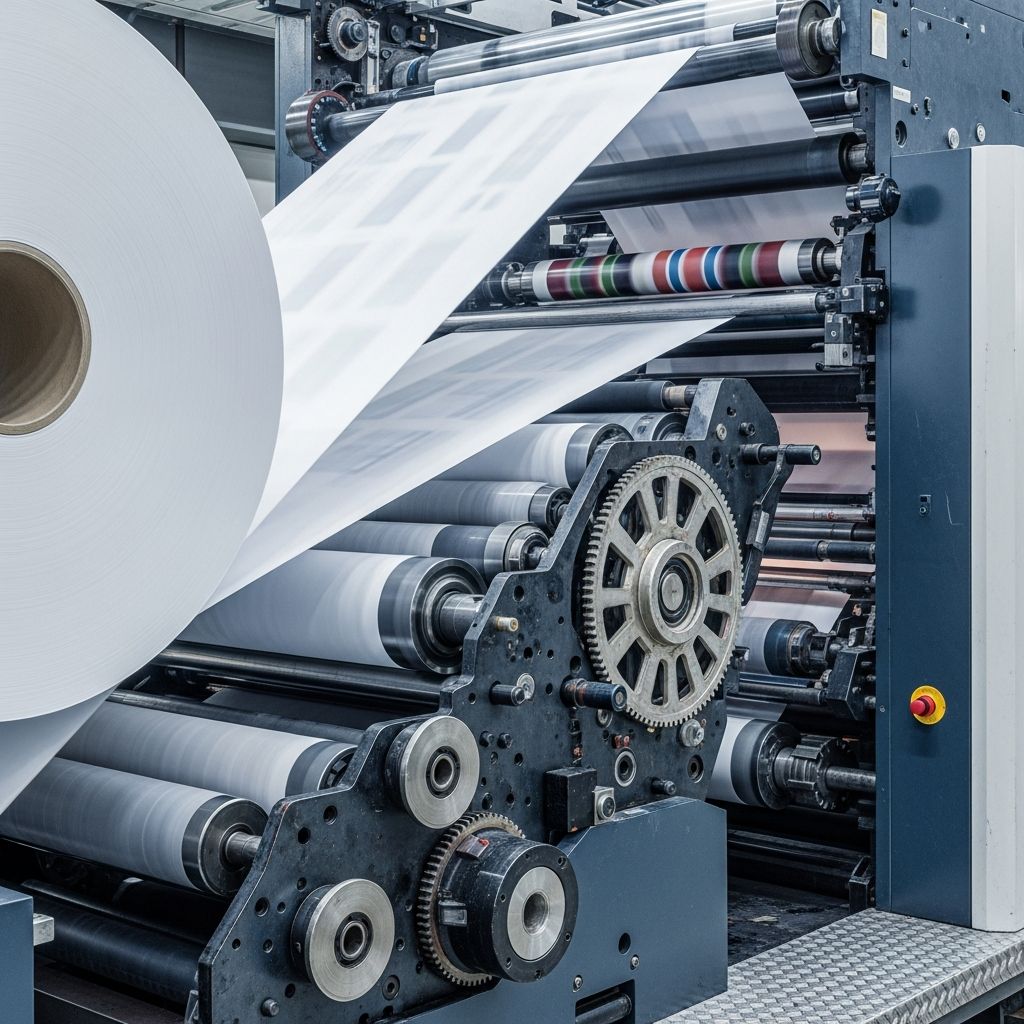
Web press printing represents a cornerstone of modern commercial printing, enabling the rapid production of vast quantities of materials like newspapers, magazines, catalogs, and books. This method utilizes continuous rolls of paper, known as webs, fed through massive presses at extraordinary speeds, often exceeding 3,000 feet per minute, to deliver cost-effective results for high-volume projects.
Core Principles of Web Press Operations
At its heart, web press printing differs fundamentally from traditional sheet-fed systems by processing paper in a continuous stream rather than individual sheets. Massive rolls, sometimes weighing tons, unwind and thread through the press, where ink is applied via sophisticated plate and roller mechanisms. This setup allows for uninterrupted operation, minimizing downtime and maximizing output—up to 50,000 impressions per hour in advanced configurations.
The process begins with the paper roll mounted on an unwind stand, tension carefully controlled to prevent wrinkles or tears. As the web advances, it passes through printing units, each dedicated to a specific color in multi-color jobs, typically following offset principles where images transfer from plates to rubber blankets before contacting the paper. Post-printing, the web encounters drying systems—either heatset lamps for glossy finishes or coldset absorption for newsprint—followed by cutting, folding, and binding inline for seamless completion.
Key Components Driving Web Press Efficiency
Web presses integrate several critical elements to achieve their high performance:
- Unwind and Tension Systems: Automatically splice new rolls to ongoing webs without stopping, ensuring constant feed.
- Printing Towers: Stacked units for multiple colors, with precise registration to align images perfectly across the web.
- Drying Mechanisms: Heatset dryers cure inks instantly for coated stocks, while chill rolls stabilize temperature before folding.
- Folding and Cutting Units: High-speed shears and folders produce signatures ready for binding, handling formats from broadsheets to signatures.
- Control Consoles: Digital interfaces monitor speed, ink density, and registration in real-time, adjusting via automation.
These components work in harmony, transforming raw paper rolls into finished products with minimal human intervention, a feat exemplified in newspaper production where presses churn out thousands of copies hourly.
Types of Web Press Systems
Web presses vary by ink drying method and application, broadly categorized into heatset and coldset variants, with offset being the dominant technique.
| Type | Ink Drying Method | Common Applications | Speed Range |
|---|---|---|---|
| Heatset Web Offset | Gas or UV lamps | Magazines, catalogs, inserts | Up to 40,000 impressions/hour |
| Coldset Web Offset | Paper absorption | Newspapers, directories | Up to 50,000 impressions/hour |
| Flexographic Web | Fast-drying inks | Packaging, labels | Variable, high-speed |
Heatset presses excel with coated papers for vibrant, durable prints, essential for periodicals, while coldset suits uncoated stocks like newsprint, prioritizing volume over gloss. Flexo variants, though less common in publishing, dominate flexible packaging due to versatile inks.
Advantages Over Sheet-Fed Printing
For runs exceeding 10,000 units, web presses outperform sheet-fed alternatives in speed, cost, and scalability. Continuous feeding eliminates sheet-loading pauses, slashing production time dramatically—a job taking days on sheet-fed might finish in hours.
- Cost Efficiency: Economies of scale reduce per-unit costs; large rolls minimize waste from sheet handling.
- High Throughput: Speeds of 3,000 feet per minute enable massive outputs, ideal for daily publications.
- Inline Finishing: Cutting, folding, and even binding occur without halting, streamlining workflows.
- Versatility: Handles various paper widths and multi-web configurations for complex jobs.
However, setup times and fixed cut-off lengths (tied to cylinder circumference) make web less ideal for short runs or variable sizes, where sheet-fed shines with flexibility.
Real-World Applications Across Industries
Web press technology powers diverse sectors. Publishing relies on it for newspapers and magazines, where daily deadlines demand unrelenting speed—classic images of rolling presses in old films capture this essence.
Catalogs and direct mail leverage heatset for glossy appeal, while book publishers use it for mass-market paperbacks in runs over 5,000 copies, especially high-page-count volumes. Packaging firms employ flexo web for labels and flexible materials, benefiting from rapid drying and inline capabilities.
Technical manuals and directories also favor web for their volume needs, ensuring consistent quality across thousands of pages.
Technological Advancements Shaping the Future
Modern web presses incorporate digital controls, automation, and sustainability features. Servo-driven motors enable precise speed adjustments, while automated plate changers reduce makeready to minutes. UV and waterless inks cut emissions and waste, aligning with eco-standards.
Hybrid systems blend offset with digital inline for variable data printing, vital for personalized catalogs. Speeds continue climbing, with some exceeding 80,000 cut-offs hourly, and zero-waste splicing sustains non-stop runs. These innovations extend web’s relevance amid digital shifts, maintaining its dominance in high-volume niches.
Challenges and Considerations for Users
Despite strengths, web printing poses hurdles. High initial costs for presses and setups suit only large operations. Paper waste from trims and spoilage requires careful planning, and fixed formats limit customization.
Quality demands skilled operators to manage registration and tension; imperfections amplify across the web. For optimal results, clients should specify jobs exceeding 20,000 impressions, ensuring ROI.
Frequently Asked Questions (FAQs)
What distinguishes web press from sheet-fed printing?
Web uses continuous rolls for high-speed, large-run production, while sheet-fed handles individual sheets better for short runs and variable sizes.
What speeds can web presses achieve?
Typical speeds reach 3,000 feet per minute or 40,000+ impressions per hour, varying by type and configuration.
Is web press suitable for short print runs?
No, it’s economical for 10,000+ units; shorter jobs favor sheet-fed due to setup costs.
What materials work best with web presses?
Continuous rolls of newsprint, coated glossies, or packaging stocks; heatset for coated, coldset for uncoated.
Can web presses handle color printing?
Yes, multi-unit towers support full-color via offset, with precise registration for quality.
Choosing the Right Printing Method for Your Project
Selecting web press hinges on volume, deadlines, and budget. For urgent, high-quantity needs like periodicals, it’s unmatched; for prototypes or low runs, opt for digital or sheet-fed. Consulting printers early ensures alignment with capabilities, maximizing efficiency and quality.
In summary, web press printing’s enduring power lies in its ability to scale production without compromising speed or economy, fueling industries worldwide.
References
- Web Press Printing: Revolutionizing High-Volume Publishing — Searles Graphics. 2023. https://www.searlesgraphics.com/web-press-printing/
- Web Press Printing 101: All You Need to Know — KETE Group. 2023. https://www.ketegroup.com/what-is-web-press-printing/
- What is Web Press Printing? — EPI Marketing Services. 2023. https://epiinc.com/what-is-web-press-printing-2
- A Web Press is the Economical Choice for Volume Projects — Formax Printing. 2023. https://www.formaxprinting.com/blog/book-printing-a-web-press-is-the-economical-choice-for-volume-projects
- Sheet-fed vs. Web Press: What’s the Difference? — BR Printers. 2023. https://www.brprinters.com/web-vs-sheetfed-press/

Medha Deb is an editor with a master's degree in Applied Linguistics from the University of Hyderabad. She believes that her qualification has helped her develop a deep understanding of language and its application in various contexts. Medha specializes in the areas of beauty, health, sports, and wellness and is committed to ensuring that the content on the website is…