
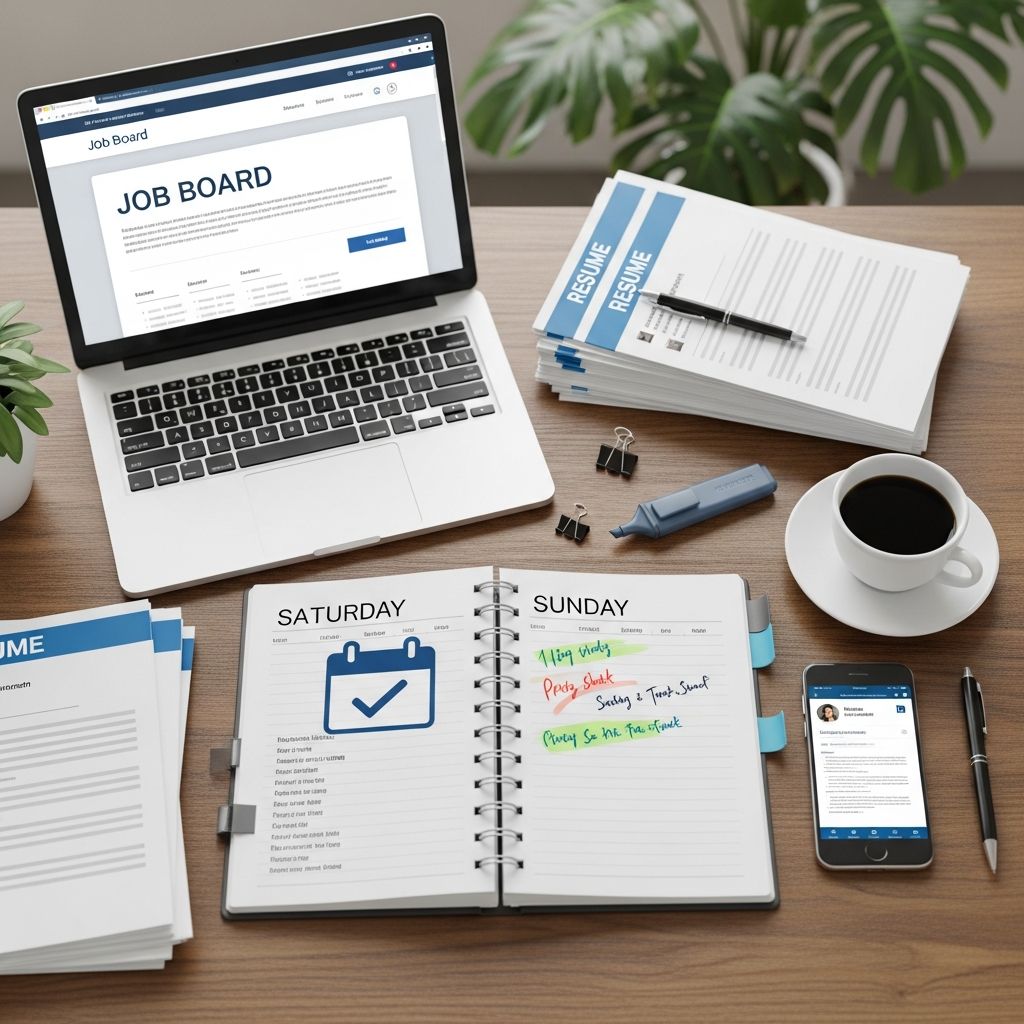
Transforming Downtime into Career Advancement Opportunities
The weekend presents a unique window of opportunity for those actively seeking employment. Rather than viewing Saturday and Sunday as purely recreational days, job seekers can strategically utilize this time to make meaningful progress toward their career goals. The key lies in recognizing that consistent, purposeful effort—even limited to just a few hours per weekend—compounds significantly over time. This article explores comprehensive approaches to weekend job searching that balance productivity with personal well-being, ensuring you remain energized and motivated throughout your job search journey.
Many professionals underestimate the power of concentrated weekend effort. By dedicating even a fraction of your weekend to career advancement activities, you can substantially reduce your overall job search timeline. The most successful job seekers treat their search as a part-time commitment during weekends, approaching it with the same professionalism and structure they would apply to any important project.
Refining Your Search Through Focused Exploration
When time is limited, quality matters far more than quantity. Rather than haphazardly browsing every available position, weekend job searchers benefit from a more disciplined approach. Allocating approximately one hour per weekend specifically for identifying relevant opportunities creates a sustainable rhythm without overwhelming yourself. Within this focused timeframe, you can discover positions that genuinely align with your background, skills, and career trajectory.
The process begins with curating a manageable selection of positions. After your initial hour of research, compile a comprehensive list of all interesting opportunities, then systematically narrow this list to your top choices. This reduction strategy—ideally cutting your initial list in half—ensures you’re not spreading your energy too thin across dozens of tangential possibilities. Instead, you develop deeper knowledge about a smaller set of truly desirable roles, allowing you to craft more compelling application materials.
Utilizing organizational tools transforms this process from chaotic browsing to strategic planning. Browser bookmarking systems, note-taking applications, and dedicated job search folders help maintain clarity about which positions merit your attention. Digital tools like Pocket or Evernote enable you to revisit opportunities later, ensuring no promising lead falls through the cracks due to weekend time constraints.
Building Genuine Professional Connections Beyond Digital Platforms
While online job boards serve an important function, face-to-face networking remains one of the most effective employment strategies. Weekends provide exceptional opportunities for this type of interaction, as both you and your contacts have more flexibility in your schedules. Unlike weekday interactions that may feel rushed or pressured, weekend connections allow for more genuine, unhurried conversations that often yield stronger professional relationships.
Community engagement offers a natural framework for weekend networking. Volunteering for causes you genuinely care about accomplishes multiple objectives simultaneously: you contribute meaningfully to your community, expand your professional network, and demonstrate commitment to causes beyond personal advancement. These interactions often feel less transactional than formal networking events, creating space for authentic connections that frequently translate into job opportunities.
Social activities provide another avenue for professional connection-building. Whether through fitness classes, team sports, hobby groups, or casual social gatherings, weekend activities create informal environments where professional conversations develop naturally. These settings allow you to present yourself as a well-rounded individual rather than simply a job candidate, often making a more memorable impression than traditional networking approaches.
Weekend social gatherings you organize or participate in—from neighborhood barbecues to casual dinner parties—create natural opportunities to discuss professional interests and career aspirations. The key is balancing authentic social engagement with subtle career visibility, ensuring conversations feel genuine rather than forced or opportunistic.
Strategic Networking Approaches for Weekend Implementation
Several specific activities work particularly well for weekend networking:
- Community volunteering: Regular involvement with charitable organizations introduces you to diverse professionals while building your resume with meaningful experience.
- Flexible gig work: Weekend side projects (ridesharing, event planning, freelance services) expand your professional circle while generating income.
- Fitness and wellness activities: Gym memberships, exercise classes, and recreational sports create regular interaction points with people from various professional backgrounds.
- Local events and gatherings: Attending or helping organize community events provides natural conversation starters and extended interaction time with potential connections.
- Skill-sharing activities: Teaching others—whether coding workshops, language tutoring, or fitness classes—positions you as an expert while building relationships with peers.
Investing in Continuous Skill Enhancement
Weekends present an ideal timeframe for professional development that enhances your marketability. Online learning platforms have democratized access to quality educational content, allowing you to acquire new certifications, develop technical skills, or deepen expertise in your field—all from your home during weekend hours. This investment directly strengthens your candidacy for positions you pursue during the week.
Establishing a dedicated study space within your home creates an environment conducive to learning without distractions. Setting clear learning objectives for each weekend session—whether completing a module, finishing practice projects, or mastering specific concepts—provides structure and measurable progress. Taking initiative to reach out to instructors or mentors for guidance demonstrates commitment and can provide valuable feedback on your development trajectory.
Beyond formal online education, weekend learning can take many forms. Local libraries offer comprehensive career resources, business seminars, and computer classes specifically designed to enhance employment prospects. Librarians can recommend materials tailored to your career interests and industry, providing curated guidance more effective than random online searching.
Teaching others represents an underutilized learning strategy. By preparing to instruct others in skills you possess, you deepen your own understanding while building credibility and expanding your network. Weekend classes at community centers—whether in specialized technical areas or practical life skills—create opportunities for meaningful engagement while establishing yourself as a knowledgeable professional.
Crafting Targeted Application Materials
Rather than submitting generic applications across dozens of positions, weekend job searchers benefit from creating tailored materials for each opportunity. This approach requires identifying which of your skills most directly address each position’s requirements, then emphasizing these elements in your application documents.
Your resume serves as your primary communication tool, and tailoring it to specific roles dramatically increases your likelihood of securing interviews. By analyzing job descriptions and incorporating relevant keywords and accomplishments, you demonstrate that you’ve invested time in understanding the role and can articulate your fit. This targeted approach feels authentic and substantially more compelling than one-size-fits-all applications.
Cover letters, when included, should specifically address how your background aligns with stated job requirements. Weekend time allows for thoughtful reflection on how your unique experiences and capabilities address each employer’s particular needs and challenges.
Optimizing Your Career Visibility and Online Presence
Beyond active job searching, weekends provide valuable time to enhance your professional brand. LinkedIn profiles function as living resumes, continuously working for you even when you’re not actively job hunting. Dedicating weekend hours to optimizing your profile—updating information, adding accomplishments, obtaining recommendations, and expanding your network—multiplies the value of this investment over time.
Strategic networking on professional platforms involves more than profile optimization. Engaging meaningfully with others’ content, participating in industry discussions, and sharing relevant insights establish you as a thoughtful professional within your field. These activities increase your visibility to recruiters and hiring managers who often browse professional networks for qualified candidates.
Creating a short list of target companies worth pursuing deserves dedicated weekend research. Understanding company culture, recent accomplishments, leadership philosophy, and expansion plans allows you to approach applications with genuine interest rather than generic enthusiasm. This research transforms your applications from transactional to relational, demonstrating that you’ve selected these employers deliberately.
Maintaining Well-being While Job Searching
Intense job searching can quickly become emotionally draining. Balancing career-focused weekend activities with genuine relaxation and stress management remains essential for sustained motivation and mental health. Job searching represents a temporary phase in your career, and maintaining perspective helps you navigate it more effectively.
Weekend activities that nourish your well-being—time with loved ones, engaging hobbies, physical exercise, creative pursuits—actually enhance your job search success. A well-rested, emotionally grounded person presents themselves more effectively in interviews and networking situations than someone running on fumes from relentless job searching. These personal activities also provide valuable material for authentic conversation during networking interactions, helping you present yourself as a multidimensional person rather than a desperate job seeker.
Structuring Your Weekend Job Search Schedule
Creating a realistic, sustainable weekend job search routine increases your likelihood of consistent progress. Consider this framework:
- Saturday mornings (1 hour): Browse job postings, bookmark relevant opportunities, and reduce your list to top choices.
- Saturday afternoon: Networking activity—volunteering, community engagement, or social gathering with professional contact potential.
- Sunday mornings: Professional development—online courses, skill-building, or career resource exploration.
- Sunday afternoon: Application preparation—tailoring resume and cover letters for targeted opportunities.
This schedule balances productive career activities with personal time, creating sustainability across multiple weekends without burnout.
Frequently Asked Questions About Weekend Job Searching
Q: How much time should I dedicate to job searching each weekend?
A: One to three hours total is typically sufficient and sustainable. This limited timeframe encourages focused, strategic effort rather than scattered browsing. Quality concentration matters more than marathon sessions.
Q: Should I focus exclusively on my current field or explore new industries on weekends?
A: Consider allocating portions of your weekend to both directions. Dedicate most energy to positions aligned with your existing skills and experience, but reserve time for exploring adjacent fields. Weekend skill-building can facilitate industry transitions by developing relevant capabilities before pursuing new career paths.
Q: How can I make networking feel natural rather than forced?
A: Engage in activities you genuinely enjoy and connect with people around shared interests rather than viewing them solely as job leads. Authentic relationships develop when you’re truly present and interested in others. Let professional conversations emerge naturally rather than forcing them.
Q: What if weekends are my only job search time?
A: Weekend-only job searching is absolutely viable with strategic focus. Prioritize high-impact activities like targeted applications and meaningful networking. Use your limited time to improve visibility and pursue carefully selected opportunities rather than attempting broad coverage.
Q: How long should my job search realistically take?
A: This varies significantly based on your field, experience level, and geographic constraints. However, consistent weekend effort typically accelerates timelines considerably. Many job seekers report reducing search duration by weeks or months through focused weekend activity.
Q: Can weekend job searching replace weekday effort?
A: While weekends provide valuable opportunity, combining weekend focus with strategic weekday activities—brief lunch break application checks, quick professional networking—often yields better results. However, weekend-only approaches can succeed with disciplined strategy.
References
- Making Time to Job Hunt While Working Full Time — Harvard Business Review. 2023-04. https://hbr.org/2023/04/making-time-to-job-hunt-while-working-full-time
- How To Find Weekend Jobs in 9 Steps — Indeed Career Advice. https://www.indeed.com/career-advice/finding-a-job/how-to-find-weekend-jobs
- 3 Strategies for Weekend Job Hunting — Penny Leisch. https://pennyleisch.com/3-strategies-for-weekend-job-hunting/
- 5 Strategies You Need to Use to be a Weekend Job-Search Warrior — Ivy Exec Career Advice. 2016-05. https://ivyexec.com/career-advice/2016/5-strategies-you-need-to-use-to-be-a-weekend-job-search-warrior/
- 3 Important Tips for Job Searching on the Weekend — Forward Think Careers. https://www.forwardthinkcareers.com/3-important-tips-weekend-job-search/
- Flexible Weekend Jobs and How to Find One — Pros Marketplace. https://prosmarketplace.com/blog/flexible-weekend-jobs/

Medha Deb is an editor with a master's degree in Applied Linguistics from the University of Hyderabad. She believes that her qualification has helped her develop a deep understanding of language and its application in various contexts. Medha specializes in the areas of beauty, health, sports, and wellness and is committed to ensuring that the content on the website is…