
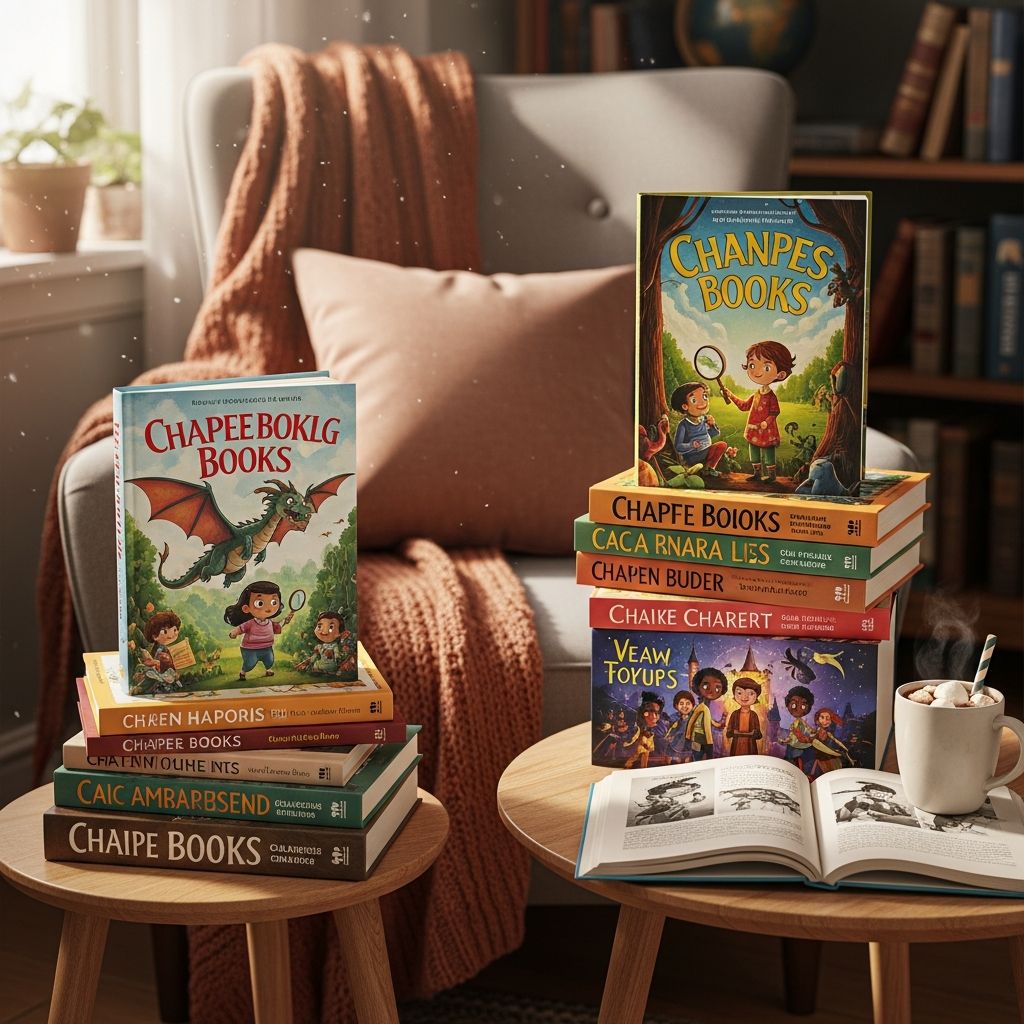
Chapter books serve as a crucial bridge in children’s literacy development, targeting newly independent readers typically between 6 and 10 years old. These books feature divided narratives into short, manageable sections that build confidence and sustain interest without overwhelming young minds.
Defining the Essence of Chapter Books
At their core, chapter books represent early novels designed for children transitioning from picture-heavy early readers to more text-based stories. Unlike simple primers, they introduce structured storytelling with distinct chapters, each functioning as a mini-adventure that contributes to a larger plot. This format encourages children to tackle longer texts independently, fostering a sense of accomplishment with each completed section.
These books typically span 5,000 to 15,000 words, making them concise yet substantial enough for character growth and plot progression. Early examples for 6-7-year-olds hover around 5,000-8,000 words, while those for 8-10-year-olds extend to 10,000-15,000 words, with chapters themselves ranging from 500 to 1,500 words.
Key Elements That Make Chapter Books Effective
Successful chapter books prioritize accessibility and engagement through several deliberate design choices. Short chapters, often 6-10 pages, end on suspenseful notes or cliffhangers to propel readers forward, creating ‘easy wins’ that boost motivation.
- Engaging Narratives: Stories revolve around relatable protagonists facing everyday challenges, like school dilemmas or family adventures, allowing kids to see themselves in the characters.
- Visual Aids: Frequent illustrations break up text, provide context clues, and make pages less intimidating.
- Reader-Friendly Layout: Large fonts, ample white space, generous margins, and open line spacing invite rather than daunt young eyes.
- Series Potential: Many thrive in series format, building familiarity with recurring characters to encourage repeat reads.
These elements collectively reduce cognitive load, helping children build stamina and vocabulary without frustration.
How Chapter Books Differ from Other Children’s Formats
Understanding chapter books requires distinguishing them from neighboring categories in children’s publishing.
| Format | Age Range | Word Count | Key Features |
|---|---|---|---|
| Early Readers | 4-6 | 100-1,000 | Very simple sentences, heavy illustrations, educational focus per Lexile levels. |
| Chapter Books | 6-10 | 5,000-15,000 | Short chapters, some illustrations, independent reading with plot arcs. |
| Middle Grade | 8-12 | 20,000-55,000 | Complex plots, fewer images, deeper themes. |
Early readers emphasize phonics and basic sight words for emergent readers, while chapter books offer narrative freedom without rigid educational constraints. Middle-grade novels demand greater endurance, spanning longer timeframes and intricate subplots.
The Developmental Benefits for Emerging Readers
Chapter books play a pivotal role in literacy growth by promoting sustained attention and comprehension. The bite-sized chapters deliver quick successes, reinforcing the joy of reading and combating intimidation from denser texts. Illustrations support decoding unfamiliar words, while cliffhangers cultivate curiosity.
Psychologically, these books help children internalize story structure—introduction, rising action, climax, resolution—laying groundwork for advanced analysis. Series formats build emotional investment in characters, encouraging loyalty to reading as a habit. Parents and educators note improved fluency and enthusiasm in children engaging with this level.
Crafting Compelling Chapter Book Stories
For aspiring authors, writing chapter books demands precision to suit young audiences. Begin with a relatable protagonist whose flaws and aspirations mirror common childhood experiences, driving a clear goal amid obstacles.
- Develop a Tight Plot: Confine the story to a short timeframe, like a week or single event, ensuring a complete character arc where the hero grows through trials.
- Structure Chapters Dynamically: Keep them concise, starting with action and ending on hooks to maintain momentum.
- Incorporate Humor and Heart: Blend lighthearted moments with emotional depth to resonate universally.
- Balance Dialogue and Description: Use simple, active language with natural conversations to model speech patterns.
- Plan Illustrations: Note spots for visuals that enhance without replacing text.
Aim for 48-80 pages total, with the narrative resolving neatly to satisfy without dragging. Examples like Ramona Quimby exemplify quirky, imperfect heroes navigating growth.
Popular Examples and Series to Explore
Iconic series illustrate these principles in action. The Magic Tree House books by Mary Pope Osborne whisk siblings through historical adventures in digestible chapters packed with facts and fun. Junie B. Jones by Barbara Park captures kindergarten mischief with irreverent humor and short, snappy sections.
- Captain Underpants: Dav Pilkey’s irreverent tales mix comics and prose for high engagement.
- Flat Stanley: Jeff Brown’s inventive premise spans lighthearted escapades.
- My Weird School: Dan Gutman’s classroom chaos delivers laughs in rapid chapters.
These titles, often 80 pages or less, exemplify how series build readership through familiar worlds.
Publishing Insights for Chapter Book Authors
The market for chapter books remains niche but rewarding, with publishers like Scholastic’s Branches imprint favoring 6,000-word stories for beginners. Word counts vary by house, but SCBWI guidelines peg 5,000-13,000 words or 40-60 pages as standard.
Query letters should highlight series potential and comp titles. Self-publishing offers flexibility, but traditional paths demand polished manuscripts with beta reader feedback from the target age. Trends favor diverse protagonists and STEM-infused adventures to meet modern demands.
Supporting Your Child’s Chapter Book Journey
Parents can amplify benefits by selecting books matching interests and reading levels. Co-reading initial chapters eases entry, then stepping back promotes independence. Discuss plots post-read to deepen comprehension—’What would you do next?’ sparks critical thinking.
Create a cozy reading nook with good lighting and minimal distractions. Track progress with chapter charts for visual motivation. Libraries and bookstores curate age-appropriate picks, while apps like Epic! provide digital access.
Frequently Asked Questions (FAQs)
What age group is best for chapter books?
Primarily children aged 6-10, with early ones for 6-7 and advanced for 8-10, depending on reading proficiency.
How many chapters should a chapter book have?
Typically 10-20 short chapters, ensuring each is 500-1,500 words for manageability.
Do chapter books need illustrations?
Yes, frequent black-and-white images support text and engage visual learners, though not as dominant as in picture books.
Can chapter books be non-fiction?
While fiction dominates, non-fiction variants exist with factual adventures structured similarly for accessibility.
What’s the ideal length for a first chapter book?
Aim for 5,000-8,000 words total to avoid overwhelming new independents.
Why Chapter Books Endure in Literacy Education
In an era of digital distractions, chapter books anchor foundational skills. They transform reading from a chore into an adventure, equipping children with tools for lifelong learning. By blending structure with imagination, they nurture not just decoders, but storytellers and thinkers.
References
- What Makes a Good Chapter Book (and Why They Matter) — Cereal Readers. 2023. https://www.cerealreaders.com/blog/what-makes-a-good-chapter-book-and-why-they-matter/
- Chapter Book Definition & Meaning — YourDictionary. Accessed 2026. https://yourdictionary.com/chapter-book
- How to Write a Chapter Book in 10 Steps — Fictionary. 2023. https://fictionary.co/journal/how-to-write-a-chapter-book/
- Chapter Book Guidelines — Karen Cioffi Writing for Children. 2020-10-18. https://karencioffiwritingforchildren.com/2020/10/18/chapter-book-guidelines/
- All about Chapter Books — DIY MFA Blog. Accessed 2026. https://diymfa.com/writing/all-about-chapter-books/

Medha Deb is an editor with a master's degree in Applied Linguistics from the University of Hyderabad. She believes that her qualification has helped her develop a deep understanding of language and its application in various contexts. Medha specializes in the areas of beauty, health, sports, and wellness and is committed to ensuring that the content on the website is…