
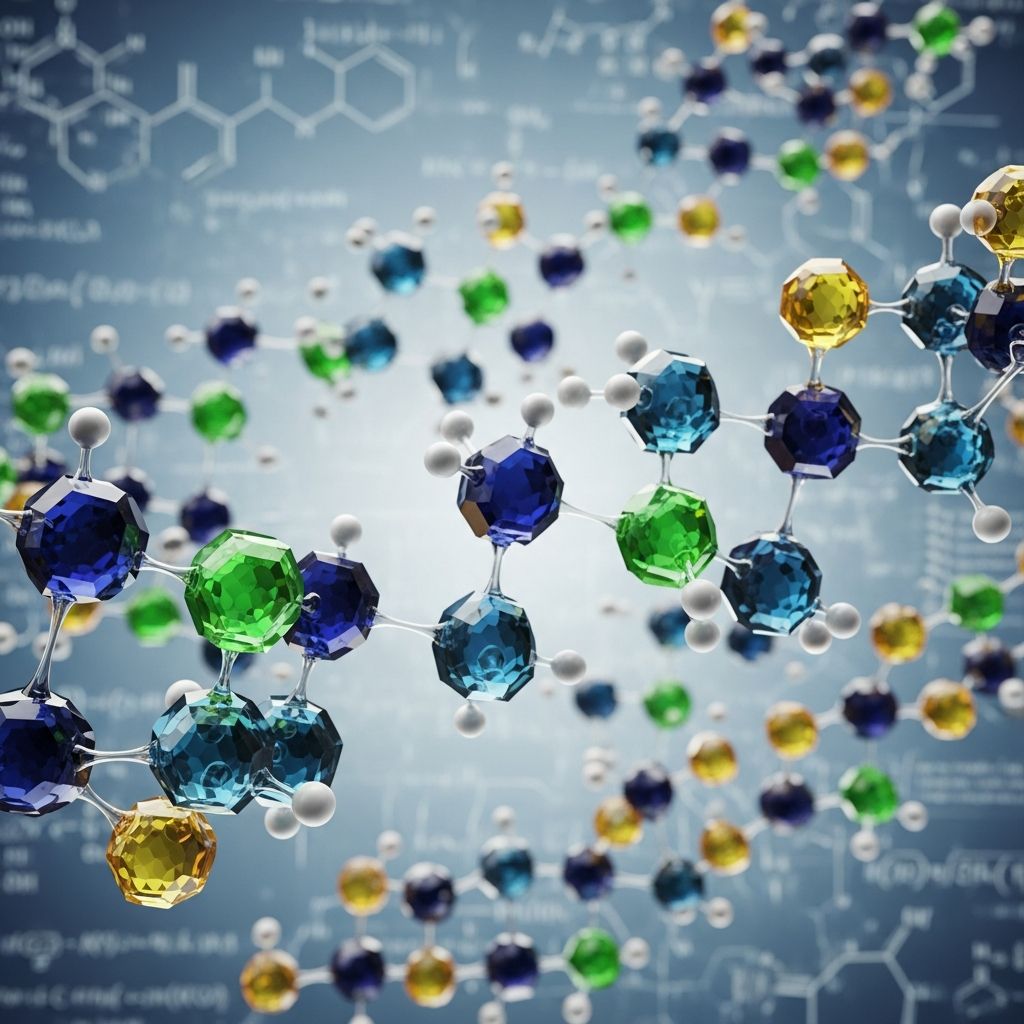
Polymers represent one of the most versatile classes of materials in chemistry, consisting of large molecules formed by repeating smaller units called monomers. These macromolecules underpin everything from biological structures to everyday plastics, offering unique properties like flexibility, strength, and durability.
The Fundamental Concept of Polymers
At their core, polymers are substances made up of macromolecules with high molecular weights, typically ranging from thousands to millions of grams per mole. The term ‘polymer’ derives from Greek roots meaning ‘many parts,’ reflecting their structure of numerous identical or similar subunits linked together. Unlike small molecules like water, which has just three atoms, polymers contain tens of thousands of atoms arranged in long chains, branches, or networks.
This repetitive architecture allows polymers to exhibit properties distinct from their monomer precursors. For instance, the chain length, branching, and degree of crosslinking directly influence characteristics such as elasticity, hardness, and thermal stability. The International Union of Pure and Applied Chemistry (IUPAC) defines a polymer as a substance composed of macromolecules where the structure principally comprises multiple repetitions of units derived from lower molecular mass molecules.
How Polymers Are Formed: The Polymerization Process
Polymers form through a chemical reaction known as polymerization, where monomers—small, reactive molecules—link together to create extended chains. This process can occur naturally in living organisms or be induced synthetically in laboratories and factories.
There are two primary types of polymerization:
- Addition Polymerization: Monomers with double bonds, like ethene, add to each other without losing atoms, forming chains such as polyethylene. This is common in plastics production.
- Condensation Polymerization: Monomers with functional groups react, releasing small molecules like water. Examples include nylon and polyesters.
In biological systems, polymerization often involves dehydration synthesis, where monomers link by removing water, as seen in protein formation from amino acids. Synthetic processes can use catalysts, heat, or pressure to control chain growth and structure.
Natural Polymers: Nature’s Own Macromolecules
Nature has been ‘manufacturing’ polymers for billions of years, essential for life itself. These biopolymers perform critical functions like structural support, energy storage, and information transfer.
| Polymer | Monomer Units | Biological Role |
|---|---|---|
| DNA/RNA | Nucleotides | Genetic information storage and transmission |
| Proteins | Amino acids | Enzymes, structural components, signaling |
| Cellulose | Glucose | Plant cell walls, structural support |
| Starch | Glucose | Energy storage in plants |
| Natural Rubber (Polyisoprene) | Isoprene | Elasticity in plant latex |
These natural polymers are primarily composed of carbon, hydrogen, oxygen, nitrogen, phosphorus, and sulfur, the key elements of life. DNA, for example, chains four nucleotide bases—adenine, thymine, guanine, and cytosine—into a double helix vital for heredity.
Proteins, polyamides formed from 20 amino acids, fold into complex shapes enabling diverse functions from muscle contraction to immune defense. Cellulose and starch, polysaccharides from glucose, highlight how the same monomer can yield different properties based on linkage types (linear vs. branched).
Synthetic Polymers: Engineering Materials for the Modern World
Human innovation has produced synthetic polymers since the early 20th century, revolutionizing industries. Derived mainly from petroleum or bio-based sources, these materials are designed for specific needs.
Key examples include:
- Polyethylene (PE): Used in bags, bottles, and pipes due to its flexibility and water resistance.
- Polypropylene (PP): Found in packaging, ropes, and automotive parts for its strength and chemical resistance.
- Polyvinyl Chloride (PVC): Pipes, flooring, and medical tubing, valued for durability.
- Nylon: Fabrics, gears, and parachutes, known for toughness.
- Polystyrene (PS): Foam insulation and disposable cups, lightweight and insulating.
Plastics are a subset of synthetic polymers that can be molded when heated, distinguishing them from rubbers (elastic polymers) or fibers (high-tenacity polymers). Advances in bio-based synthetics, like polylactic acid from corn, address sustainability concerns.
Properties That Make Polymers Unique
Polymers’ macromolecular nature imparts exceptional properties:
- High Molecular Weight: Leads to strength and toughness not found in small molecules.
- Viscoelasticity: Combination of viscous and elastic behavior, allowing deformation without breaking.
- Amorphous or Semicrystalline Structures: Influences transparency, melting point, and mechanical strength.
- Thermal and Chemical Stability: Varies by composition; some withstand extreme conditions.
These traits arise from chain entanglement, crystallinity, and intermolecular forces. For example, linear polyethylene is flexible, while branched versions are more rigid. Additives like plasticizers enhance flexibility, while fillers boost strength.
Applications Across Industries
Polymers’ versatility drives their use everywhere:
- Packaging: Lightweight, protective films and containers reduce waste.
- Construction: PVC pipes, insulation foams improve efficiency.
- Medicine: Biocompatible polymers for implants, drug delivery.
- Electronics: Conductive polymers in batteries, flexible screens.
- Automotive: Lightweight parts reduce fuel consumption.
In biology, polymers enable life’s complexity; synthetically, they enable modern convenience and innovation.
Challenges and Future Directions
Despite benefits, plastic pollution poses environmental challenges. Biodegradable polymers and recycling technologies are emerging solutions. Research focuses on sustainable monomers from renewable sources.
Smart polymers that respond to stimuli like temperature or pH promise advances in drug delivery and sensors.
Frequently Asked Questions (FAQs)
What is the basic difference between a monomer and a polymer?
A monomer is a small molecule that serves as a building block, while a polymer is a large chain formed by linking many monomers together.
Are all plastics polymers?
Yes, plastics are a type of synthetic polymer that can be shaped by heat or pressure, but not all polymers are plastics.
How do natural and synthetic polymers differ?
Natural polymers like DNA occur in living organisms and are biodegradable; synthetic ones like nylon are engineered for specific properties and durability.
What is polymerization?
Polymerization is the chemical process where monomers bond to form polymers, often via addition or condensation reactions.
Can polymers be recycled?
Many thermoplastics can be melted and reshaped, though challenges like contamination persist.
References
- What Is a Polymer? Chemistry, Types, Examples & Selection Guides — MCPolymers. 2023. https://www.mcpolymers.com/library/what-is-a-polymer
- Polymer — Wikipedia. 2026-04-04. https://en.wikipedia.org/wiki/Polymer
- Polymers vs. Plastics: What is the difference? — Stahl. 2023. https://www.stahl.com/beyond-chemistry-from-a-to-z/polymers-vs-plastics-what-is-the-difference
- Polymer | Description, Examples, Types, Material, Uses, & Facts — Britannica. 2026. https://www.britannica.com/science/polymer
- What are polymers? — IUPAC. 2023. https://iupac.org/polymer-edu/what-are-polymers/
- What Is A Polymer? — NewAge Industries. 2023. https://newageindustries.com/what-is-a-polymer/
- Polymers | Chemistry | Research Starters — EBSCO. 2023. https://www.ebsco.com/research-starters/chemistry/polymers

- Integrated M.A. in Applied Linguistics, University of Hyderabad
- 5+ years in editorial, instructional, SEO, and research-based writing
Sneha is a relationships and lifestyle writer with a strong foundation in applied linguistics and certified training in relationship coaching. She brings over five years of writing experience to theskillvault, crafting thoughtful, research-driven content that empowers readers to build healthier relationships, boost emotional well-being, and embrace holistic living. Her writing and insights reflect the belief that beauty, happiness, and wellness…