
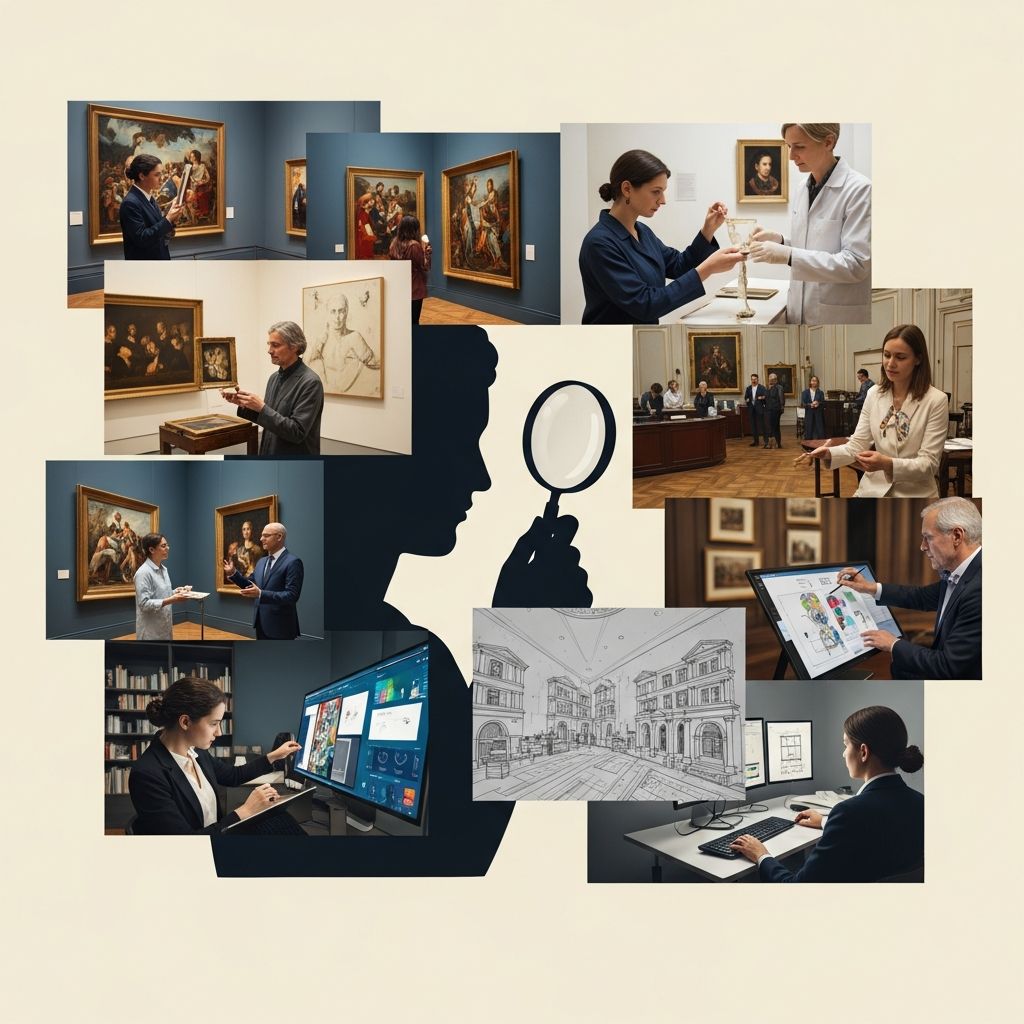
Art history is often misunderstood as a degree that leads only to museum work. In reality, it builds a rare combination of visual literacy, critical thinking, and communication skills that translate into many industries, from culture and education to business, law, and technology.
This guide explains what you can do with an art history degree, how your skills align with real jobs, and practical steps to move from the classroom into a sustainable, meaningful career.
Why Employers Value Art History Majors
Despite the stereotype that humanities degrees are impractical, research shows that liberal arts graduates develop skills that employers consistently rate as highly important: critical thinking, communication, and problem solving. Art history adds another powerful dimension—visual analysis and cultural understanding.
Core Transferable Skills You Gain
- Critical analysis: Evaluating artworks, texts, and historical contexts trains you to assess evidence, weigh interpretations, and build arguments.
- Research abilities: You learn to navigate archives, databases, and primary sources to answer complex questions.
- Professional writing: From research papers to exhibition labels, you practice writing clearly for different audiences.
- Visual literacy: You become skilled at reading images, design, and space—an asset in marketing, design, media, and user experience roles.
- Cultural competence: Studying global artistic traditions builds sensitivity to diverse histories and perspectives.
- Project management: Group projects, presentations, and internships often require planning timelines, collaborating, and meeting deadlines.
Where These Skills Show Up in the Job Market
According to university career centers, art history graduates commonly find roles in:
- Museums and galleries (curation, education, collections management)
- Education and academic research
- Nonprofits and cultural organizations
- Publishing, journalism, and media
- Marketing, communications, and design-related fields
- Law, business, and public service, often after graduate study
Major Career Paths for Art History Graduates
Below are broad career areas where art history majors often thrive, with example roles and how your background fits.
Museums, Galleries, and Cultural Institutions
Museums and galleries remain a natural home for many art history graduates, offering roles that connect scholarship with public engagement.
- Curatorial work: Curators research collections, plan exhibitions, write catalogs, and shape how visitors experience art. Advanced study (MA or PhD) is usually required for senior positions.
- Museum education: Educators design tours, workshops, and digital content that make art accessible to school groups and general audiences.
- Collections and registration: Registrars and collections managers catalog works, oversee storage, loans, and conservation logistics.
- Exhibition coordination: These professionals handle timelines, loans, shipping, installation coordination, and communication among departments.
- Gallery roles: In commercial or nonprofit galleries, you might manage exhibitions, support sales, write press materials, and liaise with artists and collectors.
Education and Academic Paths
If you are drawn to teaching and research, education-focused roles allow you to keep art at the center of your career.
- Professor or lecturer: University-level teaching typically requires a PhD in art history or a related field. Faculty teach courses, advise students, and publish research.
- K–12 teacher: With additional certification, you can teach art, humanities, or social studies in primary and secondary schools.
- Adjunct and community college roles: These may require a master’s degree and focus heavily on teaching rather than research.
- Academic support roles: Positions in academic advising, study-abroad offices, or university museums draw on your subject knowledge and student-focused skills.
Conservation, Preservation, and Heritage Work
For students who love the material side of art—objects, architecture, archives—conservation and heritage fields combine science, history, and hands-on problem solving.
- Art conservator: Conservators preserve and restore artworks and cultural objects, often specializing in paintings, textiles, or paper. This path generally requires graduate training in conservation plus coursework in chemistry and art history.
- Architectural or cultural heritage specialist: Professionals in this area work on preserving historic sites, monuments, and public art, collaborating with planners, engineers, and communities.
- Archivist: Archivists manage historical documents, photographs, and digital collections in libraries, museums, or government agencies.
Art Market, Commercial Galleries, and Auction Houses
The commercial art world offers fast-paced roles for graduates who enjoy market trends as much as scholarship.
- Auction specialist: Specialists research artists and works, prepare catalog entries, advise clients, and work on auctions in specific categories (such as contemporary art or photography).
- Art advisor or consultant: Advisors guide collectors, corporations, or institutions on acquisitions, sales, and collection strategy.
- Art appraiser: Appraisers estimate the value of artworks for sale, insurance, or estate planning, combining historical knowledge with market research.
- Gallery manager: Gallery managers oversee daily operations, marketing, events, and client relationships.
Media, Publishing, and Creative Industries
Art history’s emphasis on images and narratives aligns well with creative sectors where visual and cultural insight is a core asset.
- Arts journalist or critic: Writing reviews, interviews, and features for magazines, newspapers, or online platforms.
- Content creator and editor: Producing or editing content for museums, publishers, design firms, or cultural institutions.
- Creative direction and production: Supporting film, television, or documentary projects that require historical accuracy or visual research.
- Design and branding roles: Some graduates move into graphic design, visual communications, or branding after developing additional technical skills.
Nonprofits, Public Programming, and Community Arts
Art history graduates often thrive in mission-driven organizations that focus on access to the arts, public programming, or cultural policy.
- Arts administrator: Managing budgets, grants, marketing, and programming for arts organizations, festivals, or cultural centers.
- Public art and community programs: Coordinating murals, artist residencies, and community workshops.
- Grant writing and development: Researching funders, writing proposals, and building donor relationships to support arts initiatives.
Law, Business, and Other Professional Fields
Many art history majors leverage their analytical and communication skills in broader professional arenas after additional graduate or professional training.
- Art and cultural property law: Lawyers work on artists’ rights, intellectual property, restitution, and cultural heritage disputes.
- Business and consulting: Alumni can be found in project management, consulting, marketing, and management roles where their ability to synthesize information and communicate clearly is prized.
- Public service and policy: Government agencies and cultural councils hire people with arts backgrounds to support program design, funding, and evaluation.
Comparing Career Paths for Art History Majors
The table below gives a simplified snapshot of several common directions you might consider after graduation.
| Career Area | Typical Entry-Level Roles | Often Requires Graduate Study? | Key Skills Used Daily |
|---|---|---|---|
| Museums & Galleries | Assistant, educator, curatorial or collections assistant | Recommended for senior curatorial or conservation roles | Research, writing, public speaking, project coordination |
| Education & Academia | Teaching assistant, adjunct instructor, K–12 teacher | Yes for college-level teaching (MA or PhD) | Teaching, curriculum design, mentoring, research |
| Art Market & Commercial | Gallery assistant, sales assistant, auction trainee | Helpful but not always required | Client communication, market research, negotiation |
| Nonprofits & Public Programs | Program assistant, development assistant, coordinator | Not always; experience and networking weigh heavily | Grant writing, event planning, community outreach |
| Business, Law & Other Fields | Analyst, coordinator, paralegal, marketing assistant | Yes for law and many specialized business roles | Analysis, writing, presentations, collaboration |
Practical Steps to Build Your Art History Career
Your major is the foundation; what you do alongside it often determines how smoothly you transition into work. Academic departments and career centers consistently emphasize the value of targeted experience and complementary skills.
1. Use Coursework Strategically
- Choose seminars that involve original research, catalog writing, or curating small exhibitions.
- Take classes in areas that support your goals: business or marketing for arts administration, languages for graduate study, or chemistry and studio art if you’re considering conservation.
- Seek out opportunities to present research publicly to build confidence and communication skills.
2. Pursue Internships and Campus Experience
- Intern with museums, galleries, archives, or cultural nonprofits; many universities highlight internships as one of the most powerful tools for art history majors to enter the field.
- Work or volunteer in your campus gallery or art museum, assisting with exhibitions, education programs, or collections.
- Contribute to student publications or arts blogs to develop a portfolio of writing.
3. Build Complementary Technical Skills
- Learn basic design tools (such as image editing or layout software) if you are interested in visual communications, publishing, or marketing.
- Gain familiarity with databases, spreadsheets, and collections management software used in museums and archives.
- Develop digital storytelling skills—video, podcasts, or interactive media—valuable for education and outreach roles.
4. Network in the Art and Culture Ecosystem
- Attend public lectures, openings, and conferences at museums, galleries, and universities.
- Join professional organizations related to museums, art history, or arts administration to learn about opportunities and trends.
- Connect with alumni from your program working in fields that interest you and request brief informational interviews.
5. Consider Graduate Study Thoughtfully
Graduate school can open doors, but it is a significant investment of time and money. Universities and career centers advise students to clarify their goals and understand the job market before committing.
- Research typical qualifications for your target roles (for example, curators often need a PhD; many arts administrators advance with an MA or MBA).
- Gain work experience first if you are unsure; this can sharpen your interests and strengthen applications.
- Explore related programs such as museum studies, arts administration, conservation, law, or public policy.
Frequently Asked Questions (FAQs)
Q: Is an art history degree “useful” outside of museums?
Yes. Universities emphasize that art history majors develop analytical, research, writing, and visual interpretation skills that are widely applicable in business, law, public service, and creative industries, not just in museums and galleries.
Q: Do I need a graduate degree to work in art history?
It depends on the role. Many entry-level jobs in museums, galleries, nonprofits, and creative fields are open to BA graduates. However, advanced positions in curating, higher education, and conservation usually require a master’s degree or PhD, often combined with substantial experience.
Q: Can art history majors earn a stable income?
Like many fields, salaries vary widely by sector and location. Graduates working in business, design, and some museum leadership roles often earn higher incomes than those in early-career nonprofit positions. Long-term earnings for arts and humanities majors are competitive when they combine their degrees with in-demand skills and experience.
Q: What should I do as a student to improve my job prospects?
Focus on building a strong portfolio of experiences: complete internships, volunteer with arts organizations, improve your writing and research, and develop complementary skills in areas like languages, digital tools, or business. Academic programs specifically recommend internships and skill-building beyond the classroom as key steps to maximizing your opportunities.
Q: How can I explain my art history degree to non-arts employers?
Translate your academic work into language employers recognize. Instead of simply saying you “analyzed paintings,” highlight that you managed complex research projects, met tight deadlines, presented to groups, and synthesized large amounts of information into clear writing—capabilities that many organizations actively seek.
References
- Career pathways and opportunities for Art History majors — George Mason University, Department of History and Art History. 2024-01-15. https://historyarthistory.gmu.edu/undergraduate/career-pathways/usingyourarthdegree
- Career Opportunities with a Degree in Art History & Visual Culture — Lindenwood University Online. 2023-06-20. https://online.lindenwood.edu/blog/career-opportunities-with-a-degree-in-art-history-visual-culture/
- Career Options in History of Art & Visual Culture — University of California, Santa Cruz. 2022-09-01. https://havc.ucsc.edu/academics/undergraduate/career-options/
- Careers in the Field of Art History — Washington and Lee University. 2023-03-10. https://www.wlu.edu/art-and-art-history-department/art-history/careers-in-the-field-of-art-history
- Art, Art History Concentration, B.S./B.A. — Careers — Middle Tennessee State University. 2022-08-01. https://www.mtsu.edu/program/art-art-history-concentration-b-s/

- Integrated M.A. in Applied Linguistics, University of Hyderabad
- 5+ years in editorial, instructional, SEO, and research-based writing
Sneha is a relationships and lifestyle writer with a strong foundation in applied linguistics and certified training in relationship coaching. She brings over five years of writing experience to theskillvault, crafting thoughtful, research-driven content that empowers readers to build healthier relationships, boost emotional well-being, and embrace holistic living. Her writing and insights reflect the belief that beauty, happiness, and wellness…