
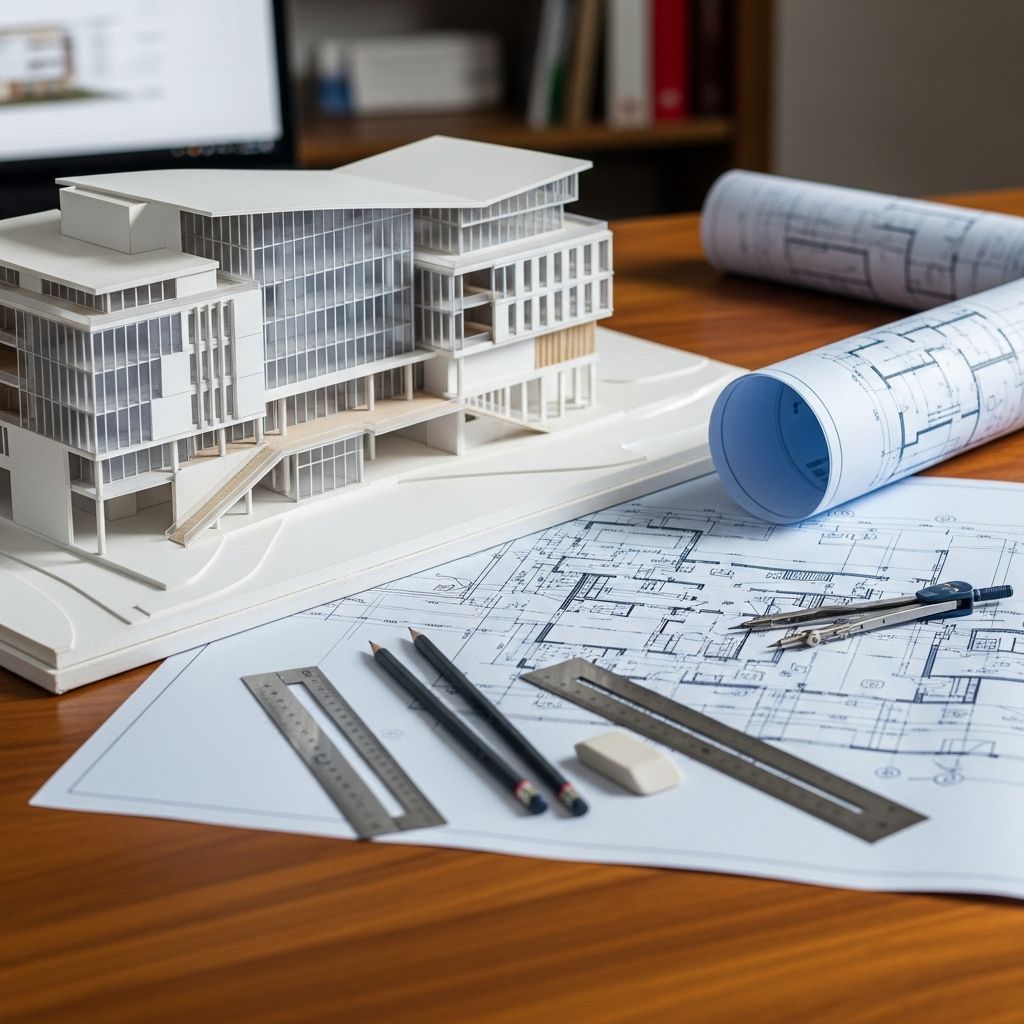
Launching a career in architecture demands a strategic blend of creative vision, technical expertise, and formal education. This guide outlines the primary academic pathways, professional qualifications, and practical steps to enter the field, drawing from established standards set by accrediting bodies and industry practices.
Why Pursue a Degree in Architecture?
Architecture stands at the intersection of art, engineering, and societal needs, shaping the built environment that influences daily life. A specialized degree equips aspiring professionals with the tools to design safe, sustainable, and innovative structures. Programs accredited by the National Architectural Accrediting Board (NAAB) form the cornerstone of eligibility for licensure across most U.S. jurisdictions. These degrees ensure graduates master design principles, structural integrity, and regulatory compliance, preparing them for real-world challenges like urban development and climate-resilient building.
High school students eyeing this path should prioritize mathematics, physics, and art courses to build foundational skills in geometry, statics, and spatial visualization. Such preparation eases the transition into rigorous university curricula.
Primary Undergraduate Degree Options
Undergraduate studies provide the bedrock for architectural practice. Here are the main routes:
- Bachelor of Architecture (BArch): This five-year professional degree offers direct entry into licensure tracks. It integrates intensive studio work with courses on structural systems, materials science, environmental controls, and digital modeling tools like CAD software. Typical coursework spans design studios, building codes, lighting dynamics, and construction management. BArch programs demand around 150 credit hours, blending theory with hands-on projects.
- Bachelor of Arts/Science in Architecture (BA/BS): These four-year pre-professional degrees introduce core concepts without immediate licensure qualification. Ideal for those exploring academia, research, or interdisciplinary fields, they cover architectural history, drafting basics, and introductory design. Graduates often transition to master’s programs for professional credentials.
| Degree Type | Duration | Accreditation | Best For |
|---|---|---|---|
| BArch | 5 years | NAAB (professional) | Licensure track, direct practice |
| BA/BS Architecture | 4 years | Pre-professional | Research, teaching, grad school prep |
Advanced Graduate Pathways
For deeper specialization or career acceleration, graduate degrees expand opportunities. The Master of Architecture (MArch) serves as the gold standard for those without a BArch.
- Master of Architecture (MArch): Available in two- or three-year formats, this degree suits BA/BS holders or even non-architecture undergrads. It requires 30-90 graduate credits, emphasizing advanced design, sustainability, and project management. NAAB accreditation is essential for licensure. Programs explore topics like urban regeneration, parametric design, and seismic engineering.
- Doctor of Architecture (DArch): A rarer doctoral path for academic or research leadership, building on 120 undergraduate plus 90 graduate credits. It focuses on innovative theory and policy.
Graduate study totals 7-10 years from undergrad start, enhancing prospects in specialized firms or academia.
Essential Skills for Architectural Success
Beyond degrees, architects thrive on a core skill set honed through education and practice.
- Technical Proficiency: Mastery of software for 3D modeling, BIM (Building Information Modeling), and rendering ensures precise blueprints.
- Creative Problem-Solving: Balancing aesthetics, functionality, and site constraints demands innovative thinking.
- Communication: Articulating ideas to clients, engineers, and regulators via sketches, presentations, and reports.
- Project Oversight: Managing timelines, budgets, and teams from concept to completion.
- Sustainability Focus: Integrating energy-efficient materials and green standards amid rising environmental demands.
The Licensure Journey: From Education to Practice
Licensure legally protects the “architect” title and is mandatory for independent practice. The process involves three pillars.
- NAAB-Accredited Degree: Verify program status via NCARB resources.
- Architectural Experience Program (AXP): Accumulate 3,740 hours (about 2-3 years full-time) under licensed supervision. Hours cover six practice areas: project planning, design, documentation, construction, and administration.
- Architect Registration Examination (ARE): Pass this multi-division exam testing programming, analysis, construction evaluation, and more. Administered by NCARB, it requires focused study.
States may add continuing education for renewal. Contact your jurisdiction’s board for specifics.
Career Specializations and Opportunities
Architecture offers diverse niches, each with tailored education needs.
- Residential Design: Focuses on homes and multi-family units, emphasizing codes, durability, and livability. A BArch suffices, bolstered by local regulation knowledge.
- Commercial/Industrial: Larger-scale projects like offices demand advanced structural and systems expertise, often via MArch.
- Sustainable/Green Architecture: Graduate specializations in eco-design address LEED certification and net-zero goals.
- Urban Planning: Blends architecture with policy for cityscapes.
Median salaries exceed $80,000 annually, with growth projected at 5% through 2032, driven by urbanization.
Building Your Portfolio and Gaining Experience
A strong portfolio—showcasing 5-10 projects—demonstrates versatility. Include studio work, internships, and personal designs. Internships during school fulfill AXP hours early. Join AIA student chapters for networking.
Challenges and Rewards of an Architecture Career
The path is demanding: long studio hours, iterative critiques, and licensure hurdles test resilience. Yet, rewards include creative fulfillment, societal impact, and intellectual stimulation. Architects influence skylines, communities, and sustainability legacies.
FAQs
Can I become an architect without a BArch?
Yes, pursue a NAAB-accredited MArch after any bachelor’s degree; duration varies by prior credits.
How long does it take to become a licensed architect?
Typically 8-10 years: 5 years BArch, 2-3 years AXP, plus exam prep.
Is NAAB accreditation required everywhere?
Most U.S. jurisdictions mandate it for initial licensure.
What high school prep is best?
Excel in math (calculus, trig), physics, and drafting/art.
Do architects need continuing education?
Yes, most states require it for license renewal.
References
- Architect Education Requirements (Plus Degree Types) — Indeed.com. 2023. https://www.indeed.com/career-advice/career-development/architect-education
- What Are The Education Requirements for Aspiring Architects — Schaub Projects. 2023-10-01. https://schaubprojects.com/2023/10/what-is-required-to-become-an-architect/
- What Degree Do You Need To Be An Architect? — New School of Architecture. N/A. https://newschoolarch.edu/what-degree-do-you-need-to-be-an-architect/
- How to Become an Architect: Education, Salary & Licensing — EnvironmentalScience.org. N/A. https://www.environmentalscience.org/career/architect
- Architectural Education: What Degree You Need to Become Licensed — NCARB. N/A. https://www.ncarb.org/earn-a-degree/study-architecture
- Becoming an Architect: What You’ll Need to Know — Young Architect. N/A. https://youngarchitect.com/becoming-an-architect/

Medha Deb is an editor with a master's degree in Applied Linguistics from the University of Hyderabad. She believes that her qualification has helped her develop a deep understanding of language and its application in various contexts. Medha specializes in the areas of beauty, health, sports, and wellness and is committed to ensuring that the content on the website is…