
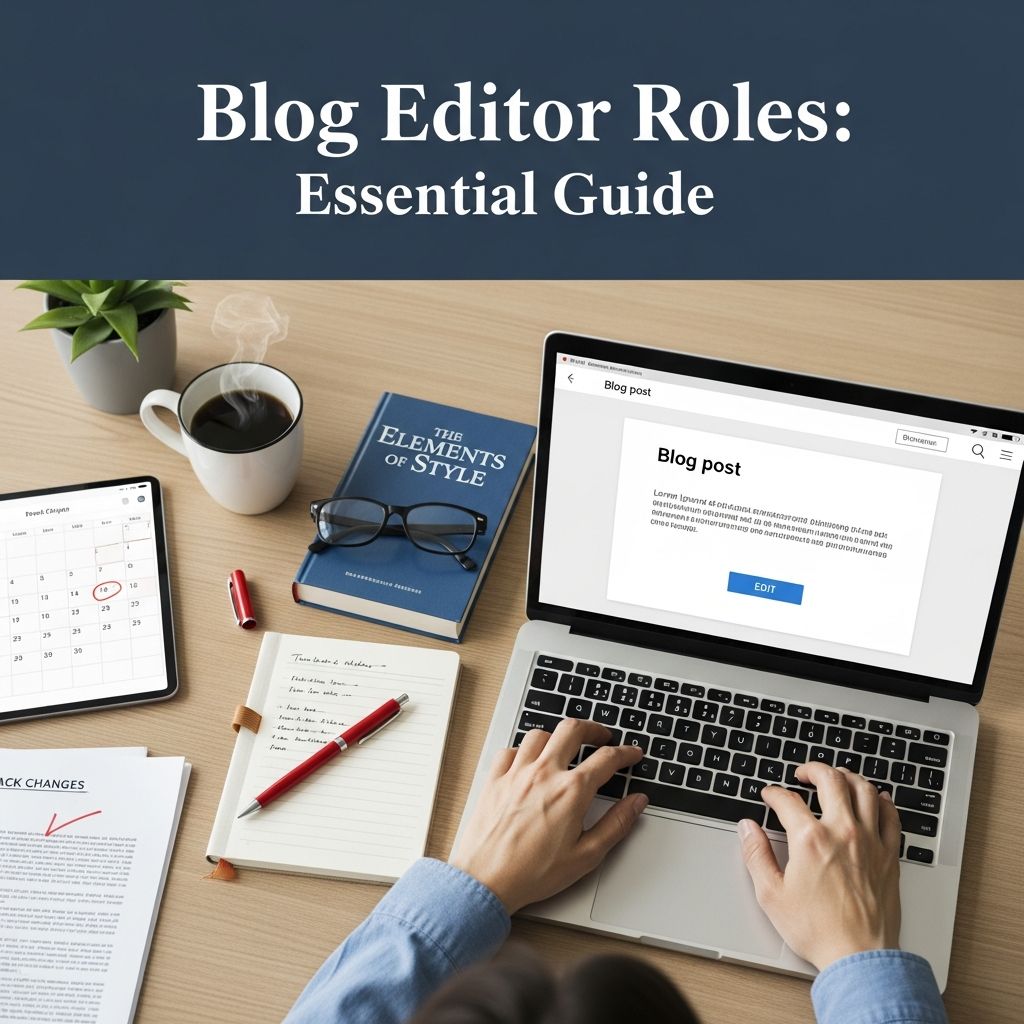
Blog editors serve as the backbone of digital content operations, ensuring that online publications maintain high standards of quality, relevance, and engagement. They bridge the gap between raw ideas and polished, audience-ready material, overseeing everything from initial concepts to final publication.
Core Responsibilities in Content Oversight
At the heart of a blog editor’s role is the meticulous oversight of content production. This involves guiding writers through the creation process, from brainstorming sessions to deadline enforcement. Editors evaluate incoming drafts for clarity, coherence, and alignment with the site’s voice, making necessary revisions to enhance readability and impact.
They establish and uphold editorial guidelines that dictate tone, style, and formatting across all posts. This standardization helps build brand consistency, making the blog recognizable and trustworthy to readers. For instance, editors decide on preferred heading structures, image captions, and call-to-action placements to optimize user experience.
Strategic Planning and Idea Generation
Blog editors play a pivotal role in shaping the content calendar. They analyze audience data, trending topics, and competitor strategies to identify high-potential subjects. By assigning these topics to writers, they ensure a steady flow of fresh, relevant material that drives traffic and retention.
- Conduct keyword research to align posts with search intent.
- Prioritize evergreen content alongside timely pieces for sustained visibility.
- Collaborate with marketing teams to tie blog topics to broader campaigns.
This forward-thinking approach prevents content gaps and maximizes SEO potential, turning the blog into a dynamic hub of information.
Technical Editing and Quality Assurance
Hands-on editing forms a daily cornerstone for blog editors. They scrutinize manuscripts for grammatical errors, awkward phrasing, and logical inconsistencies, refining text to make it concise and compelling. Fact-checking is non-negotiable; editors verify statistics, quotes, and claims against reliable sources to uphold credibility.
Beyond language, they ensure technical soundness: broken links are fixed, images are optimized for load speed, and multimedia elements are seamlessly integrated. This low-level attention to detail elevates the overall professionalism of the site.
SEO and Performance Optimization
In the digital landscape, blog editors must be SEO savvy. They incorporate target keywords naturally into titles, meta descriptions, and body text while structuring content with proper headers and internal links. Monitoring site analytics helps them tweak posts post-publication for better rankings.
| SEO Task | Description | Impact |
|---|---|---|
| Keyword Integration | Place primary terms in H1, intro, and conclusions | Boosts search visibility |
| Internal Linking | Connect related posts within content | Improves site authority |
| Meta Optimization | Craft compelling titles and descriptions | Increases click-through rates |
| Image Alt Text | Add descriptive tags to visuals | Enhances accessibility and indexing |
These practices not only attract organic traffic but also improve dwell time and conversion rates.
Team Leadership and Collaboration
Blog editors often manage teams of freelance or in-house writers. They assign tasks, provide feedback, and mentor contributors to elevate their skills. Coordinating with designers, developers, and social media specialists ensures holistic content delivery.
Regular budget meetings and progress check-ins keep projects on track. Editors approve visuals, graphics, and promotional assets, guaranteeing cohesive presentation across channels.
Community Engagement and Analytics
Post-publication duties include fostering reader interaction. Editors moderate comments, respond to queries, and gauge sentiment to inform future content. Diving into analytics—traffic sources, bounce rates, and engagement metrics—reveals what resonates, guiding refinements.
- Track performance via tools like Google Analytics.
- Adjust strategies based on user behavior data.
- Encourage shares and backlinks through targeted outreach.
Navigating Challenges in Blog Editing
Blog editors face tight deadlines, diverse writer styles, and evolving algorithms. Balancing creativity with compliance to style guides demands adaptability. High-volume sites amplify these pressures, requiring efficient workflows like collaborative editing platforms.
Staying updated on industry shifts—such as AI-assisted writing tools or voice search trends—keeps content competitive. Editors must also enforce ethical standards, avoiding plagiarism and ensuring diverse viewpoints.
Essential Skills for Aspiring Blog Editors
Success hinges on a blend of technical prowess and soft skills. Strong command of language, attention to detail, and research acumen are foundational. Leadership qualities shine in team settings, while analytical thinking deciphers data for actionable insights.
- Proficiency in CMS like WordPress.
- Knowledge of SEO tools (e.g., Ahrefs, SEMrush).
- Excellent communication for feedback delivery.
- Time management for multi-tasking.
Many enter via journalism degrees or writing portfolios, gaining experience through internships or freelance gigs.
Daily Workflow of a Blog Editor
A typical day starts with reviewing submissions and analytics from the previous day. Mornings focus on editing and fact-checking, afternoons on planning and meetings. Evenings might involve promotion and comment moderation. Flexibility is key in remote or freelance roles.
Frequently Asked Questions (FAQs)
What distinguishes a blog editor from a content writer?
A blog editor refines and oversees content created by writers, focusing on quality control rather than original drafting.
Do blog editors need coding skills?
Basic HTML and CMS knowledge is beneficial for formatting and troubleshooting, though not always mandatory.
How does a blog editor contribute to SEO?
They optimize on-page elements like keywords, links, and structure to improve search engine rankings and traffic.
Can blog editing be done freelance?
Yes, many editors work remotely on a project basis for multiple clients, offering flexibility and variety.
What tools do blog editors commonly use?
Popular choices include Grammarly for proofreading, Yoast for SEO, Google Analytics for insights, and Trello for task management.
Future Trends in Blog Editing
AI tools are automating routine tasks like grammar checks, freeing editors for strategic work. Emphasis on multimedia—videos, podcasts—expands roles into hybrid content curation. Personalization via data analytics will demand deeper audience insights, evolving the profession toward data-driven creativity.
With content marketing projected to grow, skilled blog editors will remain indispensable for brands seeking authentic online presence.
References
- What Does a Blog Editor Do and Should You Hire One? — Content Powered. 2023. https://www.contentpowered.com/blog/what-blog-editor-do/
- Editor Job Description — Breezy HR. 2024. https://breezy.hr/resources/job-descriptions/editor
- What Does an Editor Do? (With Responsibilities and Duties) — Indeed Canada. 2025-03-15. https://ca.indeed.com/career-advice/finding-a-job/what-does-editor-do
- Duties of an Editor & How Editors Help Writers — The Editor’s Blog. 2011-02-01. https://theeditorsblog.net/2011/02/01/duties-of-an-editor-how-editors-help-writers/

Medha Deb is an editor with a master's degree in Applied Linguistics from the University of Hyderabad. She believes that her qualification has helped her develop a deep understanding of language and its application in various contexts. Medha specializes in the areas of beauty, health, sports, and wellness and is committed to ensuring that the content on the website is…