
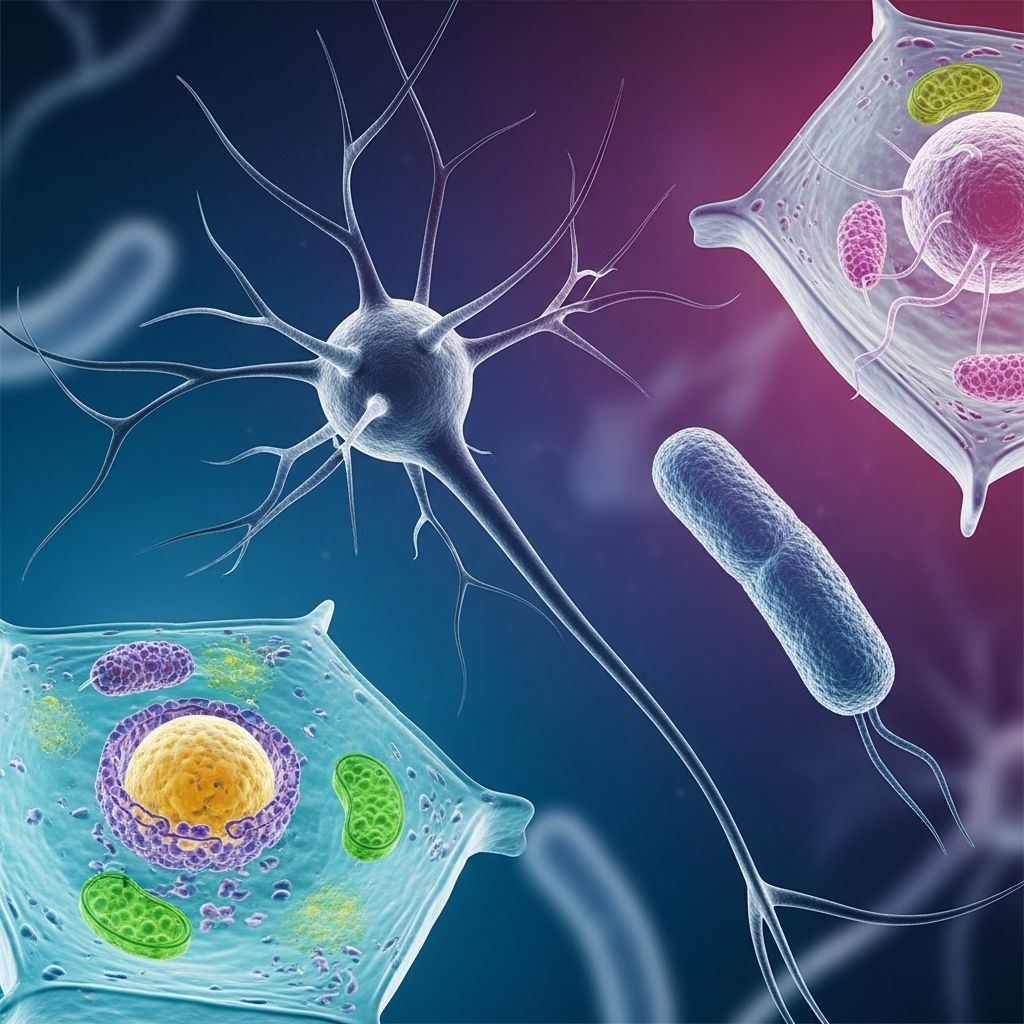
Cells represent the smallest structural and functional units of all living organisms, encapsulating the essence of life within their microscopic boundaries. Every plant, animal, and microorganism is composed of one or more cells, which carry out vital processes like energy production, growth, and reproduction.
Defining the Essence of Cells
A cell is fundamentally a mass of cytoplasm enclosed by a semipermeable cell membrane, which acts as a selective barrier regulating the entry of nutrients and exit of waste products. This membrane-bound structure houses the genetic material and organelles necessary for sustaining life. Cells vary in size but are typically microscopic, visible only under powerful microscopes.
In unicellular organisms like bacteria or yeast, a single cell performs all life functions independently. In multicellular organisms, such as humans, trillions of specialized cells collaborate to form tissues, organs, and systems. The human body alone contains an estimated 10 to 100 trillion cells, each descending from the original zygote formed by the fusion of egg and sperm.
Historical Foundations: The Development of Cell Theory
The recognition of cells as the basic units of life culminated in cell theory, first articulated in 1839 by Theodor Schwann and Matthias Schleiden. They observed that plants and animals are composed of cells, proposing that cells are the elementary particles of organisms. Later, Rudolf Virchow added that all cells arise from pre-existing cells, solidifying the theory.
Cell theory revolutionized biology by shifting focus to intracellular processes. It established three core principles: all living things are made of cells; the cell is the basic unit of structure and function; and cells come only from other cells. This framework underpins modern biological research and understanding of life processes.
Classifying Cells: Prokaryotes vs. Eukaryotes
Cells are broadly classified into two categories: prokaryotic and eukaryotic. Prokaryotic cells, found in bacteria and archaea, lack a true nucleus and membrane-bound organelles. Their genetic material floats freely in the cytoplasm, making them simpler and smaller, often unicellular.
Eukaryotic cells, present in plants, animals, fungi, and protists, feature a membrane-bound nucleus containing DNA and various specialized organelles. These cells can be unicellular or form complex multicellular organisms. Plants and animals exemplify eukaryotic multicellularity.
| Feature | Prokaryotic Cells | Eukaryotic Cells |
|---|---|---|
| Nucleus | Absent (nucleoid region) | Present, membrane-bound |
| Organelles | Few, not membrane-bound | Many, membrane-bound |
| Size | 0.1-5 μm | 10-100 μm |
| Examples | Bacteria, Archaea | Plants, Animals, Fungi |
This table highlights key distinctions, aiding in understanding cellular diversity.
Core Structural Components of Cells
Despite differences, all cells share common features: a plasma membrane, cytoplasm, DNA, and ribosomes. The plasma membrane, a phospholipid bilayer embedded with proteins, maintains cellular integrity and facilitates communication.
Cytoplasm, the gel-like substance filling the cell, suspends organelles and contains the cytosol—a watery fluid hosting metabolic reactions. The cytoskeleton, a network of protein fibers within the cytosol, provides shape, enables movement, and supports intracellular transport.
- Plasma Membrane: Selective permeability for homeostasis.
- Cytoplasm: Site of biochemical reactions.
- Cytoskeleton: Structural support and motility framework.
Key Organelles and Their Roles
Organelles are specialized structures performing specific tasks, likened to ‘little organs.’ In eukaryotic cells, they enhance efficiency.
The Nucleus: Cellular Command Center
The nucleus, surrounded by a double membrane called the nuclear envelope, safeguards DNA—the hereditary blueprint directing growth, reproduction, and protein synthesis. It includes the nucleolus, which assembles ribosomes.
Mitochondria: Powerhouses of Energy
Mitochondria generate ATP through cellular respiration, converting nutrients into usable energy. Possessing their own DNA, they replicate independently and trace evolutionary origins to endosymbiotic bacteria.
Endoplasmic Reticulum and Golgi Apparatus: Protein and Lipid Factories
The rough endoplasmic reticulum (RER), studded with ribosomes, synthesizes proteins. Smooth ER (SER) handles lipid synthesis and detoxification. The Golgi apparatus modifies, sorts, and packages molecules for secretion or use.
Lysosomes and Peroxisomes: Cellular Recycling Centers
Lysosomes digest waste, bacteria, and damaged components using hydrolytic enzymes. Peroxisomes break down fatty acids and detoxify harmful substances, protecting cellular integrity.
- Mitochondria: Energy production via ATP.
- Lysosomes: Intracellular digestion.
- Golgi: Molecule processing and transport.
Cell Functions: Sustaining Life
Cells execute critical functions: metabolism (energy conversion), growth (nutrient uptake and biosynthesis), reproduction (DNA replication and division), and response to stimuli. They synthesize proteins via ribosomes, using DNA instructions.
In multicellular organisms, cells specialize—neurons transmit signals, muscle cells contract, epithelial cells form barriers—cooperating via communication pathways.
Cell Division and Reproduction
Reproduction occurs through mitosis (somatic cells) or meiosis (gametes). Mitosis ensures identical daughter cells for growth and repair; meiosis introduces genetic diversity. Prokaryotes use binary fission.
The cell cycle includes interphase (growth and DNA replication) and mitosis (nuclear division), followed by cytokinesis (cytoplasmic division).
Cells in Human Health and Disease
Disruptions in cellular function lead to diseases like cancer, where uncontrolled division occurs. Understanding cells enables therapies targeting specific processes, such as mitochondrial dysfunction in metabolic disorders.
Stem cells, undifferentiated cells capable of becoming specialized types, hold promise for regenerative medicine.
Frequently Asked Questions (FAQs)
What is the smallest unit of life?
The cell is the smallest structural and functional unit capable of independent life processes.
How many cells are in the human body?
An adult human has 10 to 100 trillion cells, varying by individual.
What is the difference between prokaryotic and eukaryotic cells?
Prokaryotes lack a nucleus; eukaryotes have one plus organelles.
Why are mitochondria important?
They produce ATP, the cell’s energy currency.
Can cells live independently?
Yes, in unicellular organisms like bacteria; in multicellular ones, they depend on cooperation.
Advancements in Cell Biology
Modern techniques like CRISPR gene editing and live-cell imaging reveal dynamic cellular behaviors. These tools deepen insights into development, aging, and disease.
Research continues to uncover cellular communication via exosomes and signaling pathways, paving ways for innovative treatments.
References
- Cell | Definition, Types, Functions, Diagram, Division, Theory, & Facts — Britannica. 2023-10-01. https://www.britannica.com/science/cell-biology
- What is a cell?: MedlinePlus Genetics — National Library of Medicine. 2024-01-15. https://medlineplus.gov/genetics/understanding/basics/cell/
- Cell (biology) – Wikipedia — Wikipedia. 2026-04-01. https://en.wikipedia.org/wiki/Cell_(biology)
- Cell – Genome.gov — National Human Genome Research Institute. 2023-05-20. https://www.genome.gov/genetics-glossary/Cell
- Overview of Cells – Visible Body — Visible Body. 2024-02-10. https://www.visiblebody.com/learn/biology/cells/cell-overview
- Cells – Special Subjects – Merck Manual Consumer Version — Merck & Co. 2025-03-15. https://www.merckmanuals.com/home/special-subjects/the-human-body/cells

- Integrated M.A. in Applied Linguistics, University of Hyderabad
- 5+ years in editorial, instructional, SEO, and research-based writing
Sneha is a relationships and lifestyle writer with a strong foundation in applied linguistics and certified training in relationship coaching. She brings over five years of writing experience to theskillvault, crafting thoughtful, research-driven content that empowers readers to build healthier relationships, boost emotional well-being, and embrace holistic living. Her writing and insights reflect the belief that beauty, happiness, and wellness…