
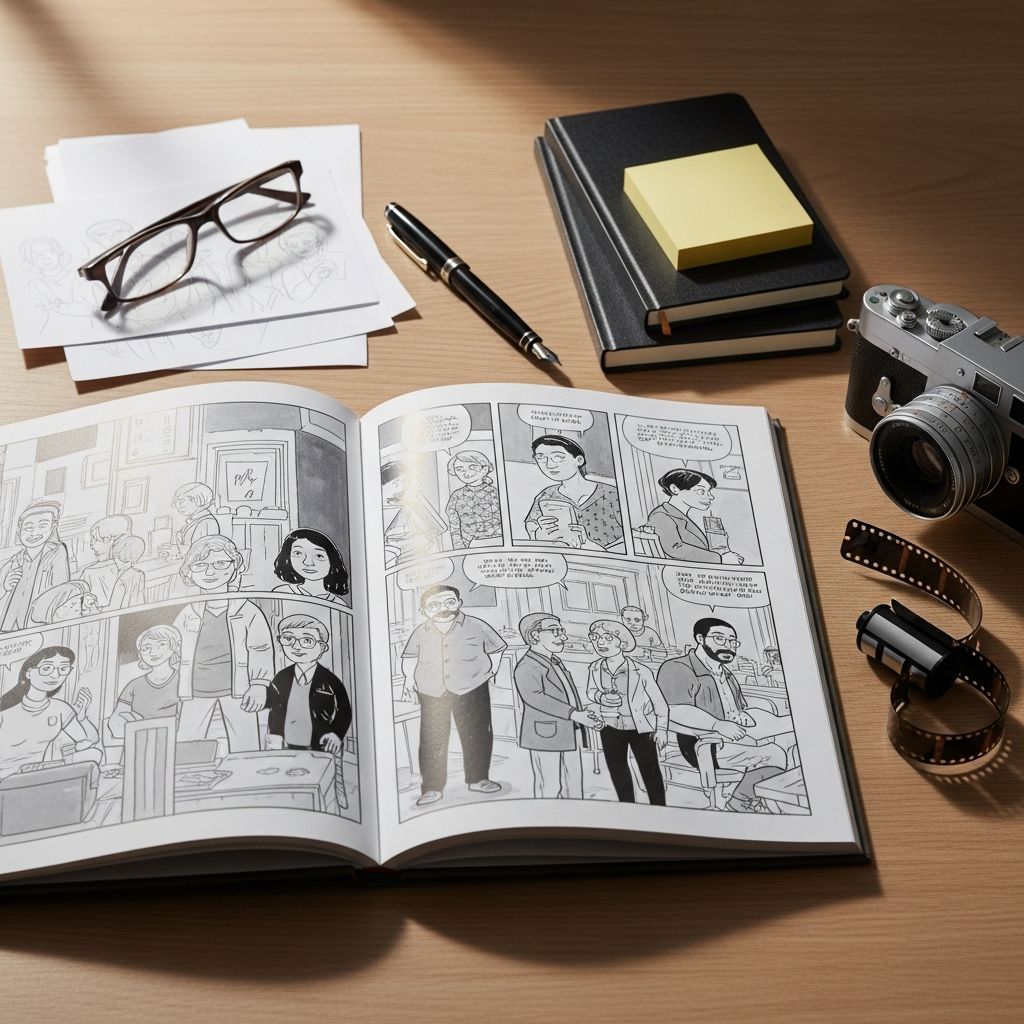
Graphic memoirs represent a captivating fusion of personal narrative and visual artistry, transforming intimate life experiences into sequential art that resonates deeply with readers. This genre leverages the strengths of both text and illustration to convey emotions, events, and reflections in ways traditional prose cannot match.
Defining the Essence of Graphic Memoirs
A **graphic memoir** is an autobiographical or semi-autobiographical account presented through comics-style sequential art, blending written prose with drawings, panels, and visual motifs. Unlike standard memoirs that rely solely on words, these works use imagery to “show” rather than just “tell,” making complex feelings and memories immediately accessible.
The format allows creators to vary the balance between text and visuals. Some emphasize expansive artwork for immersive scenes, while others incorporate minimal sketches alongside dense narration. This flexibility stems from its roots in comics and graphic novels, evolving into a distinct nonfiction subcategory since the 1980s.
Key traits include a focused scope—often zeroing in on pivotal events, relationships, or emotional arcs rather than a full life survey. Visual elements like panel layout, font choices, and color palettes enhance storytelling, transmitting subtleties such as tone, pace, and inner turmoil directly to the audience.
The Rise and Evolution of This Genre
Graphic memoirs gained prominence with Art Spiegelman’s Maus (1980s), a profound Holocaust narrative depicted with anthropomorphic animals, which clinched a Pulitzer Prize in 1992. This milestone elevated the form from niche comics to mainstream literature, inspiring diverse voices across age groups and themes.
Today, the genre thrives in publishing, appealing to adults, young readers, and graphic novel enthusiasts. It overlaps with manga, comic books, and prose memoirs but stands out for its nonfiction authenticity paired with artistic liberty. Recent years have seen explorations of trauma, identity, health, and family dynamics, often tackling sensitive topics with raw honesty.
Why Visuals Elevate Personal Narratives
The comic medium’s power lies in its multimodal approach: images capture nuances words struggle to express, like fleeting expressions or chaotic environments. For instance, irregular panel sizes can mirror emotional intensity, while speech bubbles reveal character psyches through stylized fonts.
- Immediacy: Readers experience memories viscerally, fostering empathy.
- Accessibility: Shorter, focused stories suit modern attention spans compared to lengthy prose memoirs.
- Creative Freedom: Metaphors, like turning a character into a giant to symbolize illness, amplify emotional impact without literalism.
This blend makes graphic memoirs ideal for heavy subjects—mental health, war, disability—conveying pain and resilience more potently than text alone.
Iconic Examples That Define the Genre
Notable works showcase the genre’s range. Here’s a curated selection:
| Title | Author | Core Theme | Art Style |
|---|---|---|---|
| Fun Home | Alison Bechdel | Family secrets and queer identity | Detailed, realistic line art |
| Maus | Art Spiegelman | Holocaust survival | Anthropomorphic animals |
| Giant | Mollie Ray | Sibling cancer journey | Wordless biro sketches |
These titles highlight stylistic diversity: from intricate realism to minimalist, even silent storytelling, proving the genre’s versatility.
Crafting Your Own Graphic Memoir: A Step-by-Step Guide
Creating a graphic memoir demands blending narrative craft with visual design. Start with these practical steps, drawn from expert advice.
- Gather Anecdotes: Collect life stories rich in sensory details and emotional depth, focusing on transformative moments.
- Storyboard the Narrative: Sketch rough panels to plot pacing, mixing dialogue, thoughts, and visuals. Vary panel types to avoid text-heavy pages.
- Select Art Style: Choose based on tone—cartoonish for humor, realistic for gravity, or abstract for metaphor. Study similar works for inspiration.
- Integrate Text and Image: Use bubbles for speech, captions for reflection, ensuring visuals carry equal narrative weight.
- Refine and Edit: Test for flow; visuals should nuance the story, revealing subtext like unspoken tensions.
Visuals add layers: a shadowed face hints at grief, while vibrant colors evoke joy. This synergy distinguishes graphic memoirs from plain narratives.
Artistic Styles and Their Storytelling Impact
Style choices shape reader perception profoundly.
- Realistic: Mimics photography for raw authenticity, suiting gritty real-life tales.
- Cartoonish: Softens trauma, allowing humor amid hardship.
- Minimalist/Sketchy: Emphasizes emotion over detail, as in biro-drawn wordless works.
- Symbolic: Employs metaphors (e.g., giants for illness) to externalize internal states.
Color usage varies too: monochrome for somber moods, saturated hues for vitality. These decisions reflect cultural or personal signatures, enhancing universality.
Challenges and Creative Liberties in Truth-Telling
Autobiography demands fidelity, yet comics invite exaggeration. Graphic memoirs often stylize reality—altering appearances or sequences—for emotional truth over literal accuracy. Readers embrace this, valuing authenticity in feeling.
Challenges include balancing vulnerability with artistry; creators must navigate memory’s subjectivity while engaging visually. Despite this, the format’s intimacy builds trust, drawing audiences to unfiltered lives.
The Appeal Across Audiences and Formats
Graphic memoirs attract diverse readers: their brevity and visuals lower entry barriers, serving as memoir gateways. Libraries stock them as essential nonfiction, blending entertainment with insight.
From young adult explorations of identity to adult dives into loss, they span demographics. Digital adaptations and anthologies further expand reach.
Frequently Asked Questions (FAQs)
What distinguishes a graphic memoir from a graphic novel?
Graphic novels are typically fictional; graphic memoirs are autobiographical or semi-autobiographical, rooted in real events.
Do graphic memoirs require advanced drawing skills?
No—styles range from professional polish to simple sketches. Storytelling trumps perfection.
Are they suitable for children?
Some yes, with age-appropriate themes; others tackle mature topics like trauma.
How long are graphic memoirs usually?
Focused scopes make them concise, often 100-300 pages, unlike expansive prose memoirs.
Can graphic memoirs be wordless?
Yes, relying entirely on images, as in Giant, to convey narrative through visuals alone.
Future Directions in Graphic Memoir Publishing
The genre surges forward, with indie presses and majors championing diverse creators. Expect more on global migrations, neurodiversity, and climate impacts, visualized innovatively. Hybrid digital formats may blend interactivity with tradition, broadening impact.
Its enduring draw? In a text-saturated world, graphic memoirs offer vivid windows into humanity, proving pictures truly speak louder—when paired with words.
References
- Graphic Memoir Defined: 12 Illustrated Memoir Books — MasterClass. 2023. https://www.masterclass.com/articles/graphic-memoir
- Genre Guide: Graphic Memoirs — YALSA (American Library Association). 2015-02-16. https://www.yalsa.ala.org/thehub/2015/02/16/genre-guide-graphic-memoirs/
- Graphic Memoir: 6 Tips for Writing a Great Memoir — Publishing Xpress. 2024-01-03. https://www.publishingxpress.com/blog/graphic-memoir-6-tips/
- Graphic Memoir – Graphic Medicine — Jefferson Libraries (Thomas Jefferson University). N/A. https://jefflibraries.libguides.com/c.php?g=957582&p=6912876
- Graphic Memoirs – An Underrated Genre — Mark-Making. N/A. https://www.mark-making.com/graphic-memoirs-an-underrated-genre/
- Graphic Format Memoirs: Adult Core Collection — Denver Public Library. N/A. https://www.denverlibrary.org/adult/list/core-collection/graphic-format-memoirs
- Drawn From Life: How the Graphic Novel Memoir Takes Creative Liberties — Faber & Faber. 2024. https://www.faber.co.uk/journal/how-the-graphic-novel-memoir-takes-creative-liberties-with-autobiography/

- Integrated M.A. in Applied Linguistics, University of Hyderabad
- 5+ years in editorial, instructional, SEO, and research-based writing
Sneha is a relationships and lifestyle writer with a strong foundation in applied linguistics and certified training in relationship coaching. She brings over five years of writing experience to theskillvault, crafting thoughtful, research-driven content that empowers readers to build healthier relationships, boost emotional well-being, and embrace holistic living. Her writing and insights reflect the belief that beauty, happiness, and wellness…