
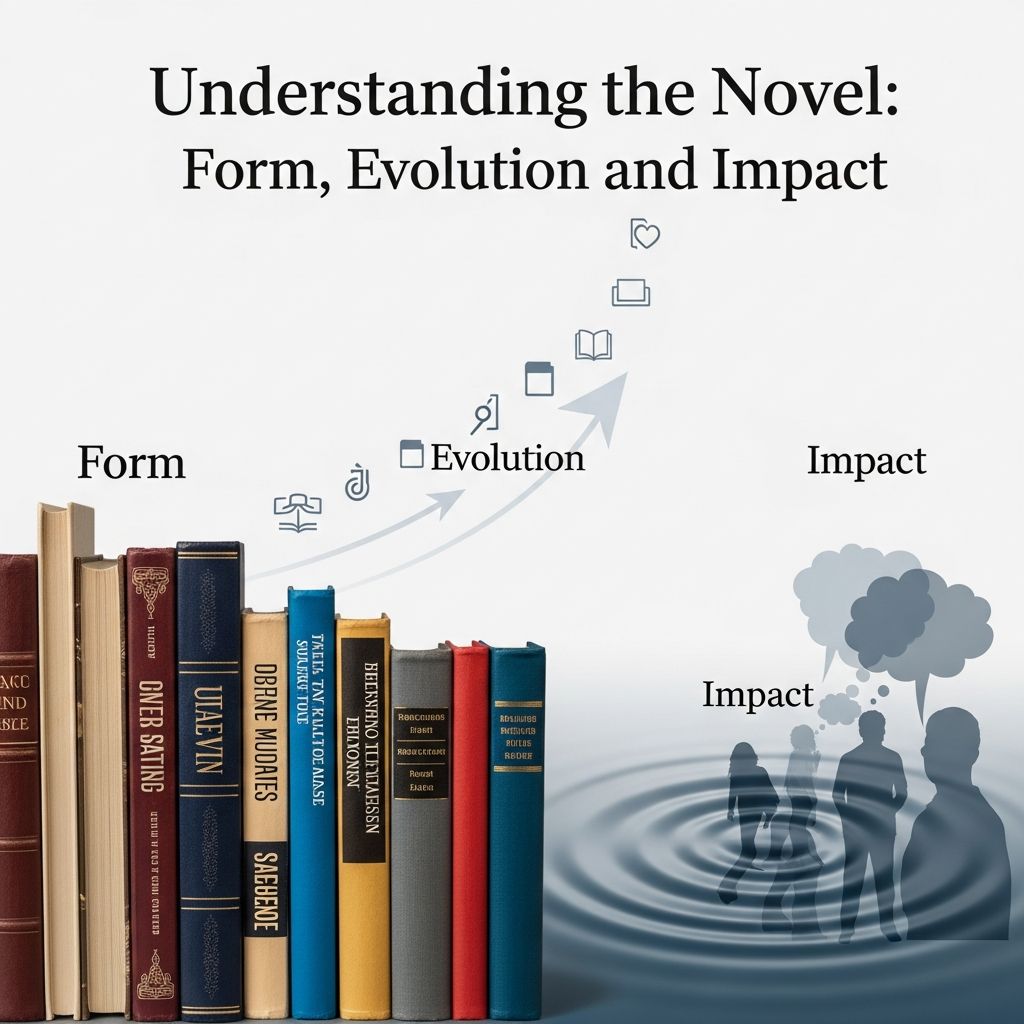
A novel represents an extended, imaginative prose narrative that delves deeply into human experiences through interconnected events, characters, and settings, typically spanning tens of thousands of words to craft complex stories.
Core Definition and Distinctions
At its heart, a novel is a work of fiction crafted in prose, distinguishing it from poetry or drama by its continuous narrative flow without verse or staged dialogue primacy. Unlike shorter forms like short stories or novellas, novels allow for expansive world-building and multi-layered plots. The term originates from the Italian novella, meaning ‘new,’ reflecting its historical role as innovative storytelling.
Novels differ from nonfiction by prioritizing invented scenarios over factual reporting, though they often mirror real emotions and societal truths. They serve not just as entertainment but as mirrors to the human condition, fostering empathy and introspection.
Historical Foundations of Novelistic Storytelling
The novel’s lineage stretches back millennia, evolving from ancient epics like the Greek Odyssey or Sanskrit Mahabharata, which featured prose elements amid verse. In English literature, the form crystallized in the 18th century with Daniel Defoe’s Robinson Crusoe (1719), often hailed as a foundational text for its realistic prose and individual focus.
Prior eras relied on oral traditions or public performances, but printing press innovations in the 15th century enabled private reading and longer narratives. The 18th-19th centuries saw explosions in realist works by Jane Austen and Charles Dickens, addressing social issues through fictional lenses. The 20th century introduced modernist experiments by James Joyce and postmodern deconstructions by Thomas Pynchon.
This evolution reflects societal shifts: from communal myths to personal explorations amid industrialization and individualism.
Fundamental Building Blocks of a Novel
Novels weave several indispensable elements into cohesive tales:
- Plot: The sequence of events driving the narrative, often following exposition, rising action, climax, falling action, and resolution. Conflicts—internal, external, or societal—propel the story forward.
- Characters: Protagonists, antagonists, and supporting figures who evolve. Depth comes from backstories, motivations, and arcs, making readers invest emotionally.
- Setting: Time, place, and atmosphere grounding the fiction, from historical Europe to futuristic dystopias, influencing mood and plot.
- Theme: Central ideas like love, power, identity, explored subtly through events rather than preached.
- Point of View: Narrative perspective—first-person intimacy, third-person omniscience—shaping reader experience.
These components interlock, with dialogue advancing plot and revealing character, while descriptive prose paints vivid scenes.
Length Benchmarks and Structural Variations
While no rigid rules exist, novels generally exceed 40,000-50,000 words, averaging 80,000-120,000, enabling subplots and development. Shorter ‘novellas’ (20,000-50,000 words) like George Orwell’s Animal Farm offer focused intensity, while epics like Tolstoy’s War and Peace surpass 500,000 words.
| Form | Word Count Range | Typical Features |
|---|---|---|
| Short Story | 1,000-20,000 | Single focus, concise |
| Novella | 20,000-50,000 | Limited subplots, tight arc |
| Novel | 50,000+ | Complex plots, deep characters |
| Epic Novel | 200,000+ | Multiple arcs, vast scope |
This table illustrates how length correlates with narrative ambition.
Diverse Genres Within the Novel Form
A novel isn’t a genre but a vessel for many: romance emphasizes relationships; mystery unravels crimes; science fiction extrapolates technology; fantasy conjures magic; historical fiction reimagines eras. Literary novels prioritize stylistic innovation and psychological depth over plot speed.
- Speculative Fiction: Explores ‘what if’ scenarios, blending sci-fi and fantasy.
- Thrillers: High-stakes suspense with twists.
- Coming-of-Age: Protagonist’s growth amid challenges.
Hybrid genres like cli-fi (climate fiction) reflect contemporary concerns.
The Artistry and Craft of Novel Writing
Authors employ techniques like foreshadowing, unreliable narrators, and stream-of-consciousness to engage readers. Showcasing emotions through actions (‘she clenched her fists’ vs. ‘she was angry’) immerses audiences. Pacing balances tension with reflection, while revisions refine voice.
Modern tools like software aid plotting, but the core remains human insight into universal truths.
Cultural and Psychological Resonance
Novels transport readers, build empathy by inhabiting diverse minds, and challenge norms. Studies show they enhance emotional intelligence and vocabulary. Banned books like To Kill a Mockingbird highlight their provocative power.
In digital eras, audiobooks and e-books expand access, yet print’s tactile appeal endures.
Evolving Trends in Contemporary Novels
Today’s novels grapple with identity, climate, AI ethics. Diverse voices—from Afrofuturism to queer narratives—enrich the canon. Short-form serials on platforms blur lines with traditional novels, signaling adaptation.
Frequently Asked Questions About Novels
What differentiates a novel from a novella?
Novels typically exceed 50,000 words with intricate plots; novellas (20,000-50,000) are more concise.
Can novels be based on true events?
Yes, historical or semi-autobiographical novels blend fact and fiction for authenticity.
Is there a minimum word count for a novel?
Commonly 50,000, but genre and publisher standards vary; quality trumps length.
Why do novels matter in the digital age?
They offer deep, reflective escapes amid short-form content, fostering sustained focus.
How has the novel form changed over time?
From 18th-century realism to postmodern fragmentation, it mirrors societal shifts.
Conclusion: The Timeless Allure of Novels
Novels endure as profound vessels for imagination, reflection, and connection, evolving yet rooted in storytelling’s essence.
References
- What Is a Novel? Definition and Examples — Grammarly. 2023. https://www.grammarly.com/blog/writing-tips/what-is-a-novel/
- What is a Novel? — JotterPad. 2023. https://jotterpad.app/what-is-a-novel/
- Novel | Definition, Elements, Examples, Types, & Facts — Britannica. 2024-01-21. https://www.britannica.com/art/novel
- What is a Novel? — The Novelry. 2023. https://www.thenovelry.com/blog/what-is-a-novel
- Novel — Wikipedia. 2026-04-04. https://en.wikipedia.org/wiki/Novel
- What is a Novel — HarperCollins Publishers UK. 2023. https://harpercollins.co.uk/blogs/glossary/what-is-novel

Medha Deb is an editor with a master's degree in Applied Linguistics from the University of Hyderabad. She believes that her qualification has helped her develop a deep understanding of language and its application in various contexts. Medha specializes in the areas of beauty, health, sports, and wellness and is committed to ensuring that the content on the website is…