
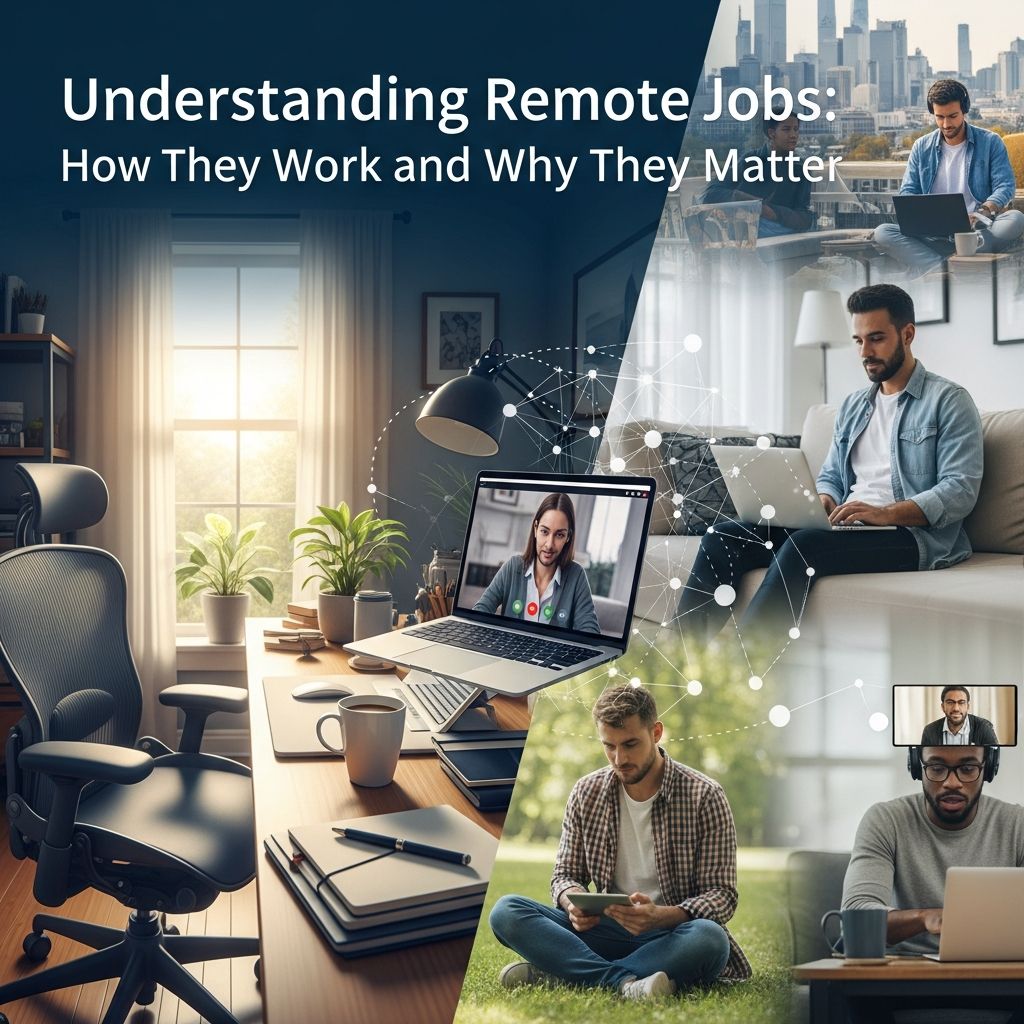
What Exactly Is a Remote Job?
A remote job is any professional role that does not require the employee to be physically present in a central office or workplace on a regular basis. Instead, the work is performed from a location chosen by the employee—often a home office, co-working space, or even a different city or country—as long as there is reliable internet access and the necessary tools to complete tasks.
Unlike traditional in-office roles, remote jobs rely heavily on digital communication, cloud-based platforms, and asynchronous workflows. The core idea is that the work itself matters more than the location where it’s done. This shift has been accelerated by advances in technology, changes in employee expectations, and evolving business models that prioritize flexibility and efficiency.
How Remote Jobs Function in Practice
Remote jobs operate on the principle that tasks can be completed independently and collaboratively without daily in-person interaction. Employees typically use a combination of tools to stay connected and productive:
- Communication platforms: Slack, Microsoft Teams, Zoom, and email for real-time and asynchronous discussions.
- Project management tools: Asana, Trello, Jira, or ClickUp to track tasks, deadlines, and responsibilities.
- Cloud storage and collaboration: Google Workspace, Microsoft 365, Dropbox, and Notion for shared documents and real-time editing.
- Time tracking and productivity tools: Clockify, Harvest, or RescueTime (where used) to monitor work hours and focus.
Work is often organized around deliverables and outcomes rather than strict schedules, though many remote roles still follow standard business hours or operate within defined time zones to facilitate collaboration.
Key Differences Between Remote and Traditional Office Roles
While the core responsibilities of a job may remain the same, the way work is structured and experienced can differ significantly:
| Aspect | Traditional Office Role | Remote Job |
|---|---|---|
| Location | Fixed office location | Flexible; home, co-working, or any suitable space |
| Commute | Required daily or several times per week | Eliminated or greatly reduced |
| Work Hours | Often rigid 9-to-5 structure | More flexible, though may follow core hours |
| Communication | Primarily in-person, with some digital tools | Primarily digital, with scheduled video calls |
| Supervision | Direct, visible oversight | Outcome-based, trust-driven management |
These differences mean that remote jobs often require a higher degree of self-discipline, clear communication, and proactive time management from employees, while employers must focus on results rather than physical presence.
Why Remote Jobs Have Become So Popular
The rise of remote work is not just a temporary trend; it reflects deeper changes in how people want to work and how businesses want to operate. Several factors have contributed to this shift:
- Technological advancement: High-speed internet, cloud computing, and collaboration tools have made it feasible to work from almost anywhere.
- Employee demand: Workers increasingly prioritize flexibility, work-life balance, and autonomy over rigid office schedules.
- Business efficiency: Companies can reduce overhead costs, access a broader talent pool, and improve retention by offering remote options.
- Globalization: Businesses operate across borders, and remote work allows them to hire the best talent regardless of geography.
- Pandemic acceleration: The global health crisis forced many organizations to adopt remote work, proving that many roles can be performed effectively outside the office.
As a result, remote jobs are no longer limited to tech or digital roles; they now span industries including marketing, customer support, education, finance, healthcare, and more.
Benefits of Remote Jobs for Employees
For individuals, remote jobs offer a range of advantages that go beyond simply avoiding a commute:
- Time and cost savings: Eliminating daily travel saves hours each week and reduces expenses related to transportation, parking, and meals.
- Greater flexibility: Employees can design their schedules around personal needs, such as childcare, appointments, or preferred working hours.
- Improved work-life balance: With more control over their environment and time, many remote workers report better mental and physical well-being.
- Location independence: Remote work allows people to live in areas with a lower cost of living, closer to family, or in more desirable climates.
- Increased autonomy: Remote roles often emphasize trust and results, giving employees more ownership over how they complete their work.
- Access to more opportunities: Job seekers are no longer limited to roles within commuting distance, opening up a much wider range of positions and industries.
These benefits can lead to higher job satisfaction, reduced stress, and a stronger sense of control over one’s career and daily life.
Advantages of Remote Jobs for Employers
Organizations that embrace remote work also gain significant strategic and operational benefits:
- Access to a global talent pool: Companies can hire the best candidates regardless of where they live, rather than being restricted to a local labor market.
- Lower overhead costs: Reduced need for office space, utilities, and on-site amenities can lead to substantial savings.
- Higher productivity in many cases: Studies have shown that remote workers often complete more work due to fewer office distractions and the ability to work during their peak hours.
- Improved employee retention: Flexibility is a major factor in employee satisfaction, and offering remote options can reduce turnover and associated hiring costs.
- Business continuity and resilience: Remote-capable teams are better equipped to handle disruptions such as natural disasters, health crises, or travel restrictions.
- Environmental and social impact: Fewer commutes mean lower carbon emissions, and remote work can support more inclusive hiring practices for caregivers, people with disabilities, and those in underserved regions.
For many businesses, remote work is not just a perk but a competitive advantage in attracting and retaining top talent.
Common Challenges of Remote Jobs
Despite the many benefits, remote work also presents real challenges that both employees and employers must address:
- Isolation and loneliness: Lack of in-person interaction can lead to feelings of disconnection, especially for extroverted individuals or those who thrive on social energy.
- Communication barriers: Misunderstandings can occur more easily in written communication, and time zone differences can complicate coordination.
- Blurred work-life boundaries: Without a clear separation between home and office, some remote workers struggle to disconnect, leading to overwork and burnout.
- Technology and security issues: Remote employees may face connectivity problems, hardware failures, or cybersecurity risks if proper protocols are not in place.
- Management and accountability: Supervisors may find it harder to monitor progress and provide support, requiring a shift from presence-based to results-based evaluation.
- Onboarding and culture building: Integrating new hires and maintaining a strong company culture can be more challenging in a fully remote environment.
These challenges are not insurmountable, but they require intentional strategies, clear policies, and ongoing support from leadership.
Who Is a Good Fit for Remote Work?
Remote jobs are not ideal for everyone, and success often depends on personality, work style, and life circumstances. People who tend to thrive in remote roles typically:
- Are self-motivated and disciplined, able to manage their time without constant supervision.
- Communicate clearly and proactively, especially in writing.
- Have a dedicated workspace where they can focus without major distractions.
- Are comfortable with technology and willing to learn new tools.
- Can set boundaries between work and personal life to avoid burnout.
Roles that are particularly well-suited for remote work include software development, writing and editing, digital marketing, customer support, data analysis, project management, and many administrative and consulting positions.
How to Succeed in a Remote Job
Whether you’re new to remote work or looking to improve your performance, these practical strategies can help:
- Create a dedicated workspace: Designate a specific area for work to mentally separate it from personal life.
- Stick to a routine: Set consistent start and end times, take regular breaks, and follow a daily schedule.
- Communicate proactively: Keep your team informed about your progress, availability, and any blockers you encounter.
- Use tools effectively: Master the core platforms your company uses and explore features that can boost productivity.
- Set boundaries: Define clear work hours and avoid checking emails or messages outside those times when possible.
- Stay connected: Participate in virtual meetings, team chats, and informal interactions to maintain relationships.
- Invest in self-care: Prioritize physical activity, healthy eating, and mental well-being to sustain long-term performance.
Success in a remote job is less about where you work and more about how you manage your time, energy, and relationships.
Types of Remote Work Arrangements
Remote jobs come in several forms, each with different levels of flexibility and structure:
- Full-time remote: The role is entirely remote, with no expectation of regular office attendance.
- Hybrid remote: Employees split their time between home and office, often following a set schedule (e.g., 2–3 days in the office).
- Remote-friendly: The company allows remote work in some capacity, but policies may vary by team or role.
- Location-independent: Employees can work from anywhere, including different countries, as long as they meet performance expectations.
- Freelance or contract remote: Independent professionals work remotely on a project or hourly basis for multiple clients.
When evaluating remote opportunities, it’s important to understand the specific arrangement and what is expected in terms of availability, communication, and performance.
How to Find and Apply for Remote Jobs
Finding remote work requires a slightly different approach than traditional job searching:
- Use specialized job boards: Platforms like We Work Remotely, Remote.co, FlexJobs, and LinkedIn’s remote filters can help you discover legitimate opportunities.
- Optimize your resume and profile: Highlight remote-friendly skills such as self-management, digital communication, and experience with collaboration tools.
- Prepare for remote interviews: Test your tech setup, choose a quiet and professional background, and be ready to discuss how you manage remote work.
- Research company culture: Look for organizations that have clear remote policies, strong communication practices, and a track record of supporting distributed teams.
- Be cautious of scams: Watch out for jobs that ask for money upfront, lack clear details, or seem too good to be true.
With the right preparation and mindset, remote jobs can open up a world of career possibilities.
Frequently Asked Questions (FAQs)
What is the difference between remote work and working from home?
Remote work refers to any job that can be done outside a central office, often with flexibility in location and schedule. Working from home is a subset of remote work where the employee performs their duties from their residence, but it may still be part of a traditional office-based role with occasional in-person requirements.
Are remote jobs less stable than office jobs?
Remote jobs are not inherently less stable. Many companies now treat remote roles as permanent, full-time positions with the same benefits and career progression opportunities as in-office roles. Stability depends more on the company, industry, and role than on the work location.
Can I do a remote job if I have children or caregiving responsibilities?
Yes, many people with caregiving responsibilities successfully work remotely. However, it requires careful planning, clear boundaries, and often some flexibility from both the employee and employer. Open communication with your manager about your needs and availability is key.
Do remote jobs pay less than office jobs?
Not necessarily. Some remote roles are paid based on the employee’s location, which can result in lower salaries in areas with a lower cost of living. However, many companies offer competitive, location-agnostic pay, especially for specialized or high-demand roles. It’s important to research and negotiate compensation based on the role, not just the work arrangement.
How can companies ensure fairness in remote teams?
Companies can promote fairness by establishing clear performance metrics, providing equal access to opportunities and resources, encouraging inclusive communication, and regularly checking in with all team members regardless of location. Training managers to lead distributed teams effectively is also crucial.
References
- Telework and Remote Work: A Guide for Employers and Employees — U.S. Department of Labor, Office of Personnel Management. 2023. https://www.opm.gov/policy-data-oversight/pay-leave/reference-materials/fact-sheets/telework-fact-sheet/
- How Remote Work Is Shaping the Future of Work — McKinsey & Company. 2023. https://www.mckinsey.com/featured-insights/future-of-work/how-remote-work-is-shaping-the-future-of-work
- Remote Work and Productivity: Evidence from a Field Experiment — Stanford University, Nicholas Bloom. 2022. https://web.stanford.edu/~nbloom/RemoteWork.pdf

- Integrated M.A. in Applied Linguistics, University of Hyderabad
- 5+ years in editorial, instructional, SEO, and research-based writing
Sneha is a relationships and lifestyle writer with a strong foundation in applied linguistics and certified training in relationship coaching. She brings over five years of writing experience to theskillvault, crafting thoughtful, research-driven content that empowers readers to build healthier relationships, boost emotional well-being, and embrace holistic living. Her writing and insights reflect the belief that beauty, happiness, and wellness…