
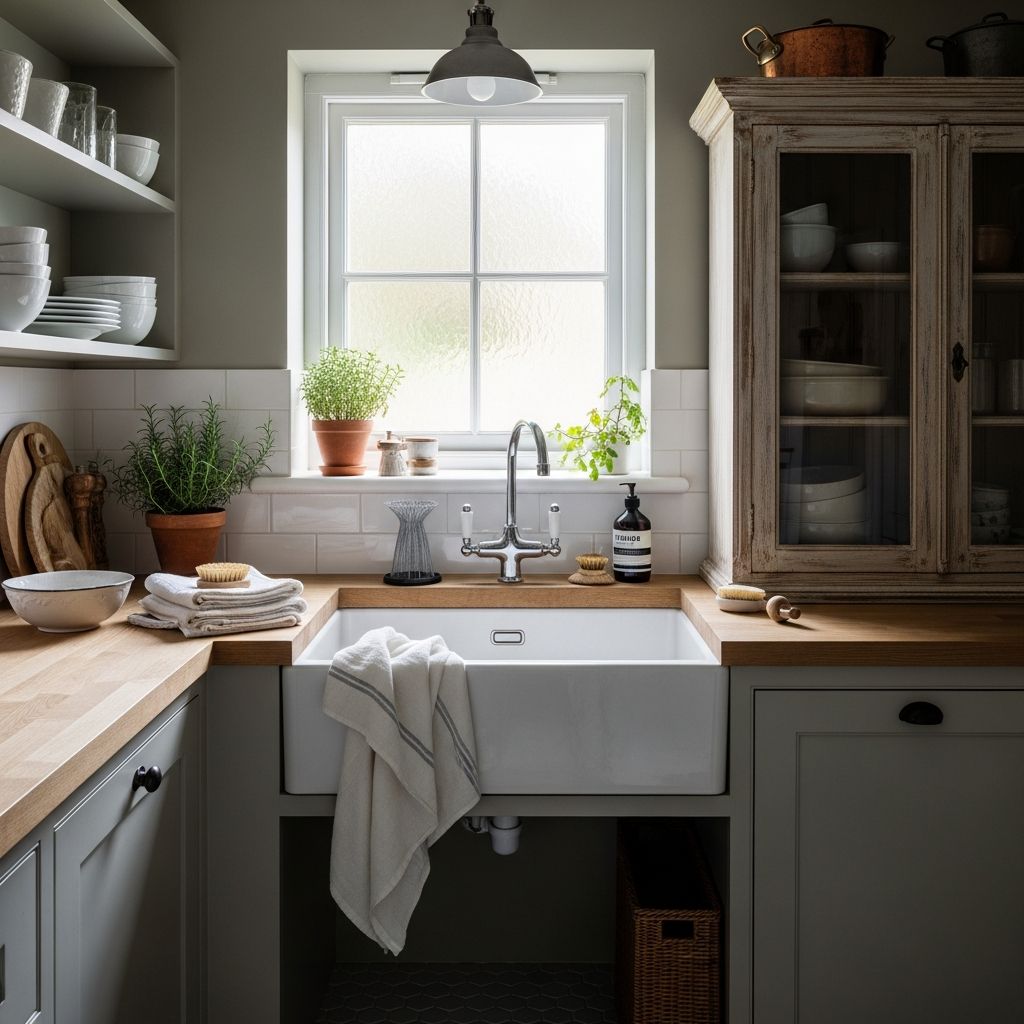
The scullery stands as one of the most underrated features in home architecture, offering a dedicated zone for the messiest kitchen tasks while preserving the elegance of primary living areas. Historically rooted in practicality, this space has evolved into a versatile extension that enhances daily functionality and aesthetic appeal in modern residences.
Origins and Evolution of the Scullery
Tracing back to medieval times, the concept of a scullery emerged from the Old French term ‘esculerie,’ denoting a modest room primarily for dishwashing and utensil care. Positioned adjacent to the main kitchen, often near water sources like wells or rainwater collectors, it served as a utilitarian outpost to manage household grime away from communal spaces.
During the Victorian and Edwardian eras, sculleries became indispensable in grand estates. Servants utilized these areas for intensive labor, including scrubbing pots, laundering linens, and boiling water in large copper vessels. The design emphasized efficiency with features like slop sinks, drain pipes, plate racks, and sturdy worktables, ensuring the formal kitchen remained pristine for family and guests.
As societal structures shifted post-World War eras, sculleries adapted. In military and commercial settings, they morphed into assembly-line stations for rinsing cookware near serving lines, highlighting their enduring role in high-volume cleaning operations.
Core Functions in Traditional Homes
In classic households, the scullery functioned as an overflow kitchen, handling tasks that generated steam, odors, or disorder. Key activities included:
- Washing and storing dishes alongside cooking tools.
- Soaking and laundering clothes in dedicated tubs.
- Boiling water for culinary or bathing needs via coppers or stoves.
- Ironing and minor food prep to support the main kitchen.
These rooms typically featured hot and cold water sinks, ample shelving, and ventilation to cope with dampness and heat. Their rear-of-house location minimized visibility, aligning with era-specific norms where labor was concealed.
Reviving the Scullery in Contemporary Kitchens
Today’s scullery reimagines its ancestor as a ‘hidden kitchen’ or sophisticated butler pantry, addressing the chaos of family life. Homeowners crave spotless main kitchens for entertaining, yet reality demands space for prep debris and appliance overflow. The scullery provides this sanctuary, acting like a powder room for culinary messes.
Modern iterations prioritize seamless integration. Often tucked behind swinging doors or cabinetry, they boast upgraded amenities:
- Secondary sinks for vegetable rinsing or handwashing.
- Extra dishwashers to handle post-dinner loads discreetly.
- Ample counter space for chopping without cluttering islands.
- Custom cabinetry for small appliances, pantry staples, and serveware.
This setup allows hosts to showcase gleaming countertops while dirty work happens out of sight, elevating both workflow and ambiance.
Design Ideas for Modern Sculleries
Crafting a scullery demands thoughtful planning to maximize utility without sacrificing style. Begin with layout: a walk-in pantry style works for compact homes, while larger formats mimic mini-kitchens. Essential elements include durable flooring like porcelain tile for spill resistance and upper cabinetry for vertical storage.
| Feature | Traditional | Modern |
|---|---|---|
| Sink | Slop sink with drain | Deep farmhouse or apron-front |
| Storage | Open shelves, racks | Pull-out drawers, lazy Susans |
| Appliances | Copper boilers | Compact dishwasher, microwave |
| Lighting | Gas lamps | LED under-cabinet strips |
Incorporate beverage stations with coffee makers or wine fridges, or transform into a baking nook with marble counters. For multi-functional use, add stacked laundry units, turning it into a utility hub.
Aesthetic choices matter: match cabinetry to the main kitchen using shaker-style doors in neutral tones, or contrast with matte black hardware for drama. Glass-front uppers display dishware, blending utility with display.
Benefits of Adding a Scullery to Your Home
Investing in a scullery yields tangible advantages. It declutters primary spaces, boosting organization—imagine stashing mixers and blenders away, freeing islands for plating. Cleanup streamlines as one dishwasher runs in the scullery while guests mingle.
Privacy enhances entertaining: prep salads or wash stemware without exposing chaos. Families benefit from dedicated zones for kids’ snacks or homework snacks, reducing traffic in the main area. Resale value surges, as buyers seek these ‘luxury’ features in open-concept plans.
Ergonomically, it promotes efficiency. Multiple sinks cut travel time, and zoned lighting prevents eye strain during late-night chores. Environmentally, better organization minimizes food waste through visible pantry access.
Scullery vs. Butler’s Pantry: Key Differences
Though often interchangeable, distinctions exist. A butler’s pantry focuses on serving—think wet bars, glassware storage, and warming drawers for dinners. Sculleries emphasize grunt work: dishwashing, prep, and appliance hiding.
| Aspect | Scullery | Butler’s Pantry |<|--------|----------|----------------|>
|
Hybrids combine both, offering versatility for diverse needs.
Practical Tips for Scullery Implementation
Budget-conscious? Retrofit existing closets or mudrooms. For new builds, allocate 50-100 square feet adjacent to the kitchen. Plumbing proximity saves costs—aim for shared lines. Ventilation is crucial; install exhaust fans to combat humidity.
Customization shines: floating shelves for pots, pegboards for utensils, or integrated spice racks. Smart tech like touchless faucets and app-controlled lighting adds convenience. Maintenance is simple—quartz counters resist stains, and sealed grout prevents mildew.
Real-World Examples and Inspiration
Envision a coastal home’s scullery with white shiplap, a hammered copper sink, and open shelving for seashell dishes. In urban apartments, narrow designs feature bifold doors concealing a sink and dishwasher. Farmhouses opt for rustic beams and apron sinks paired with herb windowsills.
These spaces inspire creativity, from coffee nooks to cocktail stations, proving sculleries adapt to any lifestyle.
Frequently Asked Questions About Sculleries
Is a scullery worth the investment?
Absolutely— it enhances functionality, organization, and home value, paying dividends in daily use and appeal.
How much space does a scullery require?
Minimum 40 square feet suffices for basics; 80+ allows full features like dual appliances.
Can sculleries serve as laundry rooms?
Yes, many incorporate washers/dryers, folding tables, and supply storage for all-in-one utility.
What’s the cost to add a scullery?
Ranges from $10,000 for simple retrofits to $50,000+ for custom builds, depending on materials and plumbing.
Are sculleries only for large homes?
No, compact versions thrive in modest spaces, maximizing every inch.
References
- Scullery – Wikipedia — Wikipedia Contributors. 2023-10-15. https://en.wikipedia.org/wiki/Scullery
- What’s A Scullery And Why Do I Need One? — Millcreek Kitchen and Bath. 2022-05-12. https://www.millcreekkb.com/what-s-a-scullery-and-why-do-i-need-one
- What is a Scullery? The Key to a Cleaner, More Organized Kitchen — RM Kitchens. 2023-08-20. https://www.rmkitchens.com/blog/what-is-a-scullery-the-key-to-a-cleaner-more-organized-kitchen/
- The Essential Guide to Sculleries: A Culinary Haven — Progressive Dimensions. 2024-01-10. https://progressivedimensions.com/the-essential-guide-to-sculleries-a-culinary-haven/

- Integrated M.A. in Applied Linguistics, University of Hyderabad
- 5+ years in editorial, instructional, SEO, and research-based writing
Sneha is a relationships and lifestyle writer with a strong foundation in applied linguistics and certified training in relationship coaching. She brings over five years of writing experience to theskillvault, crafting thoughtful, research-driven content that empowers readers to build healthier relationships, boost emotional well-being, and embrace holistic living. Her writing and insights reflect the belief that beauty, happiness, and wellness…