
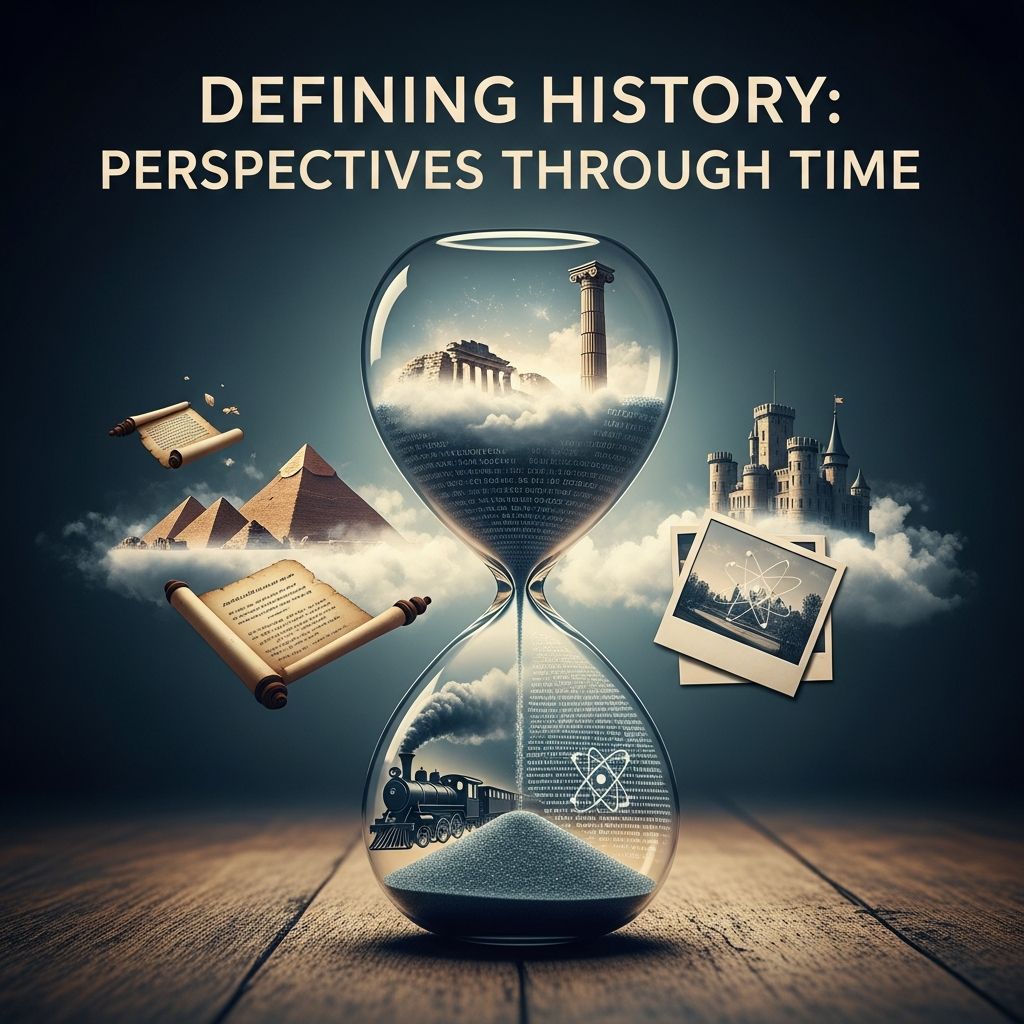
History serves as the bridge connecting humanity to its origins, encompassing both the raw events of bygone eras and the scholarly pursuit to understand them. At its core, history is the systematic examination of past occurrences, particularly those involving human actions and societies, analyzed through evidence to form coherent narratives. This dual nature—events themselves and their interpretation—forms the foundation of how we perceive time and progress.
The Academic Discipline of History
As an academic field, history involves rigorous analysis of sources to reconstruct and explain what transpired in the past. Scholars collect artifacts, documents, and testimonies, subjecting them to critical scrutiny to build accounts that not only chronicle events but also uncover causal relationships and contextual influences. This process distinguishes history from mere storytelling by emphasizing evidence-based interpretation.
History straddles social sciences and humanities, blending empirical methods with narrative craft. It probes human motives, societal shifts, and cultural evolutions, offering insights into why patterns repeat or diverge. For instance, economic downturns or technological leaps are not isolated; they interconnect within broader historical tapestries.
- Key Elements: Evidence gathering, chronological sequencing, causal analysis.
- Goals: Explain developments, interpret meanings, inform present decisions.
History as a Narrative Tradition
Beyond academia, history manifests as storytelling rooted in factual recounting. Dictionaries portray it as a continuous, chronological record of significant happenings tied to peoples, nations, or individuals. This narrative form appears in chronicles, biographies, and annals, preserving collective memory through written or oral means.
The Oxford English Dictionary highlights history’s role in narrating incidents, often in book titles like ‘A History of France,’ underscoring its structured, public-facing dimension. Such accounts evolve from raw data into compelling tales that engage readers, blending fact with interpretive flair.
| Dictionary | Core Definition | Example Usage |
|---|---|---|
| Merriam-Webster | Chronological record of significant events with explanations | A history of Japan |
| Cambridge | Study or record of past events in a period or subject | American history course |
| Dictionary.com | Systematic narrative of past events | Medical history of a patient |
Distinguishing the Past from Historical Inquiry
A crucial distinction lies between ‘the past’—fixed, unalterable occurrences—and ‘history,’ the dynamic interpretation thereof. What happened remains immutable, but our understanding shifts with new evidence or perspectives. History thus becomes an ongoing dialogue, where narratives are revised as archaeologists unearth relics or digital archives reveal forgotten letters.
This fluidity underscores history’s cultural role: it is not static but a product of reconstruction. As a countable noun, ‘a history’ denotes specific texts or accounts, each shaped by the author’s lens. This interpretive layer invites debate, enriching our grasp of human complexity.
Evolving Definitions Across Sources
Definitions vary subtly yet reveal history’s breadth. Britannica frames it as a discipline critically examining sources to explain events chronologically. Meanwhile, historians like Benjamin Craske define it as ‘the disciplined study of change over time culminating in storytelling characterised by analysis and interpretation’.
Public perceptions, per the American Historical Association, often view history as ‘facts of the past without modern interpretations,’ though scholars counter that interpretation is inherent. These views highlight tensions between objectivity and subjectivity in historical practice.
- Encyclopedic: Systematic study of human past via evidence.
- Dictionary: Record or branch of knowledge on past events.
- Scholarly: Narrative of change with analytical depth.
History in Broader Contexts
History extends beyond human affairs to natural phenomena, as in ‘a history of North American birds,’ denoting systematic accounts sans strict chronology. In medicine, patient histories catalog backgrounds for diagnosis. Even computing logs ‘browser history,’ echoing the term’s versatility.
Literature employs history in dramas like Shakespeare’s histories, dramatizing real events. This permeation shows history’s cultural ubiquity, shaping art, policy, and identity.
The Process of Historical Inquiry
Constructing history demands discipline: sourcing materials, verifying authenticity, cross-referencing accounts, and weaving narratives. Historians employ methodologies from archaeology to econometrics, ensuring robustness. The outcome? Explanations of why empires fell, revolutions ignited, or innovations spread.
Challenges include bias, incomplete records, and hindsight distortion. Yet, history’s value lies in fostering critical thinking, revealing patterns like recurring conflicts over resources.
Why History Matters Today
In contemporary society, history informs public culture and decision-making. It contextualizes current events, from geopolitical tensions to social movements, preventing repetition of past errors. By studying interactions and behaviors, history humanizes abstract forces, making the past relatable.
Educationally, it cultivates empathy and analytical skills. As Alpha History notes, every society pursues history to narrate its story.
Challenges in Defining History
Debates persist: Is history science or art? Social science or humanities? Its hybridity defies neat categorization. Postmodern critiques question objective truth, viewing history as constructed narratives. Traditionalists defend empirical rigor.
Despite this, consensus holds: history illuminates human experience through evidence-driven storytelling.
Frequently Asked Questions (FAQs)
What is the primary focus of history as a discipline?
History primarily focuses on the human past, analyzing evidence to construct narratives explaining events and their causes.
How does history differ from the past?
The past is fixed events; history is the interpretive study and narration of those events, subject to ongoing revision.
Can history apply to non-human subjects?
Yes, it describes systematic accounts of natural phenomena, like geological or biological histories.
Why is interpretation essential in history?
Interpretation contextualizes facts, revealing motives, causes, and meanings behind events.
Is history objective?
While striving for objectivity through evidence, it involves subjective elements in narrative construction.
Conclusion: History as Living Inquiry
History encapsulates our shared journey, blending fact, analysis, and story. Its definitions—from dictionary entries to scholarly treatises—affirm its role in decoding change. Engaging history equips us to navigate the future wisely.
References
- History – Wikipedia — Wikipedia. 2023-10-01. https://en.wikipedia.org/wiki/History
- What is history? A historian’s definition – Benjamin Craske — Benjamin Craske. 2022-05-15. https://www.benjamincraske.com/what-is-history/
- HISTORY Definition & Meaning | Dictionary.com — Dictionary.com. 2023-11-20. https://www.dictionary.com/browse/history
- HISTORY | definition in the Cambridge English Dictionary — Cambridge Dictionary. 2024-01-10. https://dictionary.cambridge.org/us/dictionary/english/history
- HISTORY Definition & Meaning – Merriam-Webster — Merriam-Webster. 2024-02-28. https://www.merriam-webster.com/dictionary/history
- History | Definition & Discipline | Britannica — Britannica. 2023-09-05. https://www.britannica.com/topic/history
- What is history? – Alpha History — Alpha History. 2023-07-12. https://alphahistory.com/what-is-history/

- Integrated M.A. in Applied Linguistics, University of Hyderabad
- 5+ years in editorial, instructional, SEO, and research-based writing
Sneha is a relationships and lifestyle writer with a strong foundation in applied linguistics and certified training in relationship coaching. She brings over five years of writing experience to theskillvault, crafting thoughtful, research-driven content that empowers readers to build healthier relationships, boost emotional well-being, and embrace holistic living. Her writing and insights reflect the belief that beauty, happiness, and wellness…