
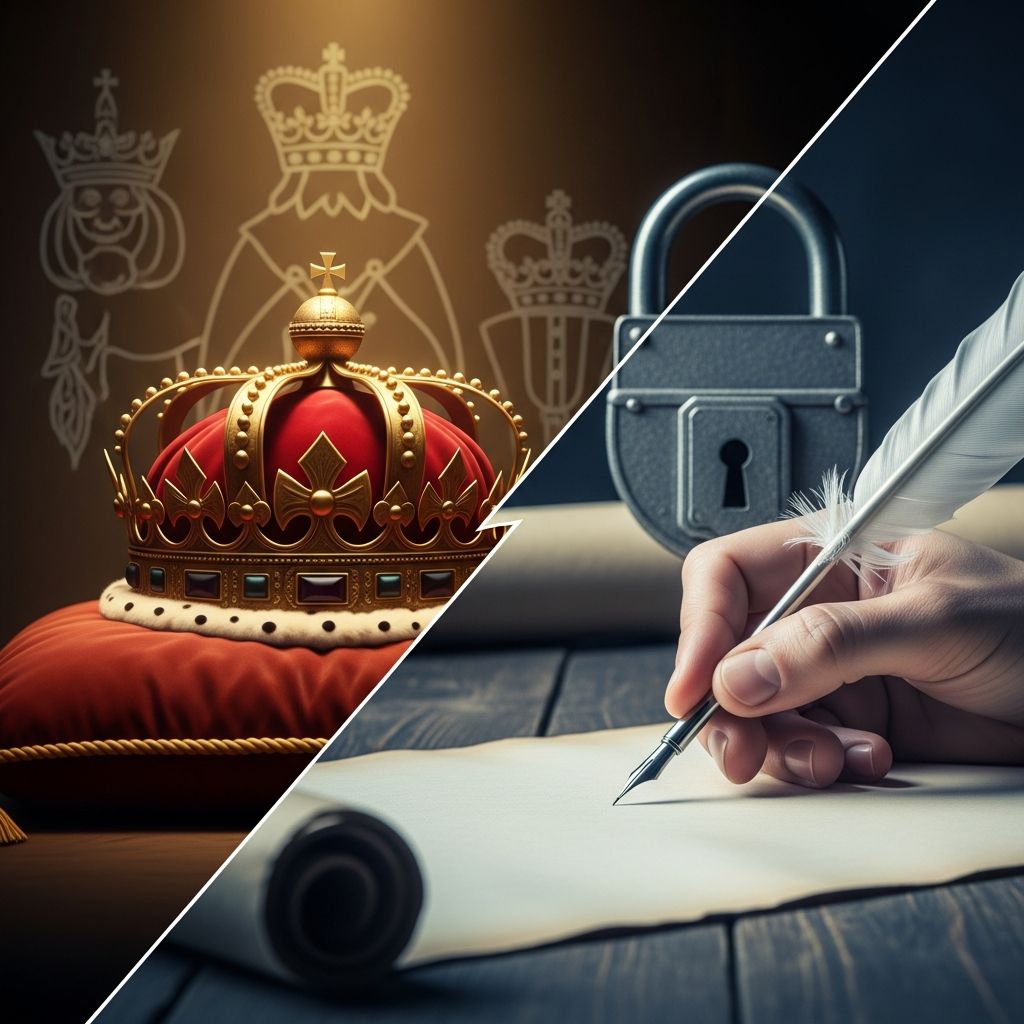
Lèse-majesté refers to offenses that undermine the dignity of a sovereign ruler or the state they represent, often carrying severe legal penalties. Rooted in ancient concepts of majesty and authority, these laws persist in various forms today, sparking debates over free expression and political power.
Defining the Offense: What Constitutes Lèse-Majesté?
At its core, lèse-majesté—pronounced ‘lez maj-es-tee’—translates to ‘injured majesty’ and encompasses acts like treason or insults against a monarch’s honor. Dictionaries define it as a crime against sovereign power or any affront to a ruler’s dignity, extending beyond literal royalty to state symbols in modern contexts.
Historically, the term derives from Latin *laesa maiestas*, meaning ‘violated majesty,’ which Roman emperors used to prosecute threats to their rule. Today, it targets defamation against heads of state, whether kings, presidents, or national institutions, blurring lines between protection and censorship.
- Key Elements: Insults via speech, writing, gestures, or online posts.
- Scope: Applies to rulers as embodiments of national sovereignty.
- Penalties: Often imprisonment, fines, or worse, depending on jurisdiction.
Ancient Foundations: From Rome to Medieval Europe
The concept emerged in the Roman Empire under Emperor Augustus, who expanded *maiestas* laws to punish not just rebellion but subtle disloyalty, like mocking imperial statues. This set a precedent for using legal tools to safeguard rulers’ prestige.
By the Middle Ages, Anglo-Norman French adopted ‘lese majesté’ to describe offenses against the Crown’s dignity. European monarchies enforced it rigorously, viewing any slight as a threat to divine-right authority. Punishments ranged from exile to execution, reinforcing the idea that a king’s honor was synonymous with the realm’s stability.
In practice, these laws deterred satire, gossip, or criticism that could erode public reverence. They evolved with absolutist regimes, where loyalty oaths and court etiquette amplified their reach.
Evolution into the Modern Era
As absolute monarchies waned post-Enlightenment, lèse-majesté adapted. Constitutional monarchies like the UK’s retained symbolic protections under laws like the Treason Felony Act 1848, though rarely invoked today. Republican states reframed it as insults to the presidency or flag.
The 20th century saw its persistence in authoritarian contexts. Post-colonial nations in Africa and Asia inherited or revived these statutes to consolidate power, often amid transitions from colonial rule to independence.
| Era | Key Developments | Examples |
|---|---|---|
| Ancient | Roman maiestas laws | Prosecution for imperial insults |
| Medieval | Anglo-Norman adoption | Crown dignity offenses |
| Modern | Adaptation to republics | Presidential defamation laws |
Thailand: The Epicenter of Contemporary Enforcement
Thailand’s Article 112 of the Criminal Code exemplifies aggressive use, punishing monarchy insults with up to 15 years per offense. Enacted in 1908 during absolute monarchy, it survived the 1932 transition to constitutional rule, becoming a tool for political control.
Since 2020, over 270 cases have led to prosecutions, including activists, journalists, and citizens for social media posts or protests. UN experts in 2025 condemned its vagueness, allowing broad interpretation and chilling dissent. Sentences stack consecutively, resulting in decades-long terms for minor remarks.
Any citizen can file complaints, burdening police with investigations amid graver crimes like trafficking. Critics argue it entrenches elite power, especially post-2014 coup.
Regional Variations: Southeast Asia and Beyond
Southeast Asia hosts some of the strictest regimes. Cambodia and Laos impose similar penalties, while Malaysia uses sedition laws as proxies despite no formal lèse-majesté.
In the Middle East, Kuwait prosecutes bloggers under royal insult statutes, targeting opposition voices. Europe largely abandoned them post-WWII, though remnants linger in nations like Spain (for the king) and the Netherlands.
- Thailand: Up to 15 years; 270+ cases since 2020.
- Malaysia: Sedition Act revival for critics.
- Kuwait: Targets online dissenters.
Globally, about 20 countries retain such laws, per human rights monitors, often clashing with ICCPR Article 19 on free speech.
Human Rights Clashes and International Criticism
Organizations like Article 19 label these laws undemocratic, granting unelected figures undue protection. They violate rights to criticize power, fostering self-censorship.
UN experts urge repeal, noting Thailand’s law’s role in jailing defenders. Peaceful reform advocacy, including monarchy scrutiny, qualifies as protected expression under global norms.
Defenders claim cultural necessity in hierarchical societies, but evidence shows abuse: satirical memes lead to arrests, deterring journalism and activism.
Case Studies: High-Profile Prosecutions
Thai cases highlight extremes. In 2021, a watch seller faced charges for naming products after royals; protesters chanted slogans deemed insulting. Abroad, a 2024 Swiss case against a Thai activist showed extraterritorial reach.
These illustrate how digital platforms amplify risks— a single tweet can trigger complaints, investigations, and exile for dissidents.
Prospects for Reform: Challenges and Hope
Repeal efforts face resistance. Thailand’s 2025 protests demanded Article 112’s end, but courts upheld it. Some nations, like Bhutan post-2015, decriminalized it.
International pressure mounts via UN reviews and trade ties, yet entrenched interests persist. Advocates push for narrowing scopes to overt threats, aligning with democracies.
Frequently Asked Questions (FAQs)
What is lèse-majesté in simple terms?
A law criminalizing insults to a monarch or state leader, originating from ‘injured majesty’ in French.
Which country enforces it most harshly?
Thailand, with Article 112 allowing up to 15 years imprisonment per violation.
Does it violate free speech rights?
Yes, per UN and human rights groups, as it punishes criticism of public figures.
Are there modern examples outside Asia?
Yes, Kuwait and Morocco use similar laws against critics.
Can tourists be charged?
In Thailand, yes—foreigners have faced prosecution for online posts.
Global Impact on Society and Expression
These laws create ‘chilling effects,’ muting discourse on governance. In Thailand, they shield a 70 billion baht palace budget from scrutiny amid inequality. Broader implications include weakened press freedom rankings and youth disillusionment.
Digital eras exacerbate issues: algorithms spread content rapidly, inviting complaints. VPNs and exile become survival tools for activists.
Yet, pushback grows. Youth movements leverage global solidarity, pressuring reforms. As democracies evolve, lèse-majesté’s obsolescence looms, favoring accountability over untouchability.
References
- Lèse-Majesté Definition & Meaning — Merriam-Webster. Accessed 2026. https://www.merriam-webster.com/dictionary/lèse-majesté
- Lèse-majesté — Wikipedia. Accessed 2026. https://en.wikipedia.org/wiki/Lèse-majesté
- How lèse-majesté laws are eroding free speech in Southeast Asia — Article 19. 2023. https://www.article19.org/resources/lese-majeste-laws-eroding-free-speech-southeast-asia/
- Thailand must immediately repeal lèse-majesté laws, say UN experts — OHCHR. 2025-01-30. https://www.ohchr.org/en/press-releases/2025/01/thailand-must-immediately-repeal-lese-majeste-laws-say-un-experts
- Lèse Majesté: Watching what you say (and type) abroad — OSAC. Accessed 2026. https://www.osac.gov/Country/italy/Content/Detail/Report/e48a9599-9258-483c-9cd4-169f9c8946f5
- Thailand’s Draconian 112 Lèse-majesté Law: Any Hope for Change? — Council on Foreign Relations. Accessed 2026. https://www.cfr.org/articles/thailands-draconian-112-lese-majeste-law-any-hope-change

- Integrated M.A. in Applied Linguistics, University of Hyderabad
- 5+ years in editorial, instructional, SEO, and research-based writing
Sneha is a relationships and lifestyle writer with a strong foundation in applied linguistics and certified training in relationship coaching. She brings over five years of writing experience to theskillvault, crafting thoughtful, research-driven content that empowers readers to build healthier relationships, boost emotional well-being, and embrace holistic living. Her writing and insights reflect the belief that beauty, happiness, and wellness…