
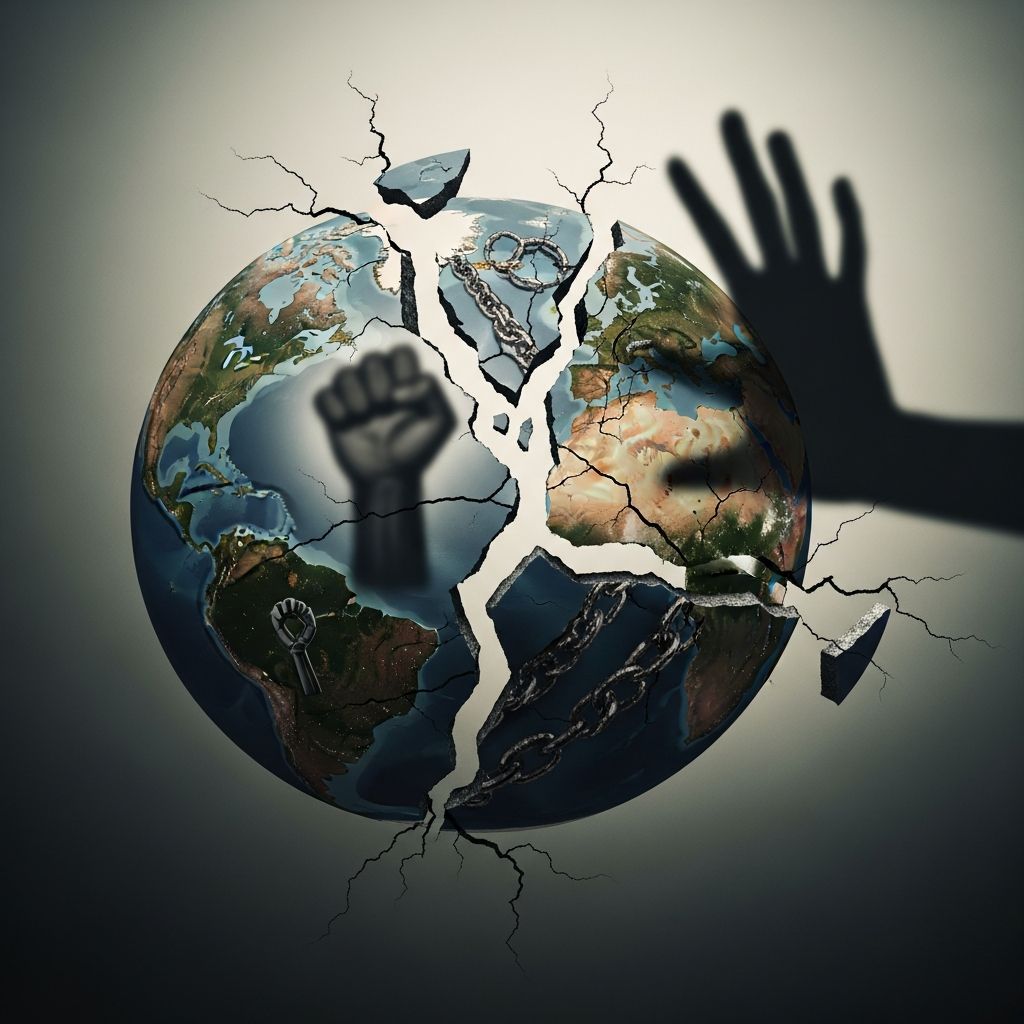
Racism encompasses beliefs in racial hierarchies that lead to prejudice, discrimination, and antagonism against individuals or groups based on perceived racial or ethnic differences. It manifests in personal attitudes, institutional policies, and societal norms, perpetuating inequality across generations.
Defining Racism in Modern Contexts
At its core, racism involves the notion that race determines inherent traits, capacities, or superiority of one group over others. Legal definitions, such as those from the U.S. Legal Information Institute, describe it as inciting discrimination, hatred, or violence due to origin or ethnic belonging, often targeting minorities. Dictionaries like Merriam-Webster expand this to include behaviors fostering such beliefs, such as prejudice or violence.
Broader scholarly views frame racism as culturally sanctioned beliefs defending advantages for dominant groups, like whites, through the subordination of minorities, regardless of intent. This perspective highlights how racism operates beyond overt hostility, embedding in everyday assumptions and structures.
Historical Evolution of Racial Thinking
The concept of racism solidified in the 19th century when scientists attempted to classify humans into races with supposed differential abilities, a pseudoscience now discredited. By World War II, the term evolved to connote not just racial categorization but active discrimination and supremacism.
Early definitions in the Oxford English Dictionary linked it to theories of race-determined characteristics, synonymous with racialism. Post-war, it gained connotations of harm, reflecting global reckonings with atrocities like apartheid and genocide rooted in racial ideologies.
Today, racism is measured by disparities in income, wealth, education, and resources between racial groups, underscoring its economic and social dimensions.
Core Components: Prejudice, Power, and Oppression
Racism combines prejudice—unfounded negative opinions—with power imbalances, enabling dominant groups to enforce discrimination. It attributes stereotypes to physical appearances, belittling dignity and inciting harm.
- Prejudice: Unconscious or conscious biases assuming inferiority based on race.
- Discrimination: Unequal treatment in opportunities or services.
- Oppression: Systemic denial of equity through policies and norms.
Institutional examples include norms like beauty standards favoring certain races or language requirements eroding minority cultures.
Types of Racism: From Individual to Institutional
Racism appears in multiple forms, each with distinct mechanisms and impacts.
| Type | Description | Examples |
|---|---|---|
| Individual | Personal biases leading to overt or subtle prejudice. | Racial slurs, avoidance based on stereotypes. |
| Interpersonal | Interactions reflecting racist attitudes. | Exclusion in social settings or biased service. |
| Systemic/Institutional | Policies and practices denying equal opportunity. | Disparities in healthcare, housing, or criminal justice. |
| Cultural | Societal norms perpetuating racial hierarchies. | Media portrayals reinforcing stereotypes. |
Systemic racism, as defined in U.S. legislation like Vermont’s Act 33, involves laws and norms working together to limit access for minorities.
Subtle Manifestations: Microaggressions and Covert Bias
Not all racism is blatant; microaggressions—brief, everyday slights—convey derogatory messages. Examples include questioning someone’s origins repeatedly or touching hair out of curiosity, signaling otherness.
These accumulate, eroding mental health and reinforcing exclusion. Unlike overt slurs, they often occur unconsciously, making them harder to confront.
Societal and Psychological Consequences
Racism inflicts deep wounds, from individual trauma to collective inequality. Victims face heightened stress, poorer health outcomes, and limited advancement.
Societally, it stifles innovation by excluding talent and fuels division. Economically, racial wealth gaps persist, with dominant groups benefiting unintentionally from historical advantages.
- Health disparities due to biased care.
- Educational inequities limiting opportunities.
- Increased violence and social unrest.
Psychologically, it fosters internalized racism, where marginalized groups adopt negative self-views.
Racism Across Global Contexts
While definitions vary, core elements persist worldwide. In Australia, it includes unfair treatment based on race, affecting Indigenous and immigrant communities.[10] UK universities define it as oppression by skin color, ethnicity, or nationality.
Scotland views it beyond dictionary simplicity, as fluid concepts adapting to social changes. This global variance underscores racism’s adaptability to local power dynamics.
Paths to Dismantling Racism
Combating racism requires multifaceted strategies: education to challenge biases, policy reforms for equity, and cultural shifts in representation.[10]
- Awareness training on microaggressions and privileges.
- Institutional audits for biased practices.
- Promoting diverse leadership and narratives.
- Community dialogues fostering empathy.
Individual actions, like self-reflection and allyship, amplify systemic change.
Frequently Asked Questions (FAQs)
Is racism always intentional?
No, it can be unconscious, embedded in norms and habits, benefiting dominant groups without malice.
What distinguishes prejudice from racism?
Prejudice is bias alone; racism requires power to enforce discrimination systematically.
Can racism affect the dominant group?
Indirectly, through perpetuated myths and societal division, though primary harm targets minorities.
How does systemic racism differ from individual acts?
It operates through institutions, producing disparities via policies rather than isolated incidents.
What role does education play in fighting racism?
It debunks myths, builds empathy, and equips people to challenge biases effectively.
References
- Racism | Wex | US Law | LII / Legal Information Institute — Cornell Law School. Accessed 2026. https://www.law.cornell.edu/wex/racism
- Racism – Wikipedia — Wikipedia contributors. Accessed 2026. https://en.wikipedia.org/wiki/Racism
- What Is Racism? – Report + Support – Sheffield Hallam University — Sheffield Hallam University. Accessed 2026. https://reportandsupport.shu.ac.uk/support/what-is-racism
- What is Racism? – Report + Support – The University of Edinburgh — University of Edinburgh. Accessed 2026. https://reportandsupport.ed.ac.uk/pages/what-is-racism
- What is racism? – CRER — Coalition for Racial Equality and Rights. Accessed 2026. https://www.crer.org.uk/what-is-racism
- RACISM Definition & Meaning – Merriam-Webster — Merriam-Webster. Accessed 2026. https://www.merriam-webster.com/dictionary/racism
- What is Racism and What are Microaggressions? – Ottawa Public Health — Ottawa Public Health. Accessed 2026. https://www.ottawapublichealth.ca/en/public-health-services/resources/Documents/What-is-Racism-and-Microaggressions-activities-activity_guide_EN.pdf

- Integrated M.A. in Applied Linguistics, University of Hyderabad
- 5+ years in editorial, instructional, SEO, and research-based writing
Sneha is a relationships and lifestyle writer with a strong foundation in applied linguistics and certified training in relationship coaching. She brings over five years of writing experience to theskillvault, crafting thoughtful, research-driven content that empowers readers to build healthier relationships, boost emotional well-being, and embrace holistic living. Her writing and insights reflect the belief that beauty, happiness, and wellness…