
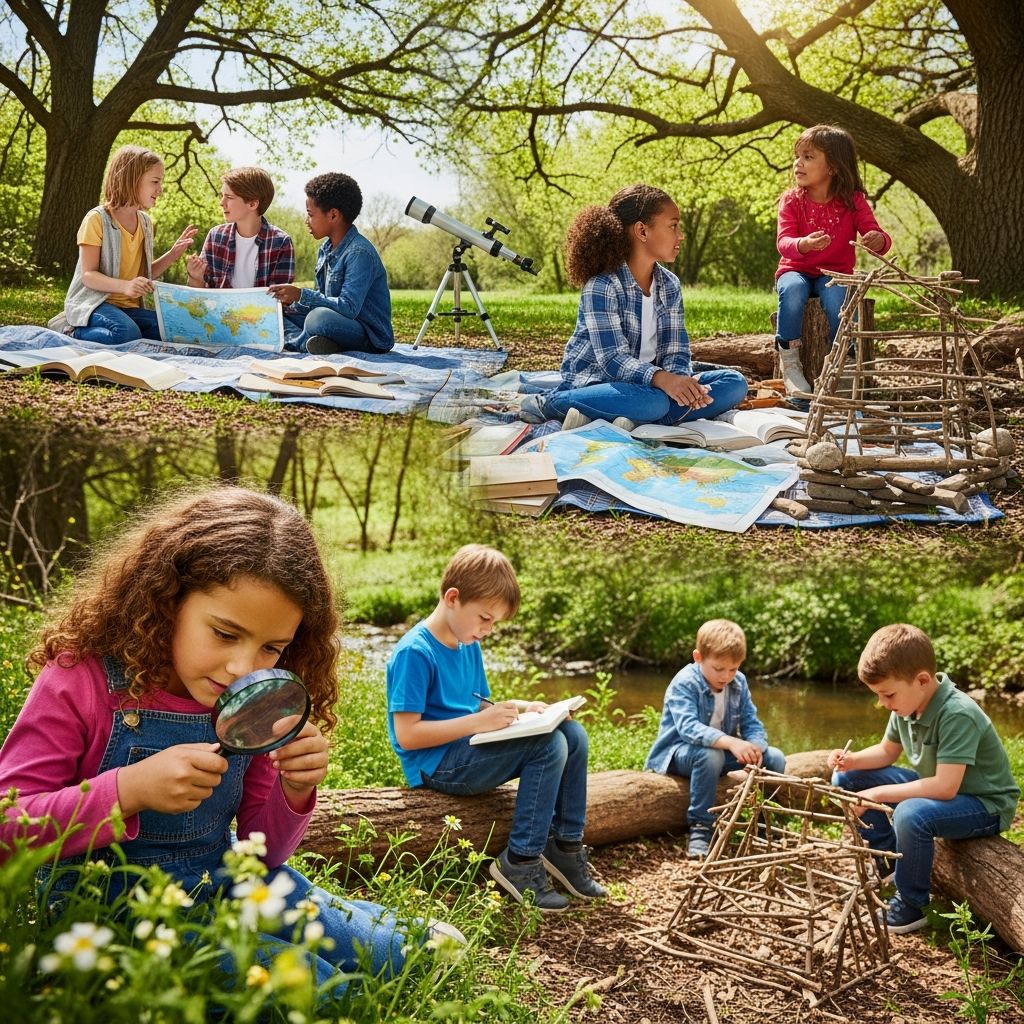
Unschooling represents a profound shift in educational philosophy, prioritizing a child’s innate curiosity and self-direction over structured curricula and institutional mandates. This learner-driven method allows children to explore knowledge organically through daily life, interests, and real-world interactions, without the constraints of traditional schooling.
Core Principles of Unschooling
At its heart, unschooling embodies the belief that education occurs naturally when children pursue what captivates them. Unlike conventional homeschooling, which often mirrors school with lesson plans, unschooling eliminates schedules, grades, and textbooks, viewing all experiences as potential learning opportunities.
- Child-Led Exploration: Children decide what, when, and how they learn, following passions that range from building forts to studying astronomy, ensuring deep engagement and retention.
- No Forced Instruction: Learning remains consensual; parents avoid coercion, recognizing that intrinsic motivation yields superior outcomes compared to mandated studies.
- Holistic Lifestyle Integration: Education blends seamlessly into family life, emphasizing relationships, autonomy in daily choices like meals and bedtimes, and community involvement.
- Resource Facilitation: Parents act as guides, curating environments rich in books, outings, experts, and tools to support emerging interests without dictating paths.
This framework draws from the idea that human beings are wired for learning, thriving when free from artificial timelines and one-size-fits-all benchmarks.
Historical Roots and Key Pioneers
The concept of unschooling emerged in the 1970s, coined by educator John Holt, often hailed as its founding figure. Holt’s observations of children in classrooms led him to advocate for removing coercive structures, arguing that true education flourishes in freedom. In his newsletter Growing Without Schooling, he distinguished unschooling—exiting school altogether—from deschooling, which seeks policy changes to make attendance optional.
Holt’s 1981 book Teach Your Own, updated in 2003 by Pat Farenga, defines it as granting children maximum freedom to learn from their world, limited only by parental comfort levels. Later thinkers like Sandra Dodd expanded this into “radical unschooling,” erasing lines between learning and living by applying child autonomy to all life aspects.
These ideas echo earlier progressive education movements, such as open classrooms of the 1960s-70s, but unschooling takes them further by ditching institutional frameworks entirely.
Unschooling Versus Traditional Homeschooling
While both occur outside public schools, unschooling diverges sharply from structured homeschooling. The table below highlights key distinctions:
| Aspect | Traditional Homeschooling | Unschooling |
|---|---|---|
| Curriculum | Uses textbooks, schedules, and grades | No curriculum; interest-driven |
| Role of Parent | Teacher delivering lessons | Facilitator providing resources |
| Learning Pace | Follows age-based standards | Self-paced, non-linear |
| Assessment | Tests and progress reports | Observation of real-world application |
| Focus | Academic subjects | All life experiences |
Homeschooling often replicates school at home, whereas unschooling rejects this, treating education as a byproduct of joyful living.
Everyday Life in an Unschooling Family
A typical unschooling day defies routines, adapting to the family’s rhythm and children’s whims. Mornings might involve baking, sparking math discussions on measurements, followed by park visits where physics emerges from swings and slides. Afternoons could feature library trips or video calls with experts on a sudden fascination with marine biology.
Parents stay attuned, offering prompts like museum passes or online courses without pressure. Even chores become lessons: budgeting during grocery shopping teaches economics, while gardening covers biology and patience.
Autonomy extends beyond academics—kids select outfits, negotiate screen time, and plan family outings, building decision-making skills essential for adulthood.
Addressing Common Myths and Misconceptions
Unschooling faces skepticism, often misconstrued as neglect. Critics claim kids will skip “essentials” like math or history. Yet evidence shows self-directed learners cover these organically when relevance arises, such as calculating game scores or exploring ancestry via documentaries.
- Myth: Kids won’t learn discipline. Reality: Self-management fosters superior intrinsic discipline over external enforcement.
- Myth: Gaps in knowledge. Reality: Interests evolve, filling gaps naturally; adults often pursue formal paths if needed.
- Myth: Parents must be experts. Reality: Facilitation requires resourcefulness, not mastery—communities and internet bridge gaps.
Far from chaos, unschooling provides gentle boundaries within which creativity thrives.
Potential Benefits for Child Development
Proponents highlight numerous advantages. Children develop resilience, pursuing deep dives into passions yields expertise and confidence. Socialization occurs authentically via clubs, volunteering, and playgroups, unhindered by classroom hierarchies.
Cognitive flexibility improves without rigid subjects; teens often outperform peers in critical thinking and adaptability. Mental health benefits include reduced anxiety from pressure-free environments, nurturing lifelong learners who view challenges as adventures.
Family bonds strengthen through shared experiences, prioritizing presence over productivity.
Challenges and Practical Considerations
Transitioning requires parental mindset shifts—letting go of control is daunting. Legal compliance varies; some regions mandate portfolios or evaluations, necessitating documentation of learning via journals or projects.
Social isolation risks exist if families don’t seek communities; joining unschooling groups or co-ops mitigates this. Financially, field trips and materials add costs, though libraries and free resources abound.
Parents must model lifelong learning, staying curious to inspire kids.
Getting Started with Unschooling
- Deschool: Take a break from all structured activities to reset habits and rediscover joy.
- Observe Interests: Note what captivates your child without intervening.
- Enrich Environment: Stock diverse resources—books, tools, nature access.
- Connect Locally: Find support networks via online forums or meetups.
- Document Progress: For legal needs, log experiences showing growth.
Start small, building confidence gradually.
Real-World Success Stories
Many unschooled individuals thrive: entrepreneurs credit passion pursuits for innovation; artists trace creativity to unstructured play. Studies of self-directed education reveal high college acceptance and life satisfaction rates, affirming the model’s efficacy.
Frequently Asked Questions (FAQs)
What age is best to start unschooling?
Any age works, though younger children adapt easily. Teens benefit from reclaimed autonomy.
Do unschooled kids take standardized tests?
Optionally, for college or records; many excel without prep.
How do unschoolers prepare for college?
Through portfolios, community college, or self-study; admissions value real-world skills.
Is unschooling legal everywhere?
Regulations vary; research state laws and comply with reporting.
Can working parents unschool?
Yes, with flexible arrangements, co-ops, or online resources.
References
- What is Unschooling? The Ultimate Guide — Happiness is Here Blog. 2023. https://happinessishereblog.com/what-is-unschooling/
- Unschooling — Wikipedia. 2026-04-01 (last edited). https://en.wikipedia.org/wiki/Unschooling
- But What is Unschooling? — Self-Directed Education. 2024. https://www.self-directed.org/tp/what-is-unschooling/
- What Is Unschooling? — John Holt GWS. 2023. https://www.johnholtgws.com/resources/what-is-unschooling
- What is Unschooling — Unschoolers.org. 2024. https://unschoolers.org/what-is-unschooling/
- What Is Unschooling? and How to Unschool Your Child — Unschooling Mom2Mom. 2023. https://www.unschoolingmom2mom.com/unschooling-explained
- What Is Unschooling? (By Homeschooling Family) — YouTube (Homeschooling Family). 2023-10-15. https://www.youtube.com/watch?v=WDB6CZLxmQg

Medha Deb is an editor with a master's degree in Applied Linguistics from the University of Hyderabad. She believes that her qualification has helped her develop a deep understanding of language and its application in various contexts. Medha specializes in the areas of beauty, health, sports, and wellness and is committed to ensuring that the content on the website is…