
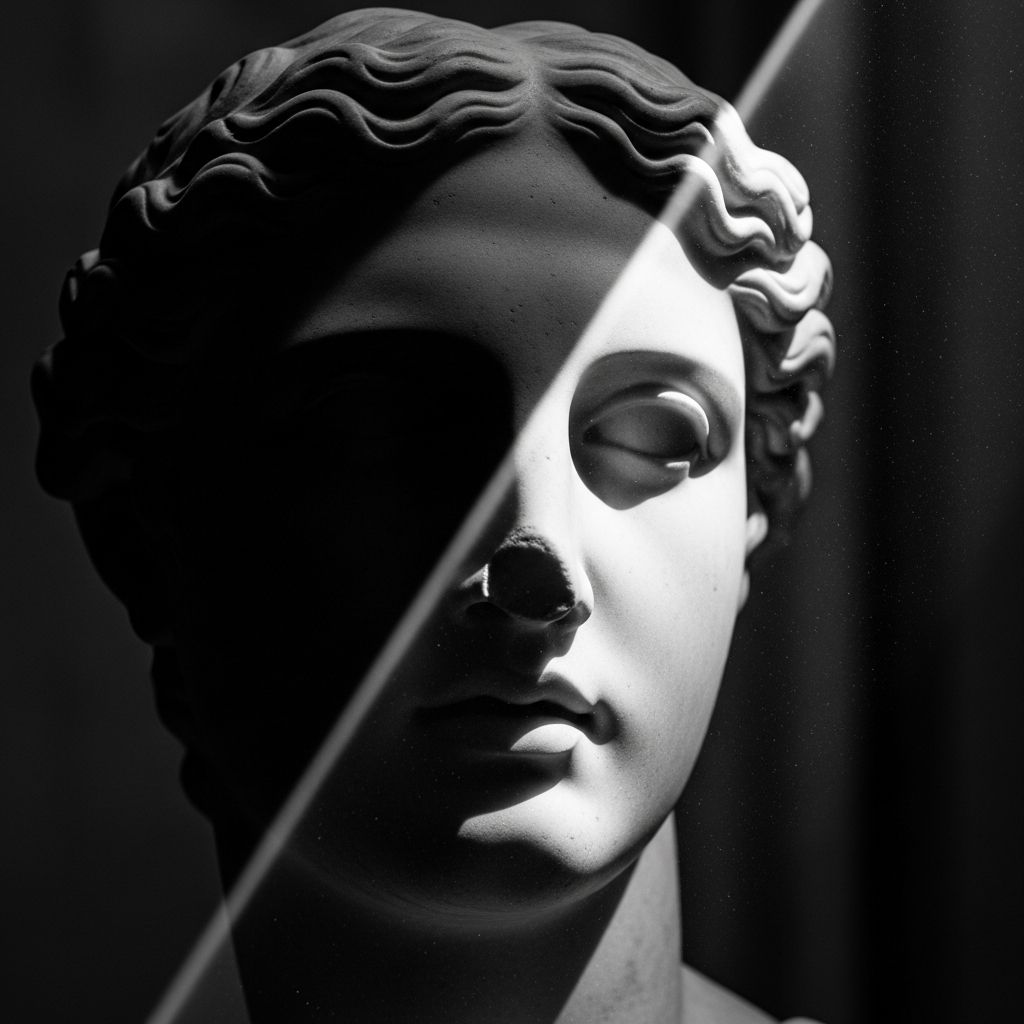
Value stands as a foundational element in visual arts, referring primarily to the relative lightness or darkness of colors and tones. This concept enables artists to craft illusions of depth, form, and light, making two-dimensional surfaces appear three-dimensional and lifelike.
The Core Concept of Value as Lightness and Darkness
In artistic practice, value describes the spectrum from pure white (lightest) to pure black (darkest), encompassing all grays in between. It is one of the seven basic elements of art—alongside line, shape, form, texture, color, and space—that artists manipulate to convey realism and emotion.
Artists perceive value through how light interacts with surfaces. Light areas, or highlights, appear bright, while shadows render darker tones. This interplay is crucial because human vision relies on these contrasts to distinguish objects and their spatial relationships. Without accurate values, even vibrant colors fail to create convincing scenes.
Why Value Outshines Other Elements in Importance
Many experts argue that value holds primacy over hue (color name) and saturation (color intensity) in constructing a painting’s structure. A grayscale version of a masterpiece often retains its compositional strength, proving value’s dominance in guiding the viewer’s eye and establishing focal points.
For beginners, mastering value ensures paintings avoid flatness. Consider a landscape: incorrect values make distant mountains blend into the sky, destroying depth. Value patterns—not hues—dictate whether a work feels harmonious or chaotic.
Visualizing Value: The Essential Scale
A value scale simplifies this spectrum into manageable steps, typically 5 to 9 levels, from #1 (white) to #9 (black). Denman Ross popularized this in 1907, aiding artists in matching tones precisely.
Here’s a basic 9-step value scale table for reference:
| Value Level | Description | Example Tone |
|---|---|---|
| 1 | Lightest (pure white) | Highlight on glossy surface |
| 3 | Light gray | Sky or lit skin |
| 5 | Mid-tone (middle gray) | Average object illumination |
| 7 | Dark gray | Shadow in indirect light |
| 9 | Darkest (pure black) | Deep shadow or core darkness |
Limiting to fewer values promotes unity; exceeding 9 risks visual noise. Practice by squinting at subjects to see massed lights and darks, ignoring color distractions.
Techniques for Building Value in Drawings and Paintings
Start with line drawings to establish proportions, then layer values. In drawing, use hatching, cross-hatching, or stippling for gradual transitions. Painters mix tints (adding white) for lights and shades (adding black) for darks.
- Hatching: Parallel lines; density controls darkness.
- Blending: Smudging for smooth gradients, ideal for skin or skies.
- Scumbling: Dry brushing light over dark for textured haze.
Key light sources—direct sun, ambient fill, reflected bounces, and cast shadows—determine value patterns. Four primary value origins include local color value, form shadows, core shadows, and reflected light.
Value’s Role in Creating Depth and Form
Value gradients model three-dimensional forms. A sphere, for instance, transitions from highlight through mid-tones to terminator (shadow edge) and deep shadow. This chiaroscuro technique, mastered by Caravaggio, uses stark value contrasts for dramatic volume.
In landscapes, atmospheric perspective employs lighter, higher values for distance: foreground dark and saturated, background pale and airy. Portraits rely on subtle value shifts for facial contours, making expressions believable.
Integrating Value with Color for Harmony
Color comprises hue, saturation, and value. A bold red can be lightened to pink or darkened to maroon, altering its emotional impact. Accurate values unify disparate hues; mismatched ones create discord.
Test harmony by converting to grayscale: strong designs persist. Value masses—large light/dark areas—provide abstract compositions underlying realism.
Beyond Technique: The Subjective Value of Artworks
Value extends metaphorically to an artwork’s cultural, emotional, or market worth. Unlike measurable lightness/darkness, this is interpretive, rooted in aesthetic, cognitive, or moral qualities.
Philosophers debate if artistic value stems solely from formal elements like value contrast or broader contexts. Some theories posit all true art inherently valuable, barring ‘bad’ works from artistic status. Sentimental pieces hold personal value immeasurable by scales.
Common Pitfalls and How to Overcome Them
Aspiring artists often err in value judgment due to over-reliance on local color. Solution: Use a value finder tool (red plastic strip with grayscale holes) to compare subjects accurately.
- Flatness: Insufficient contrast; push lights whiter, darks blacker.
- Overly even tones: Lack focal value compression; vary scale.
- Ignoring edges: Soft edges for atmospheres, hard for foregrounds.
Study masters: Convert photos of Rembrandt or Velázquez to grayscale to analyze value structures.
Practical Exercises to Master Value
Build skills progressively:
- Grayscale Studies: Paint subjects in black/white only, focusing on 5 values.
- Notan Designs: Simplify to two values (black/white) for bold compositions.
- Color Value Matching: Mix hues to match grayscale scale steps.
- Plein Air Squinting: Observe outdoors, noting value masses first.
These exercises, rooted in observational accuracy, elevate any artist’s control.
Frequently Asked Questions (FAQs)
What exactly is value in the context of art elements?
Value refers to the lightness or darkness of a color or tone, essential for depicting light, form, and depth on a two-dimensional surface.
Why is value considered more important than color (hue)?
Value structures the composition and realism; a grayscale painting can succeed where color mismatches fail, as it controls viewer focus and spatial illusion.
How many values should an artist typically use?
A range of 5-9 values strikes balance; fewer for abstraction, more for detail, but avoid exceeding 9 to prevent chaos.
Can value create 3D illusions without color?
Yes, through shading techniques like chiaroscuro, values alone model forms convincingly, as seen in monochromatic drawings.
What tools help check values accurately?
Value finders, squinting, photo grayscale conversion, or red acetate overlays neutralize hue bias for precise matching.
Advanced Applications: Value in Modern and Contemporary Art
Contemporary artists leverage value innovatively. Minimalists like Agnes Martin use subtle value shifts for meditative fields. Abstract expressionists employ value for emotional rhythm, not literal light. Digital artists in tools like Photoshop use value layers for non-photorealistic rendering.
In photography and film, value keys (high/low) set moods: noir’s low-key darks evoke tension, while high-key pastels suggest whimsy.
Ultimately, value transcends medium, uniting traditional and digital practices in pursuit of visual truth.
References
- Value in Art Examples: Understanding One of the Art Elements — Artsper Blog. 2023. https://blog.artsper.com/en/a-closer-look/contemporary-art/value-in-art/
- Painting for Beginners: 2 Important Roles For Value in Art — Virtual Art Academy. 2023. https://www.virtualartacademy.com/value-in-art-for-beginners/
- What Is Value in Art and Why Is It So Important? — Draw Paint Academy. 2023. https://drawpaintacademy.com/what-is-value-in-art/
- Elements of Art: Value — Cascadia Art Museum. 2023. https://www.cascadiaartmuseum.org/elements-of-art-value/
- Value of Art — Internet Encyclopedia of Philosophy (Academic). N/A. https://iep.utm.edu/value-of-art/
- 4.1 – Introduction to Value — Vitruvian Fine Art Studio (Educational). 2023. https://vitruvianstudio.com/lesson/4-1-introduction-value/

Medha Deb is an editor with a master's degree in Applied Linguistics from the University of Hyderabad. She believes that her qualification has helped her develop a deep understanding of language and its application in various contexts. Medha specializes in the areas of beauty, health, sports, and wellness and is committed to ensuring that the content on the website is…