
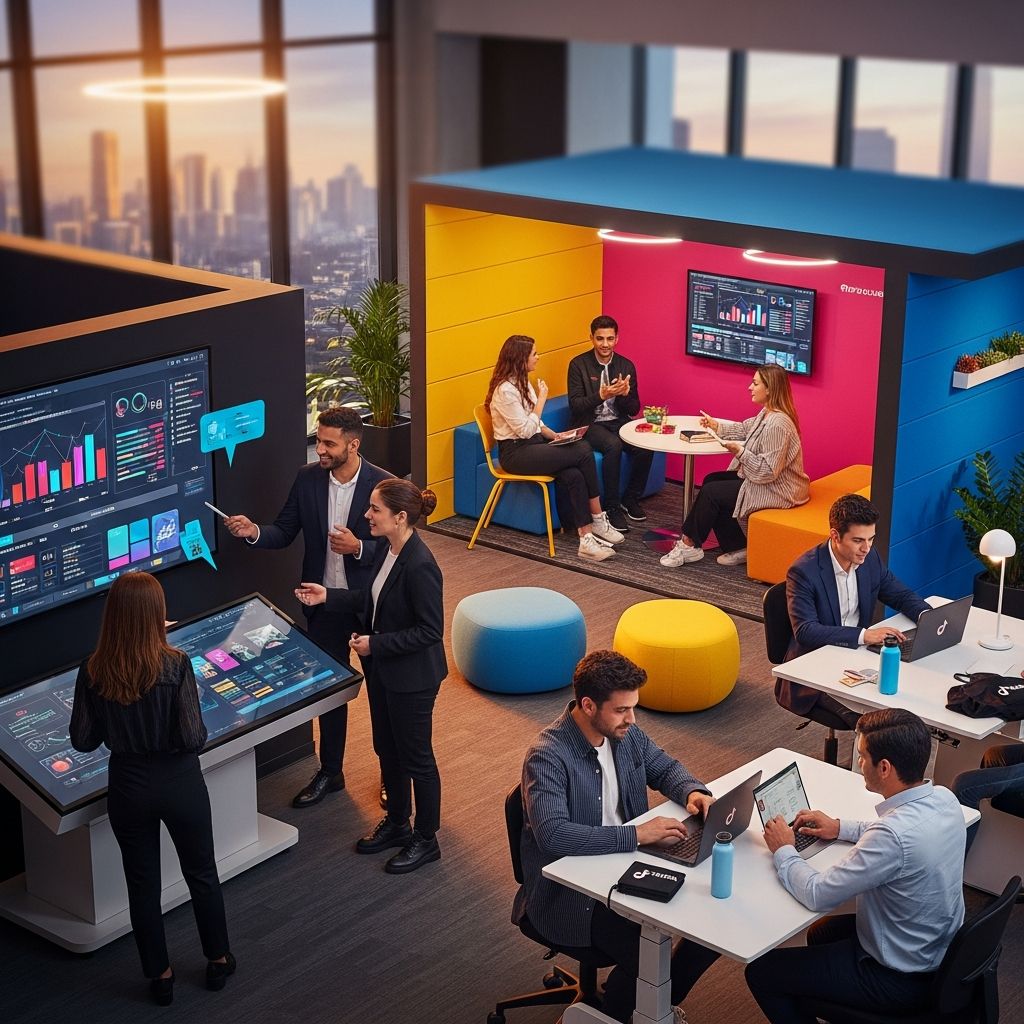
TikTok is widely known for its short-form videos and viral trends, but behind the app is a sprawling, fast-moving organisation with thousands of people collaborating across continents to design products, manage risk, and support creators. This article explores what everyday life and long-term careers look like inside a company growing at the scale and speed of TikTok, drawing on publicly available information about its culture, leadership priorities, and global footprint.
From Viral App to Global Employer
TikTok, owned by ByteDance, has evolved from a rising social platform into a central player in the global attention economy, engaging over a billion users worldwide. Sustaining this user base requires a complex ecosystem of teams—from product and data to trust and safety, content operations, sales, and corporate functions. As the platform has expanded geographically, TikTok has opened offices in major hubs such as Los Angeles, Singapore, Dublin, London, and more, creating a truly international workplace where cross-border collaboration is part of daily life.
This global reach brings both opportunity and complexity:
- Supporting different languages, cultures, and content norms.
- Navigating varied legal and regulatory frameworks.
- Designing products that feel local while remaining consistent with a global brand.
How Teams Are Organised at TikTok
Like many large tech companies, TikTok is made up of numerous specialised teams. While the precise structure evolves over time, several core functions typically underpin life at the company.
| Team / Area | Main Focus | Typical Work Examples |
|---|---|---|
| Product & Engineering | Builds and scales the app experience | Feature development, recommendation systems, infrastructure reliability |
| Content & Creator Operations | Supports creators and content ecosystems | Creator programs, content partnerships, community initiatives |
| Trust & Safety / Policy | Protects users and enforces policies | Content moderation frameworks, policy design, risk response |
| Marketing & Communications | Builds the TikTok brand | Campaigns, PR, brand storytelling, B2B marketing |
| Business & Ads Solutions | Drives revenue and client success | Ad products, client strategy, measurement tools |
| HR / Talent / People | Grows and supports the workforce | Hiring, learning and development, performance programs |
Across these teams, TikTok is often described as operating with a relatively flat structure that compresses layers of hierarchy, intended to shorten communication paths and speed up decision-making. This can make the environment feel both empowering and demanding: employees may have significant ownership early, but they are also expected to move quickly and adapt.
The Values Behind TikTok’s Culture
ByteDance and TikTok use an internal principles framework, often referred to publicly as “ByteStyle”, to set expectations around how people work and make decisions. While the exact wording is internal, several recurring ideas shape life in the company:
- Entrepreneurial mindset: Adopting an “always day one” mentality that encourages people to think like builders, seek efficiency, and challenge complacency.
- Candour and clarity: Emphasis on direct feedback, data-driven discussion, and clear written communication.
- Inclusivity: Value placed on diversity of backgrounds and perspectives, especially in a product that serves a global audience.
- Pragmatism and courage: Willingness to test ideas, take calculated risks, and iterate quickly—even in ambiguous environments.
For employees, these values translate into daily behaviours such as openly debating product directions, quickly spinning up experiments, and engaging with colleagues across functions and regions.
Leadership Style and Decision-Making
Analyses of TikTok and ByteDance highlight a leadership approach often described as distributed rather than strictly top-down. Decision-making authority tends to be shared across multiple levels of the organisation, especially in product, operations, and regional teams.
Key characteristics of leadership at TikTok include:
- Flat organisational layers: Fewer formal layers can make it easier for individual contributors to surface ideas directly to senior leaders.
- Data-informed choices: Experiments, metrics, and user research heavily inform product and policy decisions.
- Crisis responsiveness: The company has had to adapt rapidly to regulatory developments and public scrutiny, requiring transparent and proactive leadership communication in some high-pressure situations.
- Region-sensitive strategies: Local teams are empowered to adapt execution to local norms and regulations while aligning to global strategy.
This combination can give employees both autonomy and exposure: teams are expected to move fast, but leaders are closely watching impact and compliance, especially in sensitive areas like safety, privacy, and governance.
Working at Speed: What Day-to-Day Life Can Feel Like
Life at a hyper-growth company is often defined less by perks and more by pace. Public commentary on TikTok’s operating style suggests an environment where priorities can shift quickly, experiments scale fast, and teams work intensely to meet ambitious goals.
People who tend to thrive in this setting often share traits such as:
- Comfort with ambiguity: Plans can change as new data or regulations emerge, and teams must adapt.
- Bias toward action: Prototypes, tests, and pilot programs are preferred over long theoretical debates.
- Resilience: Iteration and feedback are constant, and not every project reaches full launch.
- Cross-cultural fluency: Collaboration with colleagues from different regions and cultural backgrounds is part of everyday work.
At the same time, TikTok’s flat structure and growth curve can create chances for rapid responsibility: early-career employees may find themselves leading substantial projects or owning emerging product areas sooner than they might in slower-moving organisations.
Global Collaboration and Local Nuance
TikTok’s global expansion requires a delicate balance between central coordination and local adaptation. Reports on the company’s structure indicate that headquarters and Chinese executives play a strong role in overarching strategy, while regional offices interpret and execute those strategies in line with local markets.
In practice, this can mean:
- Regional content teams adjusting campaigns and in-app experiences to reflect local culture.
- Policy and legal teams tailoring compliance strategies to different jurisdictions.
- Sales teams positioning advertising products to match local buyer expectations.
For employees, this often involves:
- Frequent cross-time-zone meetings and coordination.
- Working documents and communication channels that support multilingual, multi-country collaboration.
- Learning to navigate both global expectations and local realities.
Career Growth and Learning Opportunities
ByteDance’s leadership has emphasised hiring people who are adaptable, motivated, and open to tackling complex challenges, rather than simply fitting into rigid role definitions. In such an environment, employees may find opportunities to move across functions, take on stretch assignments, or participate in global projects as the business evolves.
Common development patterns in fast-growing tech organisations like TikTok include:
- Scope growth within a role: As products scale, the impact and complexity of a single role naturally increase.
- Lateral moves: Employees may shift between product, operations, marketing, or strategy roles to broaden their experience.
- International exposure: Cross-border projects, short-term assignments, or collaboration with remote teams can provide global experience.
- Managerial paths and expert paths: Some employees move into people leadership, while others grow as senior individual contributors.
The organisation’s emphasis on experimentation and iteration also encourages employees to treat projects as learning opportunities: even unsuccessful initiatives can generate useful insights if documented and shared.
Diversity, Inclusion, and Belonging
With a product that serves users from around the world, TikTok has clear incentives to build a workforce that reflects that diversity. The company’s stated principles and public role descriptions frequently reference inclusion, collaboration, and respect for different perspectives.
Elements commonly associated with inclusive tech environments, which TikTok publicly signals it seeks to foster, include:
- Hiring from varied academic and professional backgrounds.
- Supporting employee communities and resource groups.
- Encouraging open dialogue and feedback when cultural frictions arise.
At the same time, external reporting has noted that integrating different regional work cultures and expectations can be challenging, especially between teams inside and outside China. Leadership responses have reportedly focused on adapting practices and clarifying expectations across geographies rather than imposing a single uniform style.
Challenges of Working in a High-Scrutiny Environment
Unlike many consumer apps, TikTok operates under intense public, political, and regulatory scrutiny. Reports have highlighted ongoing debates around data security, content governance, and cross-border ownership structures. For employees, this environment can translate into:
- Heightened compliance focus: Teams working closely with legal and policy functions to ensure products and operations meet regulatory expectations.
- Frequent changes in requirements: New rules, platform policies, and safeguards are regularly introduced or updated.
- Public visibility: Decisions in areas like recommendation systems, safety features, or political content policies can receive extensive media attention.
While demanding, these constraints can also present unique professional opportunities, especially for people interested in the intersection of technology, governance, and global policy.
Is Life at TikTok Right for You?
Whether TikTok is a good fit depends on personal working style, risk tolerance, and career goals. People who typically find this environment fulfilling often:
- Enjoy building in fast-changing spaces where the product itself is still evolving.
- Value responsibility and impact over predictability.
- Are comfortable operating in globally distributed teams.
- Are motivated by complex, multidimensional problems, such as balancing growth with safety and compliance.
On the other hand, individuals who strongly prefer stable structures, slow-changing roadmaps, or very clear long-term role definitions may find the pace and ambiguity challenging.
Frequently Asked Questions (FAQs)
Q: What kinds of roles are most common at TikTok?
A: TikTok hires across a wide range of disciplines, including software engineering, data science, product management, trust and safety, content operations, marketing, sales, legal, and corporate functions. Many roles combine technical skills with an understanding of digital content and user behaviour.
Q: How is TikTok’s culture different from other tech companies?
A: Analyses of TikTok’s culture highlight a relatively flat structure, distributed decision-making, an emphasis on rapid experimentation, and strong global coordination compared with some traditional hierarchical tech organisations. Employees often experience high levels of ownership but also fast-changing priorities.
Q: What is TikTok’s leadership style?
A: Commentators describe TikTok’s leadership style as collaborative and distributed, with senior leaders empowering teams to make decisions while focusing on broad strategy, security, compliance, and external stakeholder management. The company emphasises transparent communication and systematic problem-solving, especially during crises.
Q: How global is the work environment at TikTok?
A: TikTok is highly global: it maintains offices in multiple regions, and many projects require close coordination across continents. Employees frequently work in cross-cultural teams and interface with colleagues and stakeholders in different time zones.
Q: What are some challenges employees at TikTok may face?
A: Key challenges include operating at a very fast pace, managing shifting priorities, navigating cultural differences between regions, and working within a heavily scrutinised regulatory environment. These factors can be demanding but also provide unique learning opportunities.
References
- What Leadership Style Does TikTok Use? A Strategic Analysis — Quarterdeck. 2024-04-02. https://quarterdeck.co.uk/articles/what-leadership-style-does-tiktok-use
- TikTok – The Org — The Org. 2024-01-15 (last updated, approximate). https://theorg.com/org/tiktok
- TikTok’s Global Team Restructuring and Executive Shifts Coincide with Pending U.S. Investor Deal — IAVVA. 2024-07-03. https://iavva.ai/ai-transformation/tiktoks-global-team-restructuring-and-executive-shifts-coincide-with-pending-u-s-investor-deal/
- TikTok Management Team | Org Chart — RocketReach. 2023-11-10 (data snapshot, approximate). https://rocketreach.co/tiktok-management_b4458bd8fa538a80

- Integrated M.A. in Applied Linguistics, University of Hyderabad
- 5+ years in editorial, instructional, SEO, and research-based writing
Sneha is a relationships and lifestyle writer with a strong foundation in applied linguistics and certified training in relationship coaching. She brings over five years of writing experience to theskillvault, crafting thoughtful, research-driven content that empowers readers to build healthier relationships, boost emotional well-being, and embrace holistic living. Her writing and insights reflect the belief that beauty, happiness, and wellness…