
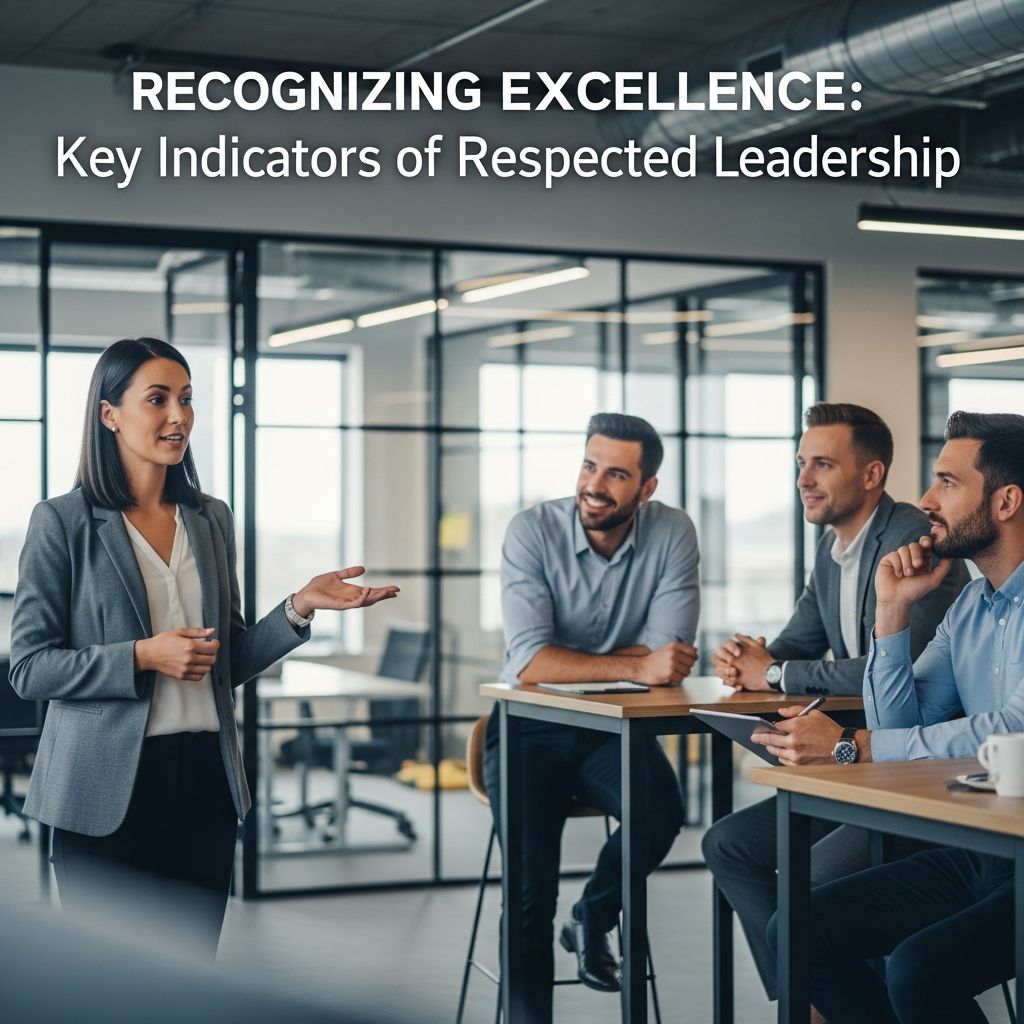
Understanding What Truly Defines Leadership Excellence
Leadership extends far beyond holding a title or managing a budget. Genuine leadership emerges when individuals consistently demonstrate behaviors and values that inspire confidence, loyalty, and peak performance from those they work with. The most respected leaders are not necessarily those with the most impressive credentials or the longest tenure in their roles. Rather, they are individuals who have cultivated specific qualities that resonate deeply with their teams, creating environments where people feel valued, challenged to grow, and genuinely motivated to contribute their best work.
Understanding the markers of exceptional leadership is crucial for anyone aspiring to lead more effectively. Whether you are a seasoned executive, an emerging manager, or someone transitioning into a leadership position, recognizing these indicators can help you evaluate your own leadership journey and identify areas for meaningful development. The following characteristics represent the foundational elements that distinguish leaders whom people genuinely want to work with from those who simply manage from above.
Demonstrating Unwavering Integrity and Moral Consistency
At the heart of respected leadership lies an unshakeable commitment to integrity. Leaders who earn genuine respect are those who make decisions based on principles rather than convenience, who admit mistakes openly, and who consistently align their actions with their stated values. This moral consistency creates a psychological safety net within organizations, allowing team members to trust that their leader will do the right thing even when facing pressure or adversity.
Integrity manifests in several critical ways within the workplace. Leaders demonstrate this quality by being honest about organizational challenges and opportunities, by following through on commitments regardless of changing circumstances, and by treating all team members fairly according to consistent standards. When leaders cut corners or bend rules to achieve short-term gains, they undermine the trust that takes months or years to build. Conversely, leaders who maintain their principles during difficult periods signal to their teams that certain values are non-negotiable, fostering a culture of ethical decision-making throughout the organization.
Research consistently shows that employees rank integrity among the most important attributes they seek in their leaders. This quality serves as the bedrock upon which all other leadership competencies rest. Without integrity, even highly skilled communicators or visionary thinkers struggle to maintain the deep trust necessary for effective long-term leadership.
Mastering the Art of Authentic Communication
Exceptional leaders understand that communication is not simply about transmitting information downward through organizational hierarchies. Instead, they recognize communication as a dynamic, bidirectional process that involves listening as actively as speaking. These leaders create channels through which information flows freely, questions are welcomed, and diverse perspectives are genuinely considered.
Authentic communication encompasses several essential practices. Leaders must articulate their vision clearly so that team members understand not only what they are working toward but why these goals matter. They explain the reasoning behind significant decisions, helping employees understand the context and logic rather than experiencing decisions as arbitrary mandates. Additionally, respected leaders listen to their teams with genuine attention, asking clarifying questions and demonstrating that they value employee insights.
This communicative openness extends to vulnerability as well. Leaders who acknowledge uncertainty, admit when they don’t have all the answers, and ask for input from their teams build stronger relationships than those who project invincibility. Such authenticity humanizes leaders and creates permission for team members to be authentic themselves, fostering a workplace culture characterized by psychological safety and genuine connection.
Building and Sustaining Trust Through Consistent Action
Trust represents the currency of effective leadership. Unlike authority, which can be granted through organizational position, trust must be earned through sustained demonstration of competence, reliability, and concern for others. Leaders build trust when they follow through on promises, meet commitments, and show genuine interest in their team members’ professional development and wellbeing.
Trust-building occurs incrementally through countless small interactions and decisions. When a leader remembers personal details team members have shared, honors deadlines they have set, and defends their team members in difficult situations, trust accumulates. Conversely, trust erodes quickly when leaders make promises they don’t keep, change direction without explanation, or favor certain team members while overlooking others.
The relationship between trust and team performance is profound. When employees trust their leader, they are more willing to take interpersonal risks, share innovative ideas that might initially seem unconventional, and commit to challenging objectives. Trusted leaders experience higher rates of employee retention, reduced turnover costs, and teams that proactively solve problems rather than waiting passively for direction.
Empowering Rather Than Controlling Team Members
One of the most distinguishing characteristics of leaders whom people respect is their inclination toward empowerment rather than micromanagement. These leaders understand that people perform at their highest levels when they have autonomy, clear expectations, and confidence that their leader believes in their abilities.
Empowering leadership involves several interconnected practices. Leaders must delegate meaningful work and resist the temptation to monitor every detail of task completion. They provide clear parameters and expected outcomes while allowing team members latitude in determining how to achieve those outcomes. They encourage calculated risk-taking, treating mistakes as learning opportunities rather than occasions for punishment. Most importantly, they demonstrate genuine belief in their team members’ capacity to succeed, which often becomes a self-fulfilling prophecy as employees rise to meet these expectations.
Research indicates that organizations whose leaders prioritize empowerment experience significantly higher engagement levels and lower turnover rates. When employees feel trusted and valued as decision-makers within their domains of responsibility, they develop stronger ownership of their work and greater investment in organizational success.
Cultivating Emotional Intelligence and Empathetic Understanding
Leaders who are truly loved by their teams possess well-developed emotional intelligence—the capacity to recognize and appropriately respond to emotions in themselves and others. These leaders read the room, notice when team members are struggling, and respond with appropriate support or intervention.
Emotional intelligence manifests through several behaviors. Leaders demonstrate empathy by taking time to understand their team members’ perspectives, challenges, and aspirations. They notice nonverbal cues that indicate stress or disengagement and inquire about what might help. They manage their own emotions effectively, avoiding explosive reactions to setbacks and modeling the emotional regulation they expect from their teams. They also use their understanding of human psychology to motivate different team members in ways that resonate with their individual drivers and values.
This emotional awareness allows leaders to navigate conflict constructively, defuse tension, and maintain team cohesion even during periods of organizational stress or change. Team members who experience empathetic leadership feel seen and valued as whole people, not merely as workers to be managed.
Establishing Clear Vision While Remaining Adaptable
Respected leaders provide direction without rigidity. They articulate a compelling vision for where the team or organization is headed and help team members connect their daily work to this larger purpose. This clarity of direction gives work meaning and helps employees understand how their contributions matter.
However, effective leaders balance this clear vision with adaptability. They recognize that the path to achieving goals often requires course corrections as circumstances change, new information emerges, or unexpected obstacles arise. Rather than stubbornly adhering to original plans regardless of shifting realities, these leaders adjust tactics while maintaining commitment to core objectives. They communicate these adjustments transparently, explaining the reasoning behind changes so that team members understand these are thoughtful pivots rather than random direction changes.
This combination of vision and flexibility creates team environments characterized by both stability and responsiveness. Team members know what the organization is working toward and trust that their leader will make intelligent decisions about how best to get there.
Taking Responsibility While Supporting Others’ Growth
Leaders whom people respect demonstrate a particular relationship with accountability. They are quick to take personal responsibility for team failures or organizational shortcomings, while simultaneously crediting their team with successes. This approach stands in stark contrast to leaders who distance themselves from failures while claiming credit for wins.
When things go wrong, respected leaders ask themselves what they could have done differently, what support they failed to provide, or what unclear guidance contributed to the outcome. They then communicate these reflections to their teams, demonstrating vulnerability and a genuine commitment to improvement. This modeling of accountability creates psychological permission for team members to own their mistakes and learn from them rather than defend or deflect.
Simultaneously, these leaders invest in their team members’ professional development. They provide coaching and mentoring, create opportunities for skill expansion, and help team members identify pathways for career growth. They recognize that investing in people’s capabilities benefits both the individuals and the organization long-term.
Demonstrating Decisiveness and Confidence Under Pressure
Respected leaders are able to make difficult decisions even with incomplete information and to communicate these decisions with conviction. While they gather relevant input and consider multiple perspectives, they ultimately take a clear stand when decisions are necessary.
This decisiveness provides stability to their teams. When organizational uncertainty exists, team members look to their leaders for direction and confidence. Leaders who dither endlessly or appear paralyzed by difficult choices undermine team morale and productivity. In contrast, leaders who acknowledge difficulty honestly while moving forward with reasoned conviction inspire confidence and stability.
This quality also extends to how leaders handle mistakes or adverse outcomes. Rather than becoming defensive or blame-shifting, decisive leaders face problems directly, determine what went wrong, and quickly redirect efforts toward solutions. This forward-focused approach prevents problems from festering and demonstrates to teams that challenges are opportunities for improvement rather than catastrophes.
Fostering Collaboration and Breaking Down Silos
Leaders whom people genuinely enjoy working with actively encourage collaboration and information-sharing across teams and departments. They recognize that organizational effectiveness emerges from integrated efforts rather than isolated heroics.
These leaders model collaborative behavior by seeking input from colleagues at all levels, by acknowledging their dependence on others’ expertise, and by creating forums where different perspectives can be heard and integrated. They break down walls that prevent information flow and actively work to align teams around shared objectives. This collaborative orientation creates workplaces where people feel part of something larger than their individual roles and where diverse talents are valued and utilized.
Showing Genuine Interest in Team Members’ Wellbeing
Perhaps unexpectedly to some, leaders whom people love to work with demonstrate sincere concern for their team members as whole people, not merely as workers. They ask about family, remember important personal events, and show genuine interest in their team members’ lives beyond the workplace.
This doesn’t mean being intrusive or unprofessional. Rather, it means recognizing that people are multifaceted individuals with lives, challenges, and aspirations that extend beyond their job descriptions. When leaders show appropriate interest in these dimensions of their team members’ lives, they build stronger relationships and demonstrate respect for people’s humanity. This approach often translates into greater loyalty and commitment from team members who feel their leaders genuinely care about their wellbeing.
Key Comparisons: Respected Leaders vs. Ineffective Managers
| Dimension | Respected Leaders | Ineffective Managers |
|---|---|---|
| Decision-Making | Explain reasoning behind decisions; invite input | Make arbitrary decisions; resist questioning |
| Accountability | Take responsibility for failures; credit team for successes | Blame team for failures; claim credit for successes |
| Communication | Listen actively; share information transparently | Talk at people; hoard information |
| Autonomy | Empower team members; delegate meaningfully | Micromanage; maintain tight control |
| Mistakes | Treat as learning opportunities; extract lessons | Punish mistakes; avoid acknowledging them |
| Team Development | Invest in growth; provide mentoring | Ignore development; focus only on current output |
Practical Steps for Developing These Leadership Qualities
For those aspiring to become leaders whom people genuinely respect and enjoy working with, development is both possible and necessary. Several concrete practices can accelerate this growth:
- Seek regular feedback from team members, colleagues, and mentors about how your leadership impacts others. Create safe channels for this feedback and genuinely listen to what you hear.
- Develop self-awareness through reflection, assessment tools, and potentially coaching. Understanding your natural inclinations, triggers, and blind spots allows you to make intentional choices rather than defaulting to habitual patterns.
- Practice active listening in all conversations, focusing on understanding others’ perspectives fully before formulating your response.
- Be transparent about decisions and your reasoning, even when transparency is uncomfortable. Explain both what you decided and why you decided it.
- Follow through consistently on commitments, treating reliability as a core leadership competency.
- Celebrate team successes publicly and handle team failures privately with focus on learning and improvement.
- Invest time in understanding each team member’s strengths, aspirations, and working preferences.
Frequently Asked Questions
Q: Can someone develop into a respected leader if they don’t naturally possess these qualities?
A: Yes. While some people may have natural inclinations toward certain leadership behaviors, all these qualities can be developed through intentional practice, feedback, and reflection. Leadership is a skill that improves with conscious effort and commitment to growth.
Q: How long does it take to build the trust necessary for respected leadership?
A: Trust develops gradually through consistent demonstration of reliability, integrity, and competence over time. While initial trust might begin within weeks, deeper trust typically requires months or years of sustained positive interactions and demonstrated commitment to team members’ wellbeing.
Q: What should a leader do if they discover they’ve violated team trust?
A: Acknowledge the violation directly and honestly, explain what happened without making excuses, express genuine remorse, and outline specific steps you will take to prevent similar violations. Demonstrate through consistent action over time that you have genuinely changed your behavior.
Q: Is it possible to be a respected leader in a toxic organizational culture?
A: While challenging, respected leaders can create islands of positive culture within their teams even in toxic organizational contexts. However, systemic toxicity often makes sustained respected leadership difficult and may eventually require the leader to seek different opportunities.
Q: How do respected leaders balance being friendly with team members and maintaining professional boundaries?
A: Respected leaders can be warm and genuinely interested in team members while maintaining appropriate professional boundaries. This involves showing genuine interest in people’s wellbeing while avoiding inappropriate personal involvement, maintaining consistent professional standards, and being transparent about the inherent power differential in leadership relationships.
References
- Leadership in the workplace: How to be a good leader — Institute of Directors (IOD). 2024. https://www.iod.com/resources/business-advice/leadership-in-the-workplace/
- 3 Qualities of an Effective Leader in the Workplace — Snellings Walters. 2024. https://snellingswalters.com/3-qualities-of-an-effective-leader-in-the-workplace/
- 6 Characteristics of an Effective Leader — Harvard Business School Online. 2024. https://online.hbs.edu/blog/post/characteristics-of-an-effective-leader
- 15 Soft Skills You’ll Need to Be a Dynamic Leader — Wilmington University. 2024. https://www.wilmington.edu/news/15-soft-skills-youll-need-to-be-a-dynamic-leader
- Effective Leadership: What Makes a Good Leader — Gallup Inc. 2024. https://www.gallup.com/cliftonstrengths/en/356072/how-to-be-better-leader.aspx

Medha Deb is an editor with a master's degree in Applied Linguistics from the University of Hyderabad. She believes that her qualification has helped her develop a deep understanding of language and its application in various contexts. Medha specializes in the areas of beauty, health, sports, and wellness and is committed to ensuring that the content on the website is…