
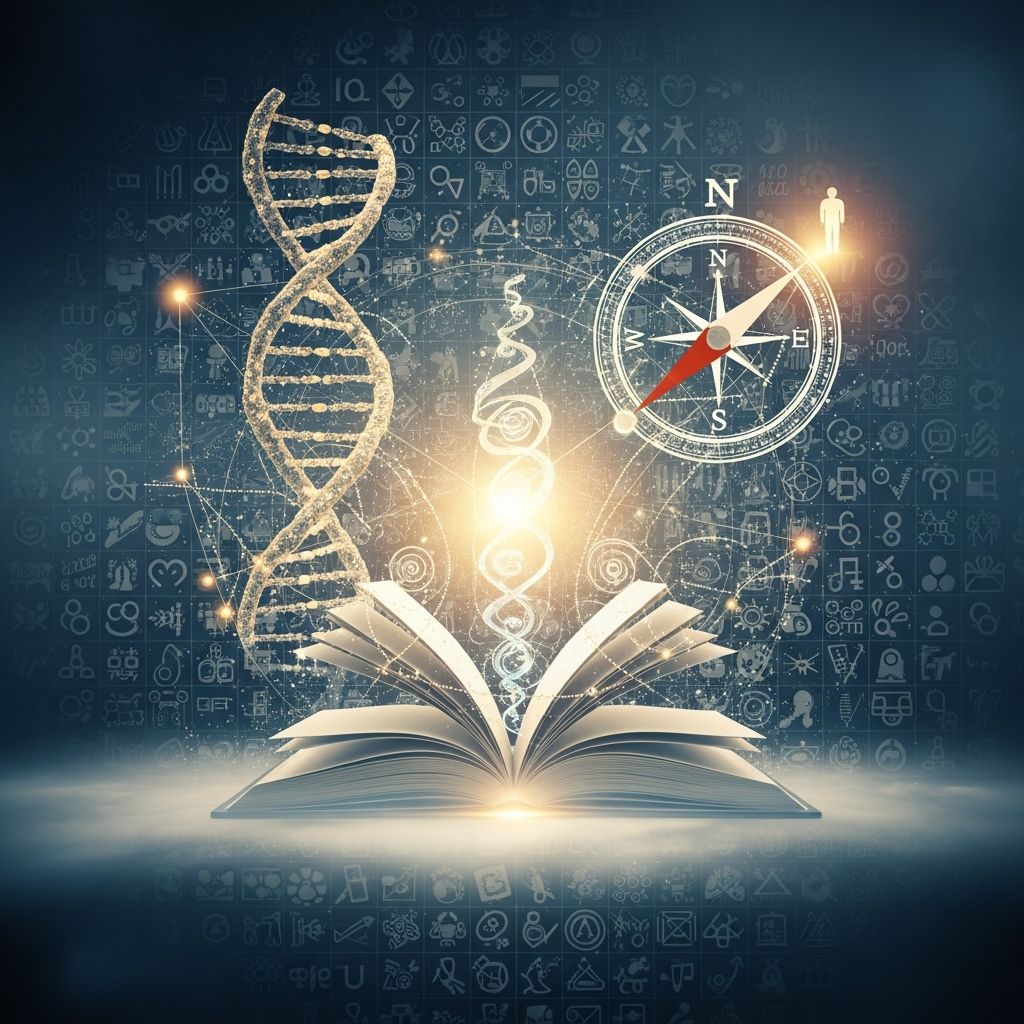
Humans stand out in the animal kingdom not just through physical form, but through a constellation of cognitive, emotional, and social capabilities that enable profound achievements and deep connections. These traits—rooted in our evolutionary history—allow us to build civilizations, ponder existence, and adapt to unimaginable challenges. This exploration uncovers five pivotal qualities: advanced self-awareness, profound interpersonal understanding, inventive thinking, adaptive endurance, and the quest for significance.
The Foundation of Self-Awareness in Human Experience
At the heart of human distinction lies our heightened level of consciousness, defined as the ability to perceive one’s own existence, thoughts, and surroundings with remarkable clarity. Unlike other species, humans possess a metacognitive capacity that lets us reflect on our mental states, question our decisions, and anticipate future outcomes. This self-reflective awareness forms the bedrock for philosophy, science, and personal growth.
Neuroscientific research highlights how our brains support this trait through extended periods of development. Humans experience a prolonged juvenile phase where neural plasticity—the brain’s ability to reorganize itself—peaks, fostering complex cognitive growth not seen in other mammals. This extended maturation, driven by social interactions, equips us to navigate intricate environments.
Consider how this manifests daily: we journal to process emotions, debate ethics in groups, or meditate to explore inner worlds. Such practices underscore our unique drive to understand not just the external world, but our internal one, setting us apart from instinct-driven behaviors in primates or other animals.
Building Bridges: The Power of Emotional Connection
Empathy, our capacity to feel and respond to others’ emotions, weaves the social fabric that defines human communities. This trait goes beyond mere mimicry; it involves theory of mind, where we infer others’ mental states from subtle cues like facial expressions, tone, and posture. Our brains are wired for this, recognizing not only our own consciousness but the independent minds of others.
- Shared neural pathways: Mirror neurons activate when we observe actions, simulating experiences in our own brains to foster understanding.
- Social normativity: Prolonged childhood dependency teaches us cultural rules through observation and interaction, unique to our species.
- Collective problem-solving: Empathy enables altruism, cooperation, and conflict resolution on scales unmatched elsewhere.
Evolutionary psychologists note that this interconnectedness arose from our need for group survival, where reading social dynamics ensured safety and resource sharing. In modern terms, it powers movements for justice, healthcare innovations, and global aid efforts. Without empathy, our societies would crumble into isolation.
Innovation as Humanity’s Signature
Creativity fuels human progress, allowing us to generate novel ideas, artifacts, and solutions from abstract thought. Our expansive neural networks—boasting vast interconnections per neuron—transform raw brainpower into imaginative leaps, far surpassing other species’ tool use or problem-solving.
This isn’t limited to artists or inventors; it’s evident in everyday adaptations, like crafting tools from scraps or devising new games for children. Scientifically, our prefrontal cortex orchestrates this, integrating memory, emotion, and foresight to envision ‘what if’ scenarios. Evolutionary anthropology emphasizes our group-oriented creativity, where shared practices and beliefs amplify innovation across cultures.
| Animal Innovation | Human Creativity |
|---|---|
| Chimpanzees fashion sticks for termites | Engineers design skyscrapers defying gravity |
| Crows bend wires for food retrieval | Scientists sequence genomes to cure diseases |
| Instinct-limited, context-specific | Abstract, scalable, culturally transmitted |
From cave paintings to quantum computing, creativity celebrates our freedom to transcend biology, turning survival into thriving.
Endurance Through Adversity: The Human Spirit
Resilience, the power to rebound from setbacks, embodies our adaptive prowess. Psychologists describe it as successful navigation of stressors, drawing on cognitive flexibility and social support. Humans don’t just survive; we transform trials into growth, a trait amplified by our brain’s plasticity during extended development.
Historical examples abound: survivors of pandemics rebuild societies, refugees forge new lives, and individuals overcome personal losses through reframed perspectives. This quality correlates with neuroplasticity, where challenges literally reshape neural pathways for strength.
- Emotional regulation to process grief
- Learned optimism from past successes
- Community networks for mutual aid
In essence, resilience ensures species continuity amid chaos, distinguishing us from more rigid biological responses.
The Drive for Deeper Fulfillment
Humans uniquely pursue meaning, seeking purpose beyond instinctual needs. This quest—exploring spirituality, legacy, and cosmic role—motivates art, religion, and ethics. Evolutionary roots tie it to social complexity, where understanding one’s place in the group fosters cohesion.
Our language, rich in concepts and syntax, shares profound ideas across generations, unlike animal communication. This pursuit yields fulfillment, driving philanthropy, exploration, and self-actualization. In a world of uncertainty, it anchors us, reminding that humanity thrives on ‘why’ as much as ‘how’.
Interconnected Qualities: A Holistic Human Portrait
These traits interweave: consciousness fuels empathy, creativity enhances resilience, and purpose integrates all. Together, they enable civilizations, ethical systems, and space voyages—feats no other species approaches. Yet, debates persist; some argue animals share echoes of these, urging humility in claims of uniqueness. Still, our scale and synthesis remain unparalleled.
Educators and parents nurture them via storytelling for empathy, play for creativity, and open discussions for purpose. In children, fostering these builds not just survivors, but contributors to humanity’s tapestry.
Frequently Asked Questions
Is human consciousness truly unique?
Yes, our metacognitive depth and theory of mind exceed other animals, supported by prolonged brain development and social learning.
How does empathy benefit evolution?
It promotes cooperation and group survival, essential for our social species.
Can creativity be taught?
Absolutely, through exposure to diverse ideas and risk-free experimentation.
What builds resilience most effectively?
Social support, mindset training, and reflective practices.
Why do humans seek meaning?
Our advanced cognition demands purpose beyond survival, driving cultural and spiritual evolution.
References
- What Makes Us Human? — Dr. Robert Brooks. Accessed 2026. https://www.drrobertbrooks.com/what-makes-us-human/
- Purposeful Lab: Evolutionary Psychology — Magis Center. Accessed 2026. https://www.magiscenter.com/blog/purposeful-lab-evolutionary-psychology
- Why do we want to think humans are different? — Animal Sentience Repository. 2018. https://www.wellbeingintlstudiesrepository.org/cgi/viewcontent.cgi?article=1358&context=animsent
- News Feature: The search for what sets humans apart — PMC (NIH). 2015-02-17. https://pmc.ncbi.nlm.nih.gov/articles/PMC4299222/
- Deep Thoughts on What Makes Humans Special — Live Science. 2010-10-14. https://www.livescience.com/10824-deep-thoughts-humans-special.html
- What makes us human? Answers from evolutionary anthropology — Wiley Online Library. 2012-09-01. https://onlinelibrary.wiley.com/doi/full/10.1002/evan.21328

- Integrated M.A. in Applied Linguistics, University of Hyderabad
- 5+ years in editorial, instructional, SEO, and research-based writing
Sneha is a relationships and lifestyle writer with a strong foundation in applied linguistics and certified training in relationship coaching. She brings over five years of writing experience to theskillvault, crafting thoughtful, research-driven content that empowers readers to build healthier relationships, boost emotional well-being, and embrace holistic living. Her writing and insights reflect the belief that beauty, happiness, and wellness…