
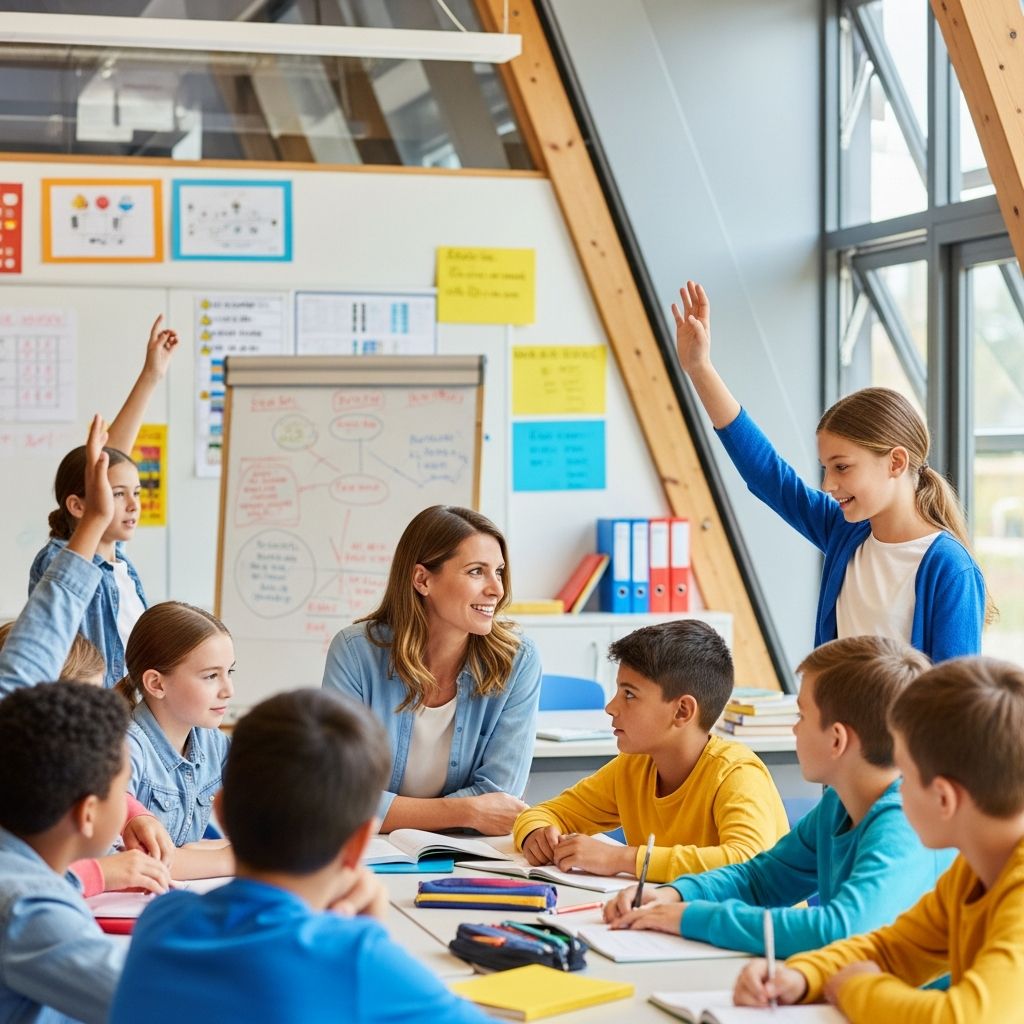
In the ever-evolving world of education, teachers often find themselves as both guides and learners. The most profound teachings frequently emerge not from textbooks or professional development workshops, but from the very students they serve. These young minds, with their unique perspectives and unfiltered honesty, offer invaluable wisdom that refines pedagogical approaches and deepens classroom connections. This article delves into key revelations drawn from decades of classroom experiences, highlighting how student interactions foster educator growth and create more effective learning environments.
Building Genuine Connections Through Observation and Empathy
One of the foremost lessons students impart is the critical role of keen observation and empathy in forging strong teacher-student bonds. Students possess an acute ability to notice subtle changes in their educators’ demeanor, from a new accessory to signs of emotional strain. This attentiveness teaches teachers to reciprocate by paying close attention to their pupils’ cues, ensuring no one feels overlooked.
Empathy extends beyond mere awareness; it involves unconditional support. Students demonstrate remarkable loyalty, showing up daily even when teachers face personal hardships. This reciprocity underscores that students crave the same unwavering commitment from adults. By prioritizing emotional availability, educators create a safe space where vulnerability strengthens rather than weakens authority.
- Notice small details: A student’s untied shoelace or quiet withdrawal signals deeper needs.
- Respond with care: Simple acknowledgments validate feelings and build trust.
- Foster mutual respect: Share glimpses of your humanity to humanize the learning process.
Such practices transform classrooms into communities where every individual feels seen, directly enhancing engagement and academic outcomes.
Adapting Instruction to Individual Learning Styles
Students consistently reveal that one-size-fits-all teaching falls short. A core insight is the necessity to tailor methods to diverse learning preferences. Not all learners process information identically, yet traditional systems often enforce uniform delivery and assessment. Educators learn to differentiate by observing how students best absorb and demonstrate knowledge.
For instance, visual learners thrive on diagrams, while kinesthetic ones engage through hands-on activities. Recognizing these variances prompts teachers to vary their strategies, ensuring broader success. Students who seem ‘gifted later’ simply need approaches that unlock their potential at their pace.
| Learning Style | Key Characteristics | Effective Strategies |
|---|---|---|
| Visual | Prefers images, charts | Infographics, videos, mind maps |
| Auditory | Learns via sound | Discussions, podcasts, lectures |
| Kinesthetic | Hands-on engagement | Experiments, role-play, building models |
| Reading/Writing | Text-based processing | Notes, essays, lists |
This table illustrates common styles, guiding educators toward inclusive planning. By teaching ‘the way they learn,’ retention and motivation soar.
The Power of Authentic Passion and Transparency
Enthusiasm is contagious, a truth students drill into teachers. If an educator lacks genuine excitement for the subject, it rarely ignites in pupils. English language learners, in particular, highlight how palpable passion transfers energy, making complex topics accessible and memorable.
Transparency complements this by dismantling barriers. Students value honesty about a teacher’s real-life experiences or uncertainties. Sharing authentically positions educators as relatable figures, sparking open dialogues and deeper connections. This vulnerability cultivates a classroom culture ripe for inquiry and growth.
In practice, starting lessons with personal anecdotes or admitting knowledge gaps invites reciprocal sharing. Students respond by voicing their own stories, enriching collective understanding and making abstract concepts tangible.
Empowering Through Inquiry and Critical Questioning
Students’ natural curiosity teaches the empowerment derived from questioning. Their barrage of inquiries about history, current events, or personal lives models how probing fosters critical thinking. Teachers learn to counter with their own questions, encouraging evidence-based responses that elevate discussions.
Advanced frameworks further this: prompting students to dissect issues via who, what, when, where, why, and how before concluding. This holistic approach prevents fragmented views, honing analytical skills applicable beyond school.
- Who benefits or suffers?
- What is truly occurring?
- When did patterns emerge?
- Where do discrepancies exist?
- Why do issues endure?
- How can change occur?
Such scaffolding equips learners to navigate complexity, with many revisiting these tools post-graduation.
Positive Reinforcement: Fueling Success and Effort
Nothing underscores motivation like positive feedback. Students exert greater effort when feeling accomplished, teaching educators to spotlight strengths deliberately. Praising specific skills reinforces desired behaviors, creating a virtuous cycle of success.
Rather than critiquing flaws, highlight progress: “Your detailed analysis shows strong critical thinking.” This not only boosts confidence but sustains momentum. Win-win dynamics emerge as students internalize positivity, amplifying classroom productivity.
Relationships as the Foundation of Effective Teaching
At its heart, teaching hinges on relationships. Students affirm that knowledge alone insufficient without rapport. “To reach the mind, connect through the heart,” they implicitly teach. Trusted bonds improve climate, resilience, and outcomes.
Small gestures—compliments, listening ears—yield profound loyalty. Former pupils recall not facts, but the empowering feelings instilled, proving emotional impact endures. Relationships thus become the WHY behind teaching, sustaining educators through challenges.
Embracing Identity Exploration and Continuous Learning
Students guide teachers toward nuanced identity mapping, urging honest self-reflection on privilege and marginalization. This ongoing practice fosters empathy and equity in instruction.
Flexible engagement options—choosing readings or videos—respect diverse paths, minimizing resentment and maximizing depth. Cohort models reinforce collaborative learning’s irreplaceability.
Every interaction refines teaching: questions expose gaps, pushback sparks evolution. Students are co-architects of education.
Resilience, Responsibility, and Lifelong Impact
Through trials, students model resilience, teaching accountability and empathy. Strong relationships propel them toward success in professions like medicine and law.
Educators, humbled, gain fresh perspectives, amplifying impact one student at a time.
Frequently Asked Questions (FAQs)
How can teachers build stronger relationships with students?
Focus on observation, empathy, and small daily interactions to show genuine care and interest in their lives.
Why is adapting to learning styles important?
Diverse styles ensure all students access material effectively, boosting engagement and success rates.
What role does positive feedback play in the classroom?
It motivates effort by making students feel successful, reinforcing positive behaviors.
How does transparency benefit teaching?
It humanizes teachers, encourages open discussions, and deepens trust and engagement.
Can students really teach teachers?
Absolutely—their perspectives on trends, emotions, and learning reveal blind spots and innovative approaches.
References
- 10 Things I Learned from My Students — Stephanie’s History Store. 2016-05-24. https://stephanieshistorystore.com/2016/05/24/10-things-i-learned-from-my-students/
- What My Students Taught Me About Teaching — DROKACADEMY (Krasun.ca). 2026-03-22. https://krasun.ca/2026/03/22/what-my-students-taught-me-about-teaching/
- Who’s the Teacher? 14 Lessons Students Taught Their Teachers — Education Week. 2021-12. https://www.edweek.org/teaching-learning/opinion-whos-the-teacher-14-lessons-students-taught-their-teachers/2021/12
- After 5 decades of teaching, 7 lessons my students taught me — K12 Dive. 2022-06-14. https://www.k12dive.com/news/after-5-decades-of-teaching-7-lessons-my-students-taught-me/620844/

Medha Deb is an editor with a master's degree in Applied Linguistics from the University of Hyderabad. She believes that her qualification has helped her develop a deep understanding of language and its application in various contexts. Medha specializes in the areas of beauty, health, sports, and wellness and is committed to ensuring that the content on the website is…