
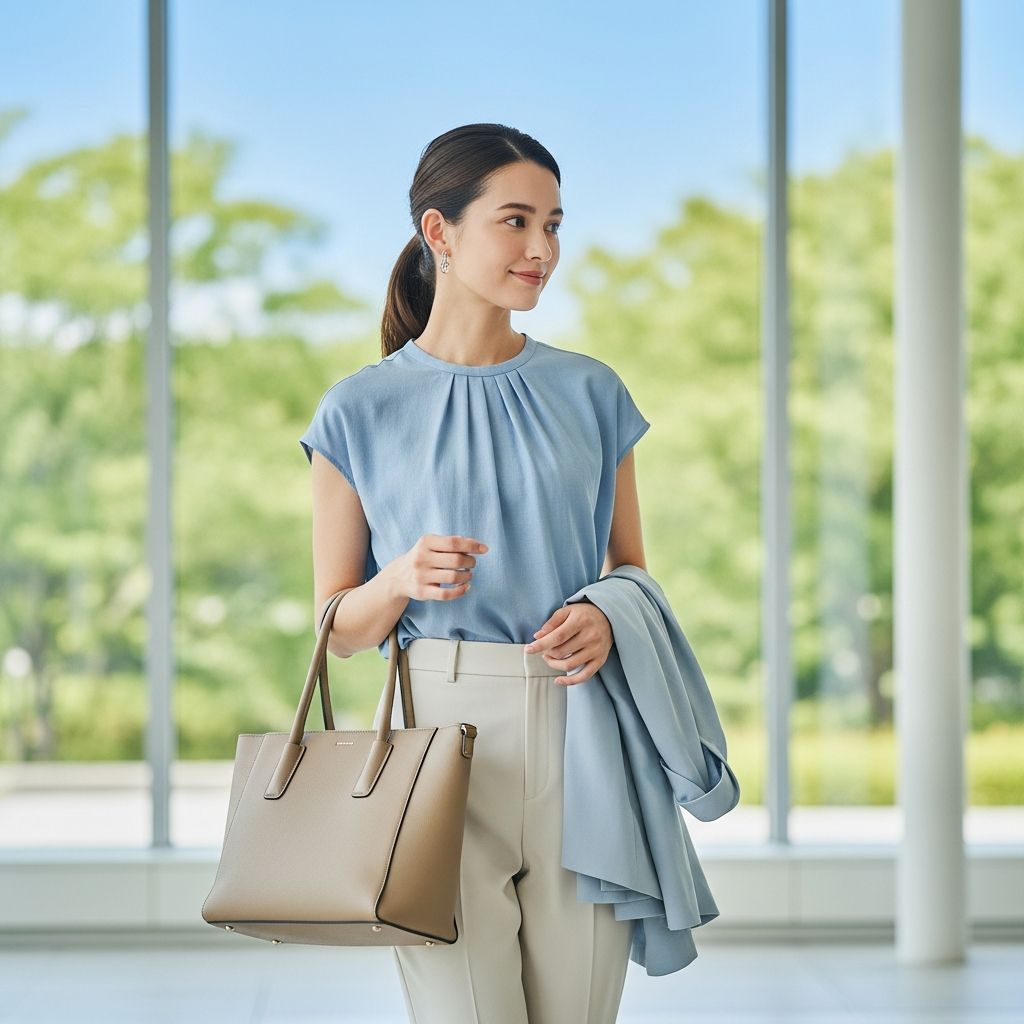
Hot, humid weather should never undermine a strong first impression. The challenge is balancing professionalism with practicality so you can walk into a summer job interview looking polished, not overheated. This guide walks you through how to choose fabrics, colors, silhouettes, and accessories that keep you cool, confident, and camera-ready for both in-person and virtual interviews.
Why Your Summer Interview Outfit Matters
What you wear to an interview communicates respect for the role, awareness of workplace norms, and attention to detail before you say a single word. In warmer months, there is an added layer of complexity: you must manage heat, sweat, and sometimes long commutes without sacrificing professionalism.
Getting your outfit right helps you:
- Project professionalism that aligns with the company and industry
- Stay physically comfortable so you can focus on answering questions, not fidgeting with your clothes
- Feel confident knowing you look prepared, polished, and intentional
Core Principles for Hot-Weather Interview Dressing
Before diving into specific outfits, keep these universal principles in mind:
- Dress for the company, not the temperature. Start with the expected dress code, then adjust for the heat with smarter fabrics and layers instead of going more casual.
- Aim for slightly more formal than everyday wear. Interview attire should be one small step up from what employees typically wear.
- Prioritize structure. Even in lighter materials, choose pieces that hold their shape (e.g., lined-but-breathable jackets, tailored dresses, crisp shirts) to avoid looking sloppy.
- Plan for two climates: the hot commute and the aggressively air-conditioned office.
Choosing Fabrics That Breathe and Look Polished
Fabric choice is the most powerful tool for creating a summer-appropriate interview outfit. Research on thermal comfort shows that breathable fabrics help regulate body temperature by allowing moisture to evaporate more easily.
| Fabric | Pros for Interviews | Potential Drawbacks |
|---|---|---|
| Lightweight wool | Breathable, drapes well, looks very professional, resists wrinkles | Can feel warm if very tightly woven; higher cost |
| Cotton blends | Comfortable, breathable, easy to care for | 100% cotton can wrinkle; overly casual weaves may look less formal |
| Linen blends | Cool in high heat, relaxed yet refined if blended with wool or cotton | Pure linen wrinkles quickly and can appear messy |
| Technical synthetics | Moisture-wicking, wrinkle-resistant, lightweight | Cheap synthetics can trap heat if not designed to be breathable |
| Silk or silk-like shells | Lightweight, looks refined under a blazer | Can show sweat easily in light colors and cling if it’s very humid |
- Best for suits: summer-weight wool, wool blends, or linen blends that keep structure without trapping heat.
- Best for shirts and blouses: cotton poplin, cotton-synthetic blends, or performance fabrics that resist wrinkles and wick moisture.
- Use pure linen sparingly: ideal for casual settings but risky for formal interviews due to wrinkles.
Color Strategy: Staying Cool Without Highlighting Sweat
Color affects both temperature and how visible sweat becomes. Light colors reflect heat, while dark colors absorb it—but darker shades also hide sweat marks more effectively.
Smart color approaches for summer interviews include:
- Base neutrals: navy, charcoal, mid-gray, black, deep olive
- Summer neutrals: light gray, stone, beige, soft taupe, pale blue
- Accent colors: muted burgundy, dusty rose, forest green, soft teal (used in ties, jewelry, or a subtle print)
To balance heat and sweat:
- Choose medium to darker neutrals on areas prone to sweat (underarms, back, seat).
- Use lighter shades for pieces less likely to show marks, like a skirt, trousers, or a blazer you can remove.
- Avoid very bright or loud prints that distract from your skills and might look less formal in conservative industries.
Outfit Formulas by Dress Code Level
Use these mix-and-match formulas as starting points and adapt them to your style, gender expression, and cultural context.
1. Formal / Corporate (Finance, Law, Traditional Offices)
In conservative environments, formality remains a priority even in high temperatures.
- Core pieces:
- Unlined or half-lined navy, charcoal, or light-gray suit in lightweight wool or a wool blend
- Crisp collared shirt or structured blouse in white, pale blue, or another light neutral
- Closed-toe leather shoes with a modest heel or flat sole
- Heat-friendly tweaks:
- Choose a single-breasted jacket with minimal padding
- Opt for ankle-length trousers instead of heavy full-length lined pants
- Wear a breathable undershirt to absorb sweat and prevent marks
2. Business Casual (Tech, Startups, Creative Corporate)
Business casual gives you more flexibility, but you still want to look sharp and intentional.
- Core pieces:
- Tailored trousers or structured chinos in a dark or mid-tone color
- Lightweight blouse, shell, or button-down (short sleeves are acceptable in many modern workplaces)
- Optional lightweight blazer or cardigan for the office AC
- Closed-toe loafers, block-heel pumps, or sleek flats
- Heat-friendly tweaks:
- Skip heavy lining in jackets; choose breathable, unstructured options
- Pick fabrics that resist wrinkling during long commutes
- Use subtle patterns (pinstripes, micro-checks) to add depth without looking loud
3. Creative or Casual-leaning (Design, Media, Some Startups)
Even where employees dress casually, interview attire should feel elevated. Aim for smart-casual: relaxed, but clearly thought-through.
- Core pieces:
- Tailored dress or midi skirt and blouse, or polished dark jeans with a blazer (only if you are confident jeans are acceptable)
- Breathable top with sleeves or a sleeveless shell that can be paired with a light jacket
- Closed-toe shoes such as mules, loafers, or minimalist sneakers if the culture clearly supports them
- Heat-friendly tweaks:
- Choose silhouettes that skim the body rather than cling tightly
- Leverage soft, natural fabrics like cotton and linen blends
- Incorporate small style details (a unique belt, interesting texture) instead of bold, busy prints
Layering Smartly for AC and Commutes
Modern office buildings often use powerful air conditioning that can make indoor spaces uncomfortably cool compared to the outdoor heat. Strategic layering allows you to manage this temperature swing.
- Outer layer: a lightweight, unlined blazer or structured cardigan you can keep off during the commute and put on before entering the building.
- Base layer: moisture-wicking undershirt or breathable camisole to prevent sweat marks and make jackets more comfortable.
- Removable pieces: scarves, belts, or jewelry that you can stow in your bag until just before the interview.
When arriving at the building, take a minute in the lobby or restroom to cool down, wash your hands, adjust your layers, and do a quick mirror check.
Footwear, Bags, and Accessories in Hot Weather
Details matter; they help your outfit feel intentional without drawing attention away from your qualifications.
Footwear
- Choose closed-toe. Even in summer, most professional interviews call for shoes that cover your toes.
- Prefer breathable materials. Leather or high-quality faux leather is usually more breathable than plastic-like synthetics.
- Moderate heel height. If you wear heels, keep them low to mid-height so you can walk comfortably in warm weather.
Bags
- Use a structured tote or brief-style bag that fits copies of your resume, a notebook, and a small emergency kit.
- Avoid heavy backpacks that sit directly against your back and can create noticeable sweat patches during hot commutes.
Accessories
- Keep jewelry minimal to avoid anything sticky, noisy, or distracting.
- Use a belt to add structure and polish to relaxed summer fabrics.
- Opt for a simple, classic watch if you like; it subtly signals punctuality and organization.
Sweat Management and Grooming Strategies
Interview days are naturally stressful, and stress can increase sweating. A few thoughtful habits can help you feel prepared rather than self-conscious.
- Antiperspirant: Apply a clinical-strength or long-lasting antiperspirant the night before and again the morning of the interview.
- Hair: Choose a style that stays neat in humidity—think low buns, braids, or sleek ponytails rather than styles that easily frizz.
- Makeup: If you wear makeup, favor long-wear formulas and matte or satin finishes over heavy, dewy products that can slide in heat.
- Fabrics over fixes: No grooming product can compensate for heavy, non-breathable fabric in extreme heat; prioritize breathable materials first.
Building a Compact Interview-Day Emergency Kit
A small kit in your bag can help you handle last-minute issues like spills, shine, or unexpected sweat marks.
- Mini or travel-size antiperspirant
- Oil-blotting sheets or a small pressed powder
- Breath mints (not gum, which you might forget to discard)
- Stain-removal pen
- Travel-size deodorizing wipes or moist towelettes
- Compact hairbrush, comb, or a few bobby pins and a hair tie
- Small pack of tissues
Use a restroom near the interview location to refresh, check your outfit, and gather yourself before checking in.
Special Considerations for Virtual Summer Interviews
Even when you interview from home, hot weather and camera framing still influence what to wear.
- Dress fully. Wear professional bottoms as well as a polished top. You may need to stand unexpectedly.
- Pay attention to color on camera. Solid mid-tone colors (like blue, teal, or soft burgundy) often look better on video than stark white or pure black.
- Mind your backdrop. Avoid patterns that clash with your background or cause visual distractions on screen.
- Stay cool quietly. Use a fan placed off-camera or adjust your air conditioning before the call; avoid clothing that makes rustling sounds in your microphone.
Frequently Asked Questions (FAQs)
Q: Can I wear short sleeves to a summer job interview?
A: In many business casual and modern workplaces, a short-sleeved button-down or blouse can be appropriate, especially when paired with a blazer or cardigan. For very formal industries, long sleeves remain the safest choice, even in lighter fabrics.
Q: Are open-toe shoes ever acceptable for interviews?
A: Closed-toe shoes are the default recommendation across most professional settings and industries. In conservative roles (finance, law, government), open toes are generally not appropriate. In very creative workplaces, subtle, polished open-toe shoes may be fine, but only if you are confident the culture allows it.
Q: How do I avoid looking wrinkled after commuting in the heat?
A: Choose wrinkle-resistant fabrics such as wool blends, cotton blends, or performance materials and avoid pure linen for formal interviews. Hang your jacket during the commute, and arrive early enough to straighten your outfit in a restroom. A small travel steamer or wrinkle-release spray can also help.
Q: What if I sweat a lot when I’m nervous?
A: Select darker or medium-tone colors in areas prone to sweat, wear breathable undershirts, and apply antiperspirant in advance. Keep tissues or blotting papers in your bag and allow a few minutes before the interview to cool down in the lobby or restroom.
Q: How do I know if my outfit is formal enough?
A: Look at the company’s website, social media, and any photos of events to gauge their usual dress code. If unsure, err slightly on the formal side: a blazer, structured trousers or skirt, and closed-toe shoes rarely feel out of place.
References
- Hyperhidrosis — Mayo Clinic. 2022-05-11. https://www.mayoclinic.org/diseases-conditions/hyperhidrosis/symptoms-causes/syc-20367152
- What to Wear: Seasonal Job Interview Guide 2025 — Scale.jobs. 2025-01-05. https://scale.jobs/blog/what-to-wear-seasonal-job-interview-guide-2025
- What to Wear to a Summer Job Interview: Stay Cool While Making a Professional Impression — ResuFit. 2024-06-10. https://www.resufit.com/blog/what-to-wear-for-a-summer-job-interview-a-complete-guide-by-industry/
- How to Look Professional in Hot Weather — M.M.LaFleur (M Dash). 2023-07-18. https://mdash.mmlafleur.com/how-to-look-professional-in-hot-weather/
- How To Dress for a Job Interview: A Practical Guide — Alpine Swiss. 2023-03-02. https://www.alpineswiss.com/blog/how-to-dress-for-job-interview

- Integrated M.A. in Applied Linguistics, University of Hyderabad
- 5+ years in editorial, instructional, SEO, and research-based writing
Sneha is a relationships and lifestyle writer with a strong foundation in applied linguistics and certified training in relationship coaching. She brings over five years of writing experience to theskillvault, crafting thoughtful, research-driven content that empowers readers to build healthier relationships, boost emotional well-being, and embrace holistic living. Her writing and insights reflect the belief that beauty, happiness, and wellness…