
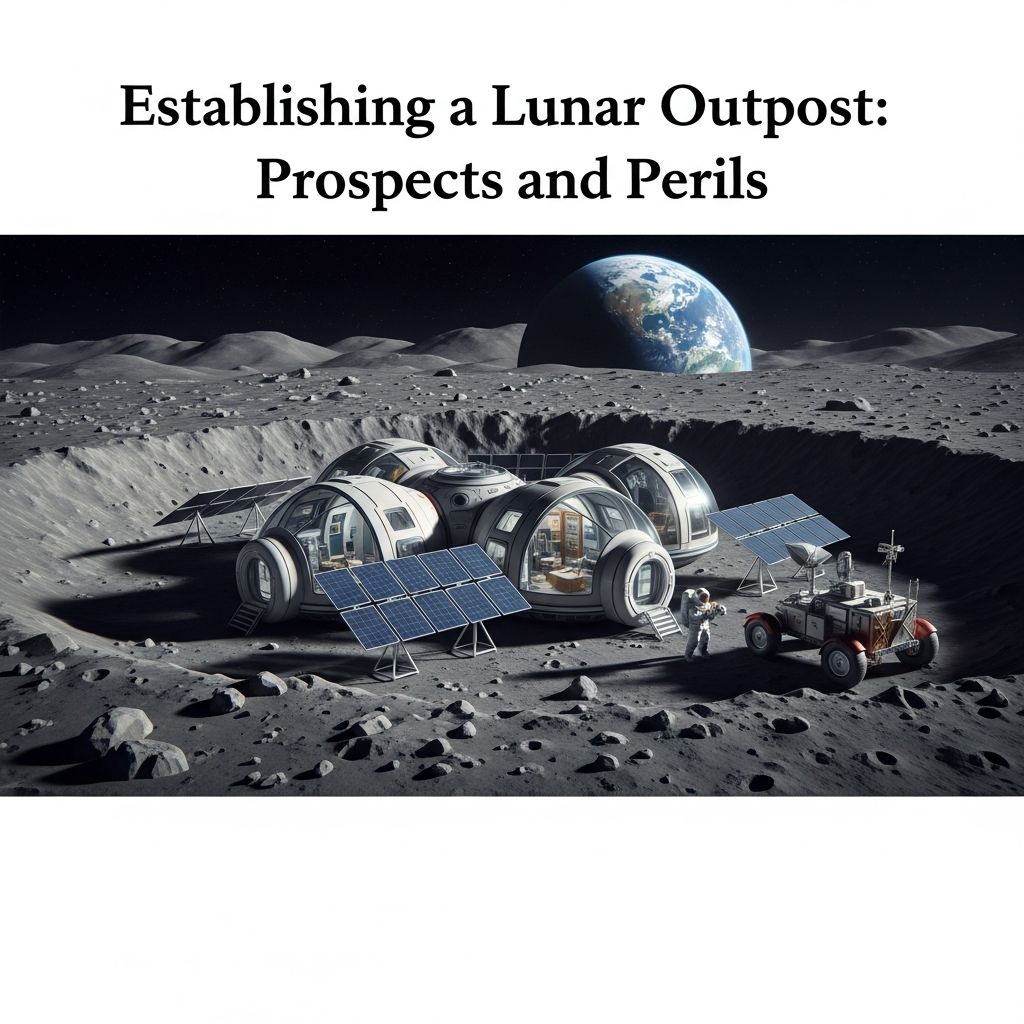
A permanent human presence on the Moon represents one of humanity’s most ambitious goals in space exploration. As agencies like NASA push forward with programs such as Artemis, the vision of lunar outposts evolves from science fiction to tangible engineering reality. These bases could serve as launchpads for deeper space missions, hubs for resource extraction, and platforms for groundbreaking research, but they demand overcoming extreme environmental and logistical barriers.
Strategic Imperative for Lunar Settlement
The Moon’s proximity to Earth—about 384,400 kilometers away—makes it an ideal testing ground for technologies needed for Mars and beyond. Unlike Earth launches, which require escaping a deep gravity well, lunar takeoffs benefit from one-sixth Earth’s gravity, slashing fuel needs for interplanetary voyages. This positioning could transform the Moon into a cosmic gas station, where propellants produced on-site fuel missions to distant destinations.
Scientific pursuits further justify investment. The lunar surface preserves ancient solar system records unmarred by weather or tectonics. Studying regolith—fine, pulverized lunar soil—reveals clues about planetary formation and bombardment history. Moreover, the far side offers pristine radio silence, perfect for telescopes observing distant galaxies without Earth’s interference.
Unlocking Lunar Resources for Self-Reliance
In-situ resource utilization (ISRU) is pivotal for viability. The Moon harbors water ice in permanently shadowed craters, especially at the South Pole. Electrolysis splits this ice into oxygen for breathing and hydrogen for rocket fuel, potentially yielding drinking water too. NASA’s Artemis targets this region for its sunlight-exposed peaks, ideal for solar arrays powering extraction operations.
Beyond water, the lunar crust brims with helium-3, a fusion fuel isotope scarce on Earth. Estimates suggest quantities sufficient for centuries of clean energy if fusion technology matures. Rare earth elements like scandium and yttrium, vital for electronics, also abound, alongside metals such as iron, titanium, and aluminum for construction.
- Water Ice Deposits: Concentrated in polar craters, enabling life support and propulsion.
- Helium-3: Potential fusion energy source, extractable from regolith.
- Regolith: Source of metals and shielding material via 3D printing or sintering.
Processing these demands innovative tech. Microwave ovens could heat regolith to extract metals, while solar concentrators melt it into bricks. Self-sufficiency reduces Earth’s supply runs, where each kilogram costs around $10,000 to deliver.
Engineering Resilient Habitats
Designing livable structures tops the challenge list. Without atmosphere, the Moon exposes inhabitants to cosmic rays, solar flares, and micrometeoroids zipping at 96,000 kph—33,000 golf-ball-sized impacts yearly. Habitats must shield against radiation, demanding at least 2.5 meters of regolith overburden to match Earth’s background levels.
Temperatures swing from 120°C in sunlight to -130°C in shadow, necessitating super-insulated modules with thermal mass. Inflatable habitats, buried or covered in regolith, minimize launch mass. 3D printers using local soil could erect domes or tunnels, leveraging low gravity for taller structures like multi-kilometer skyscrapers.
| Challenge | Solution | Benefits |
|---|---|---|
| Radiation | Regolith shielding (2.5m thick) | Reduces exposure to safe levels |
| Temperature Extremes | High-insulation, buried designs | Maintains stable internals |
| Micrometeorites | Multi-layer Whipple shields | Fragments impacts |
| Construction | ISRU 3D printing | Cuts Earth imports by 90% |
Power relies on solar farms on crater rims, with rotating panels tracking the sun. Nuclear micro-reactors provide night-time reliability, as lunar days last 14 Earth days.
Navigating Logistical and Human Hurdles
Transportation logistics strain budgets. NASA’s Artemis, eyeing a 2030s base, projects $93 billion, or $4.1 billion per launch. Robotic precursors must scout sites, deploy infrastructure, and test ISRU before humans arrive.
Human factors loom large. Low gravity weakens bones and muscles; dust clings electrostatically, abrading suits and machinery. Psychological strain from isolation, confined spaces, and perpetual vigilance over life-support systems risks mental health. Airlocks demand flawless operation to prevent decompression disasters.
Food production requires hydroponics or aeroponics in shielded greenhouses, growing crops in nutrient-rich regolith after baking out toxins. Water recycling must hit 95% efficiency, composting waste into fertilizer.
Economic Viability and Global Collaboration
Costs deter solo efforts. Public-private partnerships, like SpaceX’s Starship slashing launch prices, are essential. Mining helium-3 or rare earths could yield returns, but markets remain speculative. Tourism—lunar hotels for the ultra-wealthy—might fund early phases.
International cooperation amplifies resources. NASA’s Artemis enlists ESA, JAXA, and others, sharing habitats, rovers, and science payloads. Lunar Verticals—towers for vertical farming and industry—could emerge in low-g, fostering an off-world economy.
Vision for Artemis Base Camp
NASA’s blueprint centers on the lunar South Pole’s Artemis Base Camp: surface habitats, lunar terrain vehicles (LTVs), and robotic aides for months-long stays. Autonomous rovers deliver payloads; hoppers refuel with local propellants. This setup tests Mars tech: closed-loop life support, radiation shelters, and ISRU.
Expansion phases add far-side telescopes and mining ops. By decade’s end, crews live sustainably, paving Mars pathways.
Environmental and Ethical Dimensions
Critics flag planetary protection. Mining might scar landscapes, though NASA deems 1% surface impact centuries away. Contamination risks from Earth microbes could skew pristine science. Ethical debates question diverting funds from earthly crises, yet proponents argue spillovers—like advanced recycling—benefit all.
Preservation protocols, akin to Antarctic treaties, must govern. Sustainable practices ensure the Moon remains a shared heritage.
The Road Ahead: From Concept to Reality
Overcoming these hurdles demands iterative missions. Artemis III (2026 target) lands humans; follow-ons build incrementally. Success hinges on innovation: AI-managed systems, biotech for radiation resistance, and fusion power.
A lunar outpost promises transformative returns: energy independence, deep-space access, and humanity’s multi-planetary future. The perils are steep, but history shows bold exploration pays dividends.
Frequently Asked Questions (FAQs)
What is the main goal of a Moon base?
It serves as a staging point for Mars missions, resource hub, and scientific observatory, leveraging low gravity for efficient launches.
How will power be generated?
Solar panels on sunlit rims and nuclear reactors ensure continuous energy, critical for 14-day nights.
Can we really live off lunar resources?
Yes, via ISRU: water ice for oxygen/fuel, regolith for building/shielding, and metals for industry.
What are the biggest dangers?
Radiation, micrometeorites, dust abrasion, and psychological isolation top the list.
When will the first base be built?
NASA aims for sustainable presence by 2030s under Artemis, starting with South Pole landings.
References
- Challenges of Building a Moon Base — Josh Universe Blog. 2023-05-15. https://blog.joshuniverse.com/blog/challenges-of-building-a-moon-base/
- Should We Create a Permanent Base on the Moon? — ExplorersWeb. 2024-02-20. https://explorersweb.com/should-we-create-a-permanent-base-on-the-moon/
- Building a Moon Base: Part 1 – Challenges and Hazards — Universe Today. 2023-11-10. https://www.universetoday.com/articles/building-a-base-on-the-moon-challenges-and-hazards
- NASA’s Plan for Sustained Lunar Exploration and Development — NASA. 2020-08-01. https://www.nasa.gov/wp-content/uploads/2020/08/a_sustained_lunar_presence_nspc_report4220final.pdf

Medha Deb is an editor with a master's degree in Applied Linguistics from the University of Hyderabad. She believes that her qualification has helped her develop a deep understanding of language and its application in various contexts. Medha specializes in the areas of beauty, health, sports, and wellness and is committed to ensuring that the content on the website is…