
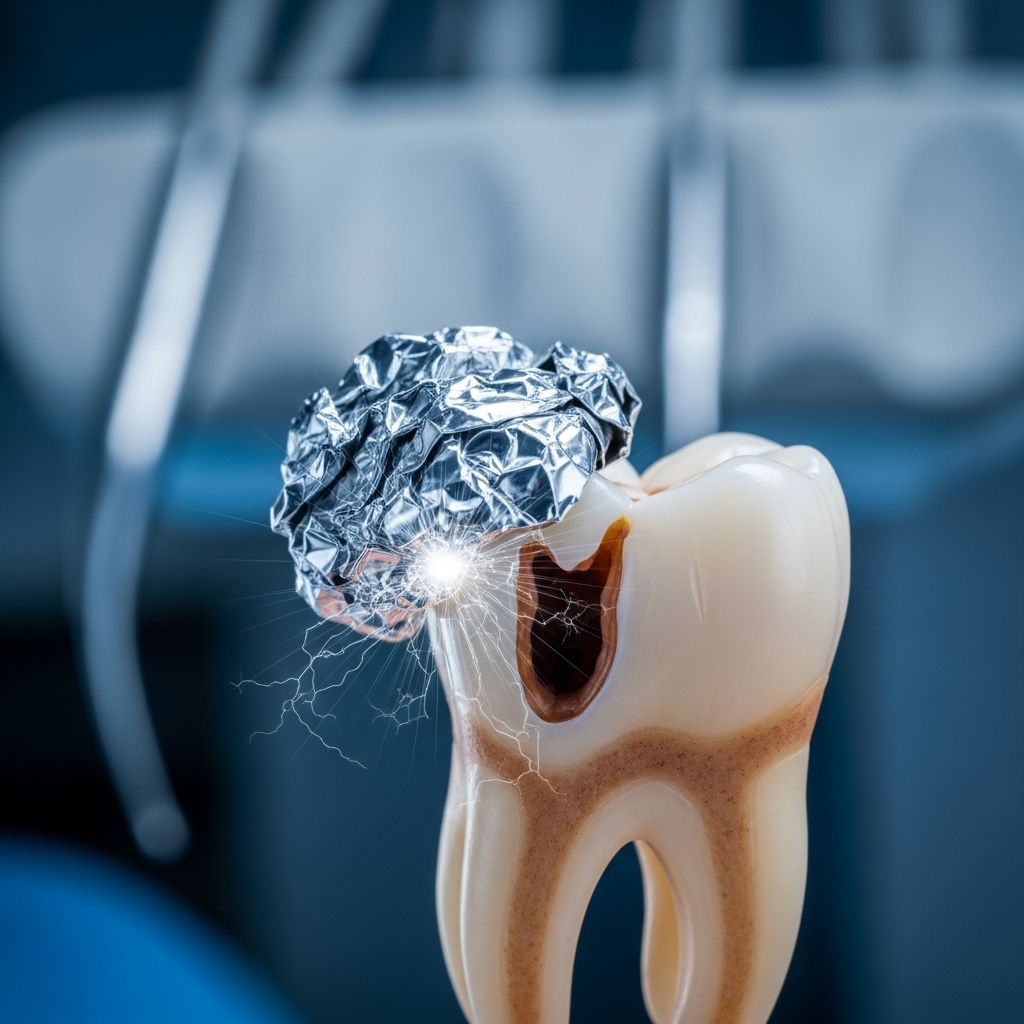
That sudden, electric-like zap when you accidentally bite down on a piece of aluminum foil is a surprisingly common experience. This discomfort arises from a basic electrochemical reaction in your mouth, turning everyday foil into a makeshift battery that irritates sensitive dental nerves. While harmless in the long term, the pain can be intense and puzzling, especially for those with metal restorations like fillings or crowns.
Understanding the Electrical Phenomenon in Your Mouth
The root cause of this dental zing is known as galvanic shock, a process where dissimilar metals generate a small electric current in a conductive environment. Your saliva, rich in electrolytes from salts, acts as the perfect medium to facilitate this reaction. When aluminum foil contacts metals in dental work—such as mercury-based amalgam fillings or gold crowns—electrons flow, creating a voltage that stimulates nearby nerves.
This isn’t a modern quirk; it echoes experiments from over two centuries ago. Italian physicist Alessandro Volta demonstrated a similar effect by stacking zinc and copper disks separated by salted paper, producing the first battery. In your mouth, biting foil replicates this on a tiny scale, with saliva bridging the metals.
Why Only Some People Feel the Pain
Not everyone winces at foil. The sensation primarily affects individuals with metal dental restorations. Amalgam fillings, composed of silver, tin, copper, and mercury, are common culprits. When foil touches these, the electrochemical potential difference—aluminum being more reactive—drives current toward the tooth’s pulp, where nerves reside.
- Key factors amplifying the shock: Presence of amalgam, gold crowns, or mixed metals in adjacent teeth.
- Saliva’s role: Its salinity (about 0.1-0.4% electrolytes) enhances conductivity, much like the saltwater in Volta’s pile.
- No metal, no problem: Those with pristine natural teeth or non-metal restorations rarely experience it.
Even without foil, mismatched metals in your mouth can spark similar shocks. Biting down on a silver fork with a gold crown or clenching teeth with opposing amalgam fillings on grinders can trigger it.
How the Current Travels to Your Nerves
Picture this: Pressure from chewing presses foil against a filling. Aluminum (anode) loses electrons, while the dental metal (cathode) gains them. This flow, though mere millivolts, heads straight to the tooth’s dentin and pulp—the living core housing nerve endings.
Dental nerves differ from others; they lack specialized sensors for temperature or pressure beyond a pain threshold. Any stimulation, from cold, heat, or electricity, registers as sharp agony. Exposed dentin from wear or recession intensifies this, making even mild currents excruciating.
| Metal Pair | Potential Difference (Volts) | Pain Likelihood |
|---|---|---|
| Aluminum Foil + Amalgam | ~0.5-1.0 | High |
| Gold Crown + Amalgam | ~0.2-0.6 | Moderate |
| Aluminum + Natural Tooth | None | Low |
This table illustrates typical voltage differences, based on standard electrochemical potentials. Values are approximate and vary by alloy composition.
Real-Life Scenarios Beyond Foil
Foil mishaps often happen with wrapped candies or food packaging, but galvanic shocks lurk elsewhere. Teeth grinders (bruxism sufferers) may feel zaps from clashing fillings. Acidic foods can worsen it by boosting saliva’s conductivity, mimicking chronic pain like trigeminal neuralgia—until the offending metal is replaced with porcelain.
Braces wearers face a twist: Traditional metal brackets rarely cause issues during chewing since they’re not on biting surfaces. However, foil brushing brackets can spark a jolt. Opting for ceramic or lingual braces minimizes risks.
Health Implications and Myths Debunked
Rest assured, these shocks pose no lasting damage. The current is too weak for tissue harm, unlike high-voltage accidents. Persistent pain, though, signals deeper issues like exposed nerves or corrosion from ongoing metal interactions.
Myth: Braces attract lightning—false. Fact: They can rarely cause intraoral shocks with external metals.
Another concern: Cutlery corrosion. Dissimilar metals in dishwashers generate currents, accelerating wear—keep gold-handled spoons from silver forks.
Strategies to Dodge the Dental Zap
Prevention is straightforward and ties into better oral care:
- Avoid foil contact: Tear wrappers carefully; use plastic-lined foils for food.
- Upgrade restorations: Discuss composite or porcelain alternatives with your dentist for metal-free smiles.
- Protect nerves: Use desensitizing toothpaste (e.g., with potassium nitrate) for sensitive teeth.
- Bruxism aids: Night guards prevent clashing metals during sleep.
- Regular checkups: Early detection of wear avoids escalation.
For braces patients, clear aligners like Invisalign sidestep metal entirely.
Frequently Asked Questions (FAQs)
What causes the pain from biting aluminum foil?
The pain stems from galvanic shock: an electric current generated when foil contacts dental metals in saliva’s conductive environment, irritating tooth nerves.
Does this happen without fillings?
Rarely. Natural teeth lack the dissimilar metals needed for the reaction.
Is galvanic shock dangerous?
No, it’s harmless but uncomfortable. Seek dental advice for frequent occurrences.
Can acidic foods trigger similar pain?
Yes, they enhance conductivity between existing metals, causing ongoing shocks.
How do I prevent it with braces?
Choose non-metal options or ensure foil avoids brackets.
Long-Term Dental Health Considerations
While foil shocks are fleeting, they highlight broader oral health needs. Metal amalgams, durable since the 1800s, are safe per major health bodies but can corrode over decades, leading to sensitivity. Modern composites offer aesthetics and biocompatibility without conductivity risks.
Monitor for signs like unexplained zaps, temperature pain, or visible wear. Fluoride treatments strengthen enamel, while sealants protect dentin. A balanced diet low in acids preserves restorations.
In rare cases, chronic galvanic pain mimics neuralgias. Case studies show relief post-metal removal, underscoring personalized dentistry’s value.
The Science Behind Dental Nerve Sensitivity
Teeth’s A-delta and C-fibers fire indiscriminately to stimuli, explaining uniform pain. Dentin tubules fluid dynamics (hydrodynamic theory) amplify signals: currents cause fluid shifts, mechanically stressing nerves.
Research affirms: Voltage as low as 0.1V suffices for perception, aligning with foil scenarios.
Educating on this empowers avoidance. Next time foil lurks, spit it out—your nerves will thank you.
References
- The Shocking Truth: Why Biting Aluminum Foil Hurts Your Teeth — Skoro Orthodontics. 2023. https://www.skororthodontics.com/blog/biting-aluminum-foil/
- Biting on aluminum foil can be painful. Why? — HowStuffWorks. Accessed 2026. https://science.howstuffworks.com/question564.htm
- Why do I get a jolt of pain every time I chew piece aluminum foil — McGill Office for Science and Society. 2018-11-08. https://www.mcgill.ca/oss/article/you-asked/why-do-i-get-jolt-pain-every-time-i-chew-piece-aluminum-foil

- Integrated M.A. in Applied Linguistics, University of Hyderabad
- 5+ years in editorial, instructional, SEO, and research-based writing
Sneha is a relationships and lifestyle writer with a strong foundation in applied linguistics and certified training in relationship coaching. She brings over five years of writing experience to theskillvault, crafting thoughtful, research-driven content that empowers readers to build healthier relationships, boost emotional well-being, and embrace holistic living. Her writing and insights reflect the belief that beauty, happiness, and wellness…