
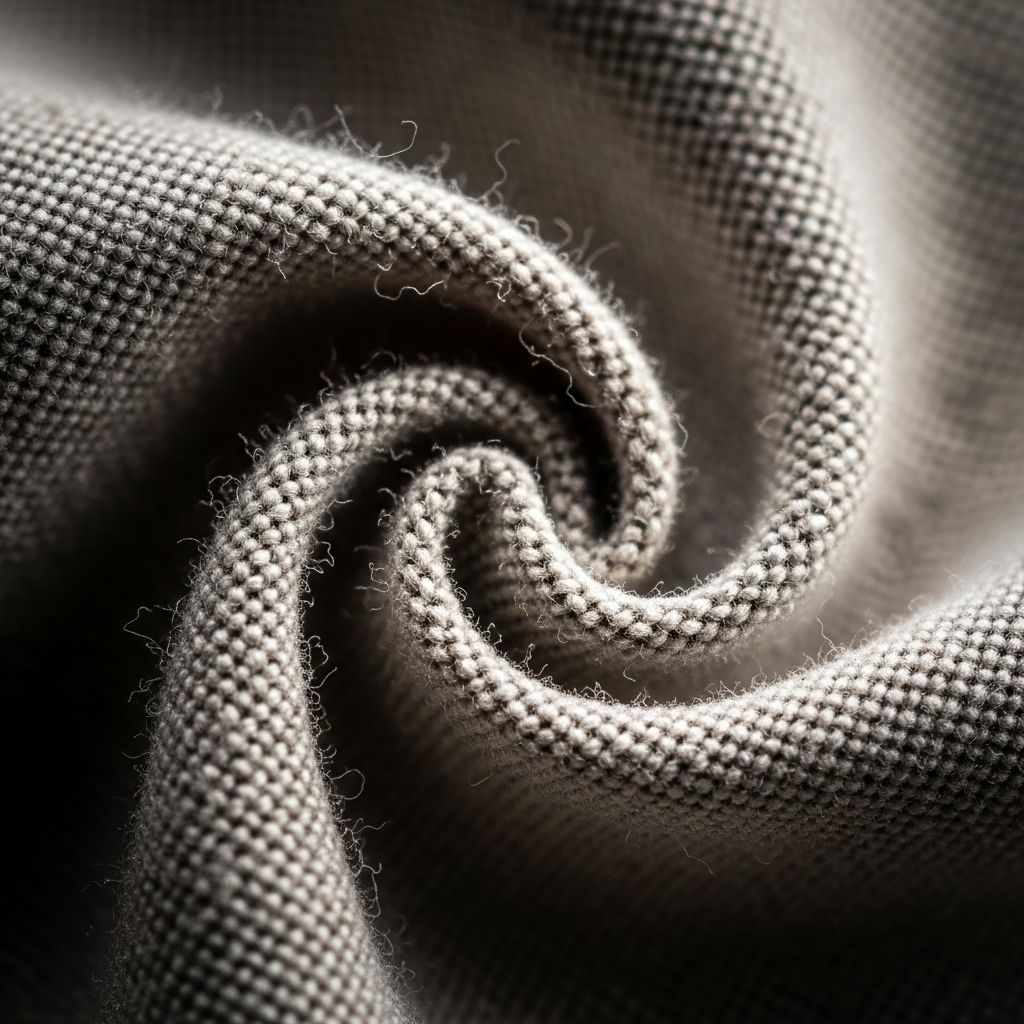
Clothes wrinkling is a common frustration that affects everyone from busy professionals to casual wearers. Understanding the root causes—primarily heat and moisture interacting with fabric polymers—empowers better care routines. This article breaks down the molecular mechanisms, compares fiber behaviors, and offers practical prevention strategies.
The Molecular Mechanics Behind Fabric Creases
Fabrics consist of polymers, long chains of molecules linked by covalent and hydrogen bonds. Heat weakens these bonds at specific glass transition temperatures, allowing fibers to shift positions. Natural cellulose fibers like cotton and linen have lower transition points, making them prone to creasing when exposed to body heat or laundry cycles.
Moisture plays a crucial role by swelling hydrophilic fibers, softening them further. A 1% increase in moisture can drop the glass transition temperature by about 10°C, facilitating bond breakage. As fabrics dry and cool, new bonds form in altered positions, locking in wrinkles.
- Heat from dryers, irons, or skin raises fiber temperature above transition thresholds.
- Water molecules penetrate and separate hydrogen bonds in absorbent materials.
- Cooling and drying reform bonds haphazardly, creating visible creases.
Fiber Types and Their Wrinkle Susceptibility
Not all fabrics wrinkle equally. Cellulose-based naturals dominate wrinkle complaints due to their structure, but synthetics and proteins vary widely.
| Fiber Type | Examples | Wrinkle Resistance | Key Reason |
|---|---|---|---|
| Cellulose Naturals | Cotton, Linen, Hemp | Low | Low glass transition temp; high absorbency swells fibrils |
| Protein Naturals | Wool | Medium-High | Elastic filaments and low yarn friction aid recovery |
| Synthetics | Polyester, Nylon | High | Higher transition temps; less moisture absorption |
| Regenerated Cellulose | Rayon, Tencel | Low-Medium | Similar to cotton but smoother surface reduces some creasing |
Wool stands out for its viscoelastic properties, stretching under stress and snapping back, unlike rigid cellulose chains that tangle permanently.
How Laundry Practices Amplify Wrinkling
Washing and drying routines often exacerbate creases. Overloading washers mixes heavy items with delicates, causing uneven agitation and bond disruptions.
Hot water and high-heat dryers push fibers past their limits repeatedly. Leaving clothes in a warm, damp dryer post-cycle allows bonds to set in crumpled states.
- Improper load sorting leads to mechanical stress on lightweight fabrics.
- Excessive lime scale from detergents builds up, stiffening fibers.
- Skipping fabric softeners misses lubrication for smoother bond reformation.
Environmental and Wear Factors in Creasing
Beyond laundry, daily wear contributes. Body heat (around 37°C) and perspiration mimic washing conditions, especially in humid climates. Closet storage in hot, steamy environments softens fibers without agitation, setting subtle creases.
Folding or hanging improperly compresses yarns, promoting inter-fiber tangling. Rough surface fibrils on cellulose threads hook during movement, worsening upon drying.
Proven Strategies to Minimize Wrinkles
Prevention starts with fiber-aware choices and habits. Select blends like cotton-polyester for everyday wear, balancing comfort and resilience.
- Cool Laundry Cycles: Use cold water washes and air-dry or low-heat settings to stay below transition temps.
- Proper Loading: Fill washers to 80% capacity; sort by weight and fabric type.
- Immediate Removal: Shake and hang clothes right after cycles to guide fiber realignment.
- Steam Power: Hang and steam to reintroduce controlled moisture and heat for unwrinkling.
- Softener and Vinegar: Add conditioners to lubricate fibers, reducing friction.
For ironing, mist fabrics lightly—moisture aids bond mobility without overheating.
Advanced Fabric Technologies Combating Creases
Modern innovations target wrinkle roots. Wrinkle-resistant finishes coat fibers with resins, strengthening hydrogen bonds. Performance blends incorporate spandex for elasticity.
Researchers at institutions like Hyogo University study moisture effects on dimensional stability, inspiring hygroscopic treatments that maintain glass temperatures.
Frequently Asked Questions
Why do cotton shirts wrinkle more than polyester ones?
Cotton has a lower glass transition temperature and high absorbency, allowing easier bond breakage from heat and moisture compared to durable synthetics.
Can I prevent wrinkles without ironing?
Yes, opt for cool dries, immediate hanging, and wrinkle-release sprays that temporarily relax bonds with silicones.
Why do my clothes wrinkle in the washer but not the dryer?
Agitation in overloaded or hot washes twists fibers; dryers set them if not removed promptly.
Does humidity make wrinkles worse?
Absolutely—high humidity lowers transition temps, softening fibers even without wear.
Are wrinkle-free fabrics truly permanent?
No, finishes degrade over washes; follow care labels to extend efficacy.
Long-Term Wardrobe Maintenance for Smooth Garments
Build a crease-resistant closet by prioritizing wool blends for suits, synthetics for travel, and treated cottons for casuals. Regular vinegar rinses descale machines, preserving fabric integrity.
Store off-floor in breathable cotton bags to avoid compression. Rotate hangers to prevent fold creases. These habits cut ironing time by 70%, saving energy and effort.
Experiment with dryer balls—they bounce fabrics, reducing tangles. For ultimate smoothness, line-dry in shade to evade UV stiffening.
References
- Why Clothes Wrinkle — BlankStyle. Accessed 2026. https://www.blankstyle.com/why-clothes-wrinkle
- How to Prevent Wrinkles in Clothes (5 Easy Ways) — Dropps. Accessed 2026. https://www.dropps.com/blogs/spincycle/how-to-prevent-wrinkles-in-clothes
- Why Do My Clothes Get So Wrinkled? — Children’s Museum of Indianapolis. Accessed 2026. https://www.childrensmuseum.org/blog/why-do-my-clothes-get-so-wrinkled
- Washer – Tips for Preventing Clothes from Wrinkling — GE Appliances. Accessed 2026. https://products.geappliances.com/appliance/gea-support-search-content?contentId=17345
- Why does clothes come out so wrinkled? – GE Appliances Q&A — Best Buy / GE Answers. Accessed 2026. https://www.bestbuy.com/site/questions/ge-3-9-cu-ft-16-cycle-top-loading-washer/4947736/question/ff1f3da2-0773-3d40-a768-099a29d597d1

- Integrated M.A. in Applied Linguistics, University of Hyderabad
- 5+ years in editorial, instructional, SEO, and research-based writing
Sneha is a relationships and lifestyle writer with a strong foundation in applied linguistics and certified training in relationship coaching. She brings over five years of writing experience to theskillvault, crafting thoughtful, research-driven content that empowers readers to build healthier relationships, boost emotional well-being, and embrace holistic living. Her writing and insights reflect the belief that beauty, happiness, and wellness…