
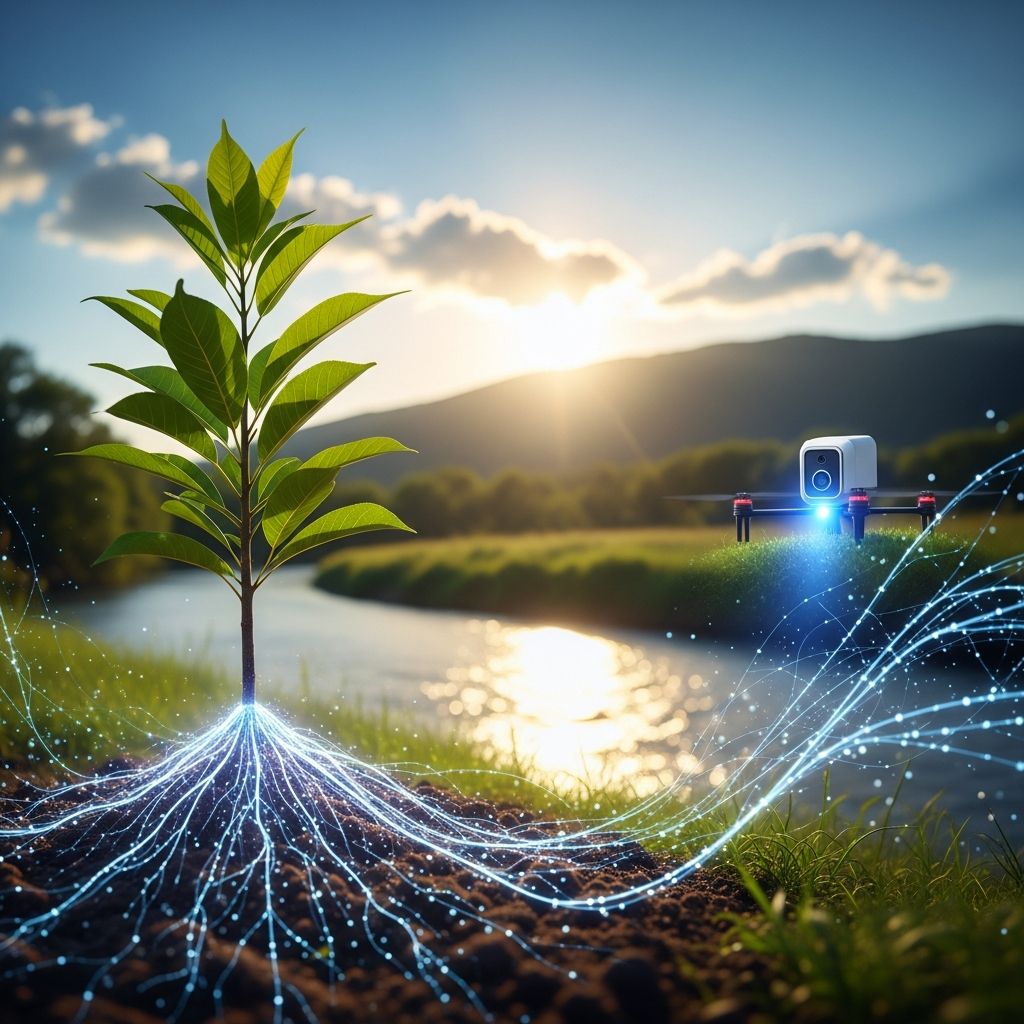
Public discussion of the environment often swings between complacency and despair. Yet when we examine long-run data on climate, air pollution, food, energy, and biodiversity, a different picture emerges: the situation is serious, but there is strong evidence that progress is possible, and in some areas already underway. This article explores how a data-based perspective can justify cautious optimism and guide more effective action.
From Doom to Data: Rethinking the Environmental Story
Many people first encounter environmental issues through dramatic news: wildfires, floods, heatwaves, and species loss. Those events are real and dangerous, but they are only a small slice of the full picture. Long-term datasets collected by scientists and international organizations tell a more nuanced story.
Several trends are happening at once:
- Some problems are getting worse (e.g., global temperatures, ocean acidification, biodiversity loss).
- Some are already getting better in many countries (e.g., outdoor air pollution, ozone-depleting substances).
- On others, humanity has shown it can reverse direction with coordinated policy, technology, and investment (e.g., acid rain, leaded gasoline, and the ozone hole).
This mixture is exactly why optimism matters. If data shows that well-designed policies and technologies have already solved or sharply reduced some environmental threats, it becomes harder to argue that current challenges are hopeless.
The Two Halves of Sustainability: People and Planet
Environmental debates are often framed as a trade-off between human welfare and planetary health. Historically, that trade-off was real: pre-industrial societies had a smaller carbon footprint, but they also experienced high child mortality, frequent famine, and low life expectancy.
In the last century, humanity drastically improved living standards through fossil fuels and industrial agriculture, but at the cost of rising greenhouse gas emissions, extensive land conversion, and pollution.
A truly sustainable world requires succeeding on two fronts at the same time:
- Environmental stability – a safe climate, thriving ecosystems, and manageable levels of pollution.
- Human flourishing – access to energy, food, health care, and opportunities for billions of people.
Modern environmental optimism is not the belief that everything will work out automatically. It is the claim that, with the right choices, it is technically and economically possible to achieve both goals, especially as low-carbon technologies and better farming methods scale up.
Climate Change: Serious Risk, Real Levers
Climate change remains one of the most destabilizing environmental threats. Global average surface temperature has already risen by more than 1 °C above pre-industrial levels, and greenhouse gas concentrations continue to increase.
Yet climate science and energy economics also contain reasons for conditional optimism:
- Policy can bend emissions curves. Countries that adopted strong climate policies have already peaked and started to reduce emissions while maintaining economic growth.
- Clean energy costs have plummeted. The cost of solar and wind power has fallen by more than 80% in recent decades, making them competitive or cheaper than new fossil fuel infrastructure in many regions.
- Each fraction of a degree matters. Climate risks increase along a continuum; avoiding higher warming levels substantially reduces extreme outcomes in health, agriculture, and ecosystems.
The credible optimistic view is not that the climate problem is small. It is that we still have substantial control over how severe the damage becomes, and the tools for deep decarbonization are increasingly available.
Air Pollution: Proof That Environmental Policy Can Work
Outdoor air pollution is a clear example where strong policy and technology have already delivered large benefits. In many high-income countries, levels of particulate matter and other pollutants have declined dramatically since the 1970s even as populations and economies grew.
Key drivers include:
- Emission standards for vehicles and industry.
- Transition away from high-sulfur fuels, which previously caused severe smog and acid rain.
- Regulation of specific hazardous substances, such as lead in gasoline.
The success of these policies provides strong evidence that coordinated environmental regulation can simultaneously improve public health and maintain economic development. Large challenges remain in many low- and middle-income countries, where air pollution still causes millions of premature deaths each year, but the path to improvement is well tested.
Food, Agriculture, and Land Use: More with Less
Feeding a growing population while reducing environmental pressure is one of the central sustainability challenges. Over recent decades, however, yields for staple crops have increased significantly, allowing more food to be grown on roughly similar or even smaller areas of land in some regions.
Several strategies stand out:
- Higher crop yields through improved seeds, fertilizers, irrigation, and farming practices.
- Reducing food loss and waste, both between farm and market and at the consumer level.
- Shifting diets toward lower-footprint foods where possible, especially in high-income countries.
- Better livestock management to reduce methane and land-use pressure.
Data shows that, in many regions, agricultural output has grown faster than land area used, easing some pressure on forests and biodiversity. Strengthening this trend—particularly in regions with low yields today, such as parts of sub-Saharan Africa—could reduce hunger and poverty while limiting further habitat conversion.
Energy Transitions: Decoupling Growth from Emissions
Energy access is tightly linked to development: electricity improves health, education, and productivity. The historical problem is that energy growth has mostly come from fossil fuels. A central question is whether countries can expand energy use while keeping emissions low.
Here, long-run data again offers cautious hope:
- The share of global electricity from renewables and nuclear has grown significantly, especially in the last two decades.
- Some countries have reduced emissions while maintaining or growing GDP, demonstrating that partial decoupling is possible.
- Several low-carbon energy options—including solar, wind, and nuclear—are among the lowest-carbon and safest energy sources when measured per unit of electricity generated.
Realistic optimism here means recognizing that a fast, global clean-energy transition is technically feasible and economically competitive, but also politically challenging. Supporting policies that accelerate clean energy deployment, grid improvements, and energy efficiency is one of the most powerful ways to influence long-run environmental outcomes.
Success Stories: Ozone, Acid Rain, and Leaded Gasoline
Some of the strongest evidence for environmental optimism comes from past international successes:
| Problem | Response | Outcome |
|---|---|---|
| Ozone depletion | Global phase-out of ozone-depleting substances under the Montreal Protocol. | The ozone layer is on track to recover gradually this century. |
| Acid rain | Controls on sulfur dioxide and nitrogen oxides from power plants and industry. | Substantial reductions in acid deposition and ecosystem damage in affected regions. |
| Leaded gasoline | Progressive global ban and replacement with unleaded fuels. | Marked declines in blood lead levels and associated health risks worldwide. |
These cases demonstrate that:
- Global coordination is possible when a problem is clearly defined and solutions are available.
- Strong regulation and technological change can rapidly phase out harmful substances.
- Environmental policy can deliver large health and ecosystem benefits within a few decades.
Biodiversity: The Hardest Challenge
Biodiversity loss is one area where optimism must be especially cautious. Species are disappearing at rates far above natural background levels, driven by habitat destruction, overexploitation, pollution, invasive species, and climate change.
However, data and case studies suggest that decline is not inevitable everywhere:
- Protected areas, when well-managed and well-funded, can slow or reverse local biodiversity loss.
- Targeted conservation—for example, against poaching or invasive species—has helped many species recover.
- Reforestation and restoration projects are expanding in some regions, providing new habitat.
Biodiversity is likely to remain under severe pressure this century, but strong conservation policies, smarter land use, and lower-carbon energy systems can significantly influence how much is lost.
Why Doom Narratives Can Backfire
Communicating environmental risks purely in catastrophic terms can have unintended consequences. Research on climate communication has found that messages emphasizing doom without agency may lead to disengagement, fatalism, or defensive denial.
Studies suggest that effective engagement often combines three elements:
- Clear description of risks backed by robust evidence.
- Concrete pathways for solutions, from policy options to technologies and social changes.
- Evidence of progress that demonstrates action can work.
This does not mean sugar-coating the science. It means presenting both the seriousness of the threat and the reality that human choices still strongly shape outcomes.
From Individual Choices to Systemic Change
Environmental discussions often get stuck on a false choice: personal lifestyle changes versus systemic reform. A data-guided perspective suggests they interact in important ways.
Individual actions matter most when they:
- Shift markets toward low-carbon technologies (for example, early adopters of electric vehicles can help lower costs globally).
- Signal political demand for stronger climate and environmental policy.
- Influence social norms, which can spread more rapidly than formal regulations.
At the same time, the scale of the challenge—billions of people needing energy, food, and infrastructure—means that policy and technology must carry most of the burden. Large-scale deployment of clean energy, improved agricultural practices, better urban design, and international agreements have far greater leverage than any set of individual choices alone.
Practical Ways to Support a Sustainable, High-Welfare Future
Drawing on the kinds of data discussed above, several broad strategies appear especially high-impact:
- Support clean energy deployment through policy advocacy, investment, or work that accelerates renewable and nuclear power, transmission, and storage.
- Back effective climate and air quality policies, such as carbon pricing, fuel standards, and pollution controls.
- Promote agricultural innovation and yield growth in regions where productivity is currently low.
- Reduce food loss and waste along supply chains and at the household level.
- Strengthen biodiversity conservation by supporting protected areas, restoration projects, and organizations working on high-leverage interventions.
These are not small tasks, but long-run data shows that similarly ambitious shifts have been achieved before.
Frequently Asked Questions (FAQs)
Q: Does being optimistic about the environment mean thinking everything will be fine?
No. Data-driven optimism is not complacency; it is the recognition that, although risks are serious, past successes and current technologies show we have powerful tools to reduce harm if we act decisively.
Q: Isn’t climate change too far advanced for our actions to matter?
Scientific assessments indicate that every fraction of a degree of warming avoided reduces the severity of heatwaves, floods, crop losses, and ecosystem damage. Where the world ends up on that spectrum still depends heavily on choices made in the coming decades.
Q: If my country emits only a small share of global CO₂, does it matter what we do?
Yes. Smaller emitters influence global outcomes by helping drive down the cost of clean technologies, shaping international norms and agreements, and demonstrating workable policy models that other countries can adopt.
Q: Are individual lifestyle changes worth making?
Individual choices have limited direct impact compared with systemic change, but they can still matter by shifting markets, building political pressure, and reinforcing social norms that favor low-carbon and low-pollution options.
Q: Why focus on long-run data instead of today’s headlines?
Headlines often highlight extreme events, which can distort our sense of trends. Long-run datasets reveal whether problems are accelerating or slowing, and whether particular policies or technologies have worked in the past. That perspective is essential for choosing effective responses.
References
- Hannah Ritchie’s optimistic view on environmental sustainability — Environmental Health News summarizing BBC reporting. 2024-01-16. https://www.ehn.org/hannah-ritchie-s-optimistic-view-on-environmental-sustainability-2666894660.html
- Hannah Ritchie’s Urgent Optimism for a Better World — IE Insights. 2024-02-07. https://www.ie.edu/insights/articles/hannah-ritchies-urgent-optimism-for-a-better-world/
- Sixth Assessment Report — Intergovernmental Panel on Climate Change (IPCC). 2021-2023. https://www.ipcc.ch/assessment-report/ar6/
- Our World in Data – CO₂ and Greenhouse Gas Emissions — Our World in Data. Updated 2023. https://ourworldindata.org/co2-and-greenhouse-gas-emissions
- Investigating the long-term impacts of climate change communications on individuals’ attitudes and behavior — Rachel A. Howell, Global Environmental Change, 2014. https://doi.org/10.1016/j.gloenvcha.2013.07.018

Medha Deb is an editor with a master's degree in Applied Linguistics from the University of Hyderabad. She believes that her qualification has helped her develop a deep understanding of language and its application in various contexts. Medha specializes in the areas of beauty, health, sports, and wellness and is committed to ensuring that the content on the website is…