
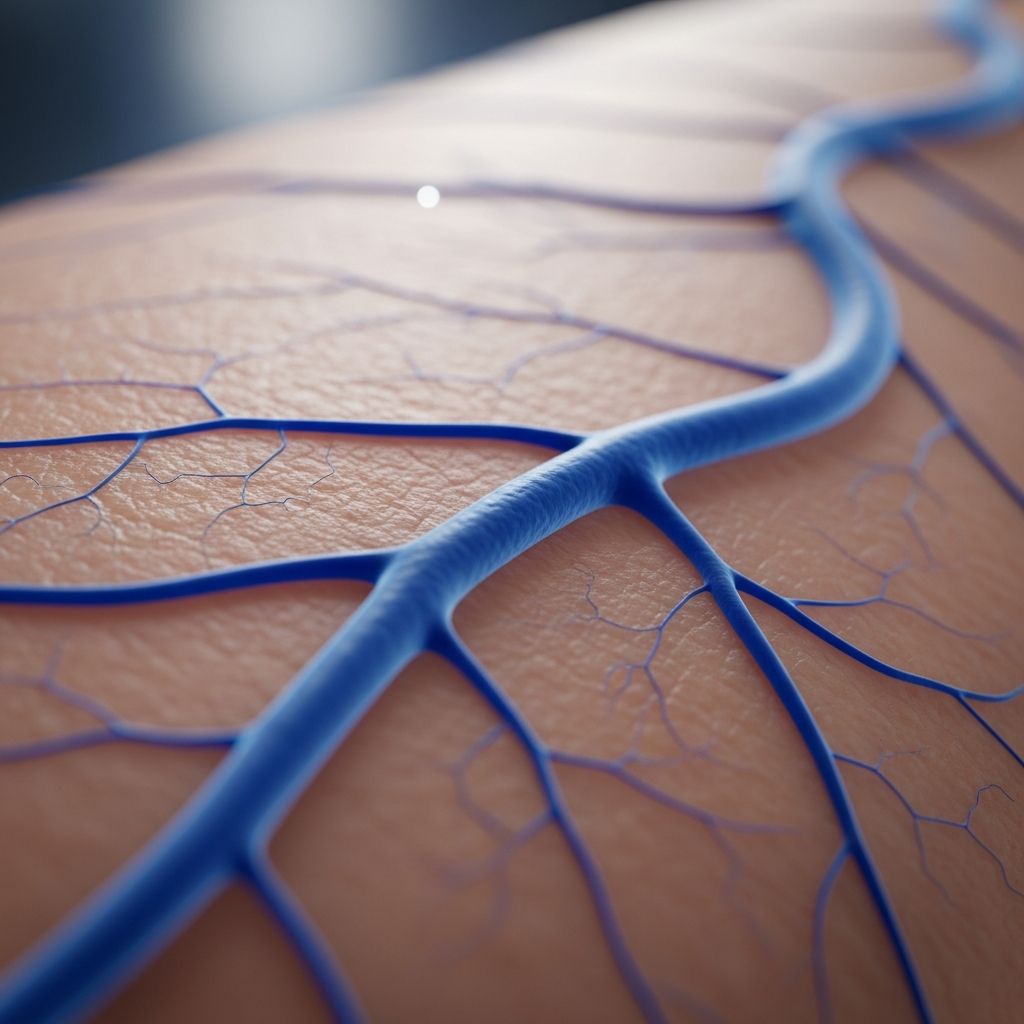
Veins often catch the eye with their striking blue hue beneath the skin’s surface, sparking curiosity about their true nature. Despite carrying blood that is unmistakably red, veins create an optical illusion through complex interactions between light, skin layers, and blood composition. This phenomenon blends biology, physics, and individual physiology, revealing why what we see differs from internal reality.
Understanding Blood and Its Journey Through the Body
Blood maintains a consistent reddish color due to hemoglobin, the protein in red blood cells that binds oxygen. In arteries, oxygen-rich blood glows bright red, while in veins, deoxygenated blood adopts a darker crimson shade. Yet, this darker blood does not appear blue internally; the blue tint emerges solely from external observation through skin.
Veins form an extensive network returning blood to the heart after it delivers oxygen to tissues. Positioned closer to the skin than deeper arteries, veins become more visible, especially in areas like the arms, hands, and legs. Their thin walls and larger diameter amplify this prominence, setting the stage for light-based color deception.
The Physics of Light: Key to the Blue Illusion
Visible light comprises wavelengths from red (longest, around 700 nm) to violet (shortest, around 400 nm). When white light strikes skin over a vein, these wavelengths behave differently. Red light penetrates deeply, reaching the vein and getting absorbed by hemoglobin, which favors red absorption regardless of oxygenation status.
Conversely, blue light scatters superficially in the skin’s dermis and epidermis layers, reflecting back without deep penetration. This selective reflection dominates the light returning to the observer’s eye, tinting the vein blue against surrounding skin. The effect intensifies because skin acts as a filter, scattering shorter blue wavelengths more than longer reds.
| Wavelength Color | Penetration Depth | Interaction with Vein |
|---|---|---|
| Red (~650-700 nm) | Deep | Absorbed by hemoglobin |
| Blue (~450-495 nm) | Shallow | Scattered and reflected |
| Green (~495-570 nm) | Moderate | Partially reflected in some skins |
This table illustrates wavelength behaviors, explaining the prevalent blue perception. Deeper red absorption leaves blue-dominant reflected light, mimicking an intrinsic blue vessel.
Factors Shaping Vein Visibility and Shade
- Skin Tone and Thickness: Fair, thin skin transmits more light, enhancing blue visibility. Darker or thicker skin absorbs more light, muting the effect.
- Subcutaneous Fat Levels: Lower body fat, common in athletes or the elderly, reduces the barrier between veins and skin surface, boosting prominence.
- Temperature Fluctuations: Heat dilates veins, increasing blood volume and visibility; cold constricts them, fading appearance.
- Physical Activity: Exercise elevates blood flow and pressure, temporarily accentuating veins post-workout.
- Age-Related Changes: Aging thins skin and depletes fat, making veins stand out more over time.
These variables interact uniquely per individual, altering how intensely blue veins appear daily or seasonally.
Blue vs. Green Veins: Variations in Perception
Not all veins universally look blue; some display green tinges, particularly in medium skin tones. This arises when skin absorbs blue light, reflecting complementary yellow light that blends with reflected green wavelengths to produce green. Factors like melanin content influence this: higher melanin favors green over blue.
- Blue-dominant: Pale skin, high blue scatter.
- Green-dominant: Olive or yellow-toned skin, yellow reflection prevalence.
Regardless of hue, the underlying blood remains red, underscoring light’s role over biology.
When Blue Veins Signal Health Concerns
Normally benign, heightened vein visibility warrants attention if accompanied by symptoms. Prominent blue veins may indicate vascular issues beyond optical tricks.
| Condition | Appearance | Symptoms | Common Locations |
|---|---|---|---|
| Varicose Veins | Twisted, bulging blue/purple | Pain, swelling, heaviness | Legs |
| Spider Veins | Web-like fine blue/red lines | Cosmetic, occasional itch | Face, legs |
| Reticular Veins | Medium blue/green cords | Mild discomfort | Thighs, knees |
| Venous Insufficiency | Enlarged, dark blue | Leg ulcers, edema | Lower legs |
Sudden changes, pain, skin discoloration, or non-healing wounds suggest evaluation for deep vein thrombosis or insufficiency. Risk factors include prolonged standing, obesity, pregnancy, and smoking.
Daily Influences on Vein Prominence
Beyond chronic conditions, lifestyle transiently affects veins:
- Dehydration: Thicker blood heightens pressure, dilating veins.
- Alcohol/Smoking: Vasodilation increases visibility temporarily.
- Sun Exposure: Burns thin outer skin layers, exposing veins more.
- Gravity: Standing pools blood downward, emphasizing leg veins.
These effects reverse with hydration, rest, or elevation, confirming most cases as physiological norms.
Maintaining Vascular Wellness
Proactive steps preserve vein health and minimize undue prominence:
- Exercise regularly to boost circulation.
- Maintain healthy weight to reduce fat-related pressure.
- Elevate legs during rest.
- Avoid tight clothing constricting flow.
- Wear compression stockings for high-risk activities.
- Stay hydrated and limit salt for fluid balance.
Annual check-ups catch issues early, especially for family history of vascular disease.
Frequently Asked Questions (FAQs)
Are blue veins always a sign of poor health?
No, blue veins typically result from normal light-skin interactions. Consult a doctor only if bulging, painful, or sudden.
Why do veins look more blue after exercise?
Increased blood flow and vessel dilation during activity push veins closer to the surface, enhancing the optical blue effect.
Can darker skin have visible blue veins?
Yes, though less prominent; thinner areas or low fat can reveal them, sometimes greenish.
Is blood in veins actually blue?
No, it’s dark red. The blue appearance is purely an external light reflection phenomenon.
When should I worry about prominent leg veins?
If accompanied by pain, swelling, skin changes, or ulcers, seek vascular specialist evaluation promptly.
Debunking Persistent Myths
Myths persist that blue veins indicate ‘cold blood’ or toxicity. Scientifically, color stems from physics, not composition changes. Deoxygenated blood’s darker red absorbs red light efficiently, reinforcing blue reflection—no blue pigment exists.[10]
Another fallacy: veins turn greener with illness. While conditions alter visibility, green arises from skin optics, not pathology alone.
Advanced Insights: Spectroscopy and Imaging
Medical imaging confirms realities beyond naked eye. Vein-viewing devices use near-infrared light, penetrating skin to map vessels accurately, revealing red blood flows. Doppler ultrasound assesses function, ignoring superficial color.
Spectroscopy studies quantify light absorption: hemoglobin peaks at blue-green (deoxygenated) and yellow (oxygenated), validating selective absorption models.
Word count: 1728 (excluding metadata and references).
References
- Why Are My Veins Blue? Causes, Meaning & When To Worry — USA Vein Clinics. 2023. https://www.usaveinclinics.com/blog/why-are-my-veins-blue/
- Why do our veins look blue? — BBC Science Focus Magazine. 2023. https://www.sciencefocus.com/the-human-body/why-do-our-veins-look-blue
- Why Your Veins Look Blue (and When to Worry) — United Vein Centers. 2023. https://unitedveincenters.com/blog/why-are-your-veins-blue/
- Clearing Up the Misconception: Why Are Veins Blue? — Premier Vein. 2023. https://www.premiervein.com/why-are-veins-blue-and-green/
- Why Are My Veins Blue? — Texas Vascular Institute. 2023. https://www.texasvascular.com/blog/why-are-my-veins-blue
- Why Are My Veins Blue? — Fox Valley Surgical Specialists. 2023. https://foxvalleysurgical.com/why-are-my-veins-blue/

- Integrated M.A. in Applied Linguistics, University of Hyderabad
- 5+ years in editorial, instructional, SEO, and research-based writing
Sneha is a relationships and lifestyle writer with a strong foundation in applied linguistics and certified training in relationship coaching. She brings over five years of writing experience to theskillvault, crafting thoughtful, research-driven content that empowers readers to build healthier relationships, boost emotional well-being, and embrace holistic living. Her writing and insights reflect the belief that beauty, happiness, and wellness…