
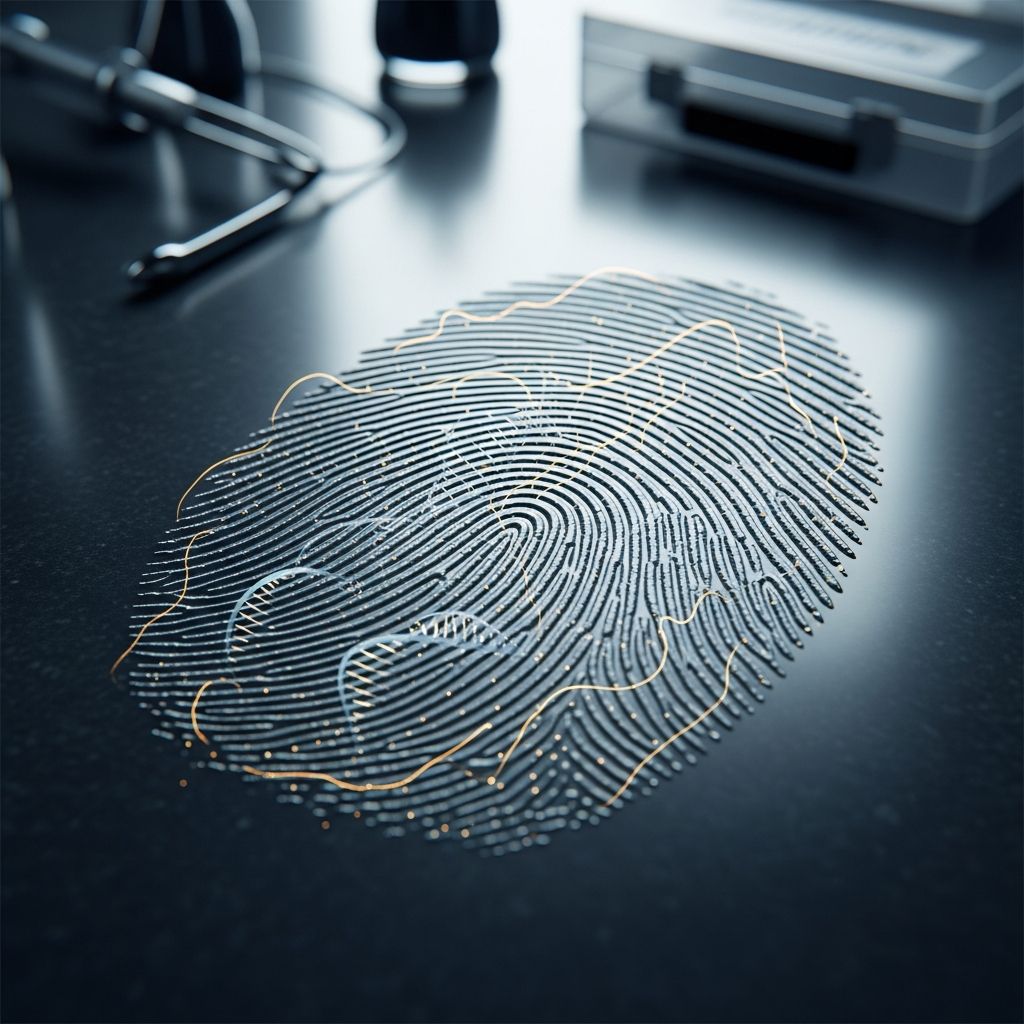
Fingerprints, those intricate swirling patterns on our fingertips, have puzzled scientists for generations. Far from mere cosmetic features, these dermal ridges serve critical biological functions rooted in evolution, while also providing unparalleled individual identification. This article delves into their biomechanical advantages, developmental biology, genetic underpinnings, and practical applications today.
Evolutionary Roots: Why Fingerprints Emerged in Primates
The story of fingerprints begins millions of years ago with our tree-dwelling primate ancestors. These early hominins relied on agile climbing and precise grasping to survive in forested environments. The ridges on their fingers and palms increased surface friction, allowing better adhesion to rough bark and branches. This adaptation complemented opposable thumbs, enabling secure holds during foraging and escape from predators.
Modern primates like chimpanzees and gorillas exhibit similar ridge patterns, reinforcing the arboreal origin theory. As humans transitioned to bipedalism and tool use, fingerprints retained their utility for manipulating objects. Biomechanical studies confirm that these grooves channel away moisture and dirt, maintaining grip even in wet conditions.
Biomechanics of Grip: Friction, Not Just Aesthetics
One prevailing theory posits fingerprints primarily enhance grip through friction. The ridges reduce direct skin-to-surface contact area while creating micro-channels that trap air or fluids strategically. Experiments with artificial skin models demonstrate up to 30% improved traction on textured surfaces compared to smooth equivalents.
However, debate persists. Some researchers argue fingerprints do not universally boost grip and may even reduce it on flat, dry surfaces. Instead, they propose ridges reinforce skin against shear forces, preventing blisters during prolonged activity—much like tire treads distribute pressure. A 2019 study using high-speed imaging showed fingerprints excel in channeling vibrations from rough textures, optimizing hold on irregular objects like stone tools or fruit.
| Theory | Proposed Benefit | Supporting Evidence |
|---|---|---|
| Friction Enhancement | Better grip on rough/wet surfaces | Primate analogs; lab friction tests |
| Tactile Amplification | Improved texture discrimination | Vibration sensor experiments |
| Blister Prevention | Skin reinforcement | Biomechanical modeling |
Enhancing Touch: The Sensory Superpower of Ridges
Beyond grip, fingerprints revolutionize tactile perception. The ridges act as natural amplifiers, converting surface irregularities into distinct vibrational patterns detectable by underlying mechanoreceptors like Pacinian corpuscles. This hypersensitive system allows humans to discern textures finer than 10 micrometers—essential for identifying ripe fruit, detecting contaminants, or crafting precise tools.
In blind individuals, this sensitivity enables Braille reading, where fingertip ridges translate embossed dots into recognizable signals. Health professionals use palpation, relying on ridge-enhanced feedback to assess tissue abnormalities. Evolutionary pressure likely favored such acuity for foraging, as distinguishing edible from toxic items via touch improved survival rates.
- Vibration Channeling: Ridges filter and intensify signals from subtle surfaces.
- Temperature Sensing: Exposed ridge edges heighten thermal detection in palms.
- Social Bonding: Fine touch facilitates handshakes, hugs, and parental care through tactile cues.
Formation in the Womb: A Genetic and Chaotic Dance
Fingerprints form remarkably early, between weeks 10-16 of gestation, making them one of the first stable traits. In the basal layer of fetal epidermis, rapid cell proliferation buckles the skin against the dermis, creating permanent ridge patterns. Primary dermal ridges emerge first, followed by secondary furrows influenced by mechanical stresses.
Genetics dictate broad patterns—loops, whorls, arches—often shared among relatives. Identical twins inherit similar volar pads (temporary fetal cushions shaping ridges), yet diverge due to microenvironmental chaos: amniotic fluid shear, fetal positioning, maternal nutrition, and hormone fluctuations. This interplay ensures no two fingerprints match, with match odds at 1 in 64 billion.
Genetic Influences and Health Correlations
While unique, fingerprint patterns correlate with health markers. Dermatoglyphics, the study of skin ridges, links whorl dominance to type II diabetes risk, possibly via shared developmental pathways with neural growth. Chromosomal disorders like Down syndrome alter ridge counts, aiding early diagnosis.
These patterns stabilize post-birth, enduring scars or burns (unless dermal papillae are destroyed). Their durability underpins biometrics, far surpassing iris or facial recognition in stability.
Modern Applications: From Forensics to Smartphones
Fingerprints revolutionized law enforcement in the 19th century, with Sir Francis Galton’s statistical work proving uniqueness. Today, automated fingerprint identification systems (AFIS) scan latent prints left via sweat and oils, solving crimes with 99.9% accuracy.
Biometrics secure devices, borders, and payments. Passports and visas mandate scans, thwarting identity fraud. Medically, ridge analysis predicts predispositions, while consumer tech leverages them for seamless access.
Unique Patterns Decoded: Loops, Whorls, and Arches
Human fingerprints fall into three categories:
- Loops (65%): Ridges enter and exit the same side; ulnar (pinky-side) or radial (thumb-side).
- Whorls (30%): Circular or spiral; plain, central pocket, double loop, accidental variants.
- Arches (5%): Wave-like, no recurve; plain or tented.
Each finger’s minutiae—ridge endings, bifurcations—number 150+, forming the forensic gold standard.
Frequently Asked Questions (FAQs)
Do identical twins have the same fingerprints?
No. Despite identical DNA, womb dynamics create subtle differences in ridge formation.
Can fingerprints change over a lifetime?
Rarely. Deep injuries may alter them, but patterns regenerate from dermal layers.
Why do some animals lack fingerprints?
Non-primate species prioritize other adaptations; ridges evolved for arboreal life.
Are fingerprints useful underwater?
Yes, pruned skin mimics ridges, enhancing wet grip temporarily.
How accurate is fingerprint biometrics?
Extremely; error rates under 0.1% for high-quality scans.
Future Frontiers: Fingerprints in Biotech and AI
Emerging research integrates fingerprints with AI for disease prediction via ridge anomalies. Wearable sensors mimic ridges for robotic touch. As gene editing advances, understanding ridge genetics could yield insights into skin regeneration.
In summary, fingerprints embody evolutionary ingenuity: grip aids, sensory enhancers, and identity markers forged in prenatal chaos. Their study bridges biology, forensics, and technology, revealing humanity’s tactile heritage.
References
- Why Do We Have Fingerprints? — ANAB Blog. 2023-05-15. https://blog.ansi.org/anab/why-do-we-have-fingerprints/
- Why do we have fingerprints? — Little Medical School Ottawa. 2023-08-22. https://littlemedicalschool.com/ottawa/blog/why-do-we-have-fingerprints/
- Why Do Humans Have Fingerprints? — Live Science. 2023-11-10. https://www.livescience.com/why-do-humans-have-fingerprints.html
- Why do we have fingerprints? — BBC Science Focus Magazine. 2024-02-14. https://www.sciencefocus.com/the-human-body/why-do-we-have-fingerprints
- Fingerprint — Wikipedia (citing primary studies). 2026-04-01. https://en.wikipedia.org/wiki/Fingerprint

- Integrated M.A. in Applied Linguistics, University of Hyderabad
- 5+ years in editorial, instructional, SEO, and research-based writing
Sneha is a relationships and lifestyle writer with a strong foundation in applied linguistics and certified training in relationship coaching. She brings over five years of writing experience to theskillvault, crafting thoughtful, research-driven content that empowers readers to build healthier relationships, boost emotional well-being, and embrace holistic living. Her writing and insights reflect the belief that beauty, happiness, and wellness…