
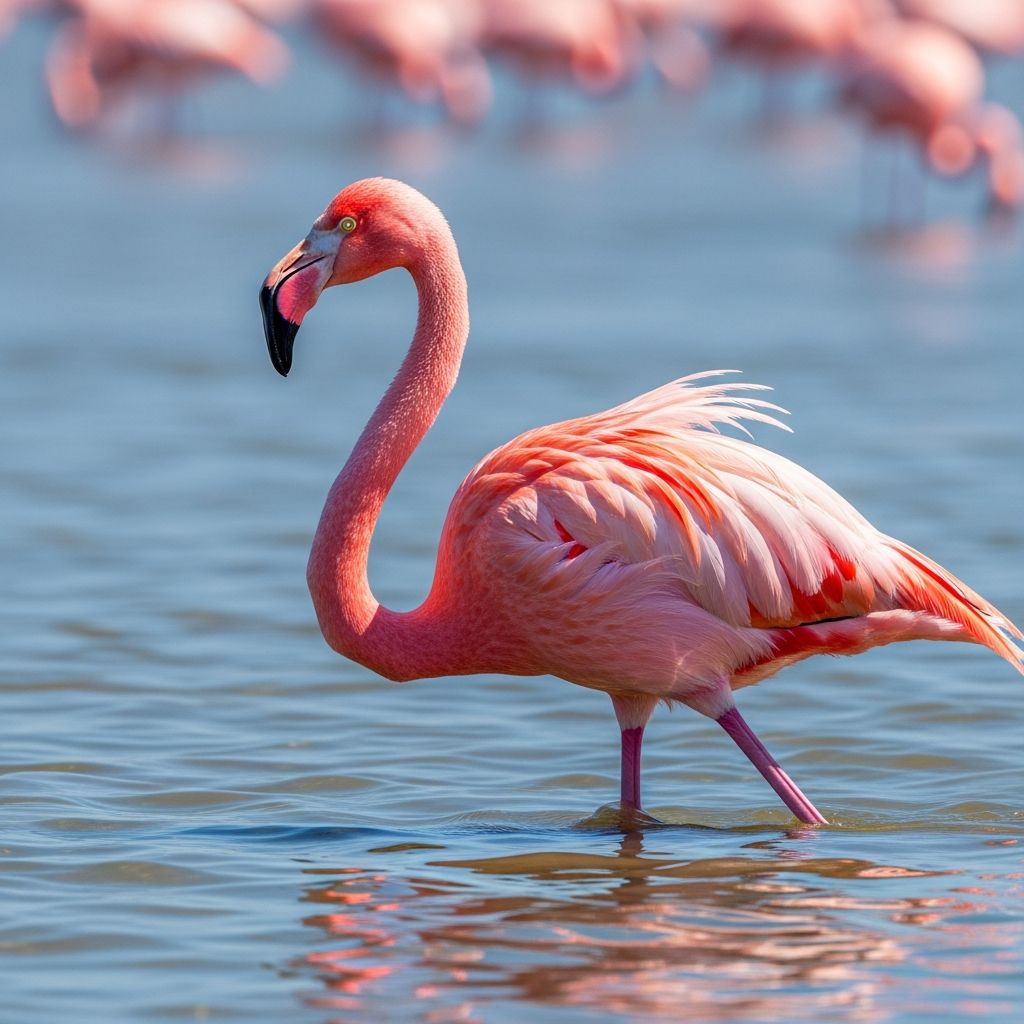
Flamingos captivate observers with their striking pink hues, a coloration derived entirely from their diet rather than genetics. Newly hatched flamingos emerge with dull gray feathers that transform over time as they consume foods laden with carotenoid pigments.
Carotenoids: The Pigments Powering Pink Feathers
At the heart of a flamingo’s rosy appearance lies **carotenoids**, a class of red-orange pigments abundant in their natural prey. These compounds, which also color carrots orange and tomatoes red, originate in algae and accumulate in the crustaceans flamingos favor.
Flamingos thrive in alkaline lakes and coastal lagoons where they filter-feed on **brine shrimp**, **brine fly larvae**, and **cyanobacteria-rich algae**. Enzymes in their digestive system break down these carotenoids into absorbable forms. The pigments then bind to fats in the liver and deposit into developing feathers, legs, skin, and bills, producing shades from pale pink to deep crimson.
The process mirrors how cooked shrimp shift from gray to pink: heat denatures proteins, freeing carotenoids, much like digestion does in birds. Without sufficient intake, feathers molt to white or pale tones, underscoring diet’s dominance over heredity.
How Flamingo Chicks Develop Their Signature Color
Flamingo hatchlings start life with straight bills and fluffy white-gray down, devoid of pink. Coloration emerges gradually as they transition to solid foods around 7-10 weeks, with full vibrancy taking 2-3 years.
- Week 1-4: Crop milk from parents provides initial nutrients but minimal pigments.
- Month 2+: Introduction to algae and shrimp accelerates pigment deposition.
- Adulthood: Peak intensity correlates with foraging success and health.
This dietary dependence ensures only robust chicks, accessing nutrient-rich waters, achieve vivid plumage, signaling vitality to the flock.
Variations in Pink: From Pale to Vibrant Crimson
Not all flamingos match the postcard pink; hues span white, orange, red, and deep rose depending on species, location, and diet.
| Species | Typical Hue | Primary Habitat | Key Diet Sources |
|---|---|---|---|
| Greater Flamingo (Phoenicopterus roseus) | Pale pink to white | Eurasia, Africa | Algae, small invertebrates |
| American Flamingo (Phoenicopterus ruber) | Bright red-orange | Caribbean, Galapagos | Brine shrimp, cyanobacteria |
| Lesser Flamingo (Phoeniconaias minor) | Deep pink | African soda lakes | Cyanobacteria blooms |
| Andean Flamingo (Phoenicoparrus andinus) | Pink with yellow legs | South American highlands | Diatoms, crustaceans |
Environmental factors like seasonal algal blooms or drought alter food availability, causing flock-wide color shifts. Healthier birds display bolder tones, as pigments demand metabolic efficiency.
Evolutionary Role of Pink in Mating and Survival
Bright pink serves as a **honest signal** of fitness in flamingo societies. Males and females with intense coloration attract mates, as vivid hues indicate access to prime foraging sites and resistance to toxins in alkaline waters.
Carotenoids act as antioxidants, bolstering immunity and combating oxidative stress from their harsh habitats. Thus, pink birds are often stronger, more fertile, and better parents, perpetuating the trait through mate choice.
In flocks, synchronized displays amplify this: mass flyovers showcase collective vibrancy, deterring rivals and predators while reinforcing pair bonds.
Captive Flamingos: Maintaining Color in Zoos
Zoo flamingos risk fading to white without wild diets, prompting keepers to supplement with carotenoid-rich feeds.
- Natural mimics: Shrimp, clams, spirulina algae.
- Synthetics: Canthaxanthin or astaxanthin, identical to natural forms, ensure consistent color without health impacts.
- Monitoring: Feather samples gauge pigment levels; paler birds receive boosts.
This mirrors salmon farming, where astaxanthin yields pink flesh. Such interventions sustain exhibit appeal and mimic wild conditions, aiding breeding programs.
Unique Feeding Adaptations of Pink Waders
Flamingos’ upside-down feeding—head submerged, beak as a pump—suits murky shallows. Lamellae on their tongue and beak strain micron-sized prey from silt.
They stomp mud to agitate organisms, then slurp water through tilted heads. This efficiency targets carotenoid hotspots, fueling their glow.
Flamingo Reproduction and Family Life
Pink parents build mud-mound nests in colonies, incubating one egg for 28-32 days. Both share duties, with chicks fed regurgitated milk until independent.
Colonial nesting amplifies predator defense; pink flocks blend into shimmering water surfaces, confusing threats.
Conservation Challenges for Pink Icons
Habitat loss from water diversion and pollution threatens carotenoid sources, dulling wild populations. Lesser flamingos, reliant on spiraling cyanobacteria, face stark declines.
Protected areas like Kenya’s Lake Nakuru preserve blooms vital for their deep pinks, underscoring diet’s role in survival.
Frequently Asked Questions About Flamingo Pink
Are flamingos naturally pink from birth?
No, chicks hatch gray and pinken via diet over years.
Can flamingos lose their pink color?
Yes, through molting without carotenoids; zoo birds may pale without supplements.
Why are some flamingos whiter than others?
Diet scarcity, species differences, or age cause paler tones.
Do pink flamingos taste like shrimp?
No, but their diet imparts no flavor change; they’re not harvested.
How do zoos keep flamingos pink?
Via carotenoid-enriched pellets mimicking algae and shrimp.
Debunking Flamingo Color Myths
Contrary to lore, flamingos don’t pinken from flamingo-shaped salt crystals or sunsets. Color stems purely from ingested pigments, verifiable via controlled studies.
Plastics in oceans don’t tint them; microplastics pose ingestion risks but no coloration.
References
- Why Are Flamingos Pink? — BeCause Tees. 2023. https://becausetees.com/blogs/articles/why-are-flamingos-pink
- Why Are Flamingos Pink? — Encyclopædia Britannica. 2023-10-12. https://www.britannica.com/story/why-are-flamingos-pink
- Flamingos | Causes of Color — WebExhibits.org. 2024. https://www.webexhibits.org/causesofcolor/7D.html
- Why Are Flamingos Pink? And Other Flamingo Facts — Smithsonian National Zoo. 2023-06-20. https://nationalzoo.si.edu/animals/news/why-are-flamingos-pink-and-other-flamingo-facts
- Why are flamingos pink? — Sequoia Park Zoo. 2022. https://www.redwoodzoo.org/CivicAlerts.asp?AID=48&ARC=329

Medha Deb is an editor with a master's degree in Applied Linguistics from the University of Hyderabad. She believes that her qualification has helped her develop a deep understanding of language and its application in various contexts. Medha specializes in the areas of beauty, health, sports, and wellness and is committed to ensuring that the content on the website is…