
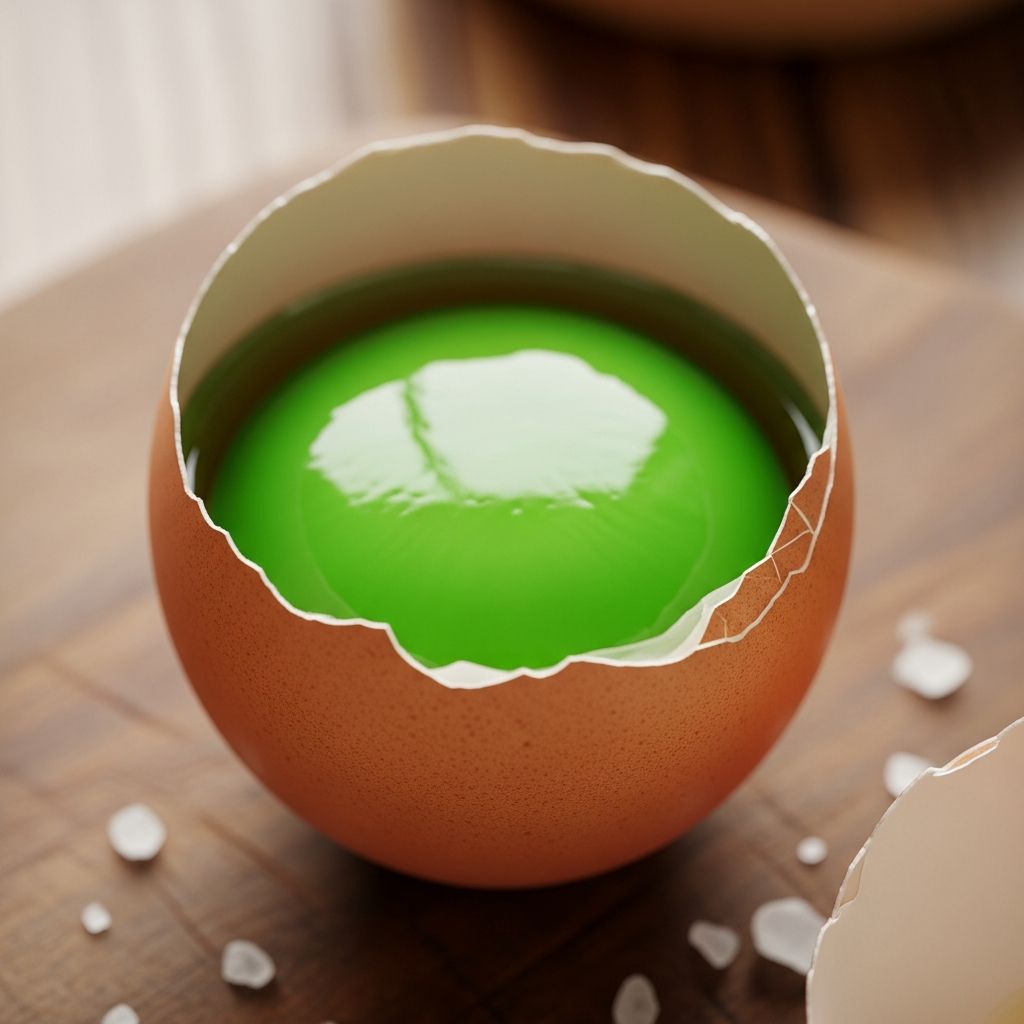
Seeing a green ring around the yolk of a hard-boiled egg can be surprising and off-putting. This common kitchen mishap stems from a simple chemical reaction triggered by cooking conditions. Understanding the process helps home cooks avoid it while ensuring food safety.
The Chemistry Behind the Green Discoloration
Green yolks result from ferrous sulfide formation. Eggs contain sulfur in the whites and iron in the yolks. Overheating causes these elements to react, producing the green compound at the yolk-white interface.
This reaction, known as denaturation, occurs above certain temperatures. Prolonged exposure to high heat breaks down proteins, releasing sulfur that migrates and binds with yolk iron. The result is a grayish-green halo, often with a slightly rubbery texture.
Similar issues affect other preparations. Scrambled eggs or omelets cooked too aggressively in iron skillets can turn greenish from sulfur reacting with pan iron. Boiled eggs show it most visibly due to contained heat buildup.
Factors That Trigger the Reaction
Several conditions accelerate green ring development:
- Excessive heat: Boiling at rolling temperatures speeds sulfur release.
- Prolonged cooking: Leaving eggs in hot water beyond optimal times allows reaction progression.
- Iron-rich water: High mineral content in cooking water contributes iron, enhancing sulfide formation.
- Egg freshness: Older eggs may react differently, though overcooking remains primary.
Not all eggs discolor equally. Yolk color varies naturally from diet—pale yellow to deep orange—but the green ring overlays regardless of base hue.
Are Green Egg Yolks Safe to Eat?
Yes, green-ringed yolks pose no health risk. Ferrous sulfide matches iron forms in supplements, providing trace nutrition rather than harm.
Food safety experts prioritize full cooking over appearance. Undercooked eggs risk salmonella, present in about 1 in 20,000 eggs, causing illness. Overcooked eggs eliminate bacteria effectively.
| Aspect | Green Yolks | Undercooked Eggs |
|---|---|---|
| Safety | Safe, harmless compound | Salmonella risk |
| Texture | Chalky, rubbery | Runny, soft |
| Nutrition | Intact, iron-enhanced | Potential pathogen exposure |
Store eggs refrigerated, unwashed, to maintain safety. Test freshness by floating: sinkers are fresh, floaters old.
Natural Variations in Egg Yolk Colors
Yolk shades range from pale yellow to vibrant orange, dictated by hen diet. Carotenoids from marigolds, corn, or greens produce deeper tones. Pale yolks signal grain-heavy feed.
Properly cooked yolks retain natural color: buttery yellow for standard, orange for enriched diets. Undercooked appear fudgier orange; overcooked gain green rims.
Regional differences exist—European yolks often deeper from varied feeds. Color indicates nutrition but not flavor superiority.
Perfect Hard-Boiled Eggs: Step-by-Step Guide
Avoid boiling; use gentle heat for flawless results.
- Place eggs in saucepan, cover with cold water by 1 inch.
- Heat to boil over medium-high, then remove from burner.
- Cover; let medium eggs sit 12 minutes, extra-large 18 minutes.
- Transfer to ice bath immediately to halt cooking.
- Peel under cool water; older eggs peel easier.
This method yields firm whites, creamy yolks without green. Cool shock prevents carryover heat.
Tips for Other Egg Dishes
- Scrambled: Low-medium heat, constant stirring avoids green.
- Omelets: Non-iron pans; cook gently.
- Deviled eggs: Perfect boils ensure smooth filling.
- Batch cooking: Same timing scales; ice bath crucial.
Aluminum foil steaming or air fryer methods also minimize rings by controlling temperature.
Debunking Egg Cooking Myths
Myths persist:
- Adding vinegar prevents green: No; it affects peeling, not reaction.
- Green means spoiled: False; spoilage smells sulfurous externally.
- All green eggs unsafe: Only if cracked/pre-cracked before cooking.
Science clarifies: control heat, time precisely.
Health and Nutrition of Eggs
Eggs pack protein, vitamins, healthy fats. Yolks provide choline, lutein for eyes. Overcooking slightly reduces B-vitamins but retains core value.
Daily intake safe for most; consult doctors for cholesterol concerns. Pasture-raised offer superior omega-3s.
Experimenting in Your Kitchen
Test variables: cook pairs—one overboiled, one perfect. Note differences. Adjust water minerals if persistent issues.
Recipe ideas:
- Green-free egg salad with celery crunch.
- Perfectly boiled for ramen toppings.
- Yolk color comparison tasting.
Frequently Asked Questions
Why do my hard-boiled eggs always have a green ring?
Overcooking or high heat causes sulfur from whites to react with yolk iron, forming ferrous sulfide.
Can I eat eggs with green yolks?
Absolutely safe; safer than undercooked due to bacteria kill.
How long to boil eggs without green?
Don’t boil—simmer start, off-heat 12-18 minutes, ice bath.
Does yolk color affect green ring chance?
No; diet influences shade, not reaction.
Why green scrambled eggs in cast iron?
Pan iron + egg sulfur; use stainless steel.
References
- Solved! Here’s Why Your Hard-Boiled Eggs Have Green Yolks — University of Illinois Food Science and Human Nutrition. 2023-approx. https://fshn.illinois.edu/news/solved-heres-why-your-hard-boiled-eggs-have-green-yolks
- Why do Eggs Turn Green When Cooked? — American Egg Board (Incredible Egg). Accessed 2026. https://www.incredibleegg.org/recipes/cooking-school/why-eggs-turn-green-when-cooked/
- How to Avoid a Green Ring on Hard-Boiled Egg Yolks — University of Nebraska-Lincoln Food Safety. Accessed 2026. https://food.unl.edu/how-avoid-green-ring-hard-boiled-egg-yolks/

- Integrated M.A. in Applied Linguistics, University of Hyderabad
- 5+ years in editorial, instructional, SEO, and research-based writing
Sneha is a relationships and lifestyle writer with a strong foundation in applied linguistics and certified training in relationship coaching. She brings over five years of writing experience to theskillvault, crafting thoughtful, research-driven content that empowers readers to build healthier relationships, boost emotional well-being, and embrace holistic living. Her writing and insights reflect the belief that beauty, happiness, and wellness…