
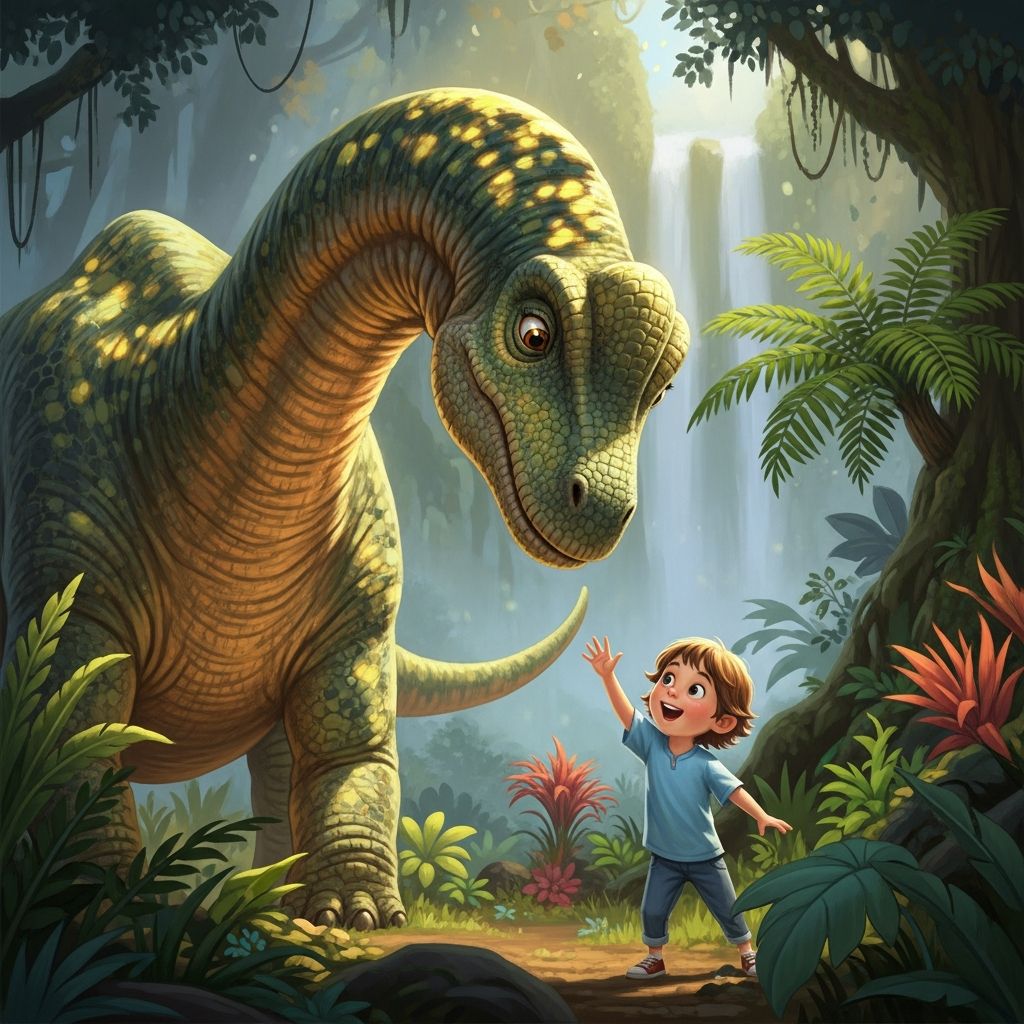
From toddler tantrums over T-Rex toys to school projects on Stegosaurus spikes, dinosaurs hold an inexplicable grip on young minds. This fascination isn’t random; it stems from a unique blend of awe, safety, education, and imagination that perfectly aligns with developmental stages.
The Allure of Prehistoric Power and Scale
Children are drawn to dinosaurs primarily because of their colossal size and raw power. Imagine a creature like Brachiosaurus, towering over modern elephants, or Tyrannosaurus rex with jaws capable of crushing bone. These attributes evoke wonder without real-world threat, as the beasts vanished 66 million years ago.
This safe thrill allows kids to explore concepts of strength and dominance. Preschoolers, in particular, admire these giants from books, videos, and toys, knowing no actual encounter awaits in the backyard.
- Massive proportions: Dinosaurs like Argentinosaurus could stretch longer than three school buses.
- Fearsome features: Spikes, claws, and teeth fuel exciting play scenarios.
- Contrast to today: Larger than any living land animal, they highlight Earth’s dramatic past.
Mystery and the Thrill of the Unknown
Dinosaurs embody enigma. Extinct for eons, they leave fossils as tantalizing clues to a lost world. Children revel in piecing together puzzles: How did they hunt? What sounds did they make? This curiosity drives endless questions.
The extinction event adds intrigue, sparking talks of asteroids and volcanoes. Unlike mythical beasts, dinosaurs’ existence is confirmed by science, blending fantasy with fact.
| Dinosaur Mystery | Why It Captivates Kids |
|---|---|
| Unknown behaviors | Allows creative storytelling |
| Fossil discoveries | Feels like real detective work |
| Sudden disappearance | Provokes ‘what if’ scenarios |
Educational Gateway to Science
Beyond fun, dinosaurs introduce complex ideas painlessly. Kids learn classification—carnivores vs. herbivores, herbivores by era (Triassic, Jurassic, Cretaceous)—building foundational science skills.
A 2008 study highlighted how intense interests like dinosaurs enhance knowledge depth, persistence, attention, and processing abilities, linking to higher intelligence in older children.
Parents note kids mastering terms like ‘paleontology’ early, fostering lifelong learning.
Boosting Cognitive and Emotional Growth
Intense dinosaur passions build confidence. Children outsmart adults with facts, gaining self-esteem. This ‘expertise’ extends to better attention spans and problem-solving.
Play with figurines hones fine motor skills and categorization. Repeated exposure to dino media strengthens focus, rare in short-attention preschoolers.
- Cognitive perks: Improved memory and classification from sorting toys.
- Emotional gains: Sense of mastery boosts resilience.
- Social benefits: Shared interest aids friendships, though it may fade by school age.
Ubiquitous Presence in Media and Culture
Dinosaurs dominate kids’ entertainment: Jurassic Park thrills, cartoons amuse, books educate. Toys and museum skeletons provide tactile engagement.
This saturation normalizes fascination, making dinos a cultural touchstone. From birthdays to apps, they’re everywhere, reinforcing appeal.
Imagination Unleashed in a Safe Realm
Dinosaurs bridge real and imaginary. Unlike dragons, they’re proven; unlike lions, they’re gone. Kids craft adventures—escaping Velociraptors or riding Triceratops—safely exploring fears and heroism.
This mirrors developmental needs: forming identity amid a confusing world. Dinosaurs ground fantasies in science.
How Parents Can Nurture This Passion
Encourage without fatigue: Rotate books, visit museums, craft fossils. Tie to broader topics like geology or evolution.
Activities table:
| Activity | Skills Developed | Materials Needed |
|---|---|---|
| Fossil dig in sand | Observation, patience | Play dough bones, sandbox |
| Dino storytime | Creativity, vocabulary | Picture books |
| Museum trip | Social skills, real-world links | None |
When Does the Obsession Fade?
Typically by kindergarten, as school and peers shift focus. Yet, skills endure: curiosity, focus, confidence.
Some retain lifelong interest, pursuing science careers. Early dino love plants seeds for future explorers.
Frequently Asked Questions (FAQs)
Why do boys seem to like dinosaurs more than girls?
It’s a stereotype; both genders show equal interest. Marketing targets boys, but surveys reveal broad appeal.
Is a dinosaur obsession normal?
Absolutely—it’s a healthy intense interest boosting development, per child psychologists.
How can I use dinosaurs for learning?
Incorporate into math (counting teeth), science (food chains), or art (drawing habitats).
At what age does dino fascination peak?
Ages 3-6, aligning with imagination boom and school prep.
Should I worry if it lasts too long?
No, as long as it doesn’t disrupt daily life. It often evolves into other sciences.
The Timeless Legacy of Dinosaur Mania
Dinosaurs tap primal awe, safe adventure, and intellectual spark. They’re more than relics—they’re catalysts for growing minds. Whether roaring T-Rex or gentle Diplodocus, they remind us: curiosity never extinct.
References
- 20 Reasons Why Kids Love Dinosaurs — Frances Mackay. 2023-05-15. https://www.francesmackay.com/post/why-are-kids-so-fascinated-with-dinosaurs
- Why Preschoolers Love Dinosaurs — Highlights for Children. 2022-11-10. https://parents.highlights.com/why-preschoolers-love-dinosaurs
- Why Do So Many Little Kids Love Dinosaurs? — Mental Floss. 2021-07-20. https://www.mentalfloss.com/science/psychology/why-kids-love-dinosaurs
- Why Kids Love Dinosaurs (And Always Will!) — Dinosaur Kingdoms. 2024-03-05. https://dinosaurkingdoms.com/blog/why-kids-love-dinosaurs-and-always-will
- Why Kids Love Dinosaurs — Atmos Magazine. 2023-08-12. https://atmos.earth/art-and-culture/why-kids-love-dinosaurs/

- Integrated M.A. in Applied Linguistics, University of Hyderabad
- 5+ years in editorial, instructional, SEO, and research-based writing
Sneha is a relationships and lifestyle writer with a strong foundation in applied linguistics and certified training in relationship coaching. She brings over five years of writing experience to theskillvault, crafting thoughtful, research-driven content that empowers readers to build healthier relationships, boost emotional well-being, and embrace holistic living. Her writing and insights reflect the belief that beauty, happiness, and wellness…