
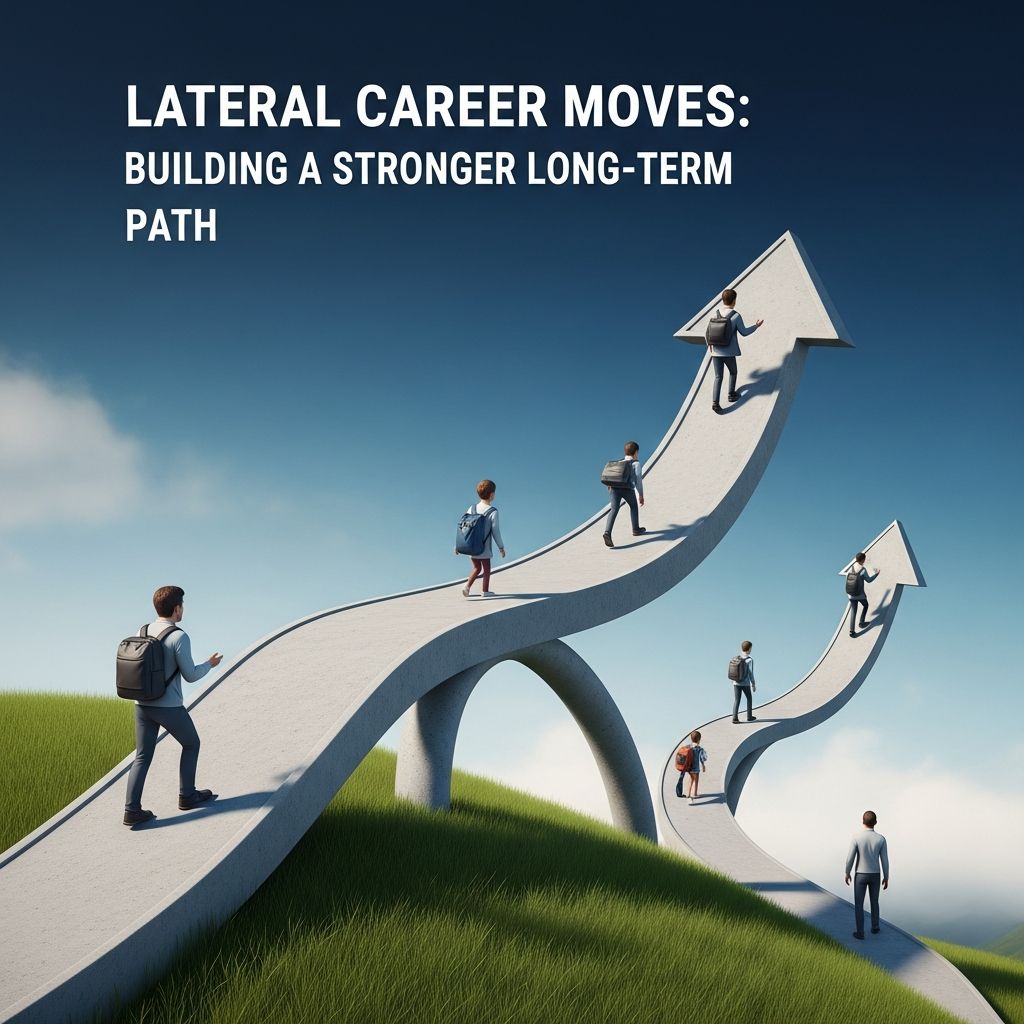
Lateral moves are often misunderstood as stalled progress, but in many modern organizations they are one of the most effective ways to build skills, visibility, and future promotion potential. Used thoughtfully, a sideways step can be one of the most powerful accelerators in your career.
What Is a Lateral Career Move?
A lateral career move occurs when an employee moves into a new role at a similar level of responsibility, pay grade, and title, but with different duties, peers, and learning opportunities. The shift is sideways rather than upward or downward, yet it alters an employee’s daily work and long-term trajectory.
Typically, a lateral move means:
- Job title and pay band remain similar or identical.
- Day-to-day tasks and focus areas change significantly.
- The employee joins a new team, manager, and internal network.
- New skills and business knowledge are required to succeed.
Organizations sometimes use lateral roles to give high-potential employees cross-functional experience, to backfill urgent needs, or to keep valuable people who would otherwise leave for a different challenge.
Why Lateral Moves Matter in Modern Careers
Traditional career thinking focuses on climbing a single ladder, one promotion at a time. Yet careers increasingly look more like lattices—moving sideways, diagonally, and occasionally backward in order to move forward later.
Research from Cornell University found that workers who make lateral moves are more likely to be promoted later and experience higher wage growth than those who do not move laterally. This suggests that employers value the broader, task-specific skills and adaptability employees gain across roles.
| Vertical Move (Promotion) | Lateral Move (Same Level) |
|---|---|
| Higher title, pay, and responsibility | Similar pay grade and seniority |
| Deeper expertise in a single area | Broader experience across functions or domains |
| Often limited by number of openings | Usually more opportunities available internally |
| Immediate status gain | Subtle benefit; value shows over time |
| Can narrow focus | Expands network and organizational visibility |
Benefits of Lateral Moves for Employees
When thoughtfully chosen, lateral moves can strengthen your professional toolkit in ways a traditional promotion might not. Several benefits stand out.
1. Broader Skill Development
Lateral roles expose you to new systems, processes, and stakeholder groups. Over time, this builds a portfolio of task-specific human capital—skills tied closely to how work is done in your organization.
- Learning new tools, workflows, or regulatory requirements.
- Working with different customer segments or internal clients.
- Practicing new types of problem-solving, such as data analysis, negotiation, or process design.
According to research highlighted by Cornell, higher-level positions rely on a wide set of skills more than deep specialization in a single task. Lateral moves help you accumulate that breadth.
2. Stronger Promotion Prospects Over Time
It can be tempting to view a lateral move as delaying a promotion, but evidence suggests it often has the opposite effect. The Cornell study found that employees who moved laterally were subsequently promoted at higher rates and saw greater wage growth than their peers who stayed in place.
This happens because:
- You become more valuable for complex, cross-functional roles.
- Decision-makers in multiple parts of the company know your work.
- You demonstrate adaptability and learning capacity—traits associated with leadership potential.
3. Reduced Burnout and Renewed Motivation
Doing the same work for years can drain engagement, even if you are good at it. Lateral moves can provide a fresh challenge without requiring you to leave the organization altogether.
- New colleagues and a different manager can reset your experience of company culture.
- A shift into a role with a more manageable workload can restore work–life balance.
- New responsibilities can reignite curiosity and a sense of purpose.
4. Expanded Network and Visibility
Each lateral move introduces you to new teams, leaders, and stakeholders. Over time, this creates a wide internal network that can help you find mentors, sponsors, and future opportunities.
Benefits include:
- More people who can vouch for your skills in promotion discussions.
- Understanding how decisions are made in different parts of the business.
- Being top of mind when special projects or new roles are created.
5. Greater Career Resilience
In fast-changing industries, focusing deeply on one narrow function can be risky. Lateral experience across functions provides flexibility if certain roles are automated or restructured.
- You have multiple credible paths for future roles.
- Your skills are more transferable across departments or employers.
- You can pivot more easily during economic or organizational changes.
Benefits of Lateral Moves for Employers
Organizations also gain when they treat lateral moves as a deliberate talent strategy rather than an ad-hoc reaction to vacancies.
1. Higher Retention and Engagement
Internal mobility is strongly associated with retention. A study summarized in MIT Sloan Management Review found that offering lateral opportunities was significantly more predictive of retention than promotions alone, and even more important than pay. When employees see multiple ways to grow without leaving, they are more likely to stay.
2. Better Leadership Pipeline
Future leaders need to understand how different parts of the business fit together. Lateral moves give high-potential employees hands-on exposure to sales, operations, finance, technology, or customer service before they take on broader management roles.
This helps organizations build leaders who:
- Can coordinate across departments effectively.
- Anticipate how decisions affect multiple functions.
- Communicate in the language of different teams.
3. More Efficient Use of Talent
Departments rarely grow at the same pace. Some are overstaffed, while others experience chronic overload. Lateral transfers help rebalance capacity without relying solely on external hiring.
- Critical roles can be filled faster with culturally aligned employees.
- Underused talent in one area can be redeployed where demand is higher.
- Institutional knowledge stays in the organization instead of walking out the door.
4. Stronger Culture and Collaboration
Employees who have worked in multiple departments can act as informal bridges between teams. They understand differing priorities, terminology, and constraints, which reduces friction and improves collaboration.
When a Lateral Move Makes Strategic Sense
Not every sideways opportunity is worth taking. The key is to evaluate whether a potential move supports your long-term direction.
Good Reasons to Consider a Lateral Move
- Skill expansion: The new role builds capabilities missing from your current profile (e.g., customer-facing work, data analysis, budgeting).
- Pathway to a target role: The move is a recognized feeder role into a job you ultimately want.
- Stronger manager or mentorship: You would work under someone known for developing talent.
- Better fit for your strengths: The duties align more closely with what you enjoy and do well.
- Access to strategic projects: The team is involved in high-visibility initiatives that shape company direction.
When to Be Cautious
- The new role is similar in content with no clear skill or exposure benefit.
- You are being moved primarily to solve a short-term staffing problem with no development plan.
- There is no transparency about performance expectations or success metrics.
- The move would significantly increase workload with no additional support or future upside.
How to Evaluate a Lateral Opportunity
Before accepting a lateral move, ask targeted questions and assess the opportunity against your career goals.
Key Questions to Ask Yourself
- What specific new skills will I gain in this role within 12–24 months?
- How does this role position me for the next step I want?
- Will this move expand my network among leaders or teams that influence promotions?
- How will my performance be measured and recognized?
- What support (training, mentoring, resources) will I receive to succeed?
Questions to Ask the Hiring Manager
- Why is this role important to the organization right now?
- What are the top three outcomes you want from the person in this position?
- How have people in this role progressed in the past?
- What learning and development opportunities are available?
- How does this team interact with other parts of the business?
Designing Lateral Moves as Part of a Career Strategy
Lateral shifts are most powerful when they are part of an intentional pattern rather than random jumps.
For Employees: Building a Coherent Story
When planning or accepting lateral moves, aim to connect your experiences into a narrative that makes sense to future managers and recruiters.
- Start with a vision: Define the type of role or impact you want 3–5 years out.
- Identify gaps: List the skills, experiences, and relationships you need to reach that vision.
- Map roles to gaps: Evaluate lateral opportunities by how well they fill those gaps.
- Document your wins: Capture measurable achievements in each lateral role so the value is clear.
For Employers: Building a Lattice, Not Just a Ladder
Organizations that deliberately support lateral mobility can improve retention and build stronger internal pipelines.
Good practices include:
- Maintaining an internal job board with clear eligibility guidelines.
- Encouraging managers to support internal applicants rather than blocking moves.
- Linking lateral experience to leadership development programs.
- Recognizing lateral movers in succession planning discussions.
Common Myths About Lateral Moves
Several misconceptions keep people from using lateral moves effectively. Understanding these myths helps you see the bigger picture.
- Myth: “If it’s not a promotion, it’s a step back.”
Reality: Lateral moves can create the conditions for larger promotions later, especially when they broaden skills and exposure. - Myth: “Lateral moves signal indecision or lack of focus.”
Reality: When tied to a clear narrative (e.g., learning the business end-to-end), lateral moves can demonstrate strategic career ownership. - Myth: “You should only move if the salary increases.”
Reality: The Cornell research suggests that the long-term wage growth associated with lateral moves can outweigh any short-term flat pay. - Myth: “Staying put is safer.”
Reality: Over-specialization in one narrow niche can become risky as technology, regulation, or strategy shifts. Breadth can provide more options.
Practical Steps to Pursue a Lateral Move
If you decide a lateral move fits your goals, treat it as a structured process rather than an opportunistic jump.
- Clarify your objectives: Write down the top three things you want to gain—skills, exposure, or new environments.
- Research internal pathways: Talk to HR or review internal postings to identify roles that commonly feed into your target job.
- Build relationships: Connect with managers or colleagues in target teams; ask for informational conversations to understand their challenges.
- Share your interest: Let your current manager know you want to grow via internal moves, and discuss possible timelines and options.
- Prepare your case: Update your internal resume to highlight transferable achievements and explain why your experience will add value in the new area.
Frequently Asked Questions (FAQs)
Q: Will a lateral move hurt my long-term earnings?
A: While a lateral move may not raise your salary immediately, research from Cornell University found that employees who make lateral moves are more likely to be promoted later and experience higher wage growth over time than those who stay in the same role.
Q: How many lateral moves are too many?
A: Multiple lateral moves can be positive if they form a coherent story of increasing responsibility, broader scope, and skill development. Problems arise when moves appear random, short-lived, or unconnected to any clear direction.
Q: Should I take a lateral move if I want to become a manager?
A: Often yes. Roles that expose you to cross-functional work, stakeholder management, and project leadership can make you a stronger management candidate. Employers frequently look for this breadth when selecting new leaders.
Q: What if my manager resists my lateral move?
A: Start by having an open conversation about your development goals and how internal mobility can keep you engaged. If resistance continues, involve HR or a mentor to explore formal internal mobility policies and timelines.
Q: Are lateral moves useful early in a career?
A: Early-career lateral moves can be especially powerful, giving you a broad base of experience before you specialize. They help you understand what work you enjoy, where you excel, and which paths hold the best long-term prospects.
References
- Lateral Moves May Ultimately Benefit Career Trajectory, Study — Cornell SC Johnson College of Business. 2021-09-21. https://business.cornell.edu/hub/2021/09/21/lateral-moves-may-ultimately-benefit-career-trajectory-study/
- How Lateral Career Moves Can Benefit Businesses and Employees — Indeed. 2024-01-30 (accessed via employer resources). https://www.indeed.com/hire/c/info/lateral-career-moves
- Vertical vs Lateral Career Growth: Key Differences — Native Teams. 2023-06-15. https://nativeteams.com/blog/vertical-vs-lateral-career-growth
- Why Lateral Moves in Career Development Are Key for Employee Retention — Cooleaf. 2022-08-03. https://www.cooleaf.com/blog/why-lateral-moves-in-career-development-are-key-for-employee-retention
- Benefits of a Lateral Transfer — Careers in Government. 2019-10-28. https://www.careersingovernment.com/tools/gov-talk/career-advice/benefits-of-a-lateral-transfer/
- Understanding Lateral vs. Vertical Career Moves — University of Phoenix. 2022-05-10. https://www.phoenix.edu/blog/making-lateral-and-vertical-career-moves.html

- Integrated M.A. in Applied Linguistics, University of Hyderabad
- 5+ years in editorial, instructional, SEO, and research-based writing
Sneha is a relationships and lifestyle writer with a strong foundation in applied linguistics and certified training in relationship coaching. She brings over five years of writing experience to theskillvault, crafting thoughtful, research-driven content that empowers readers to build healthier relationships, boost emotional well-being, and embrace holistic living. Her writing and insights reflect the belief that beauty, happiness, and wellness…