
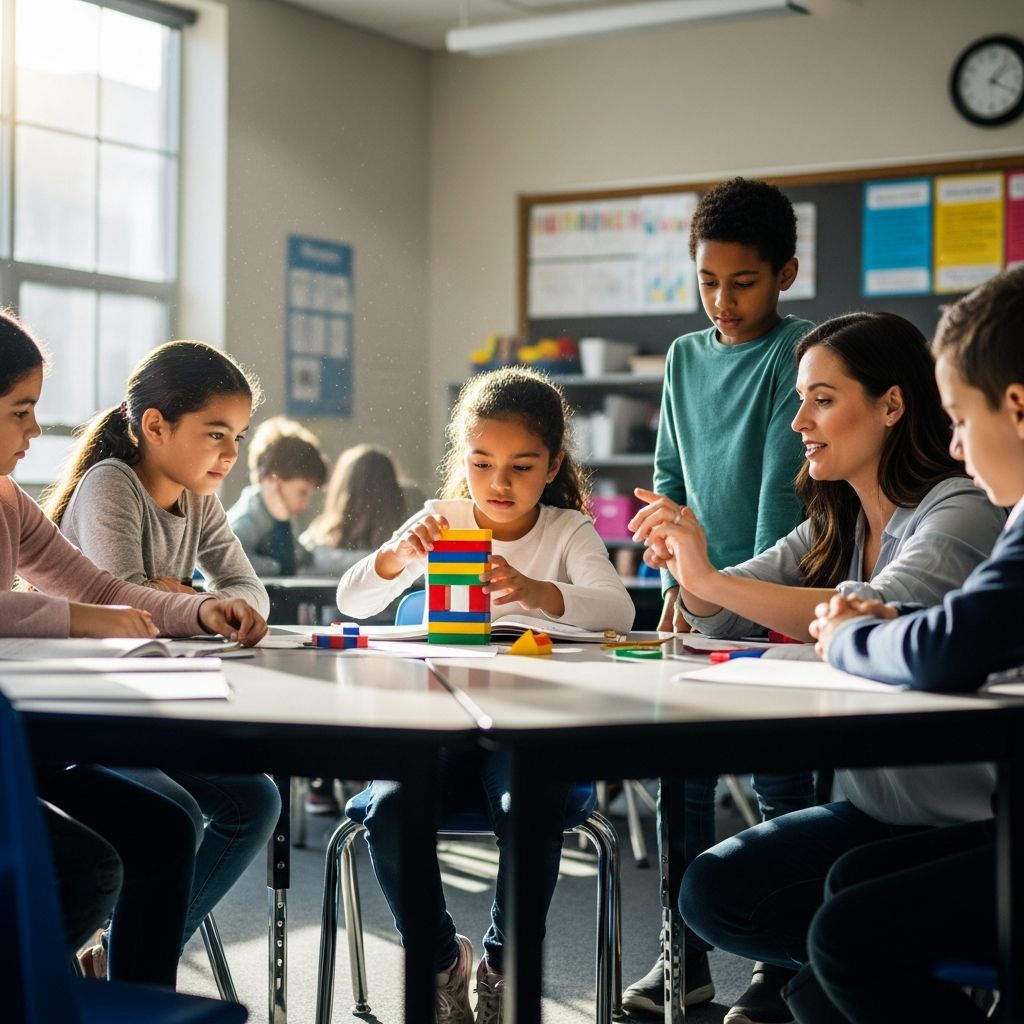
Understanding the Role of Struggle in Academic Development
The traditional classroom culture often treats mistakes as indicators of deficiency rather than opportunities for development. Students are frequently praised for correct answers while errors are glossed over or treated as embarrassing moments to avoid. However, emerging research in educational psychology reveals a strikingly different picture: when structured thoughtfully, academic setbacks can become the most powerful catalysts for deep learning and meaningful skill development.
The pressure to appear competent, to have all the answers, creates a paradox in education. Students become so focused on maintaining an image of success that they avoid challenging material, resist difficult problems, and refrain from taking intellectual risks. This defensive posture directly undermines the very purpose of education—to grow, to learn, and to develop capabilities that extend beyond current mastery.
How Mistakes Drive Deeper Understanding and Retention
When students answer a question incorrectly, their brains engage in a fundamentally different cognitive process than when they answer correctly. A correct answer often brings a moment of satisfaction but little reflection. Students may feel good temporarily without examining the reasoning, strategies, or problem-solving approaches they employed. Incorrect answers, by contrast, trigger a natural drive to investigate: What went wrong? Where did my thinking diverge from the correct path? What do I need to know or understand differently?
This investigative process creates what researchers call “productive failure.” When seventh-grade mathematics students were placed in a learning environment where they struggled and failed at solving complex problems before receiving teacher guidance, they developed stronger foundational understanding than peers who received direct instruction with immediate teacher support. The struggle itself—the wrestling with incorrect approaches and the subsequent analysis of failure—built more robust mental models of mathematical concepts.
The mechanism underlying this effect centers on reflection and self-awareness. Making and correcting mistakes forces learners to analyze what transpired, to search for accurate information, and to engage in extended review and research. This extended engagement strengthens memory recall and develops stronger analytical skills. Over time, students who regularly engage with their errors develop superior critical thinking abilities that serve them well beyond individual assignments or tests.
Contrasting Educational Approaches: What Research Reveals About Teacher Responses to Error
International comparative studies illuminate striking differences in how educational systems handle student mistakes. American mathematics classrooms typically focus instruction on correct procedures for problem-solving, with teachers demonstrating the right way to solve problems and praising students primarily for correct answers. Teachers in these environments often minimize discussion of errors, moving quickly past mistakes to reinforce accurate methods.
Japanese mathematics teachers employ a markedly different strategy. They rarely praise students for correct answers but instead ask students to solve challenging problems independently. Crucially, they then lead extended discussions about common errors, exploring multiple solution pathways—both those leading to correct answers and those resulting in mistakes. This deliberate focus on error analysis creates a classroom culture where mistakes are treated as rich learning material rather than failures to be forgotten.
Research suggests that the Japanese approach produces students with deeper conceptual understanding and greater flexibility in problem-solving. By examining why errors occur and exploring various solution strategies, students develop more adaptable knowledge they can transfer to novel situations.
The Emotional Dimensions of Academic Failure
Understanding the cognitive benefits of failure requires also addressing its emotional reality. For many students, the experience of struggling or making mistakes triggers genuine distress. According to research by UC Berkeley professor Martin Covington, the fear of failure becomes intertwined with personal identity and self-worth. When students believe that their value as people depends on academic performance, they employ elaborate psychological strategies to protect themselves from failure experiences—strategies that often backfire by limiting their engagement with challenging material.
This creates a critical challenge for educators: How can teachers help students move beyond fear and anxiety about mistakes so they can access the learning benefits that failure provides? The answer lies not in minimizing or hiding the difficulty of academic work, but in systematically reshaping how students interpret and respond to their mistakes.
Creating Conditions Where Students Can Learn from Setbacks
Focusing on Errors as Data Rather Than Deficits
The first essential shift involves treating errors as information rather than evidence of inadequacy. When a student provides an incorrect answer, the pedagogically sound response isn’t to quickly provide the correct answer or move on. Instead, teachers might explore the thinking that led to the error: “What reasoning did you use to arrive at that answer?” “Where might we reconsider your approach?” This investigative stance signals to students that errors contain valuable information about their current understanding.
Using incorrect student responses as the basis for whole-class discussion provides multiple benefits simultaneously. Such discussions help teachers diagnose genuine misunderstandings affecting multiple students. Simultaneously, they normalize the experience of error and demonstrate that mistakes are regular occurrences worthy of careful examination rather than moments to be ashamed of.
Customizing the Social Context of Learning
Research indicates that the emotional difficulty of struggling varies depending on the social environment in which it occurs. Some students find small-group work during challenging tasks to be emotionally uncomfortable; these students benefit from options to work privately when navigating difficulty. Providing flexible learning contexts—allowing students to choose between working independently, in pairs, or in groups when facing challenges—acknowledges that different learners have different emotional needs during the struggle process.
Teachers might structure this flexibility by explicitly offering choices: “You can work on this challenging problem by yourself at your desk, with a partner, or in a small group. Choose the setting where you think you’ll do your best thinking.” This empowers students while accommodating individual emotional needs.
Demonstrating and Modeling Persistence
Research examining learning in infants as young as 15 months reveals that children mimic the persistence behaviors they observe in adults. When teachers openly demonstrate their own problem-solving processes—including false starts, moments of confusion, and the decision to keep trying—they provide a powerful model for student persistence. Rather than presenting only polished, correct solutions, teachers might occasionally work through challenging problems aloud, verbalizing their thinking, noting when an approach isn’t working, and explaining their decision to try a different strategy.
This vulnerability proves particularly powerful because it communicates an essential message: intelligent, capable people encounter problems they don’t immediately solve. Persistence is not about avoiding mistakes but about maintaining effort despite encountering obstacles.
Cultivating Self-Compassion in Response to Struggle
As teachers model their own persistent efforts through difficulty, they can also model and normalize self-compassion. Teachers might articulate internal dialogues they use: “This is tough, and I don’t understand it yet. That’s okay—confusion is part of the learning process. I’m going to be patient with myself as I work through this.” When teachers normalize confusion and demonstrate kindness toward themselves during struggle, students learn they can do the same.
This self-compassionate stance differs meaningfully from simply accepting failure. It involves recognizing difficulty as a universal human experience rather than a personal failing. Students who internalize this perspective develop the emotional resilience to persist through challenge without internalizing struggle as evidence of inadequacy.
Building Relational Trust and Academic Motivation
The relationship between teacher and student powerfully influences how students respond to academic difficulty. Students demonstrate greater motivation to attempt challenging tasks and to persist through struggle when they feel genuinely valued and supported by their teachers. Conversely, students who perceive that teachers don’t care about them show reduced motivation regardless of task difficulty or perceived importance.
For students particularly prone to avoiding failure—those who prioritize protecting their self-image over learning—strong relationships with teachers become especially crucial. Teachers might deliberately communicate belief in student capability: “I see real strengths in your thinking, and I believe you can tackle this challenge.” Such affirmations, when genuine and specific, communicate that the teacher views the student as capable and is invested in their growth.
Developing Resilience Through Strategic Response to Setback
Resilience—the capacity to cope with difficulty, recover from setbacks, and persist toward goals—represents one of the most valuable outcomes of learning to embrace failure constructively. Research synthesizing over 38 studies of resilience in response to failure and error identified consistent characteristics of resilient individuals. These individuals tend to have higher self-esteem, lower levels of perfectionism, and a more positive explanatory style regarding past events.
Importantly, simply having high academic self-worth or suppressing emotional reactions to mistakes did not correlate with resilience. Instead, resilience emerges when students develop specific skills and adopt particular strategies for interpreting setbacks. When a student fails a test, for example, a resilience-promoting interpretation might be: “I didn’t succeed this time, but I can study more effectively next time.” This framing attributes the poor outcome to controllable factors (study strategies) rather than to fixed personal traits.
Teachers cultivate resilience by helping students focus on skills and strategies that enhance their capacity to manage difficulty. This might involve teaching specific problem-solving approaches, helping students develop effective study strategies, or explicitly discussing how to interpret and respond constructively to poor performance.
Why Real-World Problem-Solving Demands Comfort with Failure
The skills and dispositions developed through learning to embrace classroom failure transfer directly to real-world challenges. Outside of school, most significant problems are not solvable through procedures taught directly by authorities. Instead, real-world problem-solving requires flexibility—the willingness to abandon initial approaches that aren’t working and to try alternative strategies. This flexibility fundamentally depends on comfort with failure and the ability to learn from unsuccessful attempts.
By creating classrooms where struggle is normalized and errors are treated as learning opportunities, educators prepare students not just for more advanced academic work but for the complex, uncertain challenges they’ll encounter in careers and life. The student who learned in school that struggle indicates something is wrong with them—rather than a normal part of meaningful learning—enters adulthood unprepared for the challenges inherent in professional growth and personal development.
Practical Implementation: From Theory to Classroom Practice
Translating these principles into classroom structures and practices requires intentional design. Teachers might begin by examining their current responses to student errors and considering whether those responses emphasize quick correction or investigative exploration. Over time, teachers can shift toward treating errors as puzzles worth investigating with students.
Incorporating discussion of common misconceptions into lesson planning, explicitly teaching students growth-oriented interpretations of struggle (“I haven’t mastered this yet” rather than “I can’t do this”), and regularly sharing personal experiences of learning through difficulty create a classroom culture increasingly aligned with research evidence about optimal learning conditions.
As teachers work to transform their classroom cultures, they simultaneously transform themselves. When teachers release their own struggles for perfection and model the persistence and self-compassion they hope to develop in students, they become more authentic educators and more compelling models of lifelong learning.
Frequently Asked Questions
Q: Doesn’t celebrating failure mean accepting lower academic standards?
A: No. Embracing productive failure is entirely compatible with maintaining high academic standards. In fact, research suggests that students who learn to navigate failure thoughtfully develop deeper understanding and stronger critical thinking skills than those who avoid challenge. High standards combined with support for learning through setback creates conditions for genuine excellence.
Q: How do I help students distinguish between productive struggle and simple confusion?
A: The key difference involves whether students are engaging with material they’re developmentally ready to learn, even if it’s challenging. Productive struggle occurs when tasks stretch current abilities but remain within reach with effort. Simple confusion often indicates material is either too far above current level or lacks necessary prerequisite knowledge. Teachers can distinguish these situations by observing whether students can make progress through sustained effort or whether they become completely stuck.
Q: What role should grading play in a classroom culture that emphasizes learning through failure?
A: Many educators find that allowing students multiple attempts to demonstrate proficiency—rather than assigning grades based on single performances—better supports learning from failure. When students understand they can retake assessments after additional study, they’re more likely to engage with their errors analytically rather than defensively. This approach maintains accountability while supporting the productive failure process.
Q: How can I help parents understand this approach to failure?
A: Communication with families about educational philosophy proves essential. Teachers might share research about how learning from mistakes strengthens long-term retention and critical thinking. Explaining that struggling with difficult material is a sign the student is appropriately challenged—rather than evidence of inadequacy—helps parents support classroom messages at home.
References
- Why We Should Embrace Mistakes in School — Greater Good Science Center, University of California, Berkeley. 2018. https://greatergood.berkeley.edu/article/item/why_we_should_embrace_mistakes_in_school
- Why Students Need to be Comfortable with Failure — Resilient Educator. https://resilienteducator.com/classroom-resources/students-failure/
- Why Glorify Failure to Enhance Success? — Guskey, T. R. https://tguskey.com/glorify-failure-enhance-success/
- Why Failure Is Good for Learning, and How It Applies to Your Struggling Students — Waterford.org. https://www.waterford.org/blog/why-failure-is-better-than-success-for-learning/

Medha Deb is an editor with a master's degree in Applied Linguistics from the University of Hyderabad. She believes that her qualification has helped her develop a deep understanding of language and its application in various contexts. Medha specializes in the areas of beauty, health, sports, and wellness and is committed to ensuring that the content on the website is…