
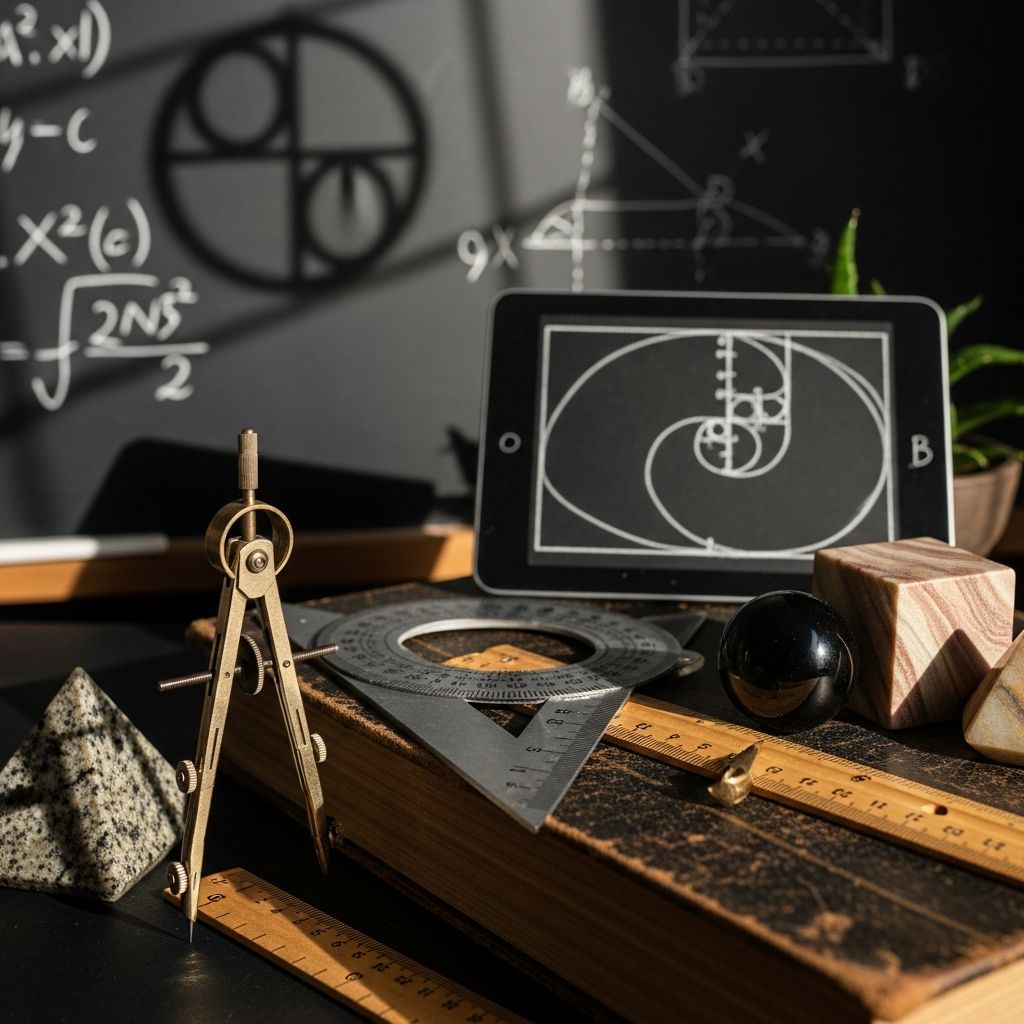
Mathematics operates as a distinctive form of communication, equipped with symbols, rules, and structures that convey complex ideas with unmatched clarity. Unlike spoken tongues shaped by regional dialects, it provides a consistent framework accessible across borders, making it indispensable in fields from physics to economics.
Defining the Essence of Linguistic Systems
To grasp why mathematics qualifies as a language, consider the core elements that define any communicative system. A language requires a collection of basic units—vocabulary—to represent concepts, rules for combining them—grammar—and arrangements that produce meaning—syntax. Mathematics fulfills these through numbers, operators, and logical sequences.
For instance, the expression 2 + 3 = 5 demonstrates vocabulary in digits and symbols like + and =, grammar dictating valid operations, and syntax ensuring the equality holds universally. This mirrors how words form sentences in English or Mandarin, yet math’s version remains invariant regardless of the speaker’s native tongue.
Building Blocks: Vocabulary and Symbols in Math
The lexicon of mathematics consists of numerals, variables, and operators that serve as foundational building blocks. Numbers quantify reality, from counting apples (1, 2, 3) to infinities in calculus. Variables like x or y represent unknowns, allowing generalization.
- Operators: Addition (+), subtraction (−), multiplication (×), and division (÷) manipulate quantities precisely.
- Functions: Tools like sine, cosine, or logarithms transform inputs into outputs systematically.
- Constants: Values such as π (pi) or e (Euler’s number) appear consistently worldwide.
These elements form a compact dictionary, far more efficient than natural languages for describing quantitative relationships.
Grammar and Syntax: Rules That Bind Meaning
Mathematical grammar enforces operations’ legitimacy, much like subject-verb agreement in prose. The distributive property (a(b + c) = ab + ac) exemplifies this, ensuring expressions yield consistent results.
Syntax governs order: in 3 × 4 + 2, multiplication precedes addition per the order of operations (PEMDAS/BODMAS). Violating this alters meaning, akin to grammatical errors scrambling sentences.
| Component | Math Example | Natural Language Parallel |
|---|---|---|
| Vocabulary | π, +, ∫ | Apple, run, quickly |
| Grammar | Commutative law | Subject-verb agreement |
| Syntax | Order of operations | Word order in sentences |
This table illustrates parallels, highlighting math’s structured rigor.
Equations: The Sentences of Mathematical Discourse
Equations function as complete thoughts, asserting balance or relationships. Einstein’s E = mc² encapsulates energy-mass equivalence succinctly, comprehensible from Tokyo to Toronto without translation.
Complex proofs build arguments layer by layer, akin to essays. A proof of the Pythagorean theorem (a² + b² = c²) uses axioms and deductions, establishing truth deductively—mathematics’ hallmark over empirical sciences.
Precision and Unambiguity: Math’s Superpower
Natural languages tolerate ambiguity; “bank” might mean riverside or finance. Math eliminates this: √4 = 2 (principal root) is unequivocal. This precision suits scientific laws, theorems, and models.
In proofs, every step must follow rigorously, preventing misinterpretation. Such clarity underpins engineering feats like bridge designs or space missions.
Mathematics in the Realm of Science
Dubbed the “language of science,” math formulates hypotheses, models phenomena, and predicts outcomes. Newton’s laws use calculus for motion; quantum mechanics employs linear algebra and probability.
Statistics analyze data across biology, economics, and climate science. Without math’s universality, interdisciplinary collaboration falters—physicists and chemists share equations seamlessly.
Transcending Borders: The Universal Aspect
Math’s symbols are culture-agnostic. A Japanese student reads F = ma identically to an American peer. This universality fosters global teamwork, from International Space Station projects to climate accords.
Even extraterrestrial contact might rely on math’s invariants—prime numbers or Fibonacci sequences—as interstellar signals. Galileo noted the universe is “written in mathematical language,” a view echoed by modern thinkers.
Implications for Learning and Pedagogy
Viewing math as a language shifts teaching: emphasize fluency-building via practice, like language immersion. Early symbol exposure aids comprehension, countering “I’m not a math person” myths.
Strategies include:
- Visual aids for abstract concepts.
- Real-world applications to contextualize syntax.
- Group problem-solving for discourse practice.
Neuroscience links language and math processing in the brain, supporting bilingual-like approaches.
Proofs: The Logical Backbone
Proofs are math’s argumentative core, constructing irrefutable truths from axioms. Euclid’s geometry proofs exemplify this, influencing philosophy and logic.
Unlike experiments, proofs are eternal—once valid, always valid. This deductive power distinguishes math, enabling foundational certainty for other disciplines.
Challenges and Critiques
Not all agree math is fully “universal.” Cultural notations vary (e.g., decimal vs. comma separators), and intuition shapes understanding. Yet, core principles remain invariant, prioritizing substance over form.
Accessibility issues persist; not everyone achieves fluency, mirroring language barriers. Inclusive teaching addresses this, leveraging tech like interactive software.
Future Horizons: Evolving Mathematical Expression
Computational tools expand math’s lexicon—algorithms visualize high-dimensional data. AI aids theorem-proving, blending human intuition with machine precision.
Visual proofs and diagrams challenge pure symbolism, echoing debates on wordless math. Still, symbols endure for their concision.
Frequently Asked Questions (FAQs)
What distinguishes math from natural languages?
Math prioritizes precision and universality, lacking cultural idioms or ambiguity, with symbols conveying exact relationships globally.
Is math truly universal?
Core concepts yes, but notations vary slightly; its logic transcends these, enabling cross-cultural science.
How does recognizing math as a language improve education?
It promotes fluency-focused teaching, building confidence through practice like language acquisition.
Can math communicate with aliens?
Likely, via invariants like primes, offering a non-verbal bridge to intelligence.
Why is precision vital in math?
It ensures unambiguous truths, foundational for science and technology.
References
- Exploring the Relationship of Language and Math — Accelerate Learning Blog. 2023-05-15. https://blog.acceleratelearning.com/is-math-a-language
- The Language of Mathematics — The Gadfly Magazine. 2022-11-20. https://www.thegadflymagazine.org/home-1/mathematics-as-a-language
- Language of mathematics — Wikipedia. 2026-04-01. https://en.wikipedia.org/wiki/Language_of_mathematics
- The New Language of Mathematics — American Scientist. 2011-09-01. https://www.americanscientist.org/article/the-new-language-of-mathematics
- Let’s Stop Saying that Math is the Universal Language — AAAS ARISE. 2022-12-13. https://aaas-arise.org/2022/12/13/lets-stop-saying-that-math-is-the-universal-language/

Medha Deb is an editor with a master's degree in Applied Linguistics from the University of Hyderabad. She believes that her qualification has helped her develop a deep understanding of language and its application in various contexts. Medha specializes in the areas of beauty, health, sports, and wellness and is committed to ensuring that the content on the website is…