
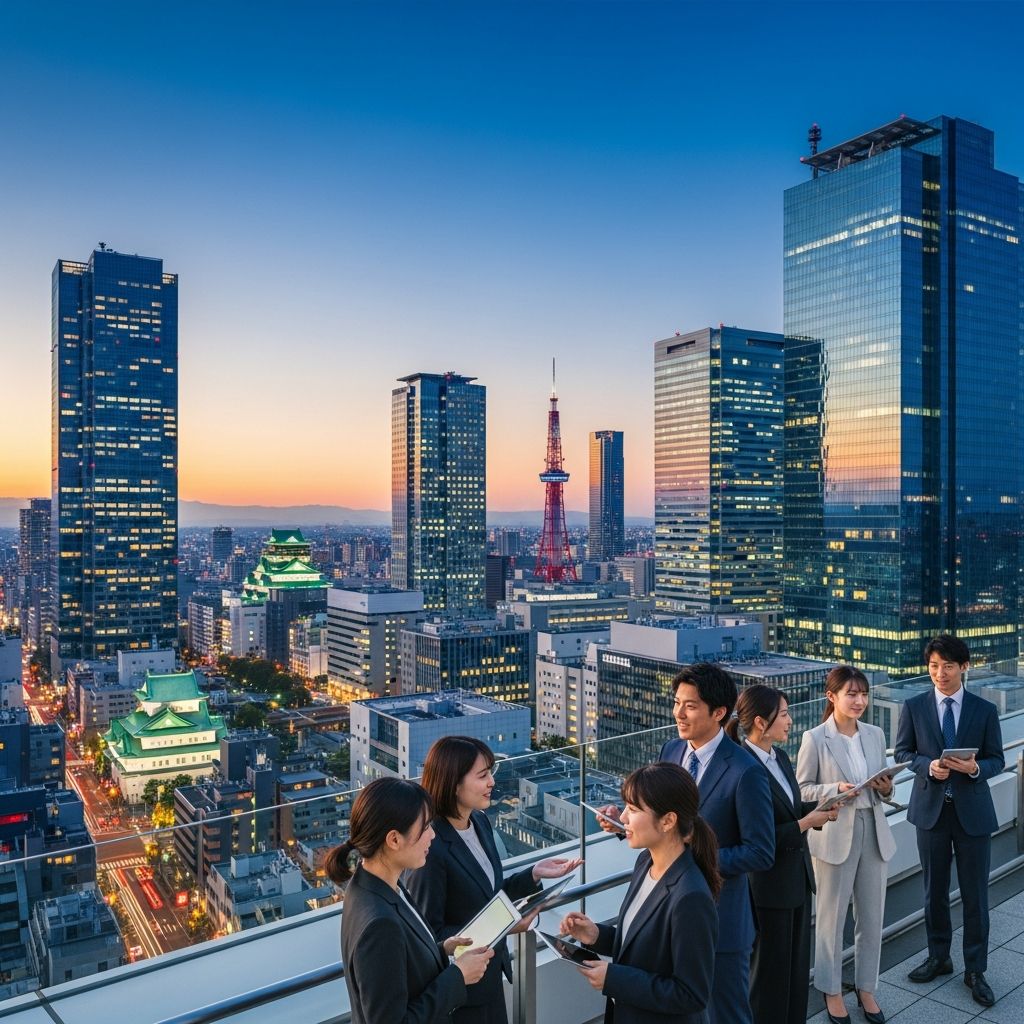
Why Nagoya Is Japan’s Rising Star for Careers and Business
Nagoya, Japan’s fourth-largest city and the heart of the Chūbu region, is quietly emerging as one of the country’s most compelling destinations for professionals, entrepreneurs, and global companies. Often overshadowed by Tokyo and Osaka in international headlines, Nagoya offers a powerful combination of industrial depth, strategic location, and high quality of life that makes it a smart long-term choice for those building careers or launching ventures in Japan.
Far from being just a manufacturing town, Nagoya is evolving into a dynamic hub where traditional industry meets digital innovation, and where global talent can thrive without the extreme costs and congestion of the nation’s largest metropolises. This article explores why Nagoya deserves serious attention from anyone considering work, relocation, or business expansion in Japan.
A City Built on Industrial Excellence
Nagoya sits at the center of one of Japan’s three major economic zones, alongside Tokyo and Osaka. Its economy has long been anchored in advanced manufacturing, particularly in automobiles, aerospace, machinery, and precision components. The city and surrounding Aichi Prefecture are home to global giants like Toyota, Denso, and Mitsubishi Heavy Industries, creating a dense ecosystem of suppliers, R&D centers, and engineering talent.
This industrial foundation is not just about scale; it’s about depth and specialization. Nagoya’s manufacturing sector is known for its focus on monozukuri—the Japanese philosophy of craftsmanship and continuous improvement. This culture attracts engineers, designers, and operations professionals who value precision, long-term thinking, and technical mastery.
For job seekers, this means a steady demand for roles in:
- Automotive engineering and R&D
- Aerospace and aviation systems
- Industrial automation and robotics
- Supply chain and logistics management
- Quality control and manufacturing optimization
But Nagoya’s economy is no longer limited to factories and assembly lines. The city’s industrial base has become a springboard for diversification into high-tech services, digital platforms, and new mobility solutions, creating fresh opportunities beyond traditional manufacturing roles.
From Manufacturing Powerhouse to Innovation Hub
In recent years, Nagoya has been actively transforming from a purely industrial city into a center for innovation and entrepreneurship. Local and national initiatives are helping to build a more vibrant startup ecosystem, supported by strong ties between industry, universities, and government.
One of the most visible signs of this shift is the launch of STATION Ai, a large-scale open innovation base inspired by Paris’s STATION F. Located in Nagoya, this facility is designed to bring together startups, corporate R&D teams, investors, and researchers in a single collaborative environment. It reflects a growing recognition that innovation in areas like mobility, robotics, and smart manufacturing can thrive in Nagoya’s unique industrial context.
Other key elements of Nagoya’s innovation ecosystem include:
- University-industry partnerships with institutions like Nagoya University, a leading research university in science and engineering
- Incubators and accelerators focused on IT, robotics, and digital content
- Government and prefectural support programs for startups and foreign-affiliated companies
- Increased interest from Tokyo-based startups in establishing local sales or R&D bases to tap into Nagoya’s manufacturing and life science strengths
While Nagoya still faces challenges in retaining early-stage startups—many of which eventually move headquarters to Tokyo for easier access to talent and capital—the city is making progress in creating a more supportive environment for early growth. Local angel investors and seed-stage venture capital with regional roots are seen as critical to the next phase of development.
Strategic Location and World-Class Connectivity
Nagoya’s geographic position in central Japan gives it a major logistical and business advantage. The city is roughly equidistant between Tokyo and Osaka, making it an ideal base for companies that need to serve both eastern and western Japan. This central location is matched by excellent transportation infrastructure:
- Shinkansen (bullet train): Nagoya is a major stop on the Tōkaidō Shinkansen line, with direct high-speed connections to Tokyo (about 1.5 hours) and Osaka (about 50 minutes).
- Chūbu Centrair International Airport: Located on an artificial island in Ise Bay, this modern airport offers direct international flights to key Asian destinations and serves as a major cargo hub.
- Port of Nagoya: One of Japan’s busiest ports, handling a wide range of industrial and consumer goods, supporting both domestic and international trade.
- Domestic rail and highway networks: Nagoya is a major node in Japan’s national rail and expressway systems, facilitating efficient movement of people and goods.
For businesses, this connectivity translates into lower logistics costs, faster time-to-market, and easier access to both domestic and international markets. For professionals, it means convenient travel for business or leisure, whether within Japan or to neighboring countries in Asia.
Strong Economy and Supportive Business Environment
Nagoya’s economy is large, diversified, and resilient. As one of Japan’s top economic regions, it benefits from a balanced mix of manufacturing, commerce, and services. The city’s nominal GDP and number of business establishments reflect its status as a major economic center.
Local authorities have also created a business-friendly environment with targeted incentives for companies looking to establish or expand operations in Nagoya. These include:
- Subsidies for foreign companies: Support for companies opening their first office in Nagoya, covering a portion of annual rent for qualifying office space.
- Capital investment incentives: Grants for companies building or expanding offices, factories, or research facilities, particularly in manufacturing and information/communication industries.
- Support for SMEs: Programs tailored to small and medium-sized enterprises that invest in fixed assets and create local employment.
These policies are designed to attract not only large multinationals but also innovative startups and growth-stage companies that can contribute to the region’s long-term competitiveness. The focus on ICT, IoT, AI, robotics, and digital content shows that Nagoya is not just preserving its industrial legacy but actively shaping its next chapter.
Quality of Life: Work-Life Balance in a Livable City
One of Nagoya’s most underrated advantages is its quality of life. The city consistently ranks highly in national assessments of livability, research and development, and daily life. Unlike Tokyo, where housing costs and commuting times can be punishing, Nagoya offers a more balanced lifestyle at a lower cost of living.
Key aspects of Nagoya’s livability include:
- Affordable housing: Rents and property prices are significantly lower than in Tokyo and Osaka, making it easier to live comfortably on a local salary.
- Efficient public transit: A well-developed subway and bus network, combined with the Shinkansen and local rail lines, makes commuting manageable.
- Green spaces and cultural amenities: Parks, historical sites like Nagoya Castle, museums, and seasonal festivals provide a rich cultural and recreational environment.
- Family-friendly environment: Good schools, healthcare, and community services make Nagoya attractive for professionals with families.
For expatriates and foreign professionals, Nagoya also offers a relatively smooth transition. While not as international as Tokyo, the city has a growing expat community, particularly in sectors like automotive, aerospace, and IT. Support services, international schools, and English-speaking professionals are increasingly available, especially in business districts and near major corporate campuses.
What It’s Like to Work in Nagoya
Working in Nagoya combines the stability of Japan’s corporate culture with the practical advantages of a mid-sized metropolis. Many large employers in the region emphasize long-term employment, technical development, and continuous improvement, which can be appealing for professionals who value career progression and skill building.
At the same time, the rise of innovation hubs and startup support programs is introducing more flexible, project-based, and international work environments. This mix means that professionals can choose between:
- Traditional corporate roles in established manufacturing and engineering firms
- Research and development positions in corporate labs or university-linked projects
- Startup and venture roles in emerging tech, mobility, and digital services
- Commercial and service sector jobs in retail, finance, logistics, and hospitality
Language requirements vary by role. In global-facing positions, especially in multinational companies and startups, English is often sufficient, particularly in technical and specialized functions. For roles deeply embedded in local operations, Japanese language skills become more important, but many companies offer language training and support for foreign employees.
Industries and Sectors with Strong Opportunities
Nagoya’s job market is strongest in a few core sectors, but opportunities are expanding into adjacent and emerging fields. The main areas of demand include:
| Sector | Key Opportunities |
|---|---|
| Automotive & Mobility | Engineering, R&D, supply chain, EV and autonomous vehicle development |
| Aerospace & Aviation | Systems engineering, materials, manufacturing, MRO (maintenance, repair, overhaul) |
| Machinery & Industrial Equipment | Design, automation, robotics, precision components |
| ICT, IoT & AI | Software development, data analytics, smart manufacturing, digital platforms |
| Commerce & Services | Retail, logistics, finance, hospitality, and business support services |
Professionals with backgrounds in engineering, data science, project management, and international business are particularly well-positioned to find rewarding roles in Nagoya. The city’s industrial DNA also means that cross-functional skills—such as understanding both technology and business operations—are highly valued.
Is Nagoya Right for Your Career or Business?
Nagoya is not for everyone, but it is an excellent fit for certain types of professionals and companies. Consider Nagoya if you:
- Work in manufacturing, engineering, or industrial technology and want to be at the heart of Japan’s industrial base.
- Are interested in mobility, robotics, or smart manufacturing and want to work in a region with deep supply chain and R&D capabilities.
- Prefer a more balanced lifestyle with lower living costs and shorter commutes than Tokyo or Osaka.
- Are launching or expanding a business that can benefit from central Japan’s logistics, skilled workforce, and government support programs.
- Want to experience Japan in a city that is international enough to be accessible but still deeply rooted in local culture and industry.
On the other hand, if you are in a highly specialized field that is almost exclusively concentrated in Tokyo (such as certain areas of finance, media, or fashion), or if you require a very large international community and expat infrastructure, Nagoya may feel more limited, at least for now.
Frequently Asked Questions
What is Nagoya known for economically?
Nagoya is known as a major center for advanced manufacturing, especially in automobiles, aerospace, machinery, and precision components. It is also developing a growing innovation and startup ecosystem, particularly in mobility, robotics, and digital technologies.
Is Nagoya a good place for foreigners to work?
Yes, Nagoya can be a very good place for foreigners, especially in engineering, R&D, and international business roles. While the expat community is smaller than in Tokyo, the cost of living is lower, and the quality of life is high. Many large companies and some startups operate in English or with strong international teams.
What industries are hiring in Nagoya?
The main hiring sectors are automotive and mobility, aerospace, industrial machinery, ICT/IoT/AI, and related services such as logistics, finance, and business support. There is also growing demand in digital content, robotics, and smart manufacturing.
How does Nagoya compare to Tokyo for living and working?
Nagoya offers a more affordable cost of living, shorter commutes, and a more relaxed pace than Tokyo, while still providing strong career opportunities, especially in manufacturing and engineering. Tokyo has more international jobs and a larger expat scene, but at a higher cost and with greater congestion.
Are there startup opportunities in Nagoya?
Yes, Nagoya is actively building its startup ecosystem, with innovation hubs like STATION Ai, university-industry collaboration, and government support programs. While the ecosystem is still developing compared to Tokyo, it offers strong potential for startups in mobility, robotics, and industrial tech that can leverage the region’s manufacturing strengths.
What support is available for foreign companies in Nagoya?
Foreign companies can access subsidies for opening offices, rent support, and capital investment incentives for building or expanding facilities. Local economic development agencies also provide guidance on site selection, permits, and connecting with local partners and suppliers.
References
- Regional Information: Nagoya City — JETRO. Accessed 2025. https://www.jetro.go.jp/en/invest/region/data/nagoya-city.html
- Nagoya City ranked 2nd in Japan Power Cities 2025! — Nagoya City. 2025. https://nagoya-potential.jp/en/news/2025/nagoya_city_ranked_2nd_in_japan_power_cities_2025.html
- How Japan is championing a regional startup economy — World Economic Forum. 2025. https://www.weforum.org/stories/2025/02/how-japan-is-championing-a-regional-startup-economy/

Medha Deb is an editor with a master's degree in Applied Linguistics from the University of Hyderabad. She believes that her qualification has helped her develop a deep understanding of language and its application in various contexts. Medha specializes in the areas of beauty, health, sports, and wellness and is committed to ensuring that the content on the website is…