
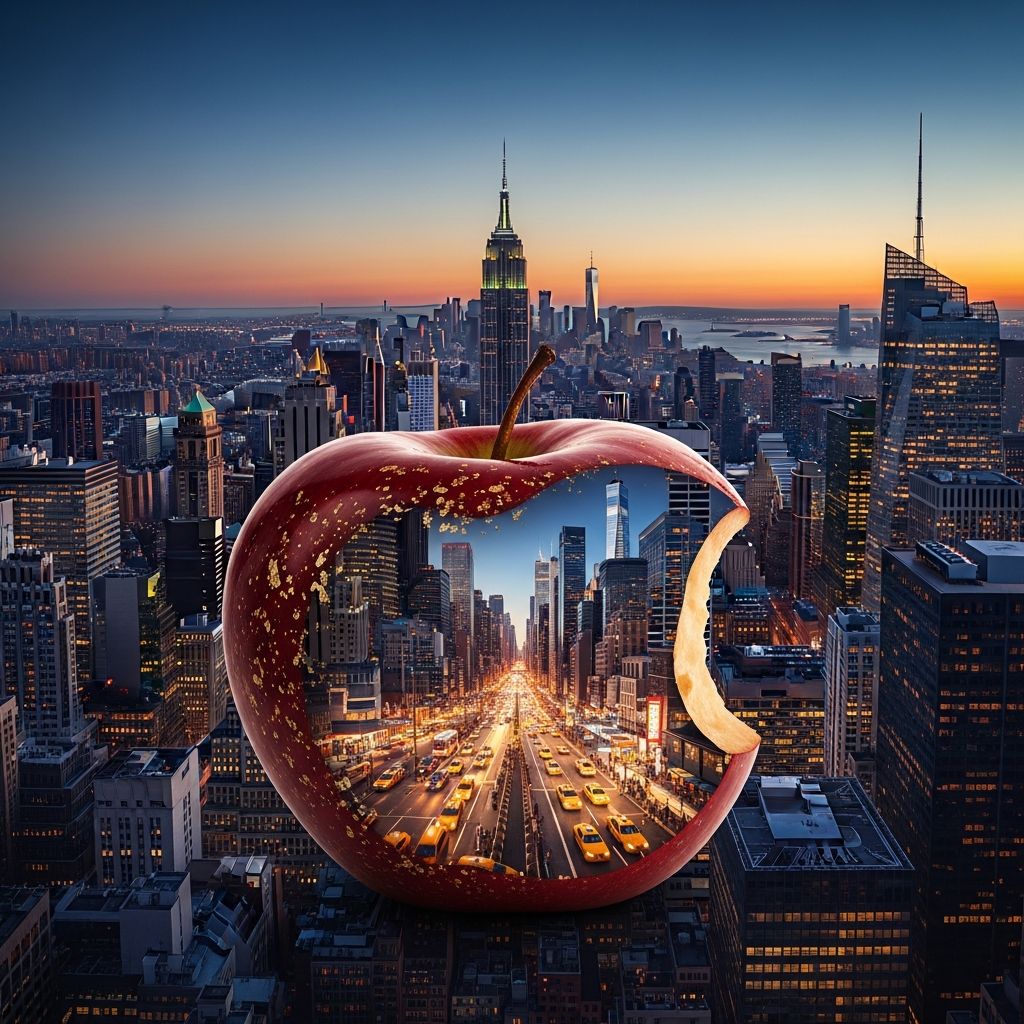
New York City, known worldwide as **The Big Apple**, owes its famous moniker to a blend of horse racing culture, jazz scene vibrancy, and clever 20th-century marketing. This nickname captures the city’s essence as the ultimate prize in entertainment, business, and culture.
Roots in 19th-Century American Slang
The phrase ‘big apple’ predates its association with New York by decades, emerging in the 1800s as a symbol of something superior or highly desirable. During that era, apples held a special allure in American culture, often representing the finest rewards or achievements. People used expressions like ‘bet a big apple’ to convey absolute confidence in a sure thing.
Newspapers from the time frequently highlighted oversized apples, reinforcing their status as prizes. This cultural reverence set the stage for the term’s later evolution into a geographic identifier. By the early 1900s, ‘big apple’ began hinting at grand locales, with one 1909 reference describing New York as the ‘big apple city’ in a travel book, implying its preeminence among urban centers.
The 1920s Horse Racing Boom
The nickname truly took root in the 1920s amid New York’s thriving horse racing scene. John J. Fitz Gerald, a columnist for the New York Morning Telegraph, played a pivotal role. In his ‘Around the Big Apple’ column starting in 1921, he dubbed the city’s racetracks—such as Belmont, Saratoga, and Aqueduct—the ‘Big Apple.’
For jockeys, trainers, and owners nationwide, competing in New York meant chasing the biggest purses and prestige. Fitz Gerald captured this allure, noting how professionals flocked from smaller tracks to what he called the ultimate destination. His writings popularized the term within racing circles, turning it into insider lingo for the top tier of the sport.
- Key Racetracks: Belmont Park, Aqueduct, Saratoga Race Course—centers of the ‘Big Apple’ circuit.
- Fitz Gerald’s Influence: His columns from 1921 onward embedded the phrase in sports journalism.
- Cultural Spread: By mid-decade, the term appeared in other publications, extending beyond racing.
Jazz Age Adoption and Cultural Resonance
As the Roaring Twenties unfolded, ‘The Big Apple’ transcended racing, infiltrating the jazz world. Musicians from smaller cities viewed New York gigs as the pinnacle of success, echoing the racetrack mentality. Harlem’s vibrant scene amplified this, with clubs, songs, and even a ‘Big Apple’ dance craze emerging.
A 1922 Chicago Defender article referenced a trip to the ‘big apple,’ while the New York Times noted it in 1928 slang coverage. Jazz artists like those in Harlem Renaissance circles embraced it, symbolizing ambition and the dream of making it big. This period marked the nickname’s shift from niche jargon to broader cultural shorthand for New York’s magnetic pull.
| Era | Context | Key Figures/Events |
|---|---|---|
| 1920s Racing | Horse tracks as top prize | John J. Fitz Gerald’s columns |
| 1920s Jazz | Performance dreams | Harlem clubs, Big Apple dance |
| Pre-1920s | General slang | 1909 ‘big apple city’ reference |
Decline and Near Oblivion
By the mid-20th century, ‘The Big Apple’ faded from prominence. World War II, economic shifts, and changing slang diminished its use. Other nicknames like ‘Gotham’ or ‘The City That Never Sleeps’ vied for attention, leaving the apple metaphor dormant for decades.
During this lull, New York grappled with post-war challenges, but the phrase lingered in obscure references, awaiting revival. Its temporary eclipse highlights how nicknames evolve with cultural tides, only to resurface when perfectly timed.
1970s Tourism Revival
The nickname’s modern fame stems from a strategic 1970s campaign by the New York Convention and Visitors Bureau. Facing urban decay, crime waves, and fiscal crisis, President Charles Gillett sought an upbeat image booster. Inspired by the jazz-era positivity, he relaunched ‘The Big Apple’ to lure tourists.
Bill Phillips, an ad executive, crafted slogans like ‘It takes a little bit of madness to live in New York… but it’s the greatest place on earth.’ Apples emblazoned subways, buses, and media, pairing with the iconic skyline. This effort, amid ‘I ❤️ NY’ branding, transformed perceptions, drawing visitors and embedding the nickname globally.
Today, ‘The Big Apple’ adorns welcome signs, merchandise, and media, symbolizing opportunity and energy. Its revival proved marketing’s power in reshaping city identity during tough times.
NYC’s Nickname Evolution Over Time
New York’s monikers reflect its layered history:
- New Amsterdam (1620s-1660s): Dutch colonial name, tied to fur trade hub.
- New York (post-1664): British rename after Duke of York.
- Knickerbocker City (1800s): Literary nod to Washington Irving.
- Gotham (1800s): From Irving’s tales, implying quirky wisdom.
- The Big Apple (1920s/1970s): Enduring symbol of aspiration.
These shifts mirror the city’s growth from trading post to global metropolis.
Why ‘Big Apple’ Endures
The nickname’s stickiness lies in its evocative power: apples signify health, abundance, and temptation, mirroring NYC’s allure. It conveys scale, success, and the ‘big time’ vibe that draws dreamers worldwide. Unlike staid labels, it bursts with vitality, fitting a city of relentless pace.
In pop culture, from films to music, it reinforces NYC’s mythic status. Economically, it boosts tourism—over 60 million visitors annually pre-pandemic flocked to bite into the apple’s promise.
Frequently Asked Questions (FAQs)
Who first called New York ‘The Big Apple’?
John J. Fitz Gerald popularized it in 1921 racing columns for the New York Morning Telegraph, referring to the city’s racetracks.
Why apples specifically for the nickname?
In 19th-century America, big red apples symbolized top prizes and desirability, evolving into slang for the best opportunities.
When did ‘The Big Apple’ become official?
It gained traction in the 1920s but was revived and popularized citywide via a 1970s tourism campaign.
What did NYC mean before ‘Big Apple’?
Earlier names include New Amsterdam (Dutch era) and Gotham (19th century).
Is ‘Big Apple’ used anywhere else?
Smaller cities were once ‘little apples’ in racing/jazz slang, but NYC owns it exclusively today.
Global Impact and Modern Legacy
‘The Big Apple’ has permeated international lexicon, instantly evoking Times Square neon, Wall Street hustle, and Broadway glamour. It influences branding—from apple logos on maps to events like the Big Apple Circus. In a globalized world, it positions NYC as the aspirational core, where ambitions ripen.
Scholars note its role in urban mythology, blending grit with glamour. As NYC evolves with tech booms and cultural shifts, the nickname adapts, remaining a timeless emblem of the American Dream.
References
- Why is NYC called ‘The Big Apple’? — FOX 5 New York. 2023-10-01. https://www.fox5ny.com/news/why-is-nyc-called-the-big-apple
- Why Is New York City Called the Big Apple? — New York Public Library (NYPL). 2015-03-11. https://www.nypl.org/blog/2015/03/11/nyc-big-apple
- Big Apple — Wikipedia (citing primary sources). 2026-01-15. https://en.wikipedia.org/wiki/Big_Apple
- How 9 Famous Cities Got Their Nicknames — Britannica. 2023-05-20. https://www.britannica.com/story/how-9-famous-cities-got-their-nicknames
- The Surprising Origin of New York’s ‘Big Apple’ Nickname — YouTube/History of Simple Things. 2024-02-10. https://www.youtube.com/watch?v=of6wxTWMN2U

Medha Deb is an editor with a master's degree in Applied Linguistics from the University of Hyderabad. She believes that her qualification has helped her develop a deep understanding of language and its application in various contexts. Medha specializes in the areas of beauty, health, sports, and wellness and is committed to ensuring that the content on the website is…