
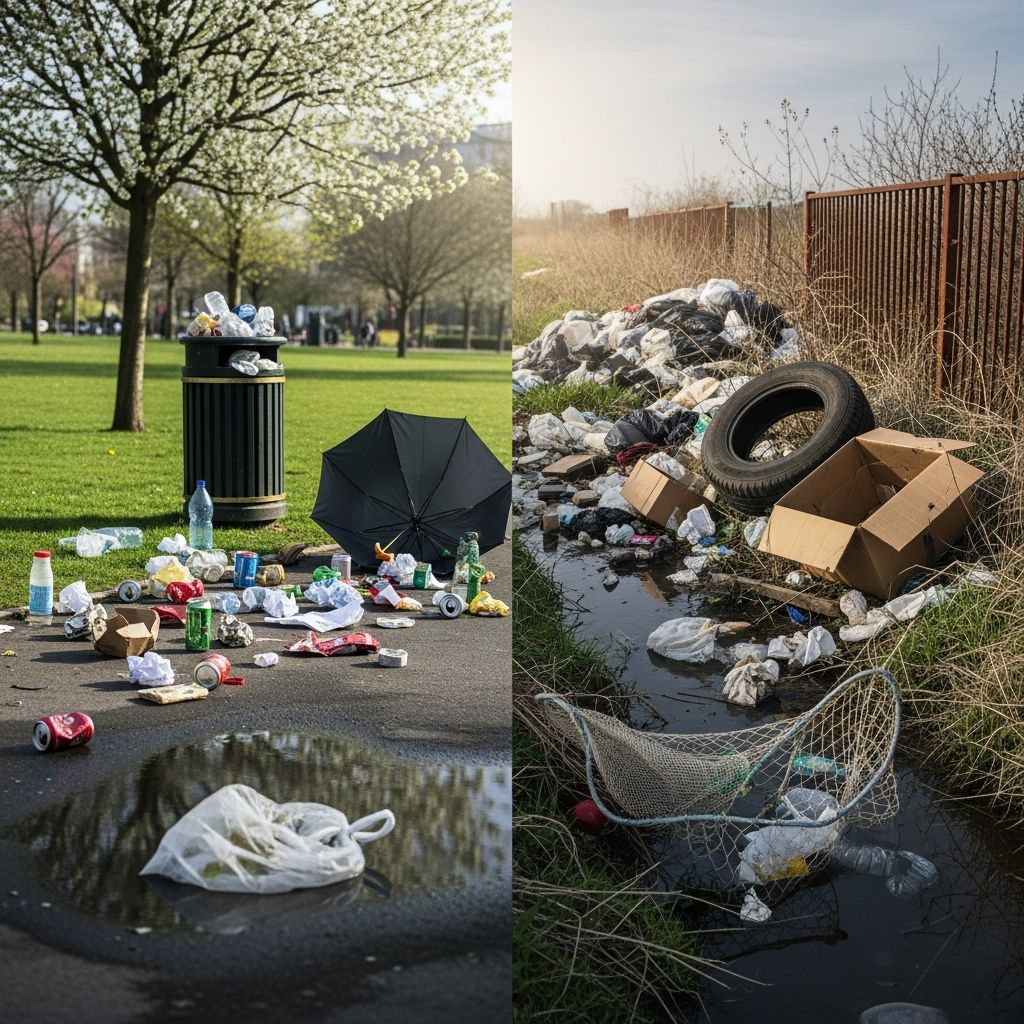
The Widespread Challenge of Discarded Waste in Public Spaces
Communities across the nation face an ongoing struggle with accumulated waste in parks, waterways, streets, and neighborhoods. The scope of this problem extends far beyond simple aesthetics; discarded trash creates genuine threats to environmental health, wildlife, and human well-being. Understanding the root causes of why people leave trash in public areas is essential for developing effective strategies to address this pervasive issue.
Currently, approximately 51 billion pieces of litter scatter across U.S. roads and waterways annually, which translates to roughly 147 pieces of trash per capita. This staggering statistic reveals that littering is not a minor inconvenience but rather a significant collective challenge requiring coordinated community response.
Behavioral Factors: Why the Habit Persists
Research into human behavior around waste disposal reveals several interconnected reasons why people choose to discard items in public spaces rather than properly disposing of them. Unlike the common assumption that litterers simply lack environmental concern, studies demonstrate that practical convenience often plays the primary role in this decision-making process.
The Convenience Factor and Infrastructure Gaps
One of the most straightforward explanations for littering involves the simple absence of accessible disposal options. When individuals find themselves without nearby trash receptacles, many opt to leave items behind rather than transport waste with them. This isn’t necessarily reflective of moral failings but rather a rational response to inconvenience. Research by environmental psychologists confirms that providing adequate disposal infrastructure significantly reduces littering behavior, suggesting that the problem often stems from environmental design rather than personal character defects.
The practical implication is clear: communities can implement immediate improvements by increasing the availability and visibility of trash containers in high-traffic areas, parks, and recreational spaces. This straightforward intervention has demonstrated measurable effectiveness in reducing discarded waste.
Social Norms and Environmental Cues
Beyond physical infrastructure, the visual appearance of an area profoundly influences whether people will litter. Environmental psychology research, including studies by Professor Robert Cialdini at Arizona State University, demonstrates that individuals respond to social cues embedded in their surroundings. The decision to discard trash is heavily influenced by what people observe around them.
Specifically, areas already containing visible litter experience a cascading effect: the presence of existing waste significantly increases the likelihood that additional waste will be discarded. Conversely, visibly clean environments establish a different norm, encouraging people to maintain that cleanliness by not littering. This creates a self-reinforcing cycle in which environmental conditions shape behavior.
The mechanisms underlying this phenomenon relate to perceived social norms. When people observe litter, they implicitly interpret this as a signal that littering is acceptable or expected in that location. Clean environments communicate the opposite message. Understanding this dynamic provides communities with a powerful intervention tool: organized cleanup efforts and ongoing maintenance create environmental conditions that discourage future littering.
Psychological Disconnection from Shared Spaces
Research from the Keep America Beautiful organization identifies another critical behavioral factor: individuals’ sense of ownership regarding public versus private spaces. People demonstrate significantly greater care for areas they perceive as personally theirs, such as their homes and immediate neighborhoods. In contrast, public parks, waterways, and commercial districts are often perceived as belonging to no one in particular, creating psychological distance that weakens personal responsibility.
This lack of perceived ownership translates into reduced motivation to maintain these spaces. When people don’t feel connected to an area, they’re less likely to consider themselves stewards of it. Consequently, littering becomes easier to justify as “not my responsibility.”
Understanding the Scope and Composition of Litter
Cigarette Butts: The Leading Contributor
Among all forms of litter, cigarette butts represent the most prevalent globally. Approximately 4.5 trillion cigarettes are discarded annually worldwide, with many ending up as litter in public spaces. This prevalence is particularly significant because cigarette butts pose disproportionate environmental risks compared to their volume.
Cigarette butts contain over 4,000 toxic compounds, including arsenic and lead, which leach into soil and water systems as the butts degrade. The filters themselves—typically made from cellulose acetate—persist in the environment for years, slowly releasing their chemical contents into ecosystems. This makes cigarette litter not merely an aesthetic problem but a genuine threat to environmental quality.
Diverse Forms of Discarded Waste
While cigarette butts dominate by count, litter encompasses diverse materials. Plastic bags, bottles, cans, food wrappers, and other consumer products frequently end up discarded in public spaces. Each type of litter presents distinct environmental challenges, from entanglement hazards for wildlife to chemical leaching and microplastic generation.
Environmental and Health Consequences
Water Pollution and Aquatic Ecosystem Damage
One of the most severe consequences of littering involves contamination of water systems. Trash discarded in streets, parks, and natural areas often travels through storm drainage systems directly into rivers, creeks, and eventually larger water bodies. Approximately 8 million tons of plastic waste annually enter ocean systems, fundamentally disrupting marine ecosystems.
As litter degrades in aquatic environments, it releases harmful chemicals and microplastics into water. These substances contaminate drinking water sources for both humans and animals, creating health risks throughout the food chain. Additionally, decomposing litter consumes dissolved oxygen in water, creating dead zones where aquatic life cannot survive. The cumulative effect is environmental devastation affecting entire ecosystems.
Research attributes approximately 60% of water pollution to litter, making waste disposal practices a primary driver of freshwater and marine contamination.
Terrestrial Ecosystem Impacts
Litter doesn’t exclusively threaten aquatic systems; terrestrial environments suffer equally significant harm. As discarded materials break down, they release toxic compounds into soil, reducing agricultural productivity and contaminating groundwater. Wildlife encounters litter through ingestion, entanglement, or habitat disruption, with thousands of animals killed annually by plastic waste and other discarded materials.
Birds, mammals, and insects may mistake litter for food, consuming plastic, metal, and other indigestible materials that cause injury or death. Even materials not directly consumed can alter habitats, creating barriers to movement or transforming ecological conditions in ways that harm native species.
Human Health Concerns
Beyond environmental damage, accumulated litter creates direct public health risks. Discarded materials harbor disease vectors, provide breeding grounds for pests, and can carry pathogens harmful to human health. Sharp objects, hidden needles, and contaminated surfaces present injury and infection risks, particularly affecting vulnerable populations like homeless individuals and maintenance workers.
Chemical contamination from degraded litter enters food systems and drinking water, exposing human populations to toxins that accumulate in bodily tissues over time. The health implications extend across generations, as persistent pollutants accumulate in the environment.
Barriers to Community Cleanup Efforts
The Futility Paradox
While some individuals demonstrate willingness to remove litter from their communities, many experience psychological barriers that prevent action. A significant obstacle involves the “futility paradox”: recognizing that cleanup efforts are quickly followed by new litter accumulation. When people perceive that their efforts make no lasting difference, motivation to continue dissipates.
This psychological response is rational in one sense—individual cleanup efforts indeed fail to solve the systemic problem. However, this perception can become paralyzing, preventing even attempts to improve local conditions. Breaking this psychological barrier requires shifting perspectives from individual responsibility to systemic change.
Sanitation Concerns and Safety Risks
Beyond psychological barriers, practical safety concerns discourage individuals from removing litter. Potential exposure to infectious diseases, contaminated needles, and other hazardous materials creates legitimate health risks for those attempting cleanup. These concerns are particularly acute in areas with high concentrations of litter or where drug use is prevalent.
Practical Solutions and Community Strategies
Infrastructure and Accessibility Improvements
| Strategy | Implementation | Expected Outcome |
|---|---|---|
| Trash Receptacle Installation | Contact local park officials to request placement in high-traffic areas | Reduced littering through increased convenience |
| Recycling Programs | Establish accessible recycling stations alongside disposal options | Diverted waste from landfills; improved community engagement |
| Regular Maintenance | Implement scheduled cleanup routines in public spaces | Maintained clean environments that discourage future littering |
| Awareness Signage | Post informational signs about environmental impacts | Increased awareness of littering consequences |
Systemic and Policy-Level Approaches
Beyond local infrastructure improvements, addressing littering requires policy-level interventions. Advocating for legislation that promotes reusable and non-plastic products addresses the problem at its source by reducing disposable waste generation. Extended producer responsibility policies, which require manufacturers to manage end-of-life product disposal, create economic incentives for reduced packaging and improved product design.
Strengthening enforcement of existing littering laws, while ensuring proportionate penalties, can deter deliberate violations. Education campaigns that highlight environmental and health consequences help shift social norms away from viewing littering as trivial.
Community Engagement and Social Norm Shifting
Given the powerful influence of social norms on littering behavior, organizing community cleanup initiatives serves multiple purposes simultaneously. Such events create visibly cleaner environments that discourage future littering, establish social norms favoring environmental stewardship, build community connection to shared spaces, and generate momentum for ongoing improvement efforts.
Historical precedent demonstrates the power of norm-shifting campaigns. The “Crying Indian” public service announcements from the 1970s established a strong social norm against littering, creating lasting cultural change regarding waste disposal in public spaces. Modern campaigns can leverage similar psychological principles to continue advancing environmental consciousness.
Individual Actions and Personal Responsibility
While systemic solutions are essential, individual choices remain important. Simple actions—properly disposing of personal waste, participating in community cleanups, and modeling responsible behavior—collectively shape environmental conditions. Individual responsibility becomes most effective when coupled with systemic improvements that make responsible behavior convenient and normalized.
Supporting organizations and policies that address littering demonstrates commitment to environmental health. Advocating for better municipal services, participating in local environmental governance, and spreading awareness about littering’s impacts extend individual influence beyond personal consumption choices.
Frequently Asked Questions
Q: What is the most common type of litter found in the environment?
A: Cigarette butts represent the most prevalent form of litter globally, with approximately 4.5 trillion discarded annually. These pose particular environmental risks due to their toxic chemical content, including arsenic and lead.
Q: Why do people litter even when they care about the environment?
A: Research shows that convenience and infrastructure availability often override environmental concerns. When proper disposal options are unavailable or inconvenient, people may litter despite caring about environmental issues. The decision frequently reflects practical barriers rather than moral failings.
Q: How does existing litter influence future littering behavior?
A: Environmental psychology research demonstrates that visible litter serves as a social cue suggesting that littering is acceptable in that location. Clean environments communicate opposite messages. Areas already containing significant litter experience increased rates of additional littering due to this norm-signaling effect.
Q: What percentage of water pollution results from littering?
A: Approximately 60% of water pollution is attributed to litter, making waste disposal practices a primary driver of freshwater and marine contamination.
Q: What are effective strategies for reducing littering in communities?
A: Effective approaches include installing accessible trash receptacles, establishing visible cleanup routines that maintain clean environments, implementing recycling programs, shifting social norms through awareness campaigns, and advocating for policies that reduce single-use product consumption.
Q: Why do some people hesitate to pick up litter despite recognizing its problems?
A: Beyond psychological disconnection from public spaces, people often experience legitimate safety concerns including potential disease exposure and contamination risks. Additionally, the perception that cleanup efforts are quickly followed by new litter accumulation creates a sense of futility that discourages action.
References
- Why People Litter – and How You Can Help — Potomac Conservancy. 2020. https://potomac.org/blog/2020/2/1/why-people-litter
- Why Some People Litter and Why Some Don’t — The Meaning of Water. 2023-10-01. https://themeaningofwater.com/2023/10/01/why-some-people-litter-and-why-some-dont/
- How Does Littering Affect the Environment? — Texas Disposal Systems. https://www.texasdisposal.com/blog/the-real-cost-of-littering/
- Littering is a global problem, and here’s what you can do to help — Campus Times. 2025-12-17. https://www.campustimes.org/2025/12/17/littering-is-a-global-problem-and-heres-what-you-can-do-to-help/
- The Psychology of Littering — The Allegheny Front. https://www.alleghenyfront.org/the-psychology-of-littering/
- Effects of Littering — Environmental Volunteers. https://www.environmentalvolunteers.org/effects-of-littering/
- Why is litter a problem? — Trash Hero World. https://trashhero.org/why-is-litter-a-problem/

Medha Deb is an editor with a master's degree in Applied Linguistics from the University of Hyderabad. She believes that her qualification has helped her develop a deep understanding of language and its application in various contexts. Medha specializes in the areas of beauty, health, sports, and wellness and is committed to ensuring that the content on the website is…