
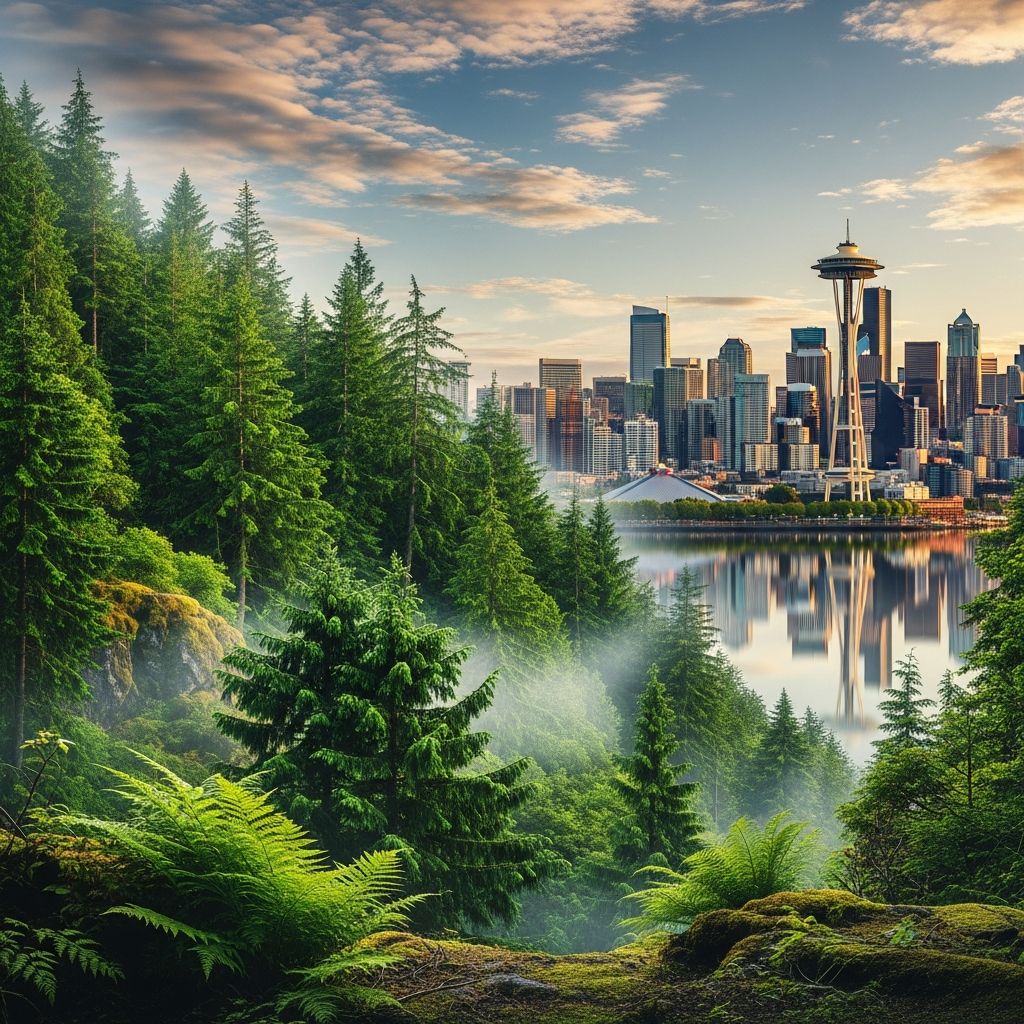
Seattle, Washington, stands out as a vibrant urban center enveloped by nature’s splendor, earning its cherished title as the **Emerald City**. This moniker celebrates the city’s persistent green hues, fueled by abundant rainfall, vast parks, and resilient evergreen forests that thrive through every season. Unlike the fictional Oz capital, Seattle’s emerald allure stems from real-world geography and strategic branding, transforming it into a symbol of environmental beauty and innovation.
Historical Roots: From Frontier Hub to Queen of the Northwest
Long before the Emerald City label took hold, Seattle carried the ambitious nickname **Queen City of the Pacific Northwest**. Coined in 1869 by real estate promoters, this title positioned the burgeoning settlement as the dominant force amid smaller towns, reflecting its rise as a commercial and transport powerhouse. During the late 19th century, Seattle’s strategic location made it the primary gateway for Alaskan trade and exploration.
The 1897 Klondike Gold Rush propelled this identity forward. As the last major U.S. port for Yukon-bound prospectors, Seattle boomed with supply shipments, population surges, and economic vitality, solidifying its regal status. Promoters leveraged the Queen City name to attract investors, emphasizing Seattle’s superiority in culture, commerce, and connectivity across the Pacific Northwest.
However, by the mid-20th century, civic leaders sought a fresh identity that better captured the city’s natural assets over industrial ambitions. The shift marked a pivot from historical pomp to ecological pride, setting the stage for a greener persona.
The Birth of the Emerald City Brand in 1982
The official adoption of **Emerald City** occurred in 1982 through a public contest organized by the Seattle-King County Convention and Visitors Bureau. Amid efforts to boost tourism, entrants proposed nicknames highlighting Seattle’s unique qualities. Sarah Sterling-Franklin emerged as the grand prize winner with her compelling essay: “Seattle, the Emerald City. Seattle is the jewel of the Northwest, the queen of the Evergreen State, the many-faceted city of space, elegance, magic and beauty.” This poetic submission resonated, blending legacy with natural allure.
The bureau integrated the name into a logo for promotional campaigns, effectively rebranding Seattle. This move coincided with Washington State’s longstanding **Evergreen State** nickname, earned for its dense coniferous forests that remain verdant year-round. Seattle’s campaign capitalized on this synergy, drawing parallels between state-wide foliage and urban greenery.
Nature’s Role: Why Seattle Stays Lush All Year
Seattle’s emerald reputation is no marketing gimmick—it’s rooted in its exceptional ecology. The city boasts over 6,000 acres of parks, including expansive greenbelts that weave through neighborhoods, providing a lush backdrop uncommon in major U.S. cities. Surrounding features amplify this: the Olympic Peninsula’s rainforests to the west and the Cascade Range’s timberlands to the east create a verdant envelope.
A temperate maritime climate is key. Mild winters (rarely below freezing) and cool summers, shielded by mountains, ensure consistent moisture without extremes. Annual rainfall, often around 38 inches, nourishes evergreens like Douglas firs and Western red cedars, which dominate the landscape and retain their deep green needles through winter. Surprisingly, Seattle appears least green in summer due to drier conditions, but overcast skies and irrigation sustain the vibrancy.
| Feature | Contribution to Greenness | Examples |
|---|---|---|
| Climate | Mild temps and steady rain | 38 inches annual precip; protected by Olympics & Cascades |
| Vegetation | Evergreen dominance | Douglas fir, hemlock; year-round foliage |
| Parks & Spaces | Urban integration | 6,000+ acres; Discovery Park, Green Lake |
| Surroundings | Natural buffers | Olympic Peninsula, Cascade forests |
This table summarizes the pillars of Seattle’s perennial greenness, blending urban planning with natural endowments.
Evergreen State Synergy and Misconceptions
Washington’s **Evergreen State** designation, adopted in 1890, underscores the regional context. Pioneers noted the contrast with deciduous East Coast forests, praising the conifers that blanketed hillsides. Seattle, as the state’s largest city, embodies this ethos, with city trees mirroring state forests.
Myths persist, like Seattle as perpetually rainy—actually, cities like Miami get more inches, but Seattle’s frequent drizzles (over 150 days yearly) keep soils moist without flooding. Another is the Oz connection; while evocative, promoters clarified no link to L. Frank Baum’s 1900 tale, focusing instead on literal greenery.
Other Nicknames Reflecting Seattle’s Diverse Identity
- Jet City: Honors Boeing’s 1916 founding here, fueling aerospace innovation and airport bustle.
- Rain City: A playful nod to drizzle culture, though statistically overstated.
- Gateway to Alaska: Revives gold rush-era role as northern trade portal.
- Coffee Capital: Birthplace of Starbucks, epitomizing caffeinated creativity.
These aliases layer Seattle’s multifaceted character, but Emerald City endures for its visual and aspirational appeal.
Modern Impact: Tourism, Culture, and Sustainability
The Emerald City brand revolutionized tourism. Post-1982 campaigns lured millions, spotlighting icons like the Space Needle amid forested vistas. Today, visitors flock to hikes in Discovery Park or kayaks on Lake Union, framed by that signature green. The logo persisted until 2001, replaced by a phonetic “See-at-L” rebus, yet the nickname thrives.
Sustainability efforts reinforce the image. Initiatives like the Trees for Seattle program plant thousands annually, combating urban heat and enhancing biodiversity. Tech giants like Amazon integrate green roofs, aligning corporate growth with ecological stewardship. This commitment positions Seattle as a model for green urbanism.
Culturally, the nickname infuses local pride. Festivals, art, and media reference it, from Emerald City Comic Con to skyline views shimmering green. It’s a reminder of indigenous roots too—Coast Salish peoples stewarded these lands for millennia, their reverence for forests echoed in modern branding.
Challenges to the Emerald Dream
Urban expansion tests the green ideal. Sprawl, wildfires, and climate shifts pose risks—drier summers strain water resources, while heat domes brown some edges. Yet, policies like the 2024 Tree Protection Ordinance safeguard canopies, ensuring resilience. Balancing growth with greenery remains Seattle’s ongoing quest.
Frequently Asked Questions (FAQs)
Why did Seattle change from Queen City to Emerald City?
The shift in 1982 via a tourism contest emphasized natural beauty over 19th-century commercial rivalry, better suiting modern identity.
Is Seattle really the rainiest U.S. city?
No—its 38 inches trails many; the myth stems from frequent light rains (150+ days).
How many parks does Seattle have?
Over 6,000 acres across 400+ parks, from neighborhood greens to vast preserves.
Does the Emerald City relate to The Wizard of Oz?
No official tie; promoters stressed local greenery, not Baum’s fiction.
What keeps Seattle green in winter?
Evergreen trees, mild climate, and rainfall sustain foliage year-round.
Seattle’s Enduring Green Allure
From gold rush queen to emerald jewel, Seattle’s nicknames chronicle its evolution. The Emerald City captures a harmonious blend of city pulse and forest embrace, inviting explorers to its trails, markets, and misty horizons. Whether hiking Mount Rainier foothills or sipping coffee under firs, the moniker rings true—a verdant beacon in the Pacific Northwest.
References
- Why is Seattle the Queen City? — Seattle Green Maids. Accessed 2026. https://www.seattlegreenmaids.com/blog/why-is-seattle-the-queen-city
- Why is Seattle Called “The Emerald City”? — TIA International Photography Blog. 2019-07-31. https://blog.tia-international-photography.com/2019/07/31/why-is-seattle-called-the-emerald-city/
- The Story Behind Why Seattle, WA Is Called Emerald City — Emerald City Medical Staffing. Accessed 2026. https://www.emeraldcitymedicalstaffing.com/the-story-behind-why-seattle-wa-is-called-emerald-city/
- Why Is Seattle Called the Emerald City? — Britannica. Accessed 2026. https://www.britannica.com/topic/Why-Is-Seattle-Called-the-Emerald-City
- Seattle becomes The Emerald City in 1982 — HistoryLink.org. Accessed 2026. https://www.historylink.org/File/3622
- Discover the Enchanting Charm of Seattle, Washington – Fondly Known as the Emerald City — Visit Seattle. Accessed 2026. https://visitseattle.org/blog/discover-the-enchanting-charm-of-seattle-washington-fondly-known-as-the-emerald-city/

- Integrated M.A. in Applied Linguistics, University of Hyderabad
- 5+ years in editorial, instructional, SEO, and research-based writing
Sneha is a relationships and lifestyle writer with a strong foundation in applied linguistics and certified training in relationship coaching. She brings over five years of writing experience to theskillvault, crafting thoughtful, research-driven content that empowers readers to build healthier relationships, boost emotional well-being, and embrace holistic living. Her writing and insights reflect the belief that beauty, happiness, and wellness…