
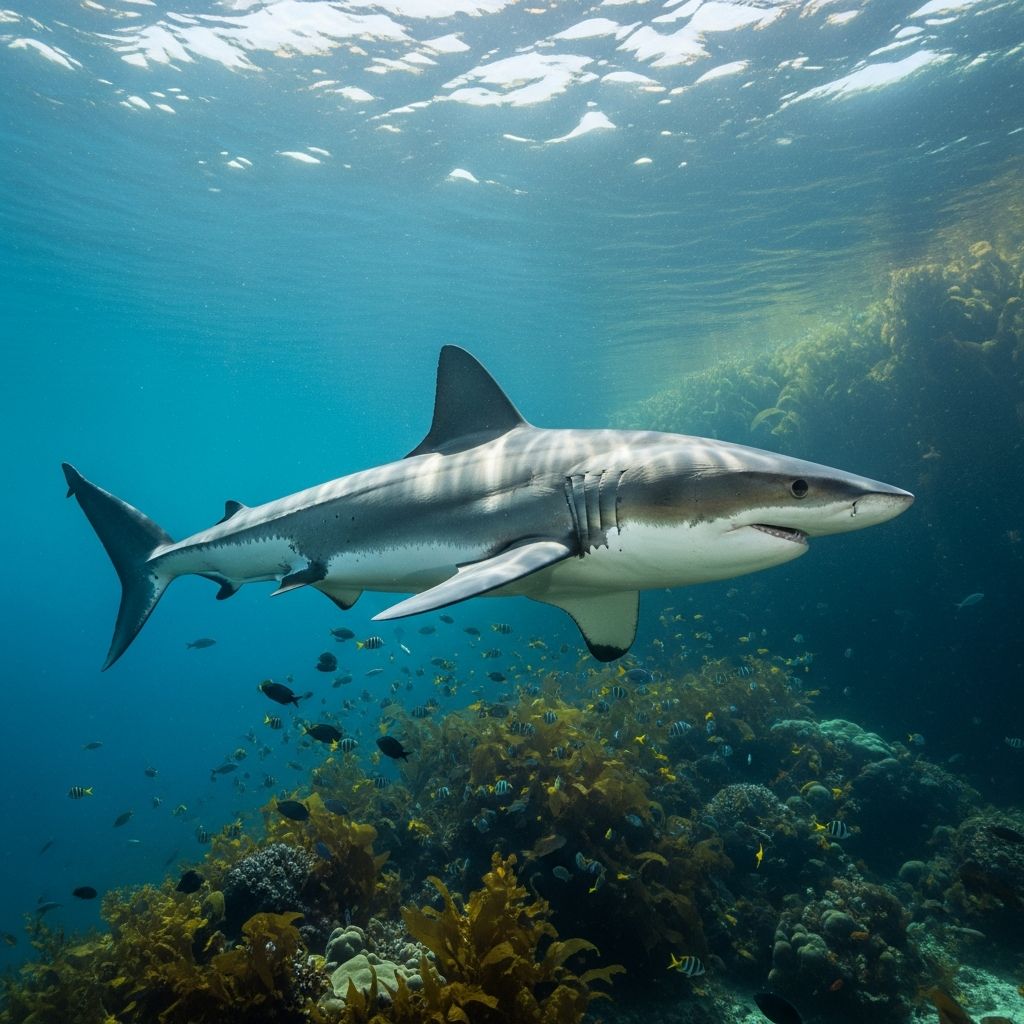
Sharks, often misunderstood as ruthless predators, are foundational to the vitality of marine environments worldwide. As apex predators, they maintain ecological equilibrium, foster biodiversity, and contribute to planetary health. This article delves into their indispensable functions, the perils they confront, and actionable conservation strategies to ensure their survival.
The Pivotal Role of Sharks in Marine Food Webs
Sharks occupy the summit of oceanic food chains, exerting top-down control that prevents any single species from dominating. By preying on mid-level predators and grazers, they ensure a balanced distribution of marine life. For instance, without sharks, populations of species like groupers could explode, decimating herbivorous fish essential for algae control on reefs.
This regulation extends to disease management. Sharks preferentially target weaker or ill individuals, culling them from populations and curbing disease spread. The mere threat of their presence prompts prey fish to become more vigilant, shedding parasites through frantic movements and enhancing overall herd health. Such dynamics underscore sharks’ role in sustaining robust fisheries and resilient ecosystems.
- Population Control: Keeps mid-level predators in check, preventing overgrazing of vital herbivores.
- Disease Prevention: Removes sick fish, bolstering genetic health in prey species.
- Behavioral Influence: Fear of sharks drives prey adaptations that improve survival rates.
Guardians of Coral Reefs and Biodiversity
Coral reefs, often called the rainforests of the sea, rely on sharks for their persistence. Excessive mid-level predators deplete algae-eating fish, allowing seaweed overgrowth that smothers corals. Sharks mitigate this by curbing those predators, preserving conditions for reef recovery and growth. Healthy reefs, in turn, generate substantial oxygen and serve as nurseries for countless species.
Biodiversity flourishes under shark influence. Their presence fosters diverse food webs, making ecosystems more adaptable to disturbances like storms or warming waters. Studies indicate that shark-depleted areas suffer cascading collapses, with diminished species variety and weakened resilience. Protecting sharks thus safeguards the intricate web of ocean life, from plankton to whales.
| With Healthy Shark Populations | Without Sharks |
|---|---|
| Balanced prey numbers; thriving herbivores | Overpopulated mid-predators; algae-choked reefs |
| High biodiversity; resilient ecosystems | Species decline; ecosystem instability |
| Productive fisheries; carbon sequestration | Collapsed food webs; reduced oxygen production |
Sharks and the Fight Against Climate Change
Sharks contribute to climate mitigation through ‘blue carbon’ storage. By regulating herbivores, they protect seagrass beds and kelp forests—powerhouses of carbon absorption via photosynthesis. These habitats sequester vast amounts of CO2, aiding the ocean’s carbon cycle. Depleting sharks disrupts this balance, exacerbating climate impacts.
Moreover, sharks enhance ecosystem resilience to warming oceans and acidification. Balanced populations buffer against environmental shifts, maintaining habitat integrity for carbon-storing vegetation. As oceans produce nearly half our oxygen, shark conservation indirectly supports global breathability and atmospheric health.
Debunking Myths: Sharks Are Not the Monsters We Think
Media portrayals fuel irrational fear, yet sharks pose minimal threat to humans. In 2015, global shark fatalities numbered just 12, contrasted against over 100 million sharks killed by us annually. Humans kill far more sharks than vice versa, often in retaliatory culls following rare incidents.
Sharks have evolved over 450 million years, surviving mass extinctions while adapting masterfully to marine life. Their ancient lineage predates dinosaurs, embodying evolutionary perfection. Far from aggressive, most species are shy, fleeing human presence—a fact underscoring our disproportionate impact.
Critical Threats Facing Shark Populations
Sharks face existential dangers from human activities. Overfishing, particularly via longlines and gillnets, targets them for fins, meat, and bycatch. Many species mature slowly, reproduce infrequently, and produce few offspring, rendering them vulnerable to depletion[10]. Currently, 37% of over 1,200 shark and ray species risk extinction, with over 90 critically endangered[10].
Finning—severing fins for soup and discarding bodies—exemplifies wastefulness. Climate-driven range shifts compound pressures, as warming alters prey distributions. Without intervention, these apex regulators could vanish, triggering irreversible ecological fallout.
Effective Strategies for Shark Conservation
Robust protections are yielding results. Marine Protected Areas (MPAs), quotas, and gear restrictions outside them rebuild populations. Prioritizing large, reproductive individuals like tiger sharks maximizes recovery. National bans on commercial shark catches for threatened species prove effective.
International efforts, including WWF initiatives, target consumption, trade, and management[10]. Education shifts public perception, reducing demand for shark products. Grassroots advocacy, science, and legislation form a multi-pronged approach.
- Establish expansive MPAs with strict enforcement.
- Implement size-based quotas favoring breeders.
- Ban harmful gear like gillnets in key habitats.
- Promote global finning prohibitions.
- Invest in research tracking population shifts.
Sharks’ Evolutionary Marvels and Intrinsic Value
Beyond ecology, sharks captivate with biological wonders. Their cartilage skeletons, electroreceptive ampullae of Lorenzini, and regenerative livers highlight 400 million years of refinement. Species like the goblin shark boast extendable jaws; whale sharks, the largest fish, filter-feed peacefully.
These traits not only inspire awe but drive biomedical research—shark cartilage informs cancer treatments, their immunity intrigues scientists. Preserving them honors biodiversity’s splendor and unlocks future innovations.
Frequently Asked Questions (FAQs)
Why are sharks considered apex predators?
Sharks top marine food chains, regulating populations below them to maintain balance. Their removal disrupts entire ecosystems.
Do sharks attack humans frequently?
No—fatal attacks are rare (e.g., 12 in 2015 globally), while humans kill millions of sharks yearly.
How do sharks help with climate change?
They protect carbon-sequestering seagrass and kelp by controlling herbivores, aiding ocean CO2 absorption.
What is the biggest threat to sharks?
Overfishing and finning; slow reproduction makes recovery challenging. 37% of species are threatened[10].
How can individuals support shark conservation?
Avoid shark fin products, support MPAs, educate others, and advocate for policy changes.
Conclusion: Act Now for Ocean Futures
Sharks’ conservation is non-negotiable for thriving oceans. Their roles in balance, biodiversity, and climate demand urgent action. By dismantling myths, curbing threats, and embracing protections, we secure marine heritage for generations.
References
- Sharks Should Be Respected, Not Feared — U.S. Fish & Wildlife Service. 2020-08-01. https://www.fws.gov/story/2020-08/sharks-should-be-respected-not-feared
- How Sharks Keep the Ocean Healthy — National Marine Sanctuaries. 2025-01-01. https://sanctuaries.noaa.gov/news/2025/how-sharks-keep-the-ocean-healthy.html
- 5 Really Good Reasons To Protect Sharks — Roatan Divers. 2023-01-01. https://roatandivers.com/conservation-rd/5-reasons-protect-sharks
- Why Saving Sharks Makes Good Sense — Shark Stewards. 2022-01-01. https://sharkstewards.org/saving-sharks-makes-good-sense/
- Shark Conservation – Protect Sharks, Protect Oceans — Shark Angels. 2024-01-01. https://sharkangels.org/shark-conservation/
- Ecological Importance of Sharks — FIU Institute of Environment. 2023-01-01. https://environment.fiu.edu/what-we-study/projects/ecological-role-of-sharks/

Medha Deb is an editor with a master's degree in Applied Linguistics from the University of Hyderabad. She believes that her qualification has helped her develop a deep understanding of language and its application in various contexts. Medha specializes in the areas of beauty, health, sports, and wellness and is committed to ensuring that the content on the website is…