
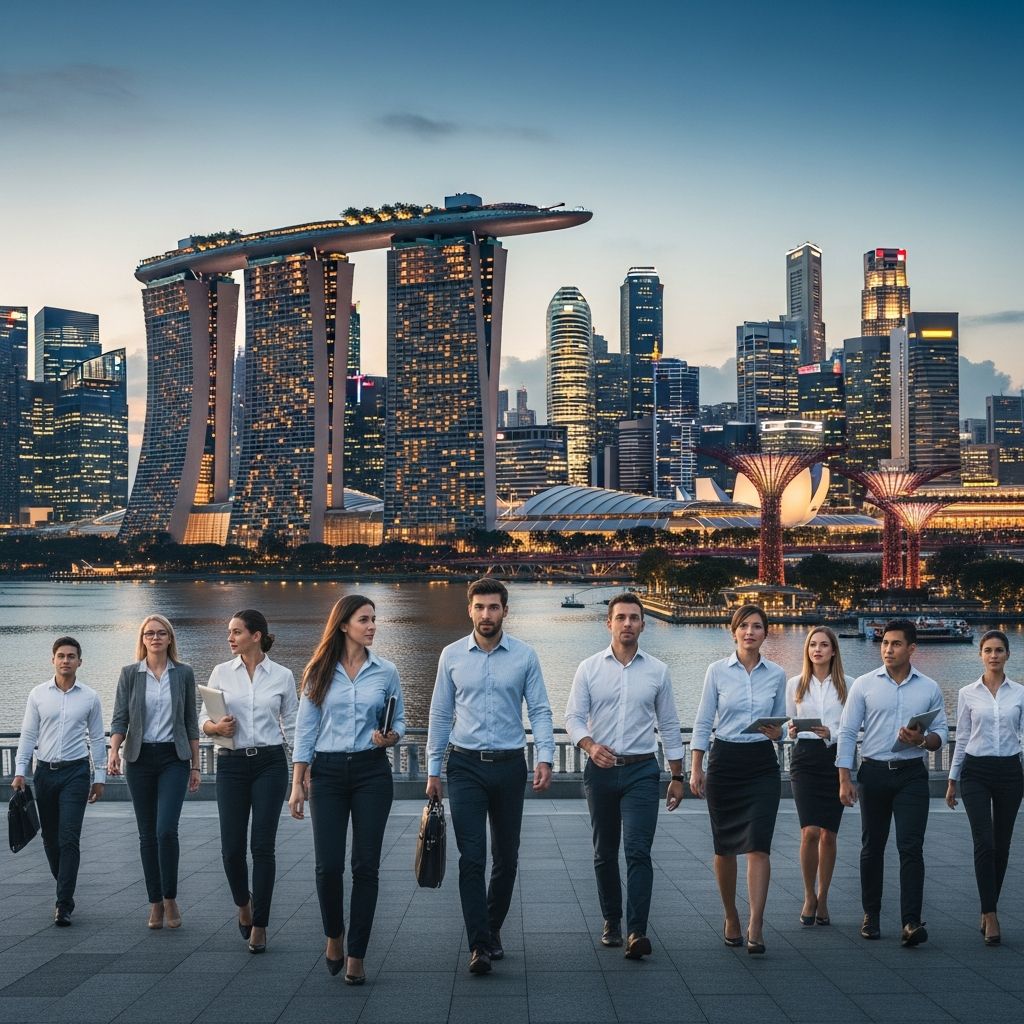
Singapore has emerged as one of Asia’s most attractive professional destinations, drawing talent from across the globe who seek career growth, stability, and innovation. The city-state combines Eastern values with Western business practices, creating a unique work environment that appeals to ambitious professionals at all career stages. Whether you’re an early-career professional looking to establish yourself internationally or a seasoned executive seeking new challenges, Singapore offers compelling reasons to consider it as your next professional home.
Strategic Geographic Positioning for Regional Influence
Singapore’s location at the crossroads of Asia-Pacific commerce provides unparalleled advantages for professionals seeking to expand their influence beyond their home markets. Positioned as a gateway to emerging economies including China, India, and Southeast Asia, professionals working in Singapore gain direct exposure to diverse business landscapes and rapidly growing consumer markets. This strategic positioning allows professionals to develop a sophisticated understanding of regional dynamics while building networks that span multiple countries and industries.
Working in Singapore enables professionals to participate in regional decision-making processes and understand how global businesses adapt their strategies across different Asian markets. The city-state serves as headquarters for numerous multinational corporations, making it an ideal location to observe and influence business trends that ripple throughout the Asia-Pacific region.
Transparent and Predictable Professional Framework
Professional environments thrive when clarity exists around expectations, processes, and outcomes. Singapore’s commitment to transparent workplace policies creates an operational foundation where employees understand their responsibilities, performance metrics, and career pathways. This clarity reduces workplace ambiguity and builds mutual trust between employers and employees, fostering an environment where merit-based advancement is the norm rather than the exception.
The rule of law and minimal corruption in Singapore’s business environment provide reassurance to professionals who value predictability and fairness. Employees can focus their energy on performance and innovation rather than navigating systemic inefficiencies or navigating opaque organizational structures.
World-Class Infrastructure Supporting Professional Excellence
The quality of a professional’s working environment significantly impacts productivity and job satisfaction. Singapore boasts world-class infrastructure that supports seamless work experiences, including modern office facilities equipped with cutting-edge technology, efficient public transportation systems, and reliable utilities. These foundational elements create an environment where professionals can concentrate on their work rather than managing logistical challenges.
The city’s investment in digital infrastructure, coupled with its reliable connectivity and well-maintained business districts, enables professionals to collaborate effectively whether working on-site or remotely. This infrastructure quality translates directly into enhanced daily workflow and overall professional satisfaction.
Innovation and Entrepreneurial Ecosystem
Singapore’s government actively supports innovation and entrepreneurship through dedicated programs including Startup SG and Enterprise Singapore, which provide funding, mentorship, and resources to transform business ideas into viable ventures. Professionals with entrepreneurial ambitions benefit from easy access to capital, experienced mentors, and a supportive regulatory environment that encourages calculated risk-taking.
The presence of thriving tech, fintech, healthcare, and professional services sectors creates abundant opportunities for professionals seeking to work on cutting-edge projects or transition into emerging industries. The country’s emphasis on innovation extends beyond startups to established corporations, which invest heavily in research and development initiatives.
Multicultural Work Environment Fostering Global Perspectives
Multiculturalism in Singapore extends far beyond surface-level diversity; it’s deeply embedded in workplace culture and business practices. As a global business hub, Singapore attracts professional talent from every continent, creating teams where collaboration across nationalities, ethnicities, and professional backgrounds is the standard expectation. English serves as the primary business language, facilitating seamless communication and rapid integration for international professionals.
The celebration of various cultural festivals and awareness of international customs adds meaningful depth to corporate life. This multicultural blend enhances creative problem-solving capabilities and builds a workforce that understands global markets from lived experience rather than theoretical study. For professionals seeking open, respectful environments where diverse perspectives drive decision-making, Singapore provides a genuinely inclusive experience.
Comprehensive Compensation and Benefits Structure
Singapore’s compensation packages are competitive by regional and international standards, designed to attract and retain skilled professionals. Beyond base salaries, employers provide substantial benefits including:
- Central Provident Fund (CPF) contributions: A mandatory savings program providing retirement security and healthcare coverage
- Performance bonuses and 13th-month payments: Annual bonuses widely practiced in the private sector, helping employees manage year-end expenses
- Tech and mobility perks: Company laptops, phones, and transportation allowances demonstrating employer investment in employee effectiveness
- Wellness benefits: Gym subsidies, mental health stipends, and counseling access increasingly standard across competitive sectors
- Flexible work arrangements: Support for staggered hours, hybrid work, and remote options addressing work-life balance priorities
Employers increasingly offer customized compensation packages that reflect employees’ life stages and roles, including CPF enhancements, top-up insurance, and tax-friendly reimbursement schemes. This tailored approach to compensation ensures professionals feel valued beyond their base salary.
Advantageous Tax Environment for Professional Earnings
Singapore’s tax policies are designed to be straightforward and beneficial for employees and professionals. With relatively low personal income tax rates compared to other developed economies, professionals retain a significantly larger portion of their earnings, making Singapore an economically attractive destination. The transparent tax structure eliminates ambiguity and allows professionals to accurately forecast their take-home income.
Strong Legal Protections and Employment Standards
Singapore maintains rigorous employment standards and effective regulatory oversight that holds employers accountable for fulfilling their obligations. The country’s commitment to the rule of law provides foreign workers and expatriates with confidence that their rights will be upheld and protected. This legal reliability creates stability and predictability in Singapore’s competitive job market, allowing professionals to focus on performance and career development rather than navigating employment uncertainties.
The structured approach to employment contracts, benefits, and dispute resolution mechanisms reduces uncertainty around major life events including illness, injury, or retirement. This systematic protection contributes to overall financial stability and well-being for professionals working in Singapore.
Professional Recognition and Achievement Programs
Organizations across Singapore prioritize employee recognition through structured programs including performance bonuses, comprehensive annual appraisals, and achievement-based incentives. This culture of acknowledgment and celebration motivates professionals to deliver their best work while fostering genuine senses of accomplishment and belonging within organizations.
The emphasis on meritocracy means that advancement and recognition are based on demonstrated competence and contributions rather than tenure or hierarchical positioning alone. Professionals who perform at high levels see their efforts acknowledged and rewarded through both financial and non-financial recognition mechanisms.
Government-Supported Lifelong Learning Initiatives
Singapore’s government actively promotes continuous professional development through initiatives such as SkillsFuture, which offers accessible courses across industries and skill levels. This commitment to lifelong learning reflects the country’s recognition that professional relevance requires ongoing skill development and knowledge acquisition.
Employers increasingly provide learning credits and professional development budgets, encouraging employees to pursue certifications, advanced degrees, or skill certifications relevant to their careers. The availability of these learning opportunities positions Singapore professionals to remain competitive in rapidly evolving global markets.
Work Culture Balancing Respect, Hierarchy, and Collaboration
Singapore’s work culture combines respect for authority and hierarchical structures with collaborative team dynamics. While formal and indirect communication helps maintain workplace harmony, the environment simultaneously emphasizes group achievements and collective success. This balanced approach creates workplaces where employees feel valued for both individual contributions and team participation.
The emphasis on workplace harmony, coupled with mutual respect and cooperation among colleagues, creates foundations for long-term team cohesion and sustainable organizational success. Professional relationships, built on trust and credibility, enhance decision-making quality and strengthen business partnerships across teams and departments.
Growing Focus on Work-Life Balance and Wellness
Contemporary Singapore workplaces increasingly recognize the importance of work-life balance and comprehensive wellness support. Mental health programs, stress management resources, and wellness benefits have transitioned from exceptional perks to standard workplace offerings. Organizations support flexible work hours, compressed work weeks, and hybrid arrangements, acknowledging that employees perform optimally when personal boundaries are respected.
This evolving workplace culture reflects Singapore’s understanding that professional success requires comprehensive well-being. Wellness stipends for gym memberships, mental health counseling, and fitness programs are becoming baseline expectations in competitive employment sectors, particularly those competing for specialized talent.
Accessibility for Diverse Professional Backgrounds
Singapore’s professional environment welcomes talent from diverse educational backgrounds, industries, and career paths. The focus on meritocracy and demonstrated capability means that professionals with non-traditional backgrounds and unconventional career trajectories find opportunities to advance based on competence and contribution. This inclusive approach attracts professionals seeking environments where potential matters more than privileged educational pedigree.
Regional Business Network Development Opportunities
Working in Singapore provides unparalleled opportunities to develop professional networks spanning the Asia-Pacific region. The concentration of multinational corporations, regional headquarters, and business associations creates consistent opportunities to connect with peers, mentors, and potential collaborators from dozens of countries and industries. These networks often prove invaluable throughout professionals’ careers, opening doors to opportunities in multiple markets and organizations.
Frequently Asked Questions About Professional Life in Singapore
Q: What is the typical work schedule in Singapore?
A: Standard work weeks typically span 40-44 hours, though this varies by industry and employer. Many organizations now offer flexibility including staggered hours and hybrid arrangements. Tech companies and startups often provide more flexibility, while traditional sectors may maintain more conventional schedules.
Q: How important is hierarchy in Singapore workplaces?
A: Respect for authority and hierarchical structures remains important, particularly in local firms and traditional industries. However, multinational corporations and startups often employ flatter organizational structures. Understanding and respecting these cultural nuances helps professionals navigate workplace relationships effectively.
Q: What visa requirements apply to foreign professionals?
A: Singapore offers several visa categories for professionals, including Employment Passes for skilled workers and EntrePass visas for entrepreneurs. Visa requirements depend on salary levels, qualifications, and job sectors. Consulting with immigration specialists or employers helps clarify specific requirements for individual circumstances.
Q: Is it difficult for expats to adapt to Singapore’s work culture?
A: Singapore’s multicultural environment and English-speaking business community facilitate expatriate integration. However, understanding cultural values around respect for authority, collective achievement, and workplace harmony helps professionals adapt more smoothly.
Q: What healthcare and wellness support do employers provide?
A: Comprehensive healthcare coverage, fitness benefits, mental health counseling, and wellness stipends have become standard in competitive employment sectors. Many employers provide health insurance that covers employees and dependents, supplementing Singapore’s excellent public healthcare system.
References
- Understanding Office Work Culture in Singapore — Edstellar. 2026. https://www.edstellar.com/blog/singapore-work-culture
- 30 Pros & Cons of working in Singapore — DigitalDefynd. 2026. https://digitaldefynd.com/IQ/pros-cons-of-working-in-singapore/
- Singapore Employee Benefits: Employer Guide 2026 — People Managing People. 2026. https://peoplemanagingpeople.com/global-hr/singapore-employee-benefits-and-compensation/
- Singapore Work Culture in 2026 – An Expat’s Perspective — Pacific Prime. 2026. https://www.pacificprime.com/blog/singapore-work-culture-expats-perspective.html
- Managing Gen Z Employees Singapore 2026 — Mavenside Consulting. 2026. https://mavenside.co/blog/managing-gen-z-employees-singapore-employers-guide-2026
- Top Five Workplace Trends In 2026 — ISCA Chartered Accountants Lab. 2026. https://ca-lab.isca.org.sg/seen-heard/top-five-workplace-trends-in-2026/

Medha Deb is an editor with a master's degree in Applied Linguistics from the University of Hyderabad. She believes that her qualification has helped her develop a deep understanding of language and its application in various contexts. Medha specializes in the areas of beauty, health, sports, and wellness and is committed to ensuring that the content on the website is…