
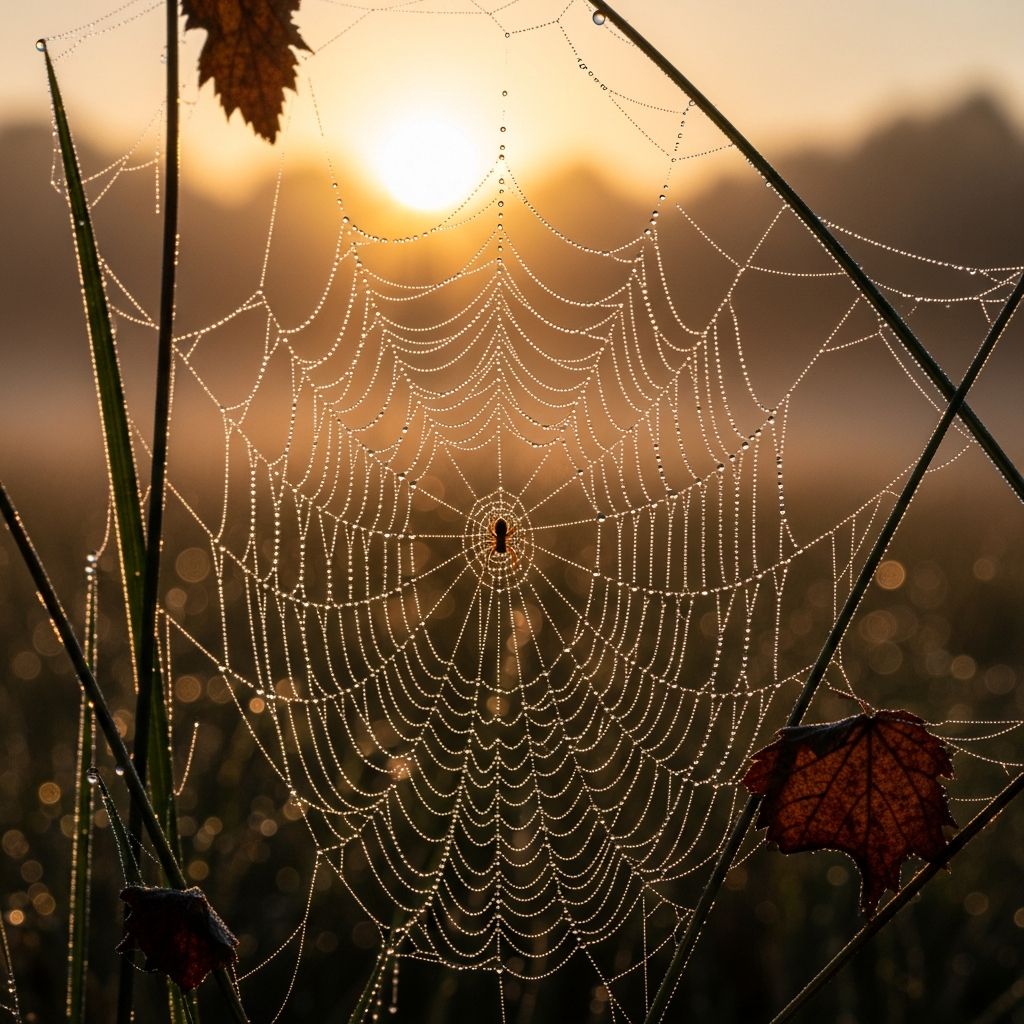
Spiders craft intricate webs that serve as both hunting grounds and architectural marvels, but many species add conspicuous embellishments known as stabilimenta. These silk structures, often reflecting ultraviolet light, spark curiosity among scientists due to their unclear purpose. Recent studies suggest multiple functions, including luring insects, warding off birds, and aiding in prey localization through vibrations.
The Anatomy of Web Decorations
Stabilimenta appear in various forms across orb-weaving spiders, such as zigzags, disks, or spirals at the web’s center. Made from a specialized silk distinct from the web’s sticky capture threads, these decorations stand out visually, especially under UV light, which many insects perceive vividly. Species like the wasp spider (Argiope bruennichi) frequently incorporate them, creating patterns that resemble reflectors or platforms.
These features are not universal; only certain orb-weavers produce them, often in open, exposed locations. Their presence correlates with environments rich in flying insects or bird activity, hinting at adaptive significance. The silk’s composition allows for high reflectivity, potentially mimicking floral signals that draw pollinators.
Attracting Prey: The Lure Hypothesis
One prominent theory posits that stabilimenta function as visual beacons for insects. UV-reflective patterns resemble nectar guides on flowers, attracting pollinators like bees that spiders preferentially target. This selective foraging boosts capture rates of nutrient-rich prey.
Experimental setups using UV paints on sticky traps demonstrate increased insect interception with decorative patterns, supporting this idea. However, repeated exposure might allow insects to learn avoidance, reducing efficacy over time. Pollinators, key to ecosystems, become easy meals, underscoring spiders’ role as top predators.
- UV reflection mimics floral bullseyes, drawing bees and flies.
- Higher prey numbers on decorated webs versus plain ones in field tests.
- Potential drawback: Habituation by insects to predictable designs.
Predator Deterrence: A Defensive Strategy
Conversely, decorations may protect spiders from visually hunting predators like birds. By making the web more visible, they reduce accidental collisions, or camouflage the spider’s position. Some species even add decoy silhouettes to confuse attackers.
In habitats with high bird presence, decorated webs show lower spider mortality. The bold patterns could signal ‘occupied territory’ or inflate the spider’s apparent size, deterring strikes. This dual-role hypothesis—prey attraction balanced with defense—remains debated, as no single explanation fits all observations.
Vibration Transmission: A Mechanical Marvel
Emerging research reveals a mechanical function: stabilimenta alter wave propagation in the web, helping spiders pinpoint struggling prey. When insects thrash, vibrations travel differently through decorated versus undecorated silk.
A 2025 PLOS One study on Argiope bruennichi combined field data and simulations, showing stabilimenta enhance elastic wave transmission parallel to web radials. This amplifies signals from peripheral captures, speeding up spider response. Zigzag or disk patterns modify vibration damping, potentially improving localization accuracy.
While not the sole purpose—location and silk tension matter more—these findings open bio-inspired applications, like tunable synthetic materials for sensors.
| Stabilimentum Type | Vibration Effect | Observed Benefit |
|---|---|---|
| Zigzag threads | Enhances radial wave speed | Quicker prey detection |
| Central disk | Reduces damping | Better signal from center |
| Spiral platform | Amplifies parallel vibrations | Peripheral capture alerts |
Environmental and Evolutionary Influences
Decoration prevalence varies by habitat. In windy or sunny areas, they might reinforce structure or regulate temperature via dew collection. Evolutionarily, stabilimenta likely arose multiple times, adapting to local pressures like prey abundance or predation risk.
Juvenile spiders decorate more frequently, possibly for protection during vulnerability. As they mature, patterns simplify, aligning with shifted priorities from survival to foraging. Genetic and environmental cues trigger production, with UV silk genes expressed selectively.
Experimental Insights and Ongoing Research
Field experiments manipulate decorations on artificial webs, testing UV blockers and patterns against controls. Results show mixed outcomes: prey uptick in some sites, bird deterrence in others. Simulations model vibration dynamics, validating mechanical roles.
Future work targets pattern predictability and species-specific traits. Understanding these boosts appreciation of spiders’ ecological impact, controlling pest insects naturally.
Frequently Asked Questions (FAQs)
Why do only some spiders decorate their webs?
Decorations appear mainly in orb-weavers exposed to birds or UV-sensitive prey, evolving as an adaptation to specific ecological niches.
Do stabilimenta make webs stronger?
Early ideas suggested stabilization, but evidence points more to signaling or sensory roles than structural reinforcement.
Can insects avoid decorated webs?
Possibly; repetitive patterns might teach avoidance, prompting spiders to vary designs for sustained effectiveness.
Are web decorations visible to humans?
Often subtle, but UV versions shine under blacklight; birds and insects see them vividly due to enhanced vision.
Could this inspire technology?
Yes, vibration-tuning properties may inform smart materials for robotics or sensors mimicking web sensitivity.
Ecological Significance of Decorated Webs
Spiders, with over 50,000 species, underpin food webs by preying on insects. Decorations enhance efficiency, indirectly aiding pollination and pest control. In agricultural settings, promoting decorated webs could reduce chemical use. Climate shifts might alter patterns, affecting spider success.
Observing these in gardens reveals biodiversity health. Avoiding web destruction preserves vital predators, fostering balanced ecosystems.
References
- Why do spiders decorate their webs? — Experiment.com. 2023. https://experiment.com/projects/why-do-the-spiders-decorate-their-webs
- Spider web “decorations” may help pinpoint location of captured prey — Scimex/PLOS One. 2025-10-29. https://www.scimex.org/newsfeed/why-do-some-spiders-decorate-their-webs
- Spiders ‘decorate’ their webs to help trap dinner — Popular Science/PLOS One. 2025. https://www.popsci.com/environment/spiders-decorate-webs/
- Why Do Spiders Decorate Their Webs? A New Piece of the Puzzle — Nautilus/PLOS One. 2025. https://nautil.us/why-do-spiders-decorate-their-webs-a-new-piece-of-the-puzzle-1245450
- These Mysterious ‘Decorations’ in Spiderwebs Might Help Spiders Better Locate Their Prey — Smithsonian Magazine/PLOS One. 2025. https://www.smithsonianmag.com/smart-news/these-mysterious-extra-touches-in-spiderwebs-might-help-spiders-better-locate-their-prey-180987600/

- Integrated M.A. in Applied Linguistics, University of Hyderabad
- 5+ years in editorial, instructional, SEO, and research-based writing
Sneha is a relationships and lifestyle writer with a strong foundation in applied linguistics and certified training in relationship coaching. She brings over five years of writing experience to theskillvault, crafting thoughtful, research-driven content that empowers readers to build healthier relationships, boost emotional well-being, and embrace holistic living. Her writing and insights reflect the belief that beauty, happiness, and wellness…