
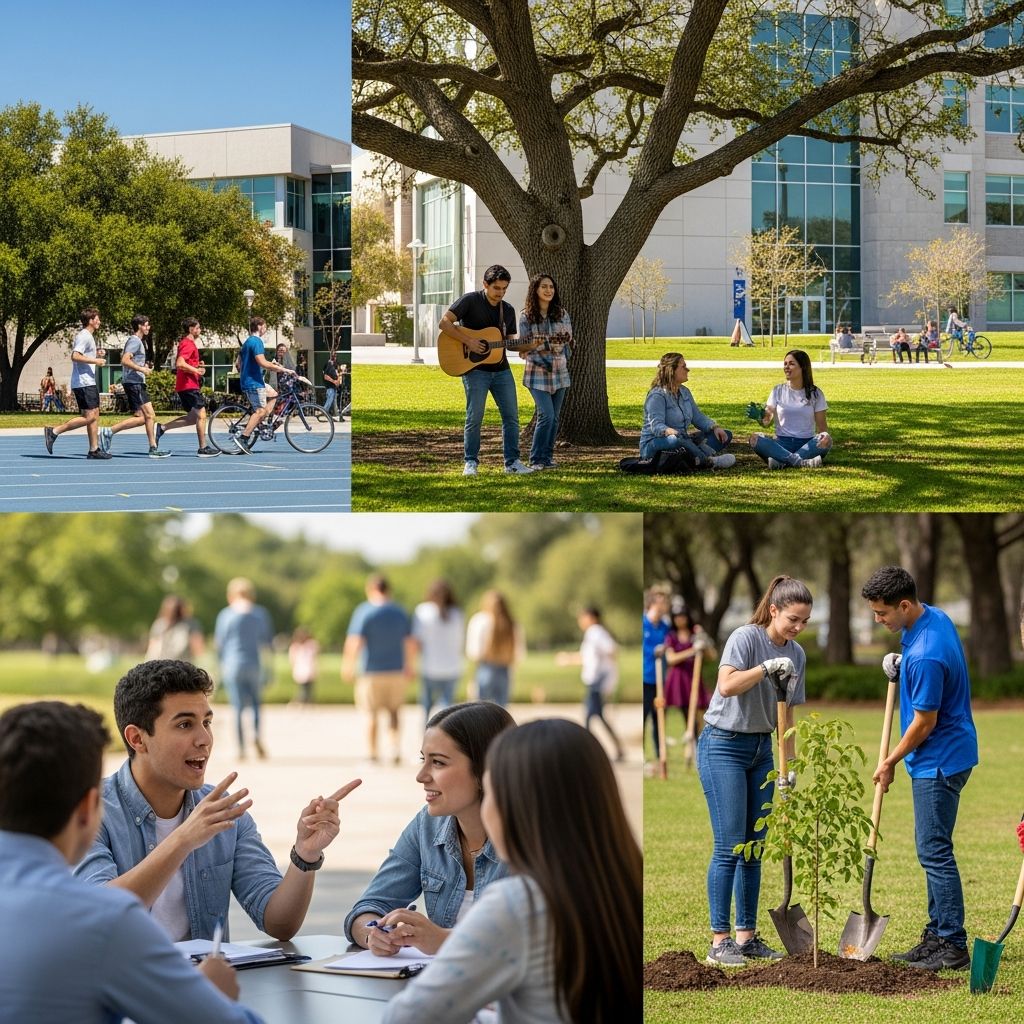
Why Structured Activity Participation Matters in Today’s Education
Students today face unprecedented pressures balancing rigorous academics with competing demands for their attention. In this complex landscape, extracurricular activities serve as more than just pastimes—they represent critical opportunities for holistic development. The shift toward viewing education solely through the lens of grades and test scores has created a generation of academically proficient yet sometimes emotionally disconnected learners. Structured activities outside the traditional classroom provide the counterbalance necessary for healthy, well-rounded student development.
When students engage in activities aligned with their interests and values, they unlock potential that transcends what any standardized assessment can measure. These pursuits cultivate resilience, foster authentic connections, and build the adaptive capacity needed for success in an unpredictable future. The evidence increasingly demonstrates that the most successful students aren’t necessarily those who spend every evening studying—they’re the ones who’ve learned to integrate intellectual growth with personal fulfillment.
Academic Performance and Intellectual Growth
One of the most compelling reasons to pursue extracurricular involvement is the demonstrable impact on academic outcomes. Research consistently shows that students participating in organized activities maintain higher grade point averages and perform better on standardized assessments in mathematics and reading. This correlation isn’t coincidental; it reflects deeper cognitive and behavioral patterns that develop through structured engagement.
The mechanism behind this academic improvement operates on multiple levels. When students commit to activities they enjoy, they develop superior time management capabilities. The student juggling soccer practice, debate team, and coursework learns to prioritize effectively in ways that directly transfer to academic work. Rather than engaging in procrastination or passive downtime, these students develop productive routines that enhance focus and follow-through. Additionally, many extracurricular pursuits—from debate to music to science clubs—directly strengthen the analytical and creative thinking skills that underpin academic success.
Furthermore, students engaged in meaningful activities demonstrate increased attendance and higher graduation rates. This pattern suggests that involvement creates a sense of belonging and purpose that anchors students to their educational institutions. When teenagers feel connected to their school community through shared activities and common interests, they’re significantly more likely to persist through challenges and complete their secondary education.
Psychological Resilience and Emotional Development
Beyond test scores and GPAs, extracurricular participation delivers profound mental health benefits. Adolescence inherently involves navigating identity formation, peer relationships, and emotional regulation—challenges that can feel overwhelming without adequate support structures. Activities provide safe spaces where these developmental tasks can unfold with guidance and community.
Students who engage in extracurriculars report substantially higher life satisfaction and optimism, alongside lower rates of anxiety and depression. This mental health benefit extends beyond the immediate experience; participants demonstrate positive emotional patterns that persist into adulthood. The mechanism involves multiple reinforcing factors: mastering new skills builds self-efficacy, supportive communities reduce isolation, and accomplishments provide tangible evidence of personal capability.
The protective effects against maladaptive behaviors deserve particular attention. A 2023 study found that students participating in extracurricular activities at least twice weekly are 18% less likely to use alcohol, 39% less likely to use marijuana, and 28% less likely to miss school without justification. This substantial risk reduction suggests that structured engagement provides both protective buffering and meaningful alternative pursuits. Rather than filling after-school hours with potentially harmful behaviors, teens invest their energy in developmentally constructive activities.
Screen time reduction represents another significant mental health mechanism. Programs offering extracurricular opportunities reduce recreational screen consumption, with 81% of activity providers reporting they facilitate genuine off-screen social and emotional growth. Given the documented links between excessive screen use and adolescent mental health challenges, this benefit proves particularly valuable in the digital age.
Building Confidence Through Mastery and Recognition
Self-esteem emerges consistently as one of the most prominently reported benefits of activity participation. This improvement operates differently than classroom-based confidence, which often depends on grades and teacher evaluation. Extracurricular settings allow students to experience success in domains where they possess genuine interest and often natural talent.
The pathway to confidence involves deliberate practice within a supportive environment. A student who struggles with traditional academics might discover genuine talent in theatrical performance, revealing previously unknown capabilities. Another might excel at robotics club despite merely average grades in physics. These experiences demonstrate that intelligence and ability manifest across diverse domains, and that dedication to meaningful pursuits yields tangible results. The low-stakes nature of most activities—where participation doesn’t directly impact GPA—allows students to take intellectual risks and learn resilience through inevitable failures without catastrophic academic consequences.
Recognition from peers and mentors within activity contexts also significantly boosts self-perception. Coaches, directors, and activity leaders often invest meaningfully in student development, providing constructive feedback and acknowledging growth. This positive attention from adults whom students respect contributes powerfully to healthy self-image development during adolescence.
Social Connection and Community Belonging
Adolescence brings intensified focus on peer relationships and identity formation within social contexts. Extracurricular activities provide structured environments where these essential developmental processes occur under relatively positive conditions. Students engaged in shared activities form stronger, more stable peer relationships than those lacking such connections.
For teenagers transitioning from middle to early adolescence—a particularly vulnerable developmental period—extracurricular participation correlates with increased peer belonging and acceptance, benefits that extend forward into later adolescence. This sense of belonging transcends simple friendship formation; it involves feeling genuinely valued within a community united by common purpose. Whether through sports teams, academic clubs, cultural organizations, or arts groups, students discover communities of like-minded peers who share their values and interests.
Particularly valuable are activities that connect students with diverse peer groups outside their typical social circles. While culturally or faith-based organizations provide particularly important communities for students from minoritized backgrounds, all extracurriculars expose students to peers with different backgrounds and perspectives. This exposure expands worldviews and builds the cross-cultural competence increasingly essential in diverse societies.
The relationships formed through extracurriculars often differ meaningfully from typical classroom-based friendships. Shared commitment to a pursuit, collaborative problem-solving, and mutual support toward common goals create stronger relational bonds. Many adults reflect that their most enduring friendships originated through high school activities rather than class enrollment.
Developing Leadership and Essential Life Competencies
Beyond the immediate social and emotional benefits, extracurricular involvement cultivates practical competencies essential for adult success. Time management skills develop almost inevitably when students balance multiple commitments. The necessity of planning, scheduling, and prioritizing naturally enhances these capabilities—skills that directly transfer to college and workplace contexts.
Leadership opportunities emerge organically through activity participation. Whether through formal positions or informal influence, students learn to motivate others, make decisions under pressure, organize complex tasks, and accept responsibility for outcomes. These experiences build confidence in leadership capability and familiarity with leadership roles before the stakes become high in professional contexts.
Participation also cultivates resilience and the capacity to accept constructive criticism. Through repeated cycles of practice, performance, feedback, and improvement, students develop emotional fortitude. They learn that failure represents feedback rather than identity, and that improvement requires integrating outside perspective. This growth mindset proves invaluable across all future endeavors.
Key Competencies Developed Through Extracurricular Engagement
| Competency | Development Mechanism | Real-World Application |
|---|---|---|
| Time Management | Balancing multiple commitments requires intentional scheduling and prioritization | College coursework, professional project management, personal goal achievement |
| Leadership Capability | Formal roles and informal influence within activity contexts build confidence and experience | Workplace advancement, team supervision, organizational responsibility |
| Communication Skills | Activities like debate, theater, and public speaking directly strengthen expression abilities | Professional presentations, interpersonal relationships, civic participation |
| Collaboration and Teamwork | Shared goals and cooperative learning build ability to work effectively with others | Professional teams, community initiatives, family dynamics |
| Resilience and Adaptability | Failures, setbacks, and feedback build capacity to persist through difficulty | Career challenges, relationship difficulties, personal setbacks |
| Problem-Solving | Activities present challenges requiring creative and analytical thinking | Professional challenges, personal decision-making, civic problem-solving |
Discovery of Authentic Interests and Talents
Students often enter high school with limited experience across diverse domains. Curriculum requirements ensure exposure to core academic subjects, but they may never encounter possibilities for talent expression beyond those traditional boundaries. Extracurricular activities expand the scope of possibility, allowing genuine self-discovery.
A student convinced of their mathematical limitations might discover genuine passion and capability in robotics or coding clubs. Another might develop unexpected interest in environmental science through debate competitions. Yet another might find unexpected fulfillment in mentoring younger students or organizing community service projects. These discoveries matter profoundly—they reshape identity and open pathways previously invisible.
This exploratory dimension proves particularly valuable for students still forming their sense of identity and potential. Rather than accepting the limited feedback from traditional classroom performance, students gain evidence of capabilities across diverse domains. This broader evidence base supports more nuanced, accurate self-perception and opens possibilities for future development.
Preparation for Higher Education and Professional Success
College admissions officers review extracurricular involvement as evidence of genuine motivation, sustained commitment, and personal qualities. However, the value extends beyond admissions competitiveness. Students with demonstrated extracurricular depth show greater engagement with college academics and smoother transitions to higher education.
The skills developed through activity participation—time management, leadership, resilience, collaboration—directly enable college success. Students already skilled at balancing competing demands adjust more readily to collegiate workloads. Those experienced with seeking help from mentors navigate professor office hours confidently. Individuals accustomed to receiving feedback integrate comments into improvement strategies effectively. The transition from secondary to higher education thus becomes less precipitous for activity-engaged students.
Professional value also extends substantially beyond college admissions. Employers consistently seek evidence of time management, leadership capability, collaboration experience, and sustained commitment. Extracurricular leadership positions provide concrete examples of these qualities. Additionally, activities often develop technical or creative skills directly applicable to career success.
Creating Productive Mental Breaks from Academic Pressure
Contemporary educational culture often creates relentless pressure toward academic achievement, leaving insufficient space for mental recovery and creative exploration. Extracurricular activities provide essential respite, allowing cognitive refreshment that paradoxically enhances academic performance.
When students engage in enjoyable activities unrelated to traditional academics, they experience genuine psychological recovery. The neural systems involved in activity participation differ from those engaged in academic work, allowing both recovery and continued productive engagement. A student might find that practicing saxophone provides the mental break necessary to approach challenging homework with renewed focus. Another might discover that team sports provide the social connection and physical activity necessary for emotional equilibrium.
This break function proves particularly important for students experiencing academic anxiety or pressure. Activities offer legitimate pursuits valued by peers and adults, yet carrying no direct academic consequences. This psychological safety enables genuine enjoyment without the background anxiety of grades or achievement.
Strategic Considerations for Meaningful Engagement
The benefits of extracurricular participation prove maximized through thoughtful engagement rather than superficial involvement or excessive overcommitment. Several principles guide meaningful activity selection and participation:
Depth Over Breadth
Sustained commitment to fewer activities typically generates greater benefit than casual involvement in numerous pursuits. Depth of engagement allows skill development, meaningful relationship formation, and genuine investment in community. A student deeply invested in debate team for multiple years develops far richer capabilities and connections than one sampling different clubs each term.
Alignment with Genuine Interest
Activities pursued solely for résumé enhancement often feel hollow and generate less benefit than those reflecting authentic interests. While college applications represent a legitimate consideration, prioritizing genuine passion ensures sustained engagement and authentic skill development. Students can articulate their motivations honestly—colleges value genuine enthusiasm far more than artificial over-commitment.
Active Participation and Growth
Simply attending meetings produces minimal benefit. Active engagement—contributing ideas, taking on responsibility, accepting leadership opportunities—multiplies returns on time investment. Students should seek activities where they can grow from participation, not merely check attendance boxes.
Frequently Asked Questions
Q: How many extracurricular activities should students pursue?
A: Quality matters more than quantity. Students benefit most from 2-3 activities where they’re genuinely engaged rather than numerous superficial commitments. The ideal number varies by individual—prioritize depth of engagement and academic balance over maximum involvement.
Q: Do colleges really care about extracurricular activities?
A: Yes, but context matters. Colleges seek evidence of sustained commitment, leadership, and meaningful contribution—not maximum activity count. Depth, growth, and genuine passion carry far more weight than extensive but superficial involvement. Admissions officers can distinguish between authentic engagement and résumé-padding.
Q: What if a student hasn’t found their extracurricular interest yet?
A: Exploration is valuable at any stage. Trying different activities helps students discover genuine interests and capabilities. Most schools offer numerous options; the goal is finding activities that resonate, not forcing participation in predetermined pursuits.
Q: How can students balance extracurriculars with academics?
A: Strategic time management is essential. Paradoxically, adding structured commitments often improves overall time management because students must plan deliberately. However, if academics suffer significantly, activity involvement requires adjustment. The goal is integration, not sacrifice of academics for activities or vice versa.
Q: Are online extracurriculars as beneficial as in-person activities?
A: Online activities offer valuable opportunities for skill development and interest exploration. However, they typically provide less robust social connection and community-building than in-person engagement. Ideally, students experience both formats—online for exploration and skill-building, in-person for deeper community connection.
References
- Benefits of Extracurricular Activities for High School Students — Crimson Education. 2024. https://www.crimsoneducation.org/us/blog/benefits-of-extracurricular-activities
- The Benefits of Extracurricular Activities — Wilson College Online. 2023. https://online.wilson.edu/resources/benefits-of-extracurricular-activities/
- Benefits of Extracurricular Activities for Kids — WebMD. 2024. https://www.webmd.com/parenting/benefits-extracurricular-activities-kids
- Extracurricular Activities: Benefits and Balance — ParentandTeen.com. 2024. https://parentandteen.com/extracurricular-benefits-balance/
- The Benefits of Participating in Extracurricular Activities — ERIC Education Resources Information Center. 2020. https://files.eric.ed.gov/fulltext/EJ1230758.pdf
- Why Online Extracurricular Activities Are So Important — Mountain Heights Academy. 2024. https://www.mountainheightsacademy.org/why-extracurricular-activities-are-so-important/
- Extracurriculars Matter To You and To Colleges — College Board BigFuture. 2024. https://bigfuture.collegeboard.org/plan-for-college/stand-out-in-high-school/extracurriculars-matter-to-you-and-to-colleges

- Integrated M.A. in Applied Linguistics, University of Hyderabad
- 5+ years in editorial, instructional, SEO, and research-based writing
Sneha is a relationships and lifestyle writer with a strong foundation in applied linguistics and certified training in relationship coaching. She brings over five years of writing experience to theskillvault, crafting thoughtful, research-driven content that empowers readers to build healthier relationships, boost emotional well-being, and embrace holistic living. Her writing and insights reflect the belief that beauty, happiness, and wellness…